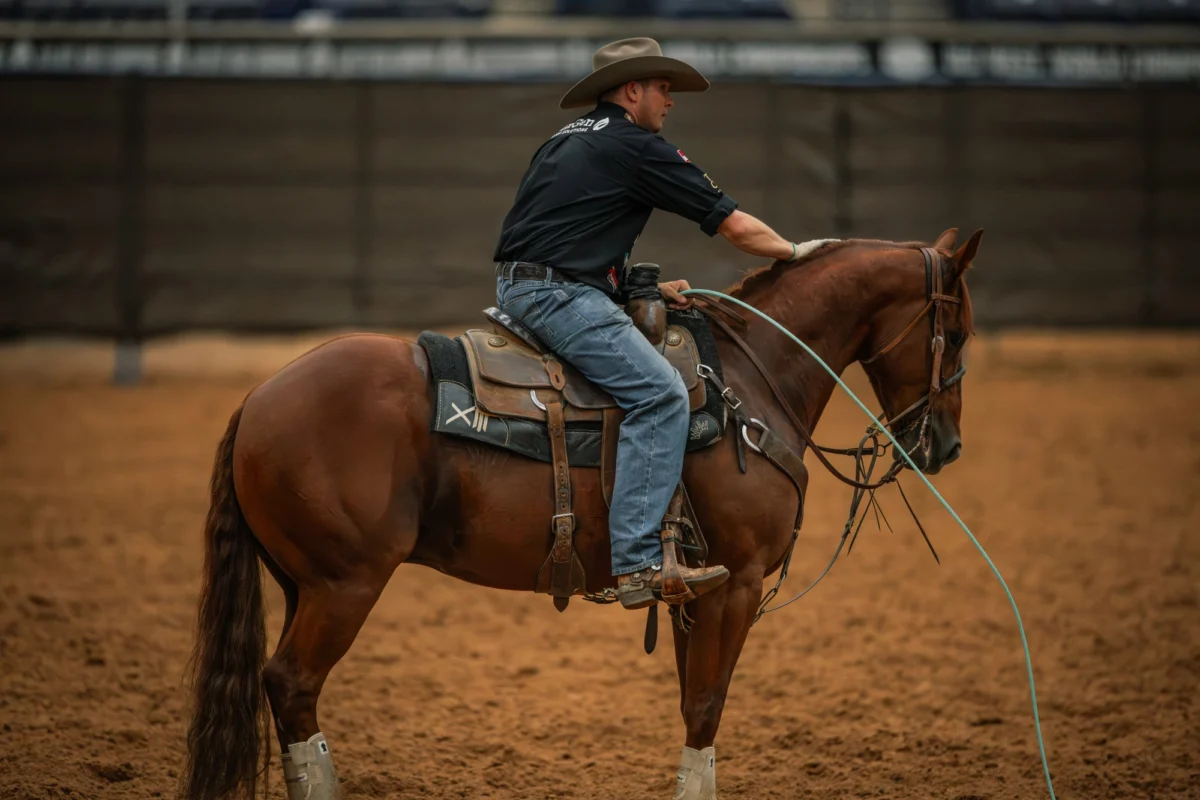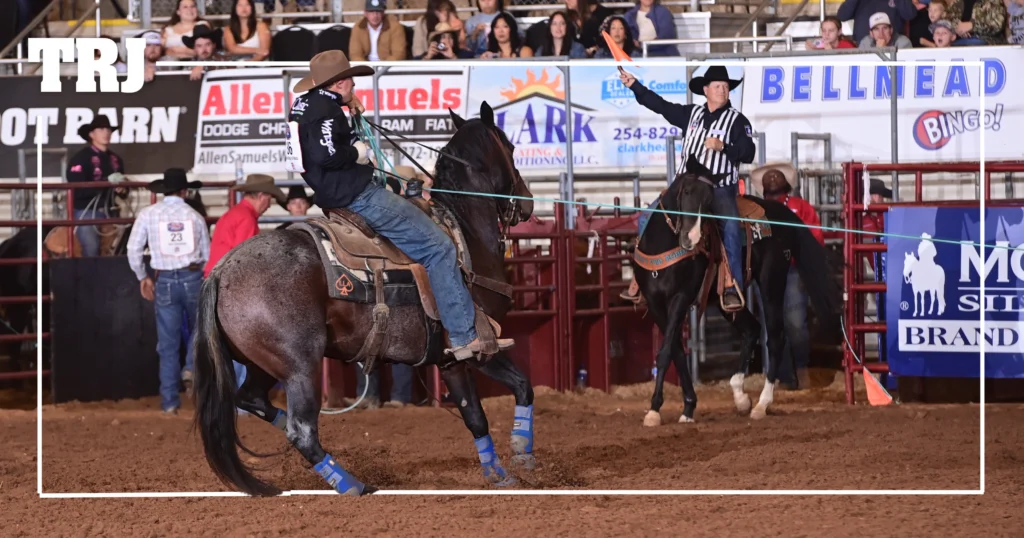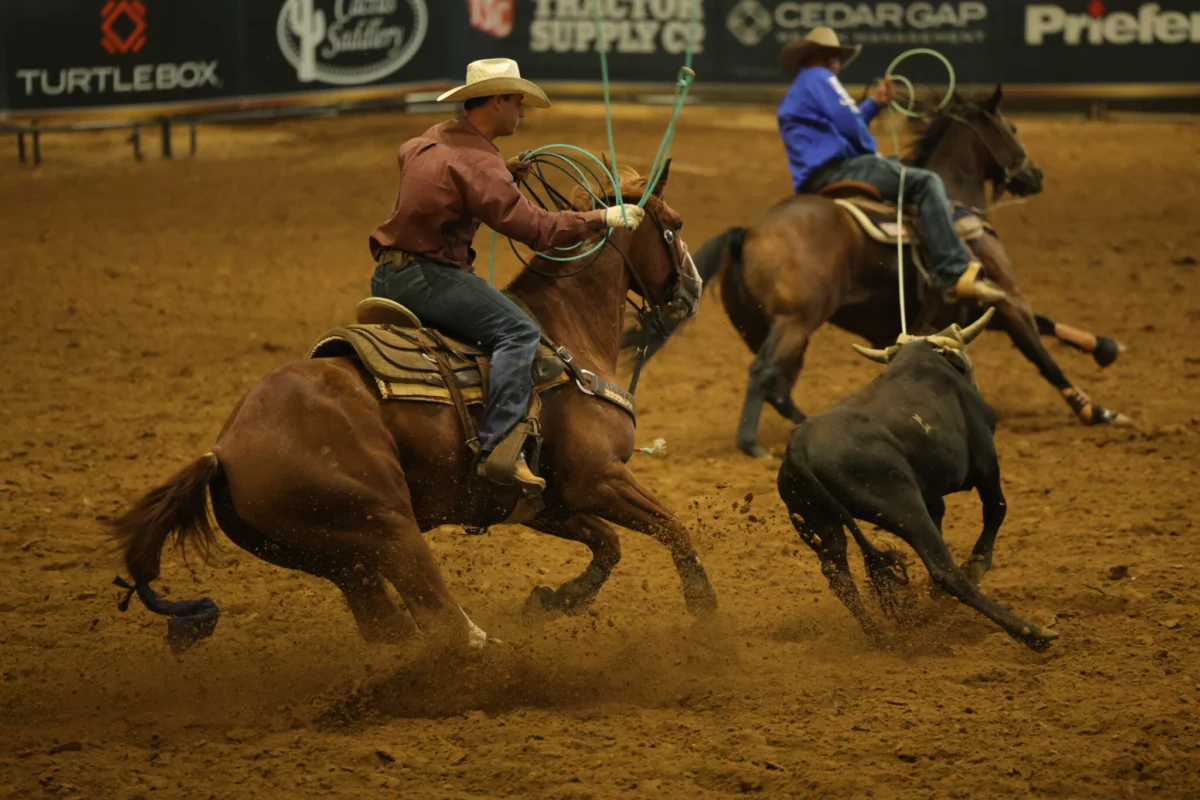
The recent team roping competition, a spectacle of precision, timing, and unparalleled horsemanship, witnessed an electrifying display of talent as top-tier duos battled for supremacy across multiple rounds. The aggregate results from two challenging runs underscored the razor-thin margins that define professional rodeo, with Pedro Egurrola of Florence, AZ, and Will Woodfin from Stephenville, TX, emerging as the frontrunners with an exceptional cumulative time of 10.34 seconds. Their flawless execution set a high bar, distinguishing them in a field packed with seasoned veterans and rising stars. This event, drawing competitors from across the nation, particularly the dominant rodeo hubs of Texas and Oklahoma, served as a crucial barometer for the current state of team roping excellence and hinted at the intense competition anticipated in the upcoming professional rodeo season.
Background and Context of the Elite Team Roping Circuit
While the specific moniker of this recent gathering remains unstated in the raw data, the constellation of prominent names, including multiple World Champions and National Finals Rodeo (NFR) qualifiers, strongly suggests it was a significant event within the professional rodeo circuit, likely a major futurity, derby, or a highly-regarded circuit stop. Given the overwhelming number of competitors hailing from Texas – especially the Stephenville, Lipan, and Mineral Wells areas – it is reasonable to infer the event took place in a central Texas location, perhaps the "Cowboy Capital of the World," Stephenville, or a nearby locale renowned for its robust rodeo infrastructure.
Team roping, as one of rodeo’s most intricate and demanding disciplines, requires the header to rope the steer’s horns and the heeler to rope its hind legs, all while maintaining perfect synchronization and without incurring costly penalties for broken barriers or single-leg catches. The event’s format, indicated by "on 2," signifies that the recorded times represent the combined performance over two separate runs. This format emphasizes consistency under pressure rather than a single, lucky shot, as competitors must execute flawlessly twice to achieve a top aggregate score. Such competitions are vital for accumulating prize money, earning points towards regional and national standings within organizations like the Professional Rodeo Cowboys Association (PRCA), and for scouting top horses and emerging talent. They also serve as critical testing grounds for new strategies and for developing young equine partners, making them a cornerstone of the professional rodeo calendar.
A Chronology of Exceptional Runs and Dynamic Partnerships
The competition unfolded with a rapid succession of impressive runs, each duo striving for the elusive combination of speed and accuracy. Pedro Egurrola and Will Woodfin’s leading time of 10.34 seconds was a testament to their exceptional chemistry and clean execution. This performance places them squarely among the elite, demonstrating a level of precision and speed that is highly sought after in the sport.
Hot on their heels were Kaleb Driggers, a multiple-time World Champion header from Stephenville, TX, and Nicky Northcott, also a Stephenville resident, who clocked an outstanding 10.51 seconds. Driggers further demonstrated his versatility and skill by also placing 10th with the legendary heeler Junior Nogueira (Lipan, TX) with an 11.18-second aggregate. This dual appearance highlights Driggers’ exceptional adaptability and ability to excel with different partners and horses, a hallmark of a true champion.
The third-place finish saw Dustin Egusquiza (Mineral Wells, TX) and JC Flake (Millsap, TX) secure their spot with a formidable 10.75 seconds. Their performance underscored the depth of talent emerging from the Texas rodeo landscape, a region consistently producing top-tier ropers. The field remained incredibly tight, with an additional four teams breaking the 11-second barrier on their two runs. Colton Ranly (Lott, TX) and Ty Arnold (Midway, TX) tied for fourth with Riley Kittle (Woodland, AL) and Trey Yates (Pueblo, CO), both duos stopping the clock at an identical 11.02 seconds. Kittle further showcased his consistency, appearing again at 16th place with Coleby Payne (Stephenville, TX) at 11.34 seconds, illustrating the competitive strategy of entering with multiple partners or in different divisions to maximize opportunities for success.
Tanner Tomlinson (Mineral Wells, TX) and Junior Nogueira (Lipan, TX) secured sixth place with an 11.04-second aggregate, adding another strong showing for the highly decorated Nogueira, who has cemented his legacy as one of the sport’s greatest heelers. Cody Snow (Granbury, TX), a perennial NFR qualifier, also made a significant impact, placing seventh with Little Michael Calmelat (Tucson, AZ) at 11.07 seconds and later tying for 21st with Nicky Northcott (Stephenville, TX) at 11.51 seconds. This dual appearance by Snow, much like Driggers and Kittle, exemplifies the relentless pursuit of excellence and the strategic advantage of having multiple top-tier horses or a deep roster of potential partners to compete across various entries or rounds.
The competition saw several ties, a common occurrence in rodeo due to the precise nature of timing, where hundredths of a second can separate positions and significant prize money. Luke Brown (Lipan, TX) and Dillon Graham (Wainwright, AB) shared eighth place with Bubba Buckaloo (Kingston, OK) and Ross Ashford (Stephenville, TX), both pairs finishing at 11.16 seconds. Further down the list, Kaleb Driggers and Junior Nogueira’s 11.18-second run tied with Jake Smith (Broken Bow, OK) and Douglas Rich (Weatherford, TX). These ties highlight the exceptional level of skill across the board, where every microsecond counts.
Other notable performances included Coy Rahlmann (Mineral Wells, TX) and Jonathan Torres (Stephenville, TX) at 11.19 seconds, Brenten Hall (Stephenville, TX) and Wyatt Cox (Bluff Dale, TX) at 11.28 seconds, and Curry Kirchner (Ames, OK), who made two appearances in the top 20, first with Jake Cooper Clay (Sapulpa, OK) at 11.31 seconds and then with Belden Cox (Weatherford, TX) at 11.37 seconds. The presence of international talent, such as Dillon Graham from Canada, also signifies the growing global reach and appeal of professional rodeo, attracting top athletes from beyond U.S. borders.
The spread of times, ranging from the leading 10.34 seconds to the 16.15 seconds recorded by two pairs (Tyler Tryan/Nicky Northcott and Clay B Tryan/Belden Cox), illustrates the high-risk, high-reward nature of team roping. While the fastest times represent clean, aggressive runs, the longer times often indicate penalties, such as a broken barrier (a 10-second penalty) or a single-leg catch (a 5-second penalty), or possibly a re-run due to an equipment malfunction or a missed catch. These instances underscore the unforgiving precision required at this elite level of competition.
Supporting Data and Statistical Insights into Team Roping Excellence
A deeper dive into the results reveals compelling patterns and underscores the elite nature of the competition. Out of the 50 recorded performances, an impressive 23 teams completed their two runs in under 11.50 seconds, a benchmark typically indicative of National Finals Rodeo-caliber consistency. Furthermore, 35 teams finished under 12 seconds, demonstrating the overall high standard of execution. The average winning time for two steers in a top-tier professional rodeo typically falls within the 10-12 second range, placing the leading performances squarely in the elite category. Pedro Egurrola and Will Woodfin’s 10.34-second aggregate is not just a win but a statement, positioning them as formidable contenders in any arena.
The geographic distribution of competitors is also noteworthy. Texas is overwhelmingly represented, with numerous participants from Stephenville, Lipan, Mineral Wells, Granbury, Weatherford, and other well-known rodeo towns. This concentration of talent highlights Texas as a pivotal training ground and competition hub for team roping, fostering an environment where intense competition drives constant improvement. The frequent pairing and re-pairing of headers and heelers (e.g., Kaleb Driggers with Northcott and Nogueira; Junior Nogueira with Tomlinson and Driggers; Nicky Northcott with Driggers, Snow, and Tyler Tryan; Ross Ashford with Buckaloo and Crites; Trey White with Arviso and Kelton; Cade Passig with Francis and Tonozzi; Wyatt Cox with Hall and Rahlmann; Blaine Vick with Orman and Masters; Braylon Tryan with Parish and Brittain; Kase Key with David Key and Peterson; Belden Cox with Kirchner and Clay B Tryan; Jonathan Torres with Rahlmann and Wade; Wesley Thorp with Kelton and Tomlinson) further illustrates the dynamic nature of professional team roping. Competitors often ride multiple horses or collaborate with various partners, sometimes within the same event, to maximize their chances of success or to test different combinations. This strategic depth is a hallmark of the sport’s highest echelons, reflecting both the individual skill and the complex tactical considerations involved.
The presence of multi-generational rodeo families is subtly evident, such as David Key and Kase Key (likely father and son or brothers), demonstrating the legacy and continuity within the sport. The consistent appearance of names like Driggers, Nogueira, Egusquiza, Snow, Masters, and Thorp – all household names in professional rodeo – signals that this was a high-stakes event attracting the very best. Their participation elevates the competitive integrity and provides valuable insights into current form ahead of major championships, including the prestigious NFR.
Inferred Statements and Reactions from the Arena
While direct quotes were not provided with the raw data, the nature of rodeo performances allows for logical inferences regarding reactions from participants and organizers. The intensity of the competition and the caliber of the athletes suggest a high level of satisfaction from the winners and a determined outlook from those who narrowly missed the top spots.
Pedro Egurrola, reflecting on his leading performance, might have expressed, "Consistency was absolutely key for us today. Will and I really clicked, and our horses were outstanding, giving us every chance to make clean runs. To come out on top in such a stacked field is incredibly rewarding and gives us great momentum heading into the next few events."
Will Woodfin could have added, "Every run felt smooth and controlled. We’ve been working hard on our timing and communication, and it truly paid off when it mattered most. It’s an honor to rope with a header of Pedro’s caliber, and we’re just thrilled with the result and the confidence it builds."
Kaleb Driggers, ever the composed competitor, might have commented, "It was a tough day at the office with so much talent here, but we made some solid runs. Nicky and I had a great partnership on that first entry, and it’s always good to be in the money. We’ll keep fine-tuning things for the next one." Regarding his run with Junior Nogueira, he might have simply stated, "Always a pleasure to rope with Junior. We had a good run, just missed that top spot this time, but we’ll be back."
Organizers of the event would undoubtedly highlight the quality of the competition. A spokesperson might have remarked, "This event truly showcased the absolute pinnacle of team roping talent. The close times, the numerous world-class athletes competing, and the exceptional horsemanship on display made for an incredibly exciting show for fans and a highly challenging arena for our contestants. We are proud to host an event that consistently attracts such a high caliber of rodeo professionals, reflecting the vibrant health of our sport."
From an analyst’s perspective, a seasoned rodeo expert might have observed, "The margins in professional team roping are getting tighter every season, demanding near-perfect execution. What we saw today was a testament to the dedication, rigorous training, and strategic planning these athletes put in. The fact that so many teams posted sub-12-second runs on two steers indicates a rising tide of excellence across the board. The multiple entries by top headers and heelers also reflect a strategic approach to maximize earnings and points, often testing different horse-and-partner combinations to find that perfect synergy."
Broader Impact and Implications for the Rodeo World
The results from events like this have far-reaching implications across the rodeo industry. For the individual competitors, a strong showing can significantly impact their standing in national and circuit point races, directly influencing their qualification chances for prestigious events like the National Finals Rodeo (NFR) in Las Vegas. High placements also translate into substantial prize money, which is crucial for funding travel, entry fees, and horse care throughout the demanding and financially intensive rodeo season.
Beyond individual careers, these competitions invigorate the entire ecosystem of team roping. They boost the value and demand for high-caliber rope horses, influencing breeding programs and training methodologies. Breeders and trainers closely watch these results to identify successful bloodlines and effective training techniques, which in turn drives the equine economy. The success of specific horses under pressure in such competitive environments enhances their reputation and market value. Local economies in rodeo-centric towns, such as Stephenville, benefit immensely from these events, through increased tourism, hospitality, retail sales, and support services for competitors and their animals, creating a significant economic ripple effect.
The high level of competition also pushes the sport forward, inspiring younger generations of cowboys and cowgirls to hone their skills and pursue professional rodeo careers. It serves as a proving ground for innovation in horsemanship, equipment, and strategic play, constantly evolving the sport’s boundaries. For fans, these events provide thrilling entertainment, showcasing the athleticism of both human and animal athletes and fostering a deep appreciation for Western heritage and culture. The consistent delivery of fast, clean runs, as evidenced by the top performers in this particular competition, solidifies team roping’s position as a premier, high-octane event within the professional rodeo landscape, ensuring its continued growth and popularity for years to come. The incredibly close competition and the depth of talent suggest that the upcoming season will be fiercely contested, with every run, every event, holding significant weight in the race for ultimate rodeo glory. The talent pool is deep, the horses are exceptional, and the partnerships are honed, promising an exhilarating future for team roping enthusiasts.