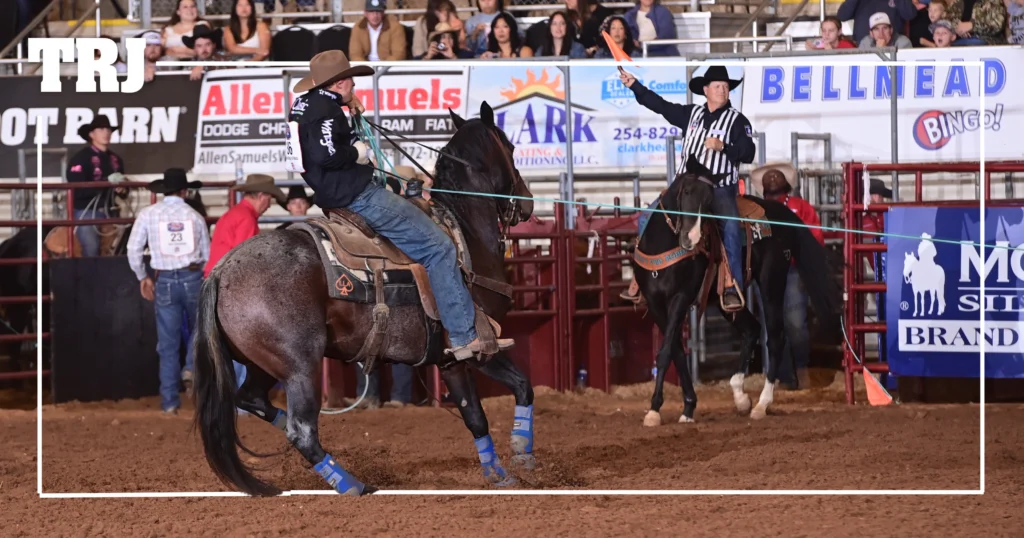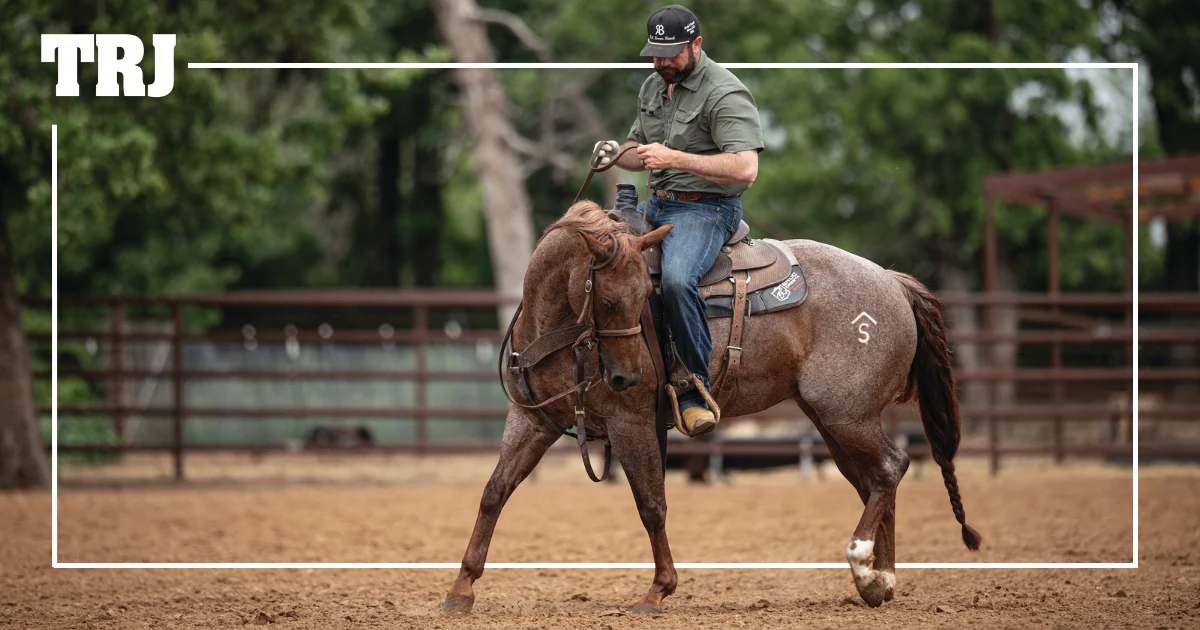
Paul Eaves, a two-time world champion heeler, champions a horsemanship philosophy that prioritizes the rider’s legs over their hands when addressing common challenges in heel horses, particularly the tendency to lean through a corner. This approach, deeply rooted in fundamental horsemanship principles, underscores a commitment to fostering a responsive and balanced equine partner, rather than relying on forceful or compensatory manual corrections. Eaves’ methodology emphasizes developing a horse that is "soft to the legs," allowing for subtle and effective communication that enhances performance and longevity in the demanding sport of team roping.
The Foundation of Leg-Driven Horsemanship
Eaves’ core belief is that a horse’s front end issues, such as leaning, are often symptoms of a deeper imbalance originating in the horse’s body and hindquarters. "I’m not real concerned with what a horse’s front end is doing," Eaves states. "If he’s leaning on me through the corner, I’d rather fix it with my legs than with my hands." This perspective challenges conventional wisdom held by some riders who might instinctively reach for the reins to correct a lean. Eaves instead focuses on what he feels "just underneath my legs, underneath my seat," seeking to ensure the horse’s body is aligned and responsive from the middle back. This emphasis on the horse’s core and hindquarters is a hallmark of classical horsemanship, where impulsion and control originate from the rear, pushing the horse into a soft, responsive contact with the rider’s hands, rather than being pulled by the reins.
For horses he inherits that were started by others, Eaves’ initial assessment revolves around their responsiveness to leg aids. The goal is simple yet profound: "Are they matched up, and are their angles to the cow the same?" This "matched up" state implies that the horse’s front and back ends are working in unison, allowing for fluid, efficient movement around the steer. If this connection is absent, Eaves believes it’s imperative to return to foundational training to establish it. This phase of re-schooling is critical, as it sets the stage for all subsequent performance, ensuring the horse understands and respects the rider’s leg cues as primary directives for lateral movement, impulsion, and balance.
Beyond the Reins: The Perils of Setting the Head
A prevalent issue Eaves observes in the team roping arena is the tendency for riders to manually manipulate a horse’s head and neck, often in an attempt to achieve a specific aesthetic or "look." While acknowledging the necessity of flexing a horse before a run or during warm-up to reinforce control, Eaves firmly distinguishes this from attempting to "set their head" during the actual run. "In the run, though, I’m not trying to get their nose tipped to the inside the perfect amount," he explains. He values a horse that feels "good in my hand," but recognizes that individual horses might naturally carry their head straighter or slightly to one side. Forcing a specific head position without proper body alignment can be counterproductive, leading to a horse that is visually pleasing but functionally unsound.
Eaves recounts experiences with horses whose noses were tipped inward during a turn, but whose ribs failed to follow, creating a sensation he describes as "terrible." Such a horse, despite appearing correctly framed from the front, is not truly "framed up to the cow," meaning its body is not aligned to efficiently track and work the steer. This misalignment can lead to a loss of balance, inefficiency, and ultimately, a less effective run. The implications extend beyond performance; horses consistently ridden with forced head positions without corresponding body engagement can develop physical discomfort or resistance, potentially shortening their competitive careers. The concept of framing a horse from "back to front" is paramount here, ensuring that the horse’s energy flows from its hindquarters through its back, into a soft, consistent contact with the bit, allowing the rider to guide rather than dictate.
Defining Success: An Uncomplicated Approach to Performance
Eaves’ philosophy for refining a seasoned heel horse, especially one with a history of being roped on by others, is characterized by its simplicity and focus on practical outcomes. His primary metrics are straightforward: "Are they easy to ride and see the feet on? Are they matched up to the cow? Can you get to those steers and maintain speed easily, or do you feel like you’ve got to accelerate, come off, accelerate again?" These questions cut to the chase of what makes a good heel horse: rideability, efficiency, and consistency.
He emphasizes allowing the horse to work in a manner that feels natural to it, provided it meets these core criteria. When a horse’s "back end’s following their front end" and it exhibits no leaning on the rider’s legs or hands, it signifies a horse that is "framed up from the back to the front," engaged and responsive. In such an ideal scenario, the horse is "hooked onto the cow," meaning it anticipates and reacts to the steer’s movements largely on its own, with minimal intervention from the rider. "The cow does nearly all the work to tell them what to do. So I’m just trying to stay out of their way," Eaves concludes. This passive role for the rider, once the horse is properly trained, is the ultimate goal—a seamless partnership where the horse performs its job instinctively and efficiently, guided by subtle cues rather than constant correction. This level of partnership is often seen in top-tier professional rodeo, where the best teams appear to operate telepathically, a testament to years of consistent training and mutual understanding.
The Application: Leg On Before Pull
When confronted with a horse that leans, Eaves’ strategy is one of measured experimentation and minimal pressure. He advocates for the use of leg aids as the first line of communication. "A lot of people don’t ride with their legs, so sometimes when you start using your legs on a horse, he starts respecting that pressure and matching up, and things get easier for him," Eaves observes. This technique leverages the horse’s natural inclination towards comfort; by making the "wrong" action (leaning) slightly uncomfortable through leg pressure, and the "right" action (straightening and balancing) the path of least resistance, horses often adapt quickly.
The effectiveness of this method stems from the horse’s biomechanics. When a horse leans, it shifts its weight, becoming unbalanced and inefficient. By applying leg pressure on the side it’s leaning, the rider encourages the horse to lift its body and re-engage its core, distributing its weight more evenly. This not only corrects the lean but also strengthens the horse’s musculature, making turns smoother and less taxing. Eaves notes that most horses respond positively and rapidly to this approach, as "it’s easier on them to make the turn that way. They’re not hollowed out or leaning anywhere." This not only improves performance but also contributes to the horse’s physical well-being and reduces the risk of strain or injury that can result from persistent imbalance.
Reinforcing the Lesson: Making the Wrong Choice Uncomfortable
While Eaves prefers minimal pressure, he acknowledges that some horses require a clearer message. If a horse fails to grasp the concept of responding to leg pressure, the training must escalate to ensure the message is understood. "If they’re not getting the idea, then I’ve got to get them off that pressure somehow—whether that means stopping, making it uncomfortable for them or whatever," Eaves explains. This could involve a firmer application of the leg, a temporary halt, or a slight discomfort that compels the horse to seek the release of pressure by moving correctly. However, Eaves emphasizes that this discomfort is always a means to an end, not an end in itself. The ultimate goal is for the horse to find the correct, balanced position, at which point the rider removes all pressure, providing immediate positive reinforcement.
Crucially, Eaves differentiates between a horse that is genuinely struggling to understand and one that is simply not performing perfectly but is still functional and responsive. "But they’re not going to get a whole lot of grief from me if they’re just not leaning on me anywhere and they’re hooked onto the cow. I’m going to stay out of their way." This nuanced approach highlights a critical aspect of advanced horsemanship: knowing when to intervene and when to trust the horse to do its job. It avoids micro-managing and fosters a confident, self-reliant equine partner, rather than one that constantly looks to the rider for every instruction.
The Training Ground: Slow Cattle and Varied Scenarios
To implement and refine this leg-first philosophy, Eaves relies on specific training tools and environments. "My donkey or a lead steer would probably be my two main tools," he states. Working with slow, predictable cattle or even a donkey allows the rider to focus intently on the horse’s body mechanics and responsiveness to leg cues without the added pressure and speed of a live, fast steer. This controlled environment is crucial for building muscle memory and understanding.
Sometimes, Eaves will introduce variations, such as heading the cattle briefly before returning to heeling, to keep the horse engaged and adaptable. This prevents the horse from becoming overly reliant on a single routine and encourages a more versatile and thinking equine athlete. The use of a donkey or a very slow steer reduces the variable of speed, allowing the rider to isolate and address specific issues like leaning, without the horse becoming flustered or resistant due to the pace. This systematic approach to training ensures that when the horse is eventually put on faster cattle, it has already internalized the correct responses to leg pressure, making the transition smoother and more effective.
Broader Implications and Industry Impact
Paul Eaves’ horsemanship philosophy represents a significant contribution to the ongoing evolution of team roping and equine sportsmanship. By advocating for a leg-first approach, Eaves champions a style of riding that promotes better horse welfare, reduces reliance on harsh methods, and ultimately leads to more consistent and higher-performing partnerships. This aligns with a growing trend in equestrian disciplines towards more humane and scientifically informed training practices that prioritize the horse’s physical and mental well-being.
His emphasis on foundational principles, such as balance, responsiveness, and communication from the hindquarters, resonates with classical horsemanship teachings that transcend specific disciplines. For aspiring ropers and seasoned professionals alike, Eaves’ insights offer a clear roadmap for developing horses that are not only effective in the arena but also happy, healthy, and willing partners. The long-term implications include increased horse longevity in competition, reduced instances of behavioral problems stemming from misunderstanding or discomfort, and a more sustainable approach to equine athletics. As the sport of team roping continues to grow in popularity, the widespread adoption of such enlightened horsemanship principles, championed by figures like Paul Eaves, will undoubtedly elevate the standard of training and competition for generations to come.
WATCH & LEARN
Put This Into Practice on Roping.com
Get step-by-step coaching from the best in the business with hundreds of team roping training videos.
WATCH ON ROPING.COM ›