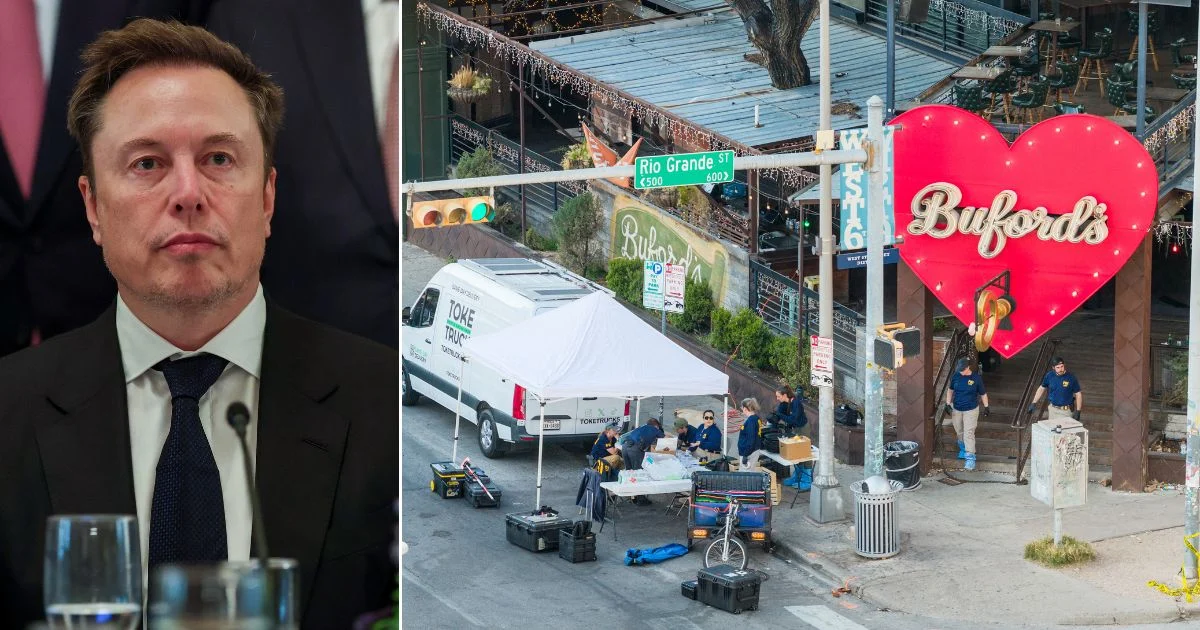
Elon Musk, the prominent CEO of Tesla and SpaceX, has revealed a significant and disturbing connection between a former employee of his Austin Gigafactory and the tragic mass shooting that occurred outside a popular Austin bar in March. According to Musk, the individual responsible for the fatal attack, which left three people dead and 15 wounded, had been terminated from Tesla months earlier following a violent assault on a female coworker at the factory. This revelation, disclosed during an interview with his biographer Walter Isaacson, adds a complex layer to the ongoing investigation and raises profound questions about workplace safety, early warning signs of violence, and broader societal implications.
Unveiling the Connection: From Gigafactory to Mass Shooting
The link between the Austin bar shooter and Tesla emerged from Musk’s recent conversation with Isaacson, where the entrepreneur detailed the events leading up to the shooter’s dismissal from the electric vehicle manufacturing plant. Musk stated that the individual, later identified as Ndiaga Diagne, was fired in December of the previous year (2025) after physically assaulting a female colleague. The alleged incident occurred when the coworker inadvertently stepped on Diagne’s prayer rug within the factory premises. Musk recounted, "He was fired because he assaulted a woman who stepped on his prayer rug in the factory. Okay — so, she wasn’t expecting anyone to be praying in the factory, and he was praying in the factory. She accidentally stepped on his prayer rug, and he assaulted her. He violently assaulted her." Just a few months later, Diagne allegedly carried out the deadly rampage in downtown Austin.
Musk’s statement culminated in a direct question concerning immigration policy: "Now, I think we shouldn’t let people like that into the country. Do you?" This remark immediately sparked further debate, intertwining the specific tragedy with broader discussions on immigration, national security, and the vetting processes for individuals entering and residing in the United States.
A Chronology of Escalation: The Events Unfold
The sequence of events leading from a workplace dispute to a mass casualty incident paints a stark picture of escalating aggression.
The Tesla Incident: Allegations of Workplace Assault
The earliest known precursor to the tragic bar shooting dates back to approximately December 4, 2025. On this date, Lilian Mendoza Brady, a 65-year-old employee at Tesla’s Austin Gigafactory, alleges she was violently assaulted by Ndiaga Diagne. According to a civil lawsuit filed by Brady, Diagne was praying in what she described as a common area or walking path during a company-sanctioned prayer break. When Brady inadvertently stepped on his prayer rug, Diagne allegedly grabbed her and threw her to the ground, resulting in injuries to her neck and back.
Brady promptly reported the incident to Tesla management and the Travis County Sheriff’s Office. Following an internal investigation, Tesla terminated Diagne’s employment. The sheriff’s office confirmed it investigated the assault; however, the case was later closed due to Diagne’s death. The civil suit against Tesla, which seeks over $1 million in damages, accuses the company of negligence, asserting that they allowed Diagne, who reportedly had "known aggressive tendencies," into shared employee spaces. Tesla, in response, has sought to resolve the dispute through arbitration, a common practice for employment-related grievances.
The Austin Tragedy: A City Rocked by Violence
Months after his dismissal from Tesla, on March 1, Diagne perpetrated a devastating mass shooting outside Buford’s Backyard Beer Garden, a popular establishment in downtown Austin. At approximately 1:30 AM, Diagne opened fire indiscriminately, plunging the bustling entertainment district into chaos. The attack resulted in the deaths of three individuals and left 15 others wounded, many with critical injuries.
Emergency services rapidly responded to the scene, and Austin police officers engaged Diagne, ultimately shooting and killing him, bringing an end to the rampage. The swift action of law enforcement likely prevented further casualties, but the incident left an indelible mark on the community, shattering its sense of safety and drawing national attention to the city.

The Shooter’s Profile and Potential Motivations
Ndiaga Diagne, 53, was identified as the perpetrator of the Austin bar shooting. His background and the findings from the subsequent investigation offer a glimpse into potential factors that may have contributed to his violent actions.
Ndiaga Diagne: A Naturalized Citizen’s Path
Diagne was a naturalized U.S. citizen, born in Senegal. He had obtained his citizenship in April 2013, following established immigration processes. Records indicate that he legally purchased the handgun and rifle used in the attack in 2017, years before the incident at the Tesla factory and the subsequent mass shooting. This detail highlights the legal accessibility of firearms for citizens without prior criminal records that would prohibit ownership, even for individuals who may later exhibit violent tendencies. Austin Police Chief Lisa Davis confirmed that her department had no prior contact with Diagne before the March 1 shooting, suggesting he had no documented history of violence or criminal activity that would have flagged him to local authorities.
Unraveling the Ideological Clues
Following the shooting, investigators began piecing together Diagne’s possible motivations. The FBI’s San Antonio Field Office, which assisted in the investigation, later stated that Diagne acted alone and had shown no signs of outside direction or being the subject of any prior FBI investigation. However, several items found on or near Diagne provided crucial insights into his ideological leanings.
At the time of the attack, Diagne was wearing a shirt featuring an Iranian flag design and a sweatshirt emblazoned with the phrase "Property of Allah." Investigators also discovered a Quran in the vehicle he used. Further examination of his personal effects and digital footprint revealed that he admired the late Iranian leader Ayatollah Ali Khamenei. These findings suggest a potential connection to extremist or radicalized views, although the precise extent to which these beliefs directly fueled his actions remains a subject of analysis by law enforcement and behavioral experts. The combination of religious conviction, perceived disrespect, and admiration for a foreign leader presents a complex psychological profile that defies simple categorization.
The Aftermath and Official Responses
The Austin shooting and the subsequent revelations have triggered multiple responses from law enforcement, corporate entities, and public figures.
Law Enforcement’s Investigation and Findings
The Austin Police Department, with assistance from the FBI, conducted a thorough investigation into the shooting. Their primary findings confirmed Diagne as the sole perpetrator and that he was killed by responding officers. The investigation also focused on understanding his motivations, leading to the discovery of the ideological symbols and literature. The FBI’s statement that Diagne acted alone and without external direction is critical, indicating that the incident was not part of a larger organized terror plot but rather the act of an individual. This conclusion, however, does not diminish the severity of the act or the impact of his apparent radicalization.
The Civil Suit Against Tesla: Corporate Accountability
The civil lawsuit filed by Lilian Mendoza Brady against Tesla places the tech giant under scrutiny regarding its workplace safety protocols and response to employee misconduct. The complaint argues that Tesla was negligent by allowing Diagne, despite his alleged "known aggressive tendencies," to remain in shared employee spaces until his termination. This raises important questions about how companies assess and manage employees who display aggression or violence, particularly when such incidents occur in a context that could be linked to broader ideological or personal grievances. The company’s move to resolve the dispute through arbitration suggests an effort to manage the legal and reputational risks associated with the incident. This type of legal challenge often prompts corporations to review and potentially strengthen their workplace violence prevention programs, employee training, and reporting mechanisms.
Elon Musk’s Public Statement: A Call for Scrutiny
Elon Musk’s direct statement, linking Diagne’s firing to the bar shooting and questioning immigration policies, has amplified the public discourse surrounding the incident. While providing a critical piece of information about the shooter’s past, Musk’s concluding rhetorical question, "Now, I think we shouldn’t let people like that into the country. Do you?" immediately injected the tragedy into the contentious debate on immigration.
This statement can be interpreted in several ways: as a genuine concern for public safety, a reflection of frustration with perceived systemic failures, or as a politically charged remark. Regardless of intent, it underscores the difficulty of balancing humanitarian immigration policies with national security concerns, particularly when individuals with documented histories of aggression or potential radicalization are involved. Such high-profile statements from influential figures often shape public opinion and push for re-evaluations of existing policies.
Broader Implications and Societal Discourse
The Austin bar shooting and its newly revealed connection to a prior workplace assault have far-reaching implications across several critical domains.
Workplace Safety and Employer Responsibility
The incident at the Tesla Gigafactory, followed by the mass shooting, highlights the critical importance of robust workplace safety protocols and threat assessment programs. Employers face the challenging task of identifying and mitigating potential risks posed by employees who exhibit aggressive behavior. Statistics from the Occupational Safety and Health Administration (OSHA) indicate that workplace violence is a significant concern, with millions of American workers experiencing it annually. While not all workplace conflicts escalate to mass violence, this case serves as a stark reminder of the potential consequences when early warning signs are missed or inadequately addressed. Companies are increasingly investing in behavioral threat assessment teams, employee assistance programs, and clear reporting mechanisms to create safer environments. The civil lawsuit against Tesla will likely influence how corporations nationwide review their policies on employee conduct, disciplinary actions, and the management of employees who may pose a risk.
The Intersection of Immigration, Religion, and Public Safety
Musk’s comments have inevitably brought the incident into the complex and often polarizing national conversation about immigration and its relationship to public safety and religious freedom. The fact that Diagne was a naturalized citizen born in Senegal and held specific religious and ideological views adds layers of sensitivity to the discussion. While it is crucial to avoid generalizations or stigmatization of entire immigrant or religious communities, the incident does raise questions about the effectiveness of existing vetting processes for naturalization, particularly concerning individuals who may harbor extremist ideologies or display violent tendencies.
The balance between upholding religious freedom and ensuring public safety is a delicate one. The alleged assault over a prayer rug underscores the potential for cultural or religious practices to become flashpoints when individuals react violently to perceived disrespect. This aspect demands careful consideration in a diverse society, emphasizing the need for cultural sensitivity training and conflict resolution skills in shared public and private spaces.
The Persistent Debate on Gun Control
Diagne’s legal acquisition of firearms in 2017, despite his later violent actions, reignites the perennial debate over gun control measures in the United States. Current federal law prohibits individuals convicted of certain violent misdemeanors or felonies from owning firearms. However, without a prior conviction or a clear legal disqualifier, individuals can legally purchase weapons. This case illustrates the challenge of preventing gun violence perpetrated by individuals who may not have a documented criminal history at the time of purchase but later engage in severe acts of aggression. Advocates for stricter gun control often point to such cases to argue for expanded background checks, red flag laws, and other measures designed to disarm individuals deemed a threat before they commit acts of violence. Opponents, meanwhile, emphasize Second Amendment rights and the importance of due process.
Community Healing and Prevention Efforts
For the city of Austin, the shooting was a traumatic event that left a lasting impact on victims, their families, and the wider community. The incident prompted an outpouring of grief and solidarity, but also a renewed focus on community safety and mental health support. Beyond law enforcement responses, there is a growing emphasis on community-based violence prevention programs, early intervention strategies for individuals exhibiting concerning behavior, and support services for those affected by trauma. Understanding the full trajectory of individuals like Diagne, from workplace conflict to mass violence, is crucial for developing more effective prevention strategies that address the root causes and escalating patterns of aggression.
In conclusion, the Austin bar shooting, now inextricably linked to a prior workplace assault at Tesla, serves as a grim case study with profound implications. It underscores the interconnectedness of various societal challenges—from workplace safety and corporate responsibility to immigration policy, religious freedom, gun control, and the complex task of identifying and preventing individual acts of extreme violence. As investigations continue and legal proceedings unfold, the revelations surrounding Ndiagne Diagne’s past will undoubtedly contribute to ongoing dialogues about how communities and institutions can better protect their members and address the multifaceted roots of violence in contemporary society.