

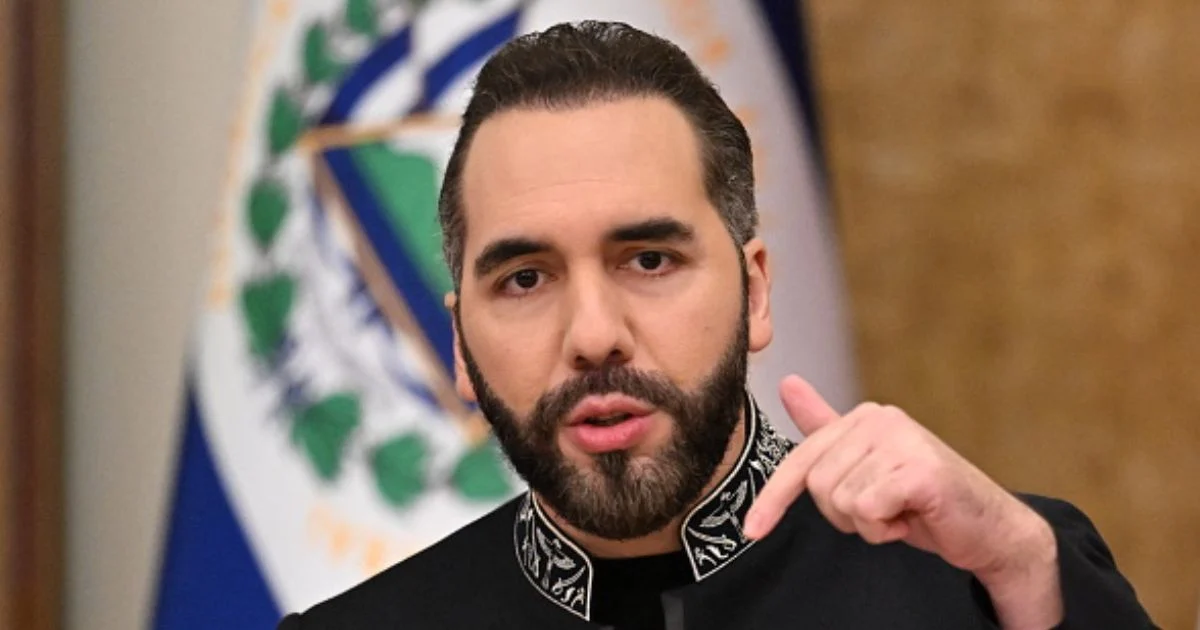
Salvadoran President Nayib Bukele announced on Wednesday, October 22, 2026, that his military had initiated a rescue operation in Haiti following the alleged kidnapping of four Salvadoran aviation technicians. The president issued a stern warning to the captors, threatening severe retaliatory attacks should the technicians not be released unharmed. This aggressive move underscores the deepening security crisis in Haiti and the proactive stance of El Salvador, a key contributor to the multinational security mission in the beleaguered Caribbean nation.
The four Salvadoran nationals, identified as non-combatants, were reportedly participating in an international mission focused on humanitarian aid and medical evacuations. Their abduction occurred while they were returning from a market where they had purchased food, a routine activity that highlights the pervasive danger civilians and international personnel face in Haiti. President Bukele, utilizing his preferred communication channel, X (formerly Twitter), described the men’s primary responsibility as conducting critical medical evacuations, emphasizing their non-aggressive role. In a direct and unequivocal message posted in Haitian Creole, Bukele stated, "We have already finished with the gangs in El Salvador, and we can finish with you too." This statement, translated into English, immediately signaled El Salvador’s resolute determination and drew parallels to Bukele’s highly publicized and often controversial anti-gang strategies within his own country.
A Bold Rescue Attempt Amidst Haitian Anarchy
The Salvadoran government’s swift response to the kidnapping of its citizens marks a significant escalation in the ongoing efforts to stabilize Haiti. President Bukele confirmed that a military operation was launched on Wednesday with the explicit objective of bringing the hostages home alive. He cautioned that the initial military action was merely a precursor, a "minor attack" compared to the potential further actions that would be unleashed if any harm came to the four captives. Offering a narrow window for de-escalation, Bukele urged the gangs to release all four men unharmed, suggesting that such an act would allow conditions to revert to their pre-kidnapping state, thereby averting a more forceful intervention. However, he did not disclose the specific gang responsible for the abduction, the size or composition of the rescue force, nor any immediate updates on their release status in his public statements.
El Salvador’s military presence in Haiti is not new; it is part of the broader Multinational Security Support Mission (MSSM), a United Nations-authorized initiative aimed at assisting Haitian authorities in their struggle against powerful armed gangs. According to the Salvadoran Defense Ministry, El Salvador’s deployment includes personnel and assets dedicated to medical evacuations, search and rescue operations, aerial patrols, and direct support for the beleaguered Haitian National Police (HNP). This mission underscores El Salvador’s commitment to regional stability and its willingness to export its security expertise, albeit in a context vastly different from its domestic environment.
The Genesis of International Intervention in Haiti
Haiti has been engulfed in a spiraling humanitarian and security crisis for several years, exacerbated by political instability, natural disasters, and the unchecked proliferation of heavily armed gangs. These criminal organizations have systematically expanded their control over vast swathes of the capital, Port-au-Prince, and surrounding regions, effectively challenging state authority and paralyzing essential services. The gangs, often operating in federations such as the G9 Family and Allies and the G-Pep, have engaged in widespread violence, including kidnapping for ransom, extortion, sexual violence, and targeted killings, leading to mass displacement and severe food insecurity.
The collapse of public order and the inability of the Haitian National Police, which is severely under-resourced and outnumbered, to contain the violence prompted repeated calls from Haitian authorities for international assistance. After months of deliberation and geopolitical wrangling, the U.N. Security Council finally authorized the Multinational Security Support Mission (MSSM) through Resolution 2793 (2025) in September 2025. This resolution provided the legal framework for an international force to help Haitian authorities confront armed gangs, with a ceiling of up to 5,550 personnel.

The deployment of the MSSM, however, faced numerous delays. Concerns over funding, legal liabilities, and the potential for mission creep initially deterred many nations from committing troops. Kenya eventually stepped forward to lead the mission, pledging approximately 1,000 police officers. Other nations, including Jamaica, Benin, Chad, and El Salvador, subsequently committed to contributing personnel or resources. Salvadoran lawmakers formally extended the country’s participation in the MSSM for an initial 12-month period, beginning October 2, 2026, signifying a long-term commitment to the mission. The Legislative Assembly confirmed that El Salvador’s military mission includes both aircraft and a mix of military and civilian personnel, highlighting a comprehensive approach to support the Haitian government.
Bukele’s "Mano Dura" Doctrine Exported
President Nayib Bukele’s swift and aggressive response to the kidnapping incident is deeply rooted in his domestic political success and public image. Since taking office, Bukele has implemented a highly controversial but undeniably effective "mano dura" (iron fist) policy against gangs in El Salvador, primarily through a state of exception declared in March 2022. This policy granted expanded powers to security forces, leading to the arrest of over 70,000 alleged gang members, a significant portion of the adult male population. While international human rights organizations have raised serious concerns about due process violations, arbitrary detentions, and extrajudicial killings, Bukele’s policies have drastically reduced El Salvador’s once-astronomical homicide rate, transforming the country from one of the most dangerous in the world to one of the safest in the Americas.
This domestic triumph has solidified Bukele’s populist appeal and provided him with a mandate to project his assertive security philosophy beyond El Salvador’s borders. His explicit threat to Haitian gangs – drawing a direct parallel to his success against Mara Salvatrucha (MS-13) and Barrio 18 – is not merely rhetoric. It reflects a strategic attempt to leverage his reputation as a "gang slayer" to pressure the captors and potentially deter future aggressions against Salvadoran personnel. The message is clear: El Salvador, under Bukele, will not tolerate threats to its citizens, regardless of the operational environment. This approach, while effective at home, introduces a new dynamic into the complex landscape of international peacekeeping and intervention, potentially setting a precedent for other contributing nations.
Statements and Reactions from Related Parties
While specific official statements regarding the ongoing rescue operation are limited to President Bukele’s pronouncements, the incident undoubtedly triggered a flurry of internal discussions and reactions among various stakeholders.
The Salvadoran Defense Ministry would be actively involved in coordinating the military response, providing intelligence, logistical support, and strategic guidance for the deployed forces. Their previous statements on El Salvador’s role in the MSSM emphasize humanitarian aid and support for Haitian police, suggesting that this direct rescue operation represents a tactical shift driven by the immediate threat to Salvadoran personnel.
Haitian authorities, including the interim government and the National Police, are likely in a delicate position. While they have consistently called for international support, a direct military operation by a contributing nation on Haitian soil, specifically targeting gangs, could raise sovereignty concerns. However, given their dire straits and inability to effectively combat the gangs, they would likely tacitly approve or welcome any action that degrades gang capabilities and secures the release of hostages, especially those involved in supporting their nation. Publicly, their reaction might be measured, acknowledging the support while reiterating the need for a comprehensive, Haitian-led solution.
The United Nations, which authorized the MSSM, would be closely monitoring the situation. The incident highlights the extreme dangers faced by mission personnel and underscores the necessity for robust security measures and intelligence gathering. The UN might issue a statement condemning the kidnapping, reiterating its support for the MSSM’s mandate to restore security, and urging all parties to respect international humanitarian law. This incident could also prompt a review of security protocols for all personnel operating under the MSSM umbrella.

Humanitarian organizations operating in Haiti, already grappling with an acute crisis, would likely express profound concern for the safety of the kidnapped technicians and the broader implications of increased military engagement. Their primary focus would remain on the protection of civilians and ensuring humanitarian access, which can be further jeopardized by escalating conflict.
Broader Impact and Implications
The kidnapping of the Salvadoran aviation technicians and President Bukele’s forceful response carry significant implications for the future of the MSSM, regional security, and the dynamics of international intervention in fragile states.
For the Multinational Security Support Mission: This incident immediately raises the stakes for the MSSM. It demonstrates the extreme risks involved and the formidable challenge posed by Haiti’s entrenched criminal networks. The MSSM will likely need to re-evaluate its intelligence capabilities, rules of engagement, and force protection measures. A successful, decisive rescue operation could boost the mission’s morale and credibility, signaling to gangs that international forces are not easily intimidated. Conversely, a prolonged or unsuccessful operation could expose vulnerabilities and embolden criminal elements. The incident also puts pressure on other contributing nations to ensure their personnel are adequately protected and that their governments are prepared for similar assertive responses.
For Haiti’s Security and Stability: While a targeted rescue operation might secure the release of hostages, it does not fundamentally alter the systemic issues fueling Haiti’s gang crisis. The underlying causes – poverty, political vacuum, weak institutions, and corruption – remain unaddressed. However, if Bukele’s "mano dura" approach proves effective in Haiti, even on a limited scale, it could provide a template or at least a psychological advantage for the MSSM. The direct confrontation, if successful, might disrupt gang operations in the immediate vicinity and potentially create space for the HNP to regain some control.
For El Salvador’s Foreign Policy and Bukele’s Image: This operation allows President Bukele to project his strongman image onto the international stage, reinforcing his narrative of being a decisive leader capable of tackling intractable security problems. It demonstrates El Salvador’s commitment to protecting its citizens abroad and its willingness to take unilateral action when necessary. This could enhance El Salvador’s standing as a regional security actor, but it also exposes Salvadoran forces to significant risks in a highly volatile environment. The operation serves as a testament to Bukele’s unconventional and often confrontational foreign policy style, prioritizing direct action over prolonged diplomatic negotiations when national interests are at stake.
For the Future of International Interventions: The Salvadoran intervention could set a precedent for how contributing nations respond to direct threats against their personnel in complex international missions. It highlights the tension between the collective mandate of a multinational force and the individual sovereign right and responsibility of a nation to protect its citizens. This incident might lead to more robust national contingency plans within international missions, ensuring that nations are prepared for rapid, independent responses when their personnel are targeted. It also underscores the evolving nature of peacekeeping, where traditional neutrality often gives way to assertive engagement against non-state actors.
The unfolding situation in Haiti remains highly fluid. The success or failure of El Salvador’s rescue operation will not only determine the fate of the four aviation technicians but will also cast a long shadow over the future trajectory of the Multinational Security Support Mission and the broader international efforts to bring stability to a nation teetering on the brink. The world watches closely as President Bukele’s iron fist extends its reach into the chaotic heart of Haiti.








