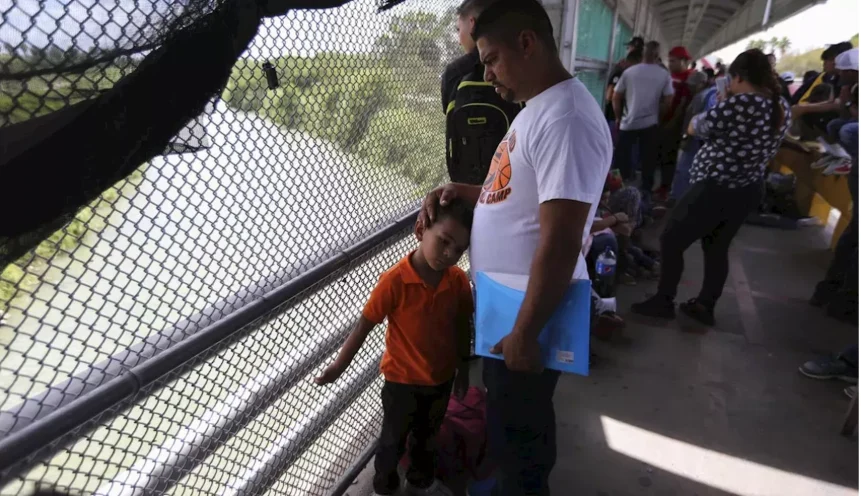
A deeply disturbing pattern of exploitation has emerged at the U.S. southern border, where transnational criminal organizations, primarily cartels, are reportedly orchestrating the abduction of children from their families and subsequently leveraging the American asylum system to place these vulnerable minors into forced labor or sex trafficking rings across the United States. Jarrod Sadulski, a recognized expert in border security and criminal justice, is set to present his alarming findings before a Republican Senate roundtable on Tuesday, highlighting a systemic vulnerability that allows these illicit operations to flourish under the guise of humanitarian asylum. His investigation underscores the ruthless efficiency with which cartels have integrated child exploitation into their broader smuggling economy, preying on the desperation of migrants and the complexities of U.S. immigration policy.
The Unfolding Crisis: From Border Crossing to Exploitation
Sadulski’s recent border trip, which included visits to critical facilities like a shelter in McAllen, Texas, has brought to light harrowing accounts that paint a grim picture of the journey for many migrants, particularly children. According to his findings, children are being stolen from families south of the border, later to be presented as "unaccompanied alien children" (UACs) to U.S. authorities. Once processed and placed into the care of the U.S. government, these children are then dispatched to communities nationwide, where a predetermined, often sinister, fate awaits them. While instances of sex trafficking are tragically present, Sadulski emphasizes that forced labor is the more prevalent outcome, with cartels effectively using the sponsorship system to place children with operatives or complicit individuals who then exploit them for profit.
The mechanism for this exploitation is chillingly sophisticated. Sadulski detailed how cartels embed their operatives within migrant groups or position them at shelters along the migration routes. These operatives are specifically tasked with identifying and targeting vulnerable migrants who can be robbed, kidnapped, or whose children can be seized for various illicit purposes, including debt bondage or direct exploitation. "The cartels are exploiting this by having children placed with sponsors who exploit the children for profit," Sadulski stated, directly implicating the criminal organizations in a deliberate scheme to abuse the U.S. system designed to protect children.
A Glimpse into Cartel Brutality: The McAllen Anecdote
During his visit to the McAllen shelter, Sadulski encountered a profoundly distressing situation that vividly illustrates the cartels’ modus operandi. A woman, clutching her sole remaining child, adamantly refused to release the minor into the care of shelter staff. When pressed for an explanation, her story unveiled the brutal reality faced by many attempting to reach the U.S. border. She recounted that en route to the southwest border, just south of Reynosa, Mexico, she had been accosted and robbed by the notorious Sinaloa cartel. Beyond stripping her of all her belongings, the cartel operatives also seized her other two children because she lacked the money to pay their exorbitant bribes. This harrowing account serves as a stark reminder of the immense power cartels wield over migrants, turning human desperation into a commodity and children into collateral or instruments of illicit gain.
Sadulski underscored the cartels’ pivotal role in the human smuggling economy and their utterly ruthless approach to those they facilitate—or prey upon—during the journey north. The strategic placement of operatives ensures a continuous flow of vulnerable individuals into their exploitative networks, demonstrating a highly organized criminal enterprise rather than opportunistic crime.
Background Context: The UAC Framework and Surging Numbers
To understand the vulnerabilities Sadulski identifies, it is crucial to examine the U.S. framework for Unaccompanied Alien Children (UACs). Under U.S. law, specifically the William Wilberforce Trafficking Victims Protection Reauthorization Act of 2008 (TVPRA) and the Flores Settlement Agreement, children apprehended at the border without a parent or legal guardian from a non-contiguous country (or Mexico, if they cannot be safely returned) are designated as UACs. These children are then transferred from Customs and Border Protection (CBP) custody to the Office of Refugee Resettlement (ORR) within the Department of Health and Human Services (HHS). ORR is responsible for sheltering these children and ultimately releasing them to a vetted sponsor, typically a parent, close relative, or another adult, while their immigration cases proceed.
This system, designed with humanitarian intent to protect children, has become increasingly strained by unprecedented surges in UAC arrivals. In recent years, the U.S. border has witnessed record numbers of UACs, peaking with over 147,000 encounters in fiscal year 2021 and remaining consistently high, with tens of thousands each year. The sheer volume places immense pressure on ORR’s capacity to shelter, process, and thoroughly vet sponsors. This pressure, combined with directives to expedite releases to prevent overcrowding in shelters, inadvertently creates loopholes that cartels and other exploiters can exploit. The system’s emphasis on family reunification, while laudable, can be manipulated when "sponsors" are, in fact, cartel operatives or individuals complicit in exploitation schemes.

The Modus Operandi of Transnational Criminal Organizations (TCOs)
Cartels, such as the Sinaloa cartel mentioned by Sadulski, are sophisticated transnational criminal organizations that have diversified their illicit operations far beyond drug trafficking. Human smuggling has become a highly lucrative enterprise, generating billions of dollars annually. Their involvement in the entire migration pipeline, from recruitment in origin countries to facilitating border crossings and now, allegedly, exploiting the UAC sponsorship system, demonstrates a terrifying level of control and strategic planning.
Their methods involve:
- Debt Bondage: Migrants, including children, incur massive debts to cartels for passage. If unable to pay, they or their family members become subject to forced labor or other forms of exploitation to "work off" the debt.
- Targeted Abduction: As seen in the McAllen anecdote, children are directly stolen or extorted from families who cannot pay bribes, becoming assets for the cartel to place into exploitative situations.
- Infiltration of Migrant Groups and Shelters: Placing operatives within the migrant flow allows cartels to identify vulnerable individuals, gather intelligence, and even facilitate the creation of false family claims for UACs.
- Exploitation of Sponsorship System: By having operatives or complicit individuals pose as sponsors, cartels can gain custody of UACs from ORR, then subject them to forced labor in agriculture, construction, factories, or even sex trafficking.
The Department of Labor has documented a significant increase in child labor violations across the U.S., with a particularly alarming rise in hazardous occupations. While not all instances are directly linked to UACs, experts and government officials have expressed concerns that the influx of vulnerable migrant children is contributing to this trend, as many are coerced into dangerous jobs to support their families or repay debts.
Official Responses and Challenges
The U.S. government faces an immense challenge in addressing this complex issue. Multiple agencies are involved, each with distinct mandates:
- Department of Homeland Security (DHS): Including CBP and ICE, responsible for border enforcement, initial apprehension, and identifying potential trafficking victims.
- Department of Health and Human Services (HHS/ORR): Responsible for the care and placement of UACs, including sponsor vetting and post-release services.
- Department of Justice (DOJ) and Department of Labor (DOL): Involved in prosecuting human trafficking and child labor violations.
HHS has acknowledged challenges in sponsor vetting, particularly given the rapid increase in UAC arrivals and the need to move children out of costly shelter care. While ORR states it conducts background checks, fingerprinting, and home visits for sponsors, critics argue that these measures are insufficient or inconsistently applied, especially under pressure. Advocacy groups consistently highlight the need for more robust safeguards to prevent children from falling into the hands of traffickers and exploiters.
The political landscape further complicates the response. The UAC crisis and border policies are highly politicized. Republican lawmakers, like those hosting Sadulski’s roundtable, often emphasize border security and the criminal aspects of migration, while Democrats and humanitarian organizations typically stress the need for compassionate care and robust protections for children. Finding bipartisan consensus on solutions that effectively address both the humanitarian crisis and national security concerns remains an uphill battle.
Broader Humanitarian and Security Implications
The findings presented by Jarrod Sadulski carry profound implications across several fronts:
- Humanitarian Catastrophe: At its core, this is a profound humanitarian crisis. Children, already traumatized by their journey and often fleeing violence or poverty, are being subjected to further exploitation. The long-term psychological and physical damage to these children is incalculable, perpetuating cycles of trauma and vulnerability. The very system designed to protect them is being weaponized against them.
- National Security and Border Integrity: The cartels’ ability to systematically infiltrate U.S. processes and exploit vulnerable populations represents a direct challenge to national security and border integrity. It signifies a loss of control over who enters the country and what happens to them post-entry, allowing dangerous criminal enterprises to operate with impunity within U.S. communities.
- Erosion of Public Trust: Revelations of children being trafficked or forced into labor after being released by government agencies can erode public trust in government’s ability to manage its borders and protect the most vulnerable.
- Policy Imperatives: The crisis demands a multi-faceted policy response. This includes strengthening sponsor vetting processes, increasing resources for ORR and other relevant agencies, enhancing intelligence sharing between law enforcement agencies (both domestic and international) to target cartel operations, and implementing comprehensive post-release monitoring for UACs. There is also a critical need to address the root causes of migration in Central and South America to reduce the overall flow of vulnerable individuals.
- International Relations: The issue has implications for diplomatic relations with countries of origin and transit, necessitating greater cooperation on anti-trafficking efforts and information sharing to dismantle these transnational criminal networks.
The testimony expected from Jarrod Sadulski before the Senate roundtable is not merely an academic presentation; it is a urgent call to action. It highlights the urgent need for a comprehensive, bipartisan strategy that acknowledges the complex interplay of humanitarian needs, border security, and the insidious reach of transnational criminal organizations. Failure to address this exploitation epidemic will not only perpetuate untold suffering among children but will also continue to undermine the integrity of the U.S. immigration system and national security. The ethical imperative to protect children, coupled with the strategic necessity to counter organized crime, demands an immediate and robust response from all levels of government and society.