

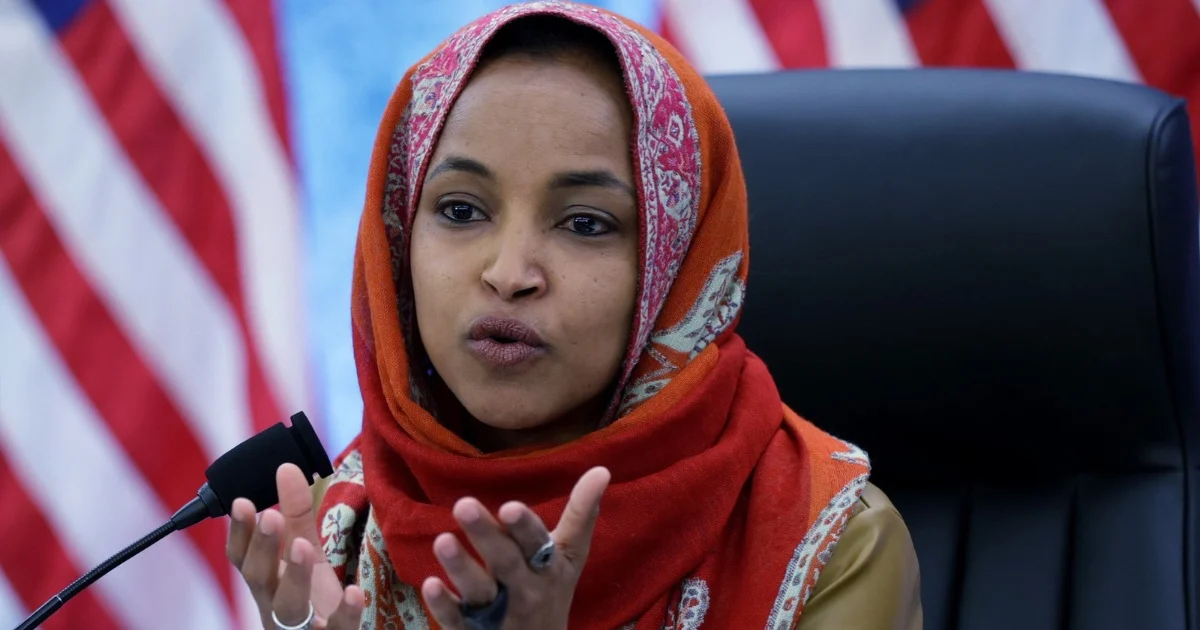
Representative Ilhan Omar (D-MN) finds herself at the center of a deepening political and legal maelstrom, grappling with twin controversies that threaten to overshadow her congressional tenure. The recent Department of Homeland Security (DHS) raid on her Washington, D.C., residence on October 12, 2026, in connection with reported allegations of immigration fraud, has been swiftly compounded by the resurfacing of a January 2024 social media post from a prominent Somaliland politician. This post alleges that Omar, a member of the House Foreign Affairs Committee at the time, divulged sensitive information to Somali leaders in December 2022, potentially influencing regional conflicts. The convergence of these serious accusations has intensified scrutiny on the Minnesota congresswoman, raising questions about her conduct, loyalties, and the broader implications for U.S. foreign policy in the volatile Horn of Africa.
The Resurfaced Somaliland Allegations: A Deep Dive into Diplomatic Intrigue
The genesis of the "leak" allegations traces back to a January 29, 2024, post by Ali Hassan Mohamed on the social media platform X (formerly Twitter). Mohamed, a former official in the Republic of Somaliland, a self-declared independent state in northwestern Somalia, claimed that Omar "leaked information" to "Somali leaders" during her December 2022 visit to Garowe, the capital of Somalia’s Puntland state. According to Mohamed, the purportedly leaked information pertained to a confidential meeting between the President of Somaliland and the U.S. Congress Foreign Affairs Committee, a body on which Omar then served. Mohamed’s post further asserted that Omar was "very persistent and urged the Somalian leaders to take proactive actions against Somaliland as soon as possible," linking these alleged actions to the outbreak of the Las-anod conflict a month later.
Ali Hassan Mohamed’s public statements carry a specific geopolitical context. Somaliland, while having its own government, currency, and military, remains unrecognized internationally as a sovereign state, a status it has sought since declaring independence from Somalia in 1991. The federal government of Somalia, based in Mogadishu, views Somaliland as an integral part of its territory. Mohamed’s position as a Somaliland official inherently suggests a vested interest in promoting his region’s autonomy and potentially discrediting figures perceived as aligned with the federal government of Somalia, such as Representative Omar. His allegations, while lacking independent corroboration of the "leak" itself, have resonated within certain political circles and online communities, particularly those critical of Omar or supportive of Somaliland’s sovereignty. The timing of the post’s resurgence, coinciding with the DHS raid, has undoubtedly amplified its visibility and impact.
Context: The Las-anod Conflict and Regional Tensions
Central to Mohamed’s allegations is the claim that Omar’s actions directly preceded and potentially fueled the Las-anod conflict. The city of Las-anod, located in the Sool region, is strategically significant and has long been a flashpoint between Somaliland and Puntland, which also claims the territory. In late 2022 and early 2023, tensions escalated dramatically in Las-anod, culminating in widespread protests against Somaliland administration and subsequent clashes between Somaliland forces and local militias aligned with clan elders who sought to join Somalia. These clashes, which began in late December 2022 and intensified in January 2023, resulted in significant casualties, displacement, and a humanitarian crisis.
The conflict underscored the fragility of regional peace and the complex clan dynamics intertwined with the broader Somaliland-Somalia dispute. Mohamed’s insinuation is that Omar, by allegedly leaking details of a U.S. Congressional meeting and encouraging "proactive actions," contributed to the environment that led to this deadly conflict. For a U.S. Congress member, particularly one serving on the Foreign Affairs Committee, to be accused of interfering in such a sensitive and violent regional dispute is an exceptionally grave charge, implying a breach of diplomatic protocols and potentially national security. While the direct causal link between any alleged leak and the immediate outbreak of violence remains unproven and highly speculative, the chronological proximity highlighted by Mohamed lends a narrative weight that cannot be easily dismissed without thorough investigation.
Representative Omar’s Engagements with Somalia: Diplomacy and Diaspora Politics
Several established facts lend circumstantial context to Mohamed’s claims, without proving the alleged leak. Representative Omar did indeed visit Somalia in December 2022, as reported by outlets such as Voice of America. During her trip, she engaged in high-level meetings with Somali President Hassan Sheikh Mohamud, Prime Minister Hamza Abdi Barre, and other key cabinet members and parliamentarians. Such visits by U.S. lawmakers, especially those with strong diaspora ties, are not uncommon and are often aimed at strengthening bilateral relations, assessing humanitarian needs, or engaging with democratic processes. However, the specific content of her private discussions during these meetings and whether they touched upon the sensitive U.S.-Somaliland engagements remains undisclosed.

Further intensifying the debate surrounding Omar’s loyalties are her past public statements. In a January 2024 speech delivered in Minneapolis to a Somali-American audience, Representative Omar, speaking in Somali, made remarks that sparked considerable controversy. A translated excerpt of her speech stated: "We should have this confidence in ourselves as Somalis. We live in this country. We are taxpayers in this country. This country is one where one of your daughters sits in Congress. While I am in Congress, no one will take Somalia’s sea. The United States will not back others to rob us."
These comments were widely interpreted by critics as prioritizing the interests of Somalia over those of the United States, or at least suggesting a dual loyalty that is problematic for a U.S. elected official. While supporters argued that Omar was simply expressing solidarity with her heritage community and advocating for a nation with which the U.S. has diplomatic ties, the specific reference to "Somalia’s sea" and the assertion that "no one will take Somalia’s sea" resonated particularly strongly in the context of a maritime dispute between Somalia and Ethiopia over access to the Red Sea, a dispute that was escalating around the time of her speech. The broader implication of a U.S. congresswoman vowing to use her position to prevent the U.S. from backing a foreign power against Somalia, especially when such a scenario might be aligned with U.S. strategic interests, raises serious questions about the ethical boundaries of diaspora representation in federal office.
The Department of Homeland Security Raid and Immigration Fraud Allegations
Adding another layer of severe scrutiny, the DHS raid on Representative Omar’s Washington, D.C., home on October 12, 2026, has thrust her into an investigation related to reported allegations of immigration fraud. While specific details of the allegations remain under wraps due to the ongoing nature of federal investigations, immigration fraud can encompass a wide range of offenses, including marriage fraud, visa fraud, fraudulent asylum claims, or making false statements on immigration documents. Such investigations are typically initiated based on credible leads and often involve extensive evidence gathering before a search warrant is executed. A raid on a sitting member of Congress’s residence signifies a serious escalation in any federal inquiry, indicating that investigators believe they have probable cause to seize evidence related to criminal activity.
Federal law enforcement agencies, including DHS components like Immigration and Customs Enforcement (ICE) or Homeland Security Investigations (HSI), are tasked with enforcing immigration laws. Investigations into public figures, especially those in Congress, are typically handled with extreme caution and often involve coordination with the Department of Justice (DOJ). The process following such a raid could involve further interviews, grand jury proceedings, and, if sufficient evidence is found, potential indictment. For a member of Congress, even the existence of such an investigation can have profound political repercussions, irrespective of the eventual legal outcome. The specter of federal charges related to personal conduct and immigration status presents a distinct and immediate challenge to Omar’s political viability and public trust.
U.S. Foreign Policy and the Horn of Africa: A Complex Tapestry
The allegations against Representative Omar unfold against the backdrop of a complex and strategically vital region: the Horn of Africa. U.S. foreign policy in Somalia has historically focused on counter-terrorism efforts against al-Shabaab, humanitarian aid, and supporting the fragile federal government’s efforts toward stability and state-building. The U.S. maintains a military presence in the region and provides significant financial and logistical support to Somali security forces.
Somaliland presents a unique diplomatic challenge. Despite its effective governance and relative stability compared to Somalia, the U.S. officially adheres to the African Union’s stance of recognizing the territorial integrity of Somalia, thus not formally acknowledging Somaliland’s independence. This delicate balance means that U.S. engagement with Somaliland is typically conducted through non-official channels or via diplomatic missions to Somalia, while carefully avoiding actions that could be interpreted as de facto recognition. Any alleged interference by a U.S. lawmaker that disrupts this carefully managed diplomatic posture could have significant ramifications for U.S. foreign policy objectives in the region, potentially alienating allies or emboldening adversaries. The Somali diaspora in the United States, particularly in Minnesota, plays a significant role in political discourse and advocacy regarding their homeland, adding another layer of complexity to the region’s relationship with American politics.
Official Responses and the Absence Thereof
In the wake of such serious allegations, official statements are often carefully calibrated or conspicuously absent. As is standard practice in ongoing federal investigations, the Department of Homeland Security and the Department of Justice have maintained a policy of "no comment" regarding the raid on Representative Omar’s home and the specific nature of the immigration fraud allegations. This silence, while customary, often fuels public speculation and leaves a vacuum for interpretation.

Representative Omar’s office has not publicly addressed the specifics of the DHS raid, nor has it provided a detailed response to Ali Hassan Mohamed’s resurfaced allegations of leaking information. Typically, congressional offices facing such scrutiny would issue statements vehemently denying wrongdoing, criticizing the investigation as politically motivated, or asserting cooperation with authorities while maintaining innocence. The absence of a robust public defense from Omar’s team on these specific charges has been noted by observers.
The U.S. State Department, consistent with its policy, has refrained from commenting on internal investigations involving U.S. lawmakers or on specific claims made by foreign politicians regarding interactions with Congressional members, particularly when those claims touch upon sensitive diplomatic matters. Similarly, the federal government of Somalia and the authorities in Somaliland have not issued official statements directly corroborating or refuting Mohamed’s claims, highlighting the cautious approach typically taken in international diplomacy when dealing with internal matters of a sovereign state or allegations against its elected officials.
Broader Political and Legal Ramifications
The convergence of these two distinct yet equally severe controversies presents a formidable challenge to Representative Ilhan Omar’s political career and carries significant legal and diplomatic implications.
Legal Ramifications:
If the immigration fraud allegations lead to federal charges and conviction, Omar could face imprisonment, fines, and the loss of her congressional seat. Such cases are often lengthy and resource-intensive, placing immense personal and financial strain on the accused. For the "leak" allegations, if evidence emerges that Omar divulged classified or sensitive information from a Congressional committee to a foreign power with intent to harm U.S. interests or aid a foreign entity, the legal ramifications could be even more severe, potentially leading to charges of espionage or treason, although such charges are exceedingly rare and require a very high burden of proof. Even without criminal charges, a Congressional ethics investigation could result in censure, removal from committees, or expulsion from Congress.
Political Ramifications:
Politically, the timing and nature of these allegations are devastating. For a congresswoman who has already faced numerous controversies and fierce criticism from political opponents, these new developments will undoubtedly be weaponized in future elections. The DHS raid, a tangible display of federal investigation, creates an immediate public perception of culpability, regardless of legal outcome. The "leak" allegations, tapping into deeply ingrained concerns about national loyalty and foreign interference, could erode trust among voters, including those within her own party. Her standing within the Democratic Party, which has previously defended her against various criticisms, could be weakened, making it harder for her to secure leadership positions or advance legislative priorities. Opponents will likely call for her resignation or expulsion, and her re-election prospects in Minnesota’s 5th congressional district could become significantly more challenging.
Diplomatic Implications:
The allegations also have broader diplomatic ramifications. If a U.S. lawmaker is perceived as actively working against U.S. foreign policy objectives or fostering regional instability through illicit means, it could strain diplomatic relations with affected countries. For Somaliland, it could reinforce their perception of bias within the U.S. government against their independence aspirations. For Somalia, it could complicate U.S. efforts to foster stability and counter terrorism. Furthermore, it could set a dangerous precedent for the conduct of diaspora politicians, prompting calls for stricter ethical guidelines regarding their engagement with their countries of origin.
Conclusion
Representative Ilhan Omar stands at a critical juncture in her political life, facing a formidable array of challenges. The Department of Homeland Security’s investigation into immigration fraud allegations, underscored by the raid on her home, represents a direct legal threat. Simultaneously, the resurfaced claims by a Somaliland politician regarding a purported information leak to Somali leaders not only cast a shadow over her congressional ethics but also inject her into the heart of a volatile geopolitical dispute. Both controversies, while distinct, converge to paint a picture of intense scrutiny and potential vulnerability. As federal investigators continue their work and political discourse surrounding these allegations intensifies, the coming months will be crucial in determining the legal and political fate of one of the most prominent and controversial figures in contemporary American politics. The outcomes will undoubtedly resonate far beyond her district, influencing debates on congressional accountability, the role of diaspora politicians, and the delicate balance of U.S. foreign policy.








