Veteran pollster and political commentator Frank Luntz has issued a stark warning to CNN, suggesting that current polling practices might be creating a deceptive sense of security for Democrats regarding the upcoming 2026 midterm elections. Luntz cautioned that these methodological shortcomings could ultimately shatter Democratic aspirations of a significant "blue wave" and lead to unforeseen electoral outcomes. His remarks underscore a growing concern within political analysis circles about the reliability of conventional polling in an increasingly polarized and distrustful electorate.
A Critical Assessment on CNN News Central
Luntz delivered his cautionary analysis during an appearance on "CNN News Central," where the initial discussion centered on President Donald Trump’s recent negative poll numbers. However, Luntz swiftly pivoted, drawing attention to potential systemic flaws within the polling industry itself. He was specifically pressed on what "polls may be missing" and whether polling firms are "under-sampling the kind of voter that Trump usually brings out."
Luntz articulated a critical observation: voters aligned with former President Trump often exhibit a reluctance to engage with traditional polling methods, such as phone calls. This behavior, he explained, stems from a pervasive belief among this demographic that the political system, including its data-gathering mechanisms, is inherently biased against them. This sentiment of alienation and distrust, Luntz argued, directly impacts the accuracy of surveys that rely on voluntary participation.
"I got 2016 wrong. I believed in the exit polls," Luntz openly admitted, referencing the widespread projections that Hillary Clinton would comfortably defeat Trump, only for the outcome to defy nearly all expectations. He elaborated on the reasons for this miscalculation: "Trump voters walked away, refused to participate because they thought it was against them. They thought that the polls were all biased. And that’s what Republicans are being told right now. Don’t believe the polls. They’re not accurate. Well, they may be. We’re about to find out. But I’m still skeptical." This personal reflection from a seasoned professional lends significant weight to his current concerns, highlighting a pattern of voter behavior that has demonstrably disrupted predictive models in recent history.
The Elusive Metric: Voter Turnout and Engagement
Luntz emphasized that voter turnout remains the single most crucial statistic in any election. He expressed profound doubt that the current polling industry adequately measures this vital metric. According to Luntz, many surveys fail to differentiate between the general sentiment of the overall electorate and the intentions of those who are genuinely committed to casting a ballot.
"I’m most interested in turnout, in the end," Luntz declared. "And there are ways to measure it and I’m not convinced that they’re doing it. That they’re polling how the electorate overall feels, and not polling the people who are actually going to participate." This distinction is paramount, as a candidate might enjoy broad theoretical support, but if their base lacks the motivation or intention to vote, that support translates into nothing on Election Day.
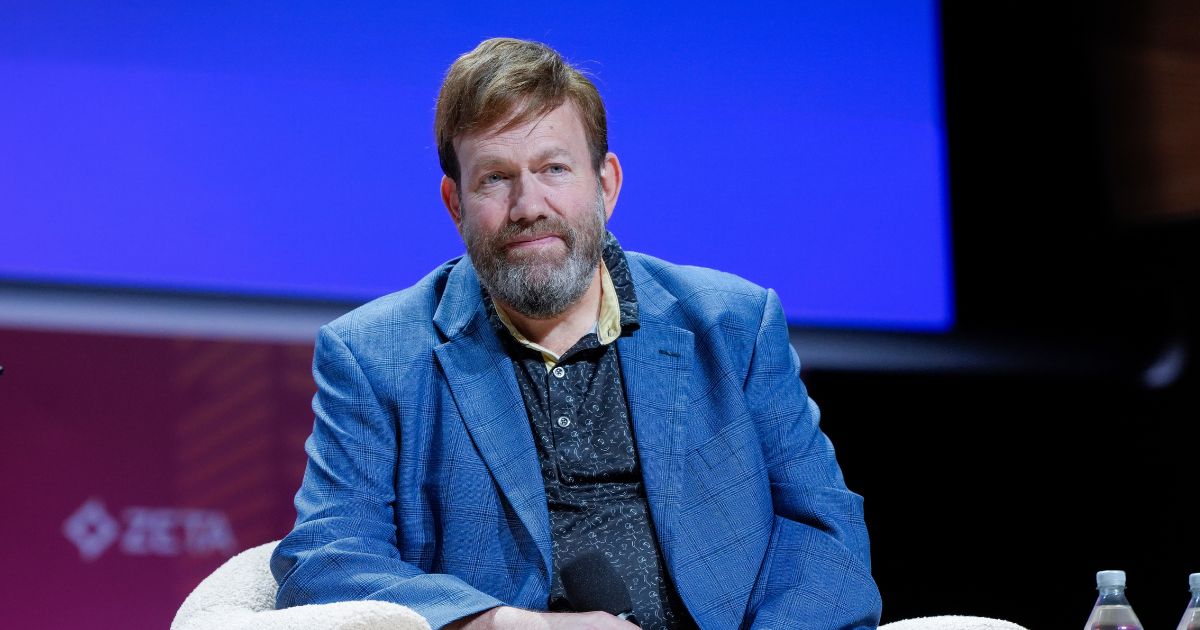
To address this gap, Luntz advocated for a more qualitative approach, suggesting that methods such as focus groups and one-to-one interviews can offer invaluable insights into voter engagement. "That’s why you have to do focus groups," he explained. "That’s why you have to do one-to-one interviews. I can tell, by looking at you, if you’re going to participate or not. And these are people who are counted in the polls, but know they’re not going to vote… And turnout determines everything." This personal assessment of voter intent, while subjective, taps into a deeper understanding of political commitment that quantitative surveys often miss.
Luntz then outlined three "essential questions" that he believes are critical for accurately determining turnout, yet are frequently omitted by many polling firms:
- How interested are you in the election? This question gauges the fundamental level of engagement a respondent has with the political process.
- How often do you collect election news, political news? This probes the respondent’s active consumption of political information, a strong indicator of their investment in the election.
- How often do you talk politics to your friends and neighbors? This question assesses the respondent’s social and community engagement with politics, which often correlates with higher likelihood of voting.
"It’s not whether you say you’re going to vote or not, because people lie," Luntz asserted, highlighting the self-reporting bias inherent in simple "will you vote?" questions. He urged viewers to "pay attention to how they’ve asked the questions about turnout," underscoring the nuanced methodology required for genuine accuracy.
Historical Precedent and the "Hidden Vote"
Luntz’s skepticism is rooted not only in his own past experience but also in a broader historical pattern of polling inaccuracies, particularly concerning Republican voters. When questioned about maintaining skepticism despite acknowledging voter frustration, he reiterated, "I have to be skeptical because I got it wrong once before. And I was so convinced that I was right." This candid admission serves as a crucial reminder of the inherent uncertainties in political forecasting.
Adding further weight to Luntz’s concerns, CNN chief data analyst Harry Enten previously echoed similar sentiments. Earlier in the month, Enten posited that the Republican Party could significantly boost its chances of maintaining or even expanding its Senate majority if polling numbers were off by just a few percentage points. Enten pointed out that the polling industry has a consistent history of favoring Democrats in past elections, suggesting that a modest shift in voter sentiment or an undercounted Republican base could easily flip vital toss-up seats.
"Let’s just say we have the 2026 Senate polls, but if the polls are underestimating the Republicans by 3.5 points, which you know is really possible, because we’ve seen it through the history, right? You go back to 2020, that’s basically what happened," Enten stated. He continued, "Even in 2024, in a number of the key states we saw it happen, including places like Texas." This historical context provides a robust framework for understanding the current apprehension. Analysis of general election polls over the past three decades reveals that the generic congressional ballot has underestimated Republican support in 14 out of 16 elections since 1994, with an average discrepancy of approximately four points. This consistent pattern, if it holds true for 2026, could drastically alter the electoral landscape.
Implications for Key Races and Legislative Control
The potential for a "hidden GOP vote" or systematic polling errors carries profound implications for the 2026 midterms, particularly for control of the Senate and House of Representatives. Enten specifically highlighted several high-profile contests, including those in traditionally Republican states, where even a slight miscalculation could lead to unexpected outcomes.

For instance, current polling for Senate contests in reliably Republican states such as Texas, Ohio, Alaska, Kansas, and Iowa has frequently shown Democratic candidates either ahead or within the margin of error. This presents a stark contrast to the historical voting patterns in these states. If these polls are indeed underestimating Republican support by the historical average of 3-4 points, then many of these races, currently appearing competitive or leaning Democratic, could easily swing Republican. For example, a Democratic candidate leading by 2 points in Ohio might actually be trailing by 1-2 points if the 3.5-point underestimation holds.
Furthermore, even states that President Trump won in 2024, such as Georgia and North Carolina, have seen their Senate contests classified by various analysts as "lean Democrat" or "likely Democrat." This classification suggests a significant uphill battle for Republicans, even in states where their presidential candidate demonstrated strength. Should Luntz and Enten’s warnings prove accurate, these categorizations could be fundamentally flawed, setting the stage for surprising Republican holds or even pickups.
In the House of Representatives, the situation is equally precarious for Democratic predictions. Despite significant efforts by Republicans in mid-decade redistricting – a process designed to maximize their electoral advantage – and a Supreme Court ruling that struck down part of the Voting Rights Act, thereby eliminating certain race-based congressional districts, numerous polls and media outlets have declared that Democrats are poised to easily retake the lower chamber. These predictions, however, rest on the assumption that current polling accurately reflects the electorate. If, as Luntz and Enten suggest, there is a consistent underestimation of Republican voters, then the narrative of an easy Democratic House takeover could be severely challenged, potentially leading to a much tighter contest or even a Republican retention of the chamber.
Broader Impact and the Future of Polling
The concerns raised by Luntz and Enten extend beyond mere statistical inaccuracies; they touch upon the very foundation of how political campaigns are run, how media narratives are shaped, and how the public perceives the democratic process. Inaccurate polling can lead to misallocated campaign resources, misguided strategic decisions, and a false sense of complacency or urgency among voters and candidates alike.
For Democratic strategists, these warnings, if taken seriously, necessitate a re-evaluation of their ground game and voter mobilization efforts, particularly in states where their candidates appear to be performing strongly in polls. A "blue wave" narrative, built on potentially flawed data, could lead to reduced enthusiasm and turnout among their base, while simultaneously motivating an undercounted Republican opposition. Conversely, for Republicans, these warnings could serve as a call to action, reminding their voters that the race is tighter than mainstream polls suggest and that their participation is crucial.
The implications for media coverage are also substantial. If major news outlets rely heavily on polls that consistently underestimate one political faction, their reporting risks becoming skewed, potentially contributing to the very distrust that Luntz identifies among certain voters. This could further exacerbate the perception of media bias and erode public confidence in journalistic institutions.
The ongoing debate about polling accuracy highlights a critical juncture for the industry. The increasing difficulty of reaching representative samples in an age of declining landline usage, caller ID screening, and widespread distrust necessitates innovative approaches. As Luntz suggested, a blend of quantitative and qualitative research, focusing more intently on indicators of actual voter intent and turnout, may be required. Polling firms might need to invest more in diversified sampling methods, including online panels, text message surveys, and even more sophisticated micro-targeting based on behavioral data, to capture the full spectrum of the electorate.
Ultimately, the 2026 midterm elections will serve as a crucial test for the modern polling industry. Should the warnings from experts like Frank Luntz and Harry Enten prove prescient, it would necessitate a profound reckoning with current methodologies and a renewed commitment to understanding the complex dynamics of voter behavior in an evolving political landscape. The stakes are high, not just for the parties vying for control, but for the credibility of the tools used to predict and interpret democratic outcomes.