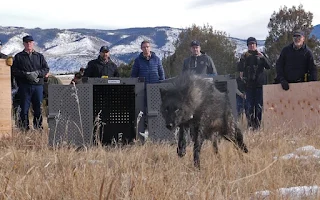
The Confederated Tribes of the Colville Reservation (CTCR) in Washington State have officially rescinded a prior agreement to transfer 15 gray wolves to Colorado Parks and Wildlife (CPW) for the state’s ambitious reintroduction program. This significant reversal, communicated in a letter dated June 6 to CPW Director Jeff Davis and publicly announced by Cody Desautel, executive director of the Colville Tribe, on July 30, stems directly from concerns raised by sovereign Indian Tribes within Colorado, particularly the Southern Ute Indian Tribe. The decision marks a substantial setback for Colorado’s voter-mandated initiative to restore a breeding population of wolves to its western landscapes, potentially complicating the sourcing of animals crucial for the program’s success.
Background: Colorado’s Mandate for Wolf Reintroduction
The impetus for wolf reintroduction in Colorado originated from Proposition 114, a ballot initiative narrowly passed by Colorado voters in November 2020 with 50.91% support. The measure mandated that CPW develop and implement a plan to reintroduce gray wolves (Canis lupus) onto the Western Slope of Colorado by December 31, 2023. The directive aimed to establish a self-sustaining population of 30-50 wolves within the state over a five-year period, with the goal of restoring a keystone predator to an ecosystem where they had been extirpated by the 1940s.
Following the passage of Prop 114, CPW embarked on an extensive planning process, engaging with various stakeholders including conservation groups, ranchers, hunters, and tribal nations. The agency’s final reintroduction plan, approved in May 2023, outlined a strategy for sourcing wolves from other Western states with established populations, primarily focusing on Oregon, Idaho, and Montana. The first ten wolves, sourced from Oregon, were successfully released in December 2023, marking the initial phase of the program.
The Colville Reservation’s Pivotal Role and the Rescinded Agreement
The Confederated Tribes of the Colville Reservation, an intertribal coalition comprising twelve aboriginal bands, have a long history of coexisting with and managing wolf populations within their ancestral lands in north-central Washington. Their reservation, spanning approximately 1.4 million acres, supports a robust and growing wolf population, making them a natural and experienced partner for Colorado’s reintroduction efforts. The initial agreement with CPW was seen as a mutually beneficial arrangement, allowing the Colville Tribes to contribute to broader conservation goals while potentially managing their own wolf population dynamics. The plan envisioned the transfer of 15 wolves from the Colville Reservation to Colorado in late 2024 and early 2025, which would have significantly bolstered Colorado’s nascent wolf population.
Cody Desautel, executive director of the Colville Tribe, articulated the tribe’s initial willingness to participate, recognizing the ecological importance of wolves. However, the decision to rescind the agreement underscores the profound respect the Colville Tribes hold for inter-tribal relations and the principle of tribal sovereignty. Desautel stated, "After hearing from Colorado tribes concerned about the (wolf) reintroduction, we halted the project out of respect for the sovereignty, culture, and impacts to membership of the Indian Tribes in Colorado." This statement highlights a critical dimension of wildlife management often overlooked: the intricate web of relationships and shared values among Indigenous nations.
Inter-Tribal Consultation and the Southern Ute’s Concerns
The catalyst for the Colville Tribes’ decision was a formal letter from the Southern Ute Indian Tribe in Colorado, explicitly requesting that the Washington-based tribe not provide wolves to Colorado. The Southern Ute Indian Tribe’s land, encompassing roughly 681,000 acres, is located in southwestern Colorado along the New Mexico border, within or adjacent to potential wolf dispersal zones.
The Southern Ute Tribe’s concerns mirror many of those expressed by non-tribal ranchers and hunters in Colorado. Principal among these are the potential for wolf depredation on tribal livestock and the impact on vital deer and elk populations, which are culturally and economically significant for the tribe. For generations, hunting has been a cornerstone of the Southern Ute’s way of life, providing sustenance, cultural identity, and economic opportunities. A decline in elk and deer herds due to increased wolf predation could have tangible and profound effects on the tribe’s resources and traditions.
Furthermore, the Southern Ute Tribe had also formally requested that Colorado Parks and Wildlife limit wolf releases to the northern zone, along the Interstate 70 corridor, of its two preferred release areas. This preference indicates a desire to mitigate immediate impacts on their ancestral lands and traditional hunting grounds in the southern part of the state. The tribe’s proactive engagement with both CPW and the Colville Tribes demonstrates a strong assertion of their sovereign rights and a commitment to protecting their cultural and economic interests in the face of state-led wildlife initiatives.

A Broader Context: Wolf Reintroduction in the American West
The current situation in Colorado is not unique; it reflects the complex and often contentious history of wolf reintroduction across the American West. Gray wolves were systematically hunted to near extinction in the lower 48 states by the early 20th century, largely due to government-sponsored eradication programs aimed at protecting livestock and promoting agricultural expansion. Their absence led to significant ecological shifts, including overgrazing by ungulates and impacts on forest health.
In 1973, the gray wolf was listed under the Endangered Species Act (ESA), paving the way for recovery efforts. The most iconic success story began in the mid-1990s with the reintroduction of wolves from Canada into Yellowstone National Park and central Idaho. These efforts led to a remarkable ecological recovery in Yellowstone, demonstrating the wolf’s role as a keystone species in restoring trophic cascades. From these core populations, wolves naturally dispersed into Montana, Wyoming, Oregon, and Washington, leading to robust populations. Today, states like Idaho host an estimated 1,500 wolves, Montana around 1,100, and Wyoming approximately 300, while Oregon’s population has grown to about 175.
Despite these successes, wolf management remains a battleground. The federal delisting of wolves in many Western states has shifted management authority to state wildlife agencies, often leading to polarized debates over hunting quotas, livestock depredation compensation, and conservation strategies. Ranchers continue to face economic losses from wolf attacks on livestock, despite compensation programs and non-lethal deterrents. Hunters express concerns about reduced elk and deer populations, while conservationists advocate for broader protections and expanded habitats. The Colorado initiative, unique for being voter-mandated, brought these long-standing tensions to a new state.
Challenges and Controversies Surrounding Wolf Management
The withdrawal of the Colville Tribes highlights several persistent challenges in wolf management.
- Livestock Depredation: Wolves are opportunistic predators. While their primary prey consists of wild ungulates, they will prey on domestic livestock, particularly cattle and sheep, when opportunities arise. This creates significant financial and emotional burdens for ranchers. Compensation programs, though available, often do not fully cover indirect losses or the emotional toll.
- Impact on Big Game Populations: The reintroduction of wolves into areas with established elk and deer herds naturally introduces a new layer of predation. While ecologists argue that wolves help maintain healthier, more resilient prey populations by culling weaker animals, hunters and outfitters express valid concerns about potential reductions in huntable populations, which can impact local economies reliant on hunting tourism.
- Tribal Sovereignty and Consultation: The incident with the Colville and Southern Ute Tribes underscores the critical importance of respecting tribal sovereignty and engaging in meaningful consultation. Federal and state agencies are increasingly recognizing their trust responsibilities to tribal nations, but effective implementation remains a challenge. Wildlife management decisions made by state agencies can have direct impacts on tribal lands, resources, and cultural practices, necessitating early, respectful, and comprehensive engagement.
- Social License and Public Acceptance: The success of any reintroduction program hinges on gaining "social license" – the ongoing acceptance by local communities and stakeholders. When key groups feel unheard or their concerns are unaddressed, it erodes trust and can jeopardize the long-term viability of conservation efforts.
Colorado Parks and Wildlife’s Response and Next Steps
While CPW has not yet issued a formal public statement directly responding to the Colville Tribes’ decision, the agency is undoubtedly navigating a significant challenge. CPW Director Jeff Davis received the formal notification on June 6, allowing the agency time to consider its options before the public announcement. The rescinded agreement for 15 wolves represents a substantial portion of the 30-50 wolves Colorado aims to reintroduce.
CPW’s immediate priorities will include:
- Acknowledging Tribal Concerns: The agency will likely reaffirm its commitment to robust tribal consultation and acknowledge the sovereign rights of Colorado’s tribes. This incident will likely lead to even more intensive outreach and dialogue with the Ute Mountain Ute Tribe and the Southern Ute Indian Tribe, as well as other tribes with historical ties to Colorado.
- Seeking Alternative Sourcing: The primary challenge now shifts to finding alternative sources for the remaining wolves. Oregon has been a willing partner, but its population growth may not be sufficient to meet Colorado’s needs exclusively. CPW will likely broaden its search to other states with established wolf populations, such as Idaho, Montana, and Wyoming, although these states have historically been less willing to export wolves, often due to internal political pressures and existing management challenges. The process of securing agreements with other states or federal agencies can be protracted and politically sensitive.
- Maintaining Program Timeline: The voter mandate set a firm deadline, and while the initial releases occurred on time, securing additional animals will be crucial to meeting the long-term population goals. Delays in sourcing could impact the overall timeline for establishing a self-sustaining population.
Implications for Colorado’s Reintroduction Program
The decision by the Confederated Tribes of the Colville Reservation carries profound implications for Colorado’s wolf reintroduction program:
- Sourcing Difficulty and Potential Delays: Losing the Colville Tribes as a source makes the task of acquiring the necessary number of wolves significantly more challenging. While the initial ten wolves from Oregon provided a start, finding 20-40 more wolves from other states will require extensive negotiations, potentially with states less enthusiastic about contributing to another state’s wolf population. This could lead to delays in reaching the target population size and establishing breeding pairs.
- Heightened Scrutiny of Tribal Engagement: This event serves as a stark reminder of the critical importance of early, meaningful, and continuous consultation with all affected tribal nations. Future wildlife management initiatives in Colorado, and indeed across the nation, will likely face increased scrutiny regarding their tribal engagement strategies. It highlights that "consultation" must go beyond mere notification and involve genuine dialogue and consideration of tribal perspectives.
- Political and Social Ramifications: The incident further complicates the already complex social and political landscape surrounding wolf reintroduction in Colorado. It amplifies the voices of those with concerns about the program’s impacts and underscores the need for CPW to navigate a delicate balance between fulfilling a voter mandate and addressing the legitimate concerns of various stakeholders, including sovereign tribal nations.
- Precedent for Inter-Tribal Relations: The Colville Tribes’ decision to honor the request of the Southern Ute Indian Tribe sets a powerful precedent for inter-tribal solidarity and respect for sovereignty. It demonstrates that tribal nations, when united, can exert significant influence over decisions impacting their shared interests and traditional territories, even across state lines.
In conclusion, the withdrawal of the Confederated Tribes of the Colville Reservation from the wolf transfer agreement represents a significant hurdle for Colorado’s wolf reintroduction efforts. While CPW remains committed to the voter-mandated program, the incident underscores the multifaceted challenges inherent in large-scale wildlife reintroduction, particularly when it intersects with complex issues of tribal sovereignty, resource management, and diverse stakeholder interests. The path forward for Colorado will require not only the logistical challenge of finding new wolf sources but also a renewed and deepened commitment to fostering respectful and productive relationships with its sovereign tribal partners.