

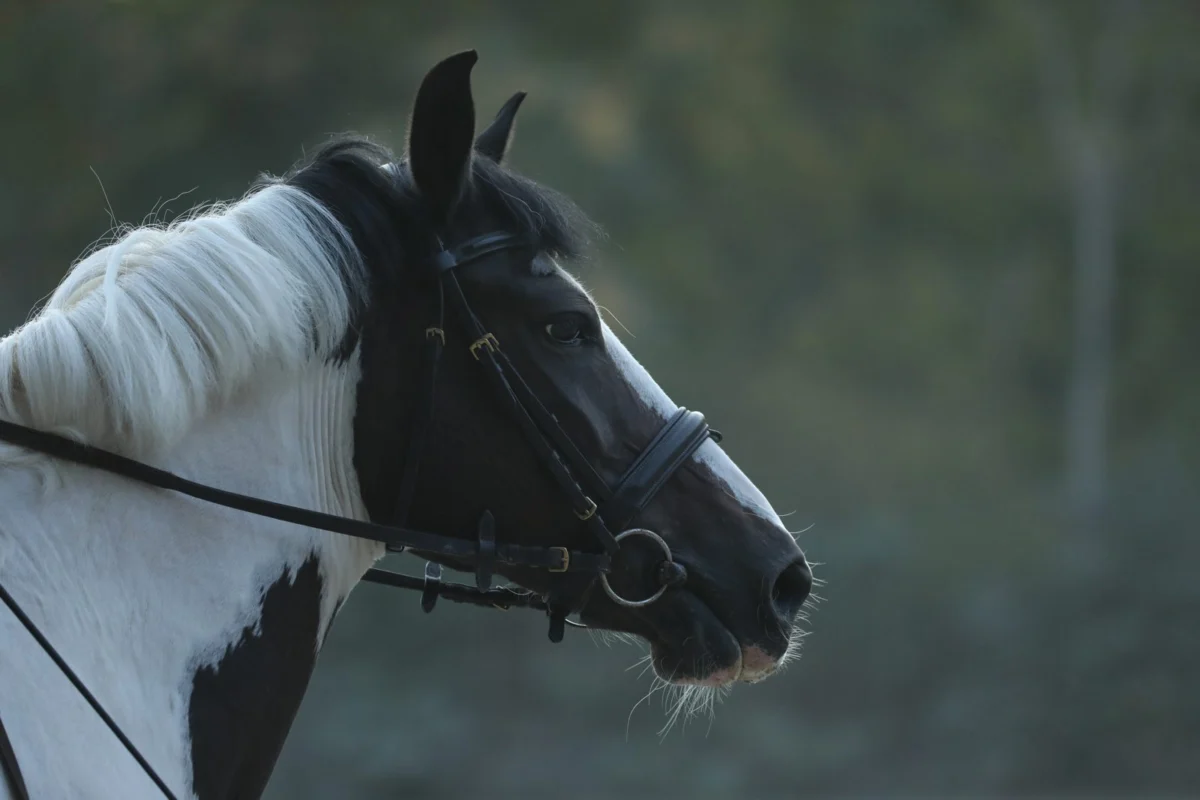
In the competitive arenas of equestrian sport, where the dominance of towering Warmbloods and exquisitely refined Thoroughbreds is often an unspoken rule, a distinct flash of color is increasingly catching the eye. This isn’t merely a decorative coat pattern; it signifies a powerful statement. The Appaloosa, historically known for its iconic spotted patterns—be it a leopard blanket, snowflake, or varnish roan hide—has long been typecast, often perceived primarily as a Western pleasure mount, a reliable trail companion, or a child’s introductory pony. However, a significant paradigm shift is underway. Venture into the demanding environments of recognized eventing competitions or high-stakes jumper shows, and these uniquely marked horses are not only present but are asserting themselves as genuine contenders. They are observed clearing technical show jumping combinations with precision and tackling the rugged challenges of cross-country courses with a quiet, workmanlike attitude that belies their sometimes flamboyant appearance. This narrative is not merely about an underdog gaining recognition; it is about a historically overlooked athlete systemically demonstrating its profound capabilities and finally receiving the widespread acknowledgement it warrants in the diverse world of high-performance equestrianism.
Historical Roots and the Evolution of a Versatile Breed
The Appaloosa’s journey to modern sport is deeply rooted in a rich and resilient history, beginning with the Nez Perce tribe in the Pacific Northwest. Developed by these skilled horsemen, the Appaloosa was selectively bred for intelligence, sure-footedness, stamina, and a calm, courageous disposition—traits that were paramount for hunting, warfare, and daily life in challenging terrains. This initial breeding philosophy, focused on utility and reliability rather than mere aesthetics, laid the indelible foundation for the breed’s enduring versatility. Following the Nez Perce War of 1877 and the subsequent dispersal of the tribe and its horses, the Appaloosa population dwindled dramatically, nearly to extinction. It was only in the mid-20th century, through dedicated preservation efforts spearheaded by the Appaloosa Horse Club (ApHC) founded in 1938, that the breed saw a resurgence.
For decades, the Appaloosa’s primary presence in equestrian circles was within Western disciplines, particularly Western pleasure, reining, and trail riding, where its docile temperament and striking appearance made it a popular choice. The breed’s unique characteristics, including striped hooves, mottled skin, and sclera visibility, became signature identifiers. Yet, as equestrian sports diversified and the demand for versatile, sound horses grew, a segment of Appaloosa breeders and enthusiasts began to selectively breed for qualities that excelled beyond the Western arena. This gradual shift, particularly noticeable from the late 1980s onwards, saw a deliberate integration of sport horse lines, blending the Appaloosa’s inherent durability and mind with the athleticism required for English disciplines. This strategic cross-breeding, while sometimes controversial within traditional breed circles, has been instrumental in producing the modern sport Appaloosa, retaining the distinctive coat patterns while enhancing performance attributes.
The Foundation: Built for the Demands of Sport
To truly comprehend the Appaloosa’s burgeoning success in jumping and eventing, one must look beyond its eye-catching coat patterns to the robust biomechanical structure beneath. The contemporary sport Appaloosa, often the product of thoughtful cross-breeding with Thoroughbreds or Warmbloods, nonetheless draws heavily on its foundational stock for a unique and advantageous template. They typically possess a strong, well-sloped shoulder, a critical anatomical feature that facilitates a fluid, ground-covering stride—essential for the extended gallop phases in eventing and the powerful, elastic take-off required in show jumping.
Their backs are commonly short-coupled and robust, providing an inherently stable platform for collection, efficient energy transfer from the hindquarters, and carrying a rider through demanding maneuvers. Crucially, Appaloosas are widely celebrated for their exceptional bone density and remarkably sound, durable hooves, which often display characteristic vertical stripes. This natural resilience is an invaluable asset, mitigating the relentless pounding and concussion inherent in intensive training and high-level competition, where leg injuries can prematurely end a sport horse’s career. Unlike some more delicate, specialized breeds, the Appaloosa presents a resilient, sturdy frame built not just for speed or agility, but for sustained durability and miles of demanding work. This inherent soundness contributes significantly to their longevity in sport, making them a wise investment for riders and trainers.
The Mind: The Unflappable Competitor
If optimal conformation provides the necessary hardware for an athlete, then temperament serves as its critical operating system, and in this regard, the Appaloosa truly distinguishes itself. The historical breeding imperatives of the Nez Perce tribe, prioritizing intelligence, sure-footedness, and calm bravery, have instilled these traits deeply within the breed’s genetic makeup. In the high-pressure environments of a chaotic warm-up ring, under the intense glare of stadium lights, or navigating the isolated and unpredictable challenges of a cross-country course, the Appaloosa’s renowned ‘people sense’ and pragmatic mind come powerfully to the fore.
These horses are typically quick to learn and eager to please, yet they are rarely ‘hot’ or overly reactive. This translates into a competitor that conserves energy, refraining from spooking at banners flapping in the wind or unexpected movements. Instead, an Appaloosa assesses an odd-looking jump, processes the rider’s aids with thoughtful consideration, and then executes the task with focus. For an eventer confronting a complex coffin combination or a jumper in a tight jump-off scenario, this mental fortitude and ability to remain composed under duress are as invaluable as any physical attribute. They are inherently thinkers, not merely reactors, a quality that renders them incredibly trainable, adaptable, and reliable partners when the stakes are highest. This mental resilience often allows them to perform consistently even when other breeds might succumb to pressure or distraction.
Pioneers and Progress: Appaloosas at the Top Levels
While Appaloosas may not yet be a common sight in Olympic dressage, their impressive credentials in the jumping and eventing worlds are undeniable and growing. Prestigious American competitions, such as the American Jumping Derby and major eventing championships like the USEA American Eventing Championships, have increasingly witnessed Appaloosas not just competing, but frequently achieving top placings and even outright victories. Historical figures, such as the legendary stallion Prince Plaudit, an Appaloosa who earned his Register of Merit in jumping, served as early trailblazers, unequivocally proving the breed’s athletic pedigree and paving the way for future generations.
In eventing, Appaloosas and Appaloosa-crosses consistently perform above their perceived weight class. They particularly excel in the lower to mid-levels (Beginner Novice through Preliminary), where a combination of soundness, bravery, and all-around versatility is paramount for success and rider development. However, their presence is steadily expanding into higher echelons, with Appaloosas competing at Intermediate and even some Advanced levels. Their remarkable ability to transition seamlessly from the precise obedience required in the dressage phase to the bold, attacking nature of cross-country, and then to the agility and carefulness demanded by stadium jumping, serves as a testament to their exceptional all-around athleticism and mental adaptability. Data from the USEA (United States Eventing Association) shows a consistent representation of Appaloosa and Appaloosa-crosses in their recognized events, indicating a growing acceptance and success rate across various levels. This trend underscores a broader recognition of their capabilities beyond breed-specific competitions.
Training the Spotted Sport Horse: Leveraging Their Strengths
Effectively training an Appaloosa for English sport disciplines necessitates a nuanced understanding of their unique mindset and physical attributes. They respond exceptionally well to clear, consistent, and fair training methodologies. Due to their innate intelligence, Appaloosas can become bored or resistant if subjected to repetitive, uninspired drills. The key to success lies in maintaining variety, purpose, and engagement in their daily work.
For jumping, their natural scopiness and powerful hindquarters can be meticulously cultivated through structured gymnastics exercises that encourage them to lift their backs, engage their core, and utilize their full range of motion. They often demonstrate a powerful, elastic jump, capable of taking off from a deeper spot than many other breeds, an advantage in complex combinations. For eventing, their natural gallop and inherent stamina are enormous assets, requiring relatively less intensive conditioning compared to some breeds. However, the dressage phase can sometimes demand extra patience. While they may not possess the innate, flashy, high-knee action often seen in some Warmbloods, Appaloosas are more than capable of achieving the balance, suppleness, obedience, and impulsion required for a competitive dressage test. The training focus should therefore be on building a correct, powerful, and supple engine through systematic flatwork, rather than attempting to chase an exaggerated or extravagant movement pattern that is not natural to the breed. Their profound willingness to please, once a solid foundation of trust and understanding has been established with their trainer, proves to be one of their greatest and most effective training tools. This partnership-oriented approach allows the Appaloosa to truly flourish.
Economic and Industry Implications
The increasing presence of Appaloosas in English sport disciplines carries significant implications for the equestrian industry. For breeders, it opens up new market avenues, demonstrating that the breed can be successfully developed for performance beyond traditional Western roles. This versatility offers a compelling selling point in a market often saturated with specialized sport horse types. Breeders can now aim to produce horses that combine the Appaloosa’s legendary soundness and temperament with the athleticism required for jumping and eventing, potentially attracting a broader range of buyers, including amateur riders and professionals seeking durable partners.
For training barns, the Appaloosa often fills an invaluable niche. Their renowned temperament and resilience make them ideal schoolmasters, capable of safely and effectively teaching countless students across various skill levels. For adult amateurs balancing demanding careers with their passion for riding, an Appaloosa offers the trustworthy partner that can be confidently ridden after a stressful workday, providing a sensible and safe experience without the volatile temperament sometimes associated with more high-strung sport breeds. For young riders aspiring to move up the levels, an Appaloosa can provide a confident, brave, and forgiving first experience at a new, more challenging competition level. This multi-faceted utility makes them an economically viable choice, reducing veterinary costs due to their soundness and offering a longer competitive lifespan. The breed’s adaptability also supports sustainability in equestrian sport, promoting genetic diversity rather than an over-reliance on a narrow genetic pool of hyper-specialized breeds.
A Spot for Every Program: Broader Impact and Future Outlook
The Appaloosa’s expanding role in equestrian sport is fundamentally driven by its offering of something increasingly invaluable in the modern competitive landscape: unparalleled durability and an indomitable heart. They are not merely a specialized tool designed for a single job; rather, they embody the ultimate multi-purpose vehicle—capable, reliable, and surprisingly high-performing across a spectrum of disciplines. This shift in perception and application contributes to a broader understanding of what constitutes a "sport horse," challenging long-held assumptions about breed-specific roles and opening doors for greater diversity in the competitive arena.
Looking ahead, the trajectory suggests a continued rise in the Appaloosa’s prominence in English disciplines. As more riders and trainers experience their unique blend of physical prowess and mental fortitude, their acceptance and demand will undoubtedly grow. Educational initiatives by the Appaloosa Horse Club, coupled with successful competitive outings by Appaloosas and Appaloosa-crosses, will further cement their reputation as serious contenders. This evolution is beneficial not only for the breed itself, ensuring its continued relevance and vitality in a changing equestrian world, but also for the sport as a whole, promoting diversity, encouraging thoughtful breeding practices, and celebrating the unique contributions of every horse, regardless of its coat pattern.
Therefore, the next time a spotted horse catches your eye in the lineup at an eventing or jumping competition, resist the urge to simply admire its distinctive coat. Instead, observe its technique over a fence. Watch the focused intensity in its eyes. Note the steady, ground-covering stride across the field. You are not merely observing a pretty picture; you are witnessing a true athlete in action, one whose rich history is literally written in its hide, and whose immense potential is being powerfully articulated in every clean jump and every steady, purposeful stride. The Appaloosa is not just making a comeback; it is redefining its legacy in the annals of equestrian sport.







