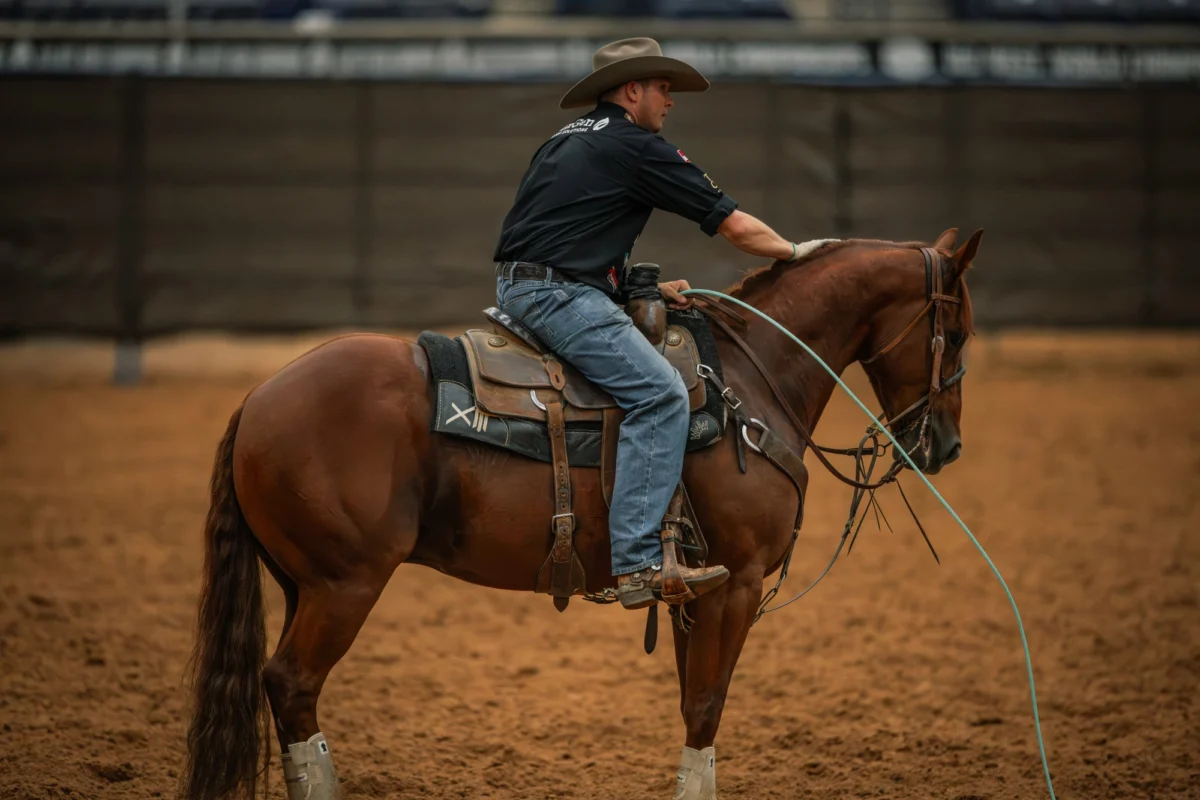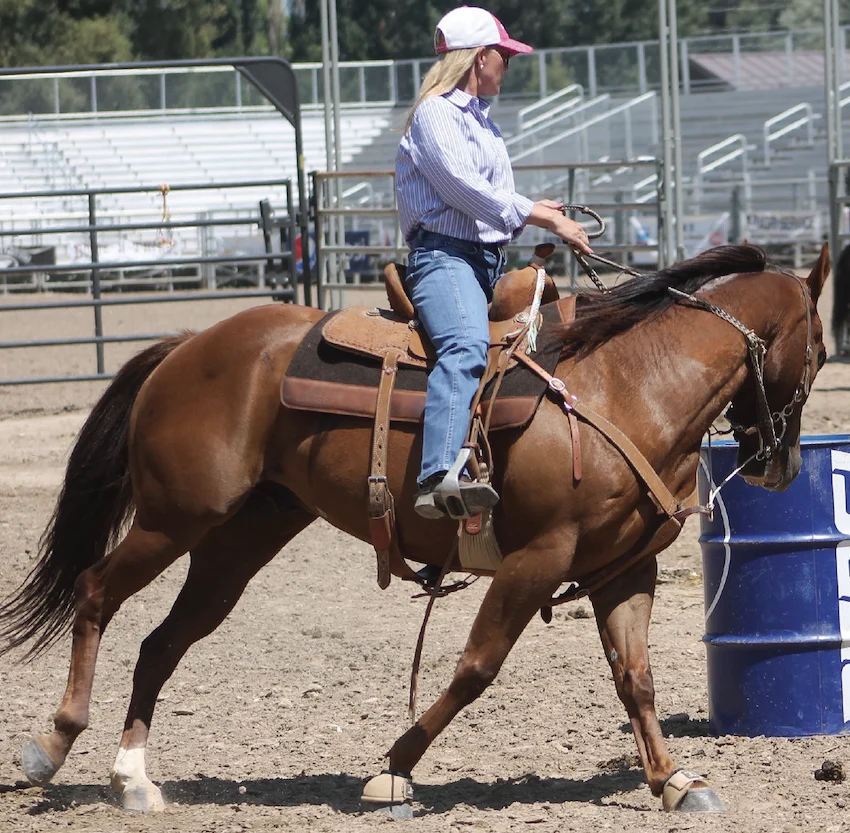
Rachel Myllymaki, a name synonymous with precision, fluidity, and speed in the demanding world of barrel racing, has forged a remarkable career path that spans decades and disciplines. From her unprecedented debut as a child prodigy at the sport’s pinnacle to her current role as a highly respected horse trainer, Myllymaki’s influence on barrel racing continues to expand, driven by a philosophy rooted in horse welfare and meticulous technique. Her methods, which emphasize smooth, fast turns, have consistently produced winning partnerships at every level of competition.
A career that began with an extraordinary feat, Myllymaki made her mark on professional rodeo history long before many children even complete elementary school. In 1988, she qualified for her first National Finals Rodeo (NFR) in Las Vegas, Nevada, a prestigious event often dubbed the "Super Bowl of Rodeo" and the ultimate championship for professional rodeo athletes. At an astonishing age of not yet 12, Myllymaki not only competed but also won the first go-round, setting an indelible record as the youngest cowgirl ever to participate in the NFR. This immediate success at such a tender age hinted at the profound talent and innate horsemanship that would define her journey. The NFR, sanctioned by the Women’s Professional Rodeo Association (WPRA), represents the culmination of a year-long competitive season, where only the top 15 athletes in each event qualify, making her accomplishment even more significant.
Myllymaki’s early career was a whirlwind of success, characterized by consistent performances and multiple victories at some of North America’s most historic and challenging rodeos. Following her groundbreaking NFR appearance, she returned to Las Vegas for two more NFR qualifications in 1990 and 1994, solidifying her status as a formidable competitor. During these formative years, she captured titles at esteemed venues that demand both exceptional horse and rider skill, including La Fiesta de los Vaqueros in Tucson, Arizona, known for its long-standing tradition; the legendary Cheyenne Frontier Days, often called "The Daddy of ’em All" due to its scale and rough-stock events; and the internationally renowned Calgary Stampede, celebrated for its rich heritage and substantial prize money. These victories underscored her ability to adapt and excel across diverse arena conditions and competitive environments. Her dominance extended to the circuit system, where she claimed the first of her two Dodge National Circuit Finals Rodeo (DNCFR) titles in 1990, an event that brings together the champions from each of the WPRA’s 12 geographical circuits.
Beyond the professional circuit, Myllymaki demonstrated a rare versatility by conquering the youth rodeo ranks with equal prowess. During her high school years, she proved that her talents extended beyond the unique demands of barrel racing, securing two consecutive National High School Rodeo Association (NHSRA) All-Around titles. The All-Around title is a testament to a contestant’s diverse skill set across multiple rodeo events, showcasing her comprehensive horsemanship. Her academic pursuits did not deter her competitive drive; she further cemented her national championship status in college rodeo, winning the College National Finals Rodeo (CNFR) in 1997. This victory, achieved while pursuing her education, highlighted her ability to balance rigorous demands and maintain peak performance.
Armed with a college degree, Myllymaki seamlessly transitioned back into full-time professional barrel racing, picking up where she left off as if no time had passed. Her dedication to her home circuit was evident, as she accumulated an impressive eight Montana Circuit titles between 1988 and 2001. Her second DNCFR championship in 1999 further underscored her enduring competitive edge. The culmination of this phase of her career saw her return to the NFR stage an additional four times from 1999 to 2002, achieving a career-best fourth-place finish in the Women’s Professional Rodeo Association world standings in 2002. This achievement placed her among the elite barrel racers globally, a testament to her sustained excellence in a sport demanding both athletic prowess and mental fortitude.
The Evolution from Jockey to Master Trainer
In recent years, Myllymaki’s focus has gracefully shifted from the frenetic pace of professional competition to the deliberate, rewarding process of developing young horses. While the thrill of a winning run still resonates deeply, her passion has evolved towards nurturing equine talent from the ground up. "I never used to be in the training mode; I was always in the jockey mode," Myllymaki reflects, crediting her mother, Judy, for laying the foundational groundwork during her youth. "She would put me on these finished horses, and it was easy and a lot of fun."

The transition from rider to trainer, however, was not without its initial challenges. Myllymaki openly admits to facing frustrations inherent in the training process, describing it as "very defeating. You know, you’re chicken one day, feathers the next." This candid observation highlights the unpredictable nature of working with young, developing animals. Yet, a turning point emerged, perhaps in her thirties, as she found immense satisfaction in witnessing the "light-bulb effect" in colts—the moment a horse grasps a new concept. "I loved seeing that light-bulb effect in those colts and to know I had a part in it," she shares, articulating the profound fulfillment derived from shaping equine potential. This shift signifies a deeper connection to the animals and a commitment to their long-term development.
Today, Myllymaki’s joy stems from watching a horse "bloom" under her guidance. The extensive mileage of her rodeo career has given way to a quieter, more profound satisfaction. "I still enjoy making a good run at a rodeo—there’s nothing better. But at the same time, just seeing my colt place at these rodeos against these good girls is what sparks me," she explains. This perspective underscores a mature appreciation for the journey, where the success of her trained horses is as gratifying, if not more so, than her own competitive achievements. The two years of dedicated work culminating in a shining performance is what "makes my heart happy," firmly establishing her current path as a dedicated trainer.
A Proven Track Record in Training Excellence
In the decade since she phased out full-time rodeo competition, Myllymaki has carved out an impressive reputation as a top-tier trainer. Her program consistently produces winners across various competitive spheres, from the high-stakes futurity ranks—competitions for young horses, typically four or five years old, showcasing early talent—to seasoned professional rodeo arenas. One of her most notable achievements as a trainer was developing French First Watch, affectionately known as "Custer," who was voted the American Quarter Horse Association (AQHA)/WPRA Barrel Horse of the Year in 2015.
Custer’s story is a powerful testament to Myllymaki’s training philosophy and her ability to match horses with riders. Ridden by Jill Welsh, who battled cancer during their initial partnership, Custer carried Welsh to 16th in the WPRA world standings that year, securing numerous major wins, including at Reno, Nevada. Myllymaki recalls the emotional impact of Custer’s success: "I had goosebumps watching [Jill Welsh] on the video at Reno." Despite Welsh’s health challenges, her prior positive experience with a Myllymaki-trained horse instilled confidence in the trainer’s system, leading her to believe Custer’s style would be a perfect fit. "And sure enough, it was a match," Myllymaki affirms, underscoring her commitment to the horse-rider partnership. She stands by her "product," offering to take a horse back if it doesn’t prove to be the right match, demonstrating a rare integrity and focus on the animal’s well-being over a quick sale.
"Horses First": The Cornerstone of Myllymaki’s Philosophy
Myllymaki’s unwavering dedication to horses is a fundamental pillar of her life and training program. "I couldn’t imagine [doing anything else]. I had a real job one summer…It was the worst summer of my life," she recounts, emphasizing that her career choice was not merely a preference but a calling. "I decided horses were my major." This deep-seated commitment has seen her establish homes and training bases across Montana, Arizona, California, and Wyoming, continually seeking knowledge and refining her methods by learning from "many good hands" in diverse equestrian communities.
A significant portion of her training foundation is directly inherited from her mother, Judy Myllymaki, herself a WNFR qualifier who, even in her 70s, continues to train horses and conduct clinics. Rachel proudly states, "I took her playbook and went on with it." Beyond teaching essential fundamentals like precise positioning for turns and intricate footwork, Judy instilled in Rachel the paramount importance of attitude—both the horse’s and the rider’s. "I try to act more like her when I’m in training mode," Rachel says of her driven mother, noting that Judy’s horsemanship makes even intense training appear "calm, relaxed."

Myllymaki stresses that a positive attitude in a colt is indispensable for effective learning, matched only by a healthy dose of patience. These qualities, she believes, must be present even before catching a horse to saddle up. "If I’m feeling stressed or something, I won’t even get on because I know if I’m not in the right mindset, I’m going to pick a fight and it’s not going to be good," she candidly admits. This highlights her understanding that a rider’s emotional state directly impacts the horse’s ability to learn constructively. Training, therefore, begins not with the horse, but with the rider’s internal preparation.
"When you get on, you’re that horse’s best friend. If you’re not, you shouldn’t be on him," Myllymaki asserts, encapsulating her philosophy of rider responsibility. "You’re their security blanket. Either you’re helping them or you’re hurting them." This holistic approach places the horse’s health and happiness at the forefront of her program. Her two primary goals are to ensure horses are "rideable, No. 1, and No. 2, I’ve got to give them a job so they can have a good home." She believes that a well-trained horse with a clear purpose is "employed forever" and will be well cared for, ensuring their longevity and welfare—a vision she holds for every horse that passes through her program.
Longevity is a critical metric for Myllymaki. She finds profound satisfaction in seeing her former competition horses enjoy long, productive lives. She proudly mentions her 27-year-old horse, Easy Does It Doc, who is "still training a little girl up in Montana." For Myllymaki, this epitomizes true horsemanship: "If you love horses, not just barrel racing, that’s what you want to see. You want to see them have a happy life." While acknowledging the financial realities of training young horses for futurities and other aged events, Myllymaki prioritizes the horse’s natural development pace over immediate financial gain. "Money isn’t everything to me, but it’s doable," she states, humorously adding, "I consider myself a non-profit half the time because I just love what I do." This commitment also extends to maintaining a manageable number of horses in her barn—typically "three or four of mine and three or four outside horses"—to ensure each animal receives ample individual attention and quality training.
Laying the Groundwork: The Foundation of Success
Myllymaki’s approach to foundational training has evolved over time. While she once handled every aspect of a young horse’s development, from breaking to pattern training, she now prefers to let others manage the initial rides. "When I was younger and really didn’t have two nickels to rub together, I sacked them out and did it all," she explains. Today, she opts to take on prospects late in their 2-year-old year, after they have had some basic riding experience, such as trail riding or working behind cows. The goal is for them to "be able to walk around the arena and to track in a straight line."
Once a colt has moved past this initial "wandering phase," Myllymaki ensures they can confidently lope correct circles and manage their leads. Her preference is to then take them with a "clean slate," free from any pre-programmed "buttons" that might conflict with her systematic approach. "The horses I’ve had the most heck with are the ones other people have put the buttons in, and I don’t know what they are," she notes, emphasizing the importance of consistent communication and a clear training language.
As she begins to introduce the barrel pattern, Myllymaki incorporates foundational elements from her mother’s program, such as teaching lateral movement and the ability to move the hind end and front end independently. Another critical component of her early foundation work is establishing the horse’s "set in the bridle." She desires a horse that is "on the bridle—not behind it or in front of it—but on the bridle." This means the horse is responsive and engaged with the bit, maintaining a soft, consistent contact without leaning on it or evading it. Achieving this "happy medium" is particularly challenging, yet crucial, as horses learn to carry speed into a turn, often wanting to get "real strong or get behind the bit."
The Philosophy of "Two Bales at a Time"

In a sport often obsessed with raw speed, Myllymaki champions a patient, methodical approach, particularly when introducing young horses to competition. She cautions against rushing the process, stating, "You can’t put your heart on the line when you’re in the seasoning mode or the training mode. You just have to think [of getting it done] little bits at a time."
To maintain this mindful perspective, Myllymaki frequently recalls a profound lesson from her mother. "The best explanation is one Mom gave me. She said, ‘You’re the kind of person who, if there are 100 bales in the field, you want to put it all in the barn in one day. But you can put it in two at a time and it’ll look just as good at the end.’" This "two bales a day" analogy is the bedrock of her training philosophy. It serves as a powerful reminder that complex skills cannot be rushed and that attempting to "fix everything in one day" is counterproductive, instead advocating for consistent, incremental progress.
The Three Rs: Rate, Round, and Read Your Horse
Myllymaki’s training program is distilled into her own version of the three "Rs": rate, round, and read your horse—each indispensable for achieving her signature smooth, fast turns.
Rate and Round: These two concepts are intricately linked in Myllymaki’s system, forming the core of a horse’s preparation for a turn. "Rate" refers to the horse’s ability to control its speed and collect itself effectively as it approaches the barrel. "Roundness" describes the horse’s body position, achieved by lifting the inside shoulder and engaging the hindquarters to create an arc through the turn. Myllymaki prefers to use her inside rein to initiate the shoulder lift and encourage roundness, allowing the horse to carry itself through the turn, only applying more push with her inside foot if conditions demand. "I really like my horses to round up and move forward in that corner," she explains, emphasizing the need for responsiveness. "I don’t want to pick up on the rein and have nothing happen when I’m going fast." This element of control is paramount, especially for rodeo horses that must navigate varying ground conditions. She wants to be able to "play with the horse’s body" as she comes into the barrel, making subtle adjustments rather than abrupt, large ones.
Read Your Horse: This third R is the adaptive intelligence crucial for high-level performance. It involves constantly assessing the horse’s individual style, experience level, and the immediate environment. "I can keep a feel on what’s going on so if I need to make a change, I can make a two-inch change—not a two-foot change—because that takes too long to get the desired effect," Myllymaki states. In barrel racing, where milliseconds matter, small, timely adjustments are critical: "When you’re by the barrel, the mistake is already made." Myllymaki expects her horses to be in the correct position for the turn about a stride out, visually marking this by where the tracks cross approaching and exiting the barrel. This ideal position involves the horse being gathered in its stride, with the pivot leg correctly underneath its body, rounded for the turn, and adequately set into the ground for the specific conditions. Critically, the exact timing of this preparation varies: "Some horses can do it in one stride and some horses take three to gather up, so read your horse," she advises, emphasizing that riders must adjust their cues to their horse’s unique capabilities.
"Wrap the Turn": Myllymaki’s Signature Style
One of the distinguishing hallmarks of Myllymaki’s horses is their ability to "wrap the turn" with a characteristic round, fluid motion that minimizes the risk of knocking over barrels. This elegant and efficient maneuver is a core focus of her training program, influenced by years of observing successful horse-rider combinations. Her aim is to simplify the complex mechanics of a barrel turn, making it "a two-step operation instead of a 20-step operation," thereby enhancing a horse’s longevity and transferability to other riders.

When working a horse on a barrel, Myllymaki places particular emphasis on hand position. She instructs riders to "bring your hand above the saddle horn so you’re saying whoa, but shape at the same time so you’re putting two moves into one." By bringing the hand towards the belly button and above the horn, the rider simultaneously cues for rate and encourages the horse to "round up—get that shoulder picked up." Recognizing that rate and roundness are often compromised when speed is introduced, Myllymaki counter-intuitively focuses more on these two components as she increases a horse’s speed. "Realize throughout the gaining speed process, always keep throwing those two things back in your mix, just a little more than you think you need," she advises. This ensures that control is not sacrificed for velocity. Myllymaki’s theory is that it is always easier to "straighten a horse out or free them up" if they become too rounded than it is to re-establish control in a horse that has learned to run without proper body carriage.
A key element in her rate training is the correct stop. Myllymaki is adamant: "I want to stop them with their eye to the inside slightly, not cranked around, but I want to see their actual eyeball down their neck when they stop." This precise head position ensures the horse’s nose is tipped towards the barrel, never away from the turn, building muscle memory. By making this a consistent habit, horses automatically offer "a bit of roundness" when the inside rein is requested during a run, effectively creating an "e-brake" that is invaluable in challenging situations, such as poor ground conditions.
Mitigating Stress and Preventing Boredom
To keep her horses mentally and physically fresh, Myllymaki employs a diverse range of daily training options. She remains open to new ideas, noting, "Like everybody, I’ve seen a ton of stuff on social media, and most of the exercises on there are good." The crucial factor, she stresses, is maintaining correct body position throughout any drill. She encourages creativity, urging riders to "dream things up to do" and set up new exercises daily to keep the work interesting. "I always say if we’re getting bored, surely the horse is too," she quips, highlighting the importance of rider engagement in maintaining equine focus.
Myllymaki also emphasizes understanding a horse’s mental state. If a horse shows signs of fatigue or disinterest in barrel work, she will take "one or two days and do no barrels," instead performing the same movements and cues around a bush or other objects to maintain their liveliness. This principle extends to hauling horses to competitions, a process she recognizes as inherently stressful due to new environments, lights, noise, and crowds, often combined with demands for increased speed.
During this seasoning process, Myllymaki acknowledges that perfection is an unrealistic expectation. Learning to accept minor mistakes and miscues is vital for the rider’s mental outlook. Equally important is ensuring that downtime workouts are varied and light, preventing the horse from associating training solely with high-pressure situations. "When you’re not at the rodeo or show, make sure you do something different. Constantly mix it up," she advises, suggesting activities like chasing a Heel-O-Matic or ground work in a round pen.
Crucially, in the seasoning phase, Myllymaki contends that the rider’s attitude, not the horse’s, is the most critical factor. "If you’re a little nervous, then the horse is darn sure nervous," she warns, emphasizing the rider’s role as the horse’s "rock." Consistency is paramount during these stressful initial competitions. "Don’t change up on the horse when you get there. Go with the plan; stick to the plan." If a plan proves ineffective, the rider should "go home and rewrite the plan," rather than making mid-stream adjustments that can confuse the horse. Deliberation and patience are key, allowing a few days to formulate a new strategy so the horse "knows what to expect when they get to the next race," thereby building confidence.
Navigating the Market for Myllymaki-Trained Horses

While Myllymaki is not driven by a high-volume, quick-turnaround business model—she typically keeps horses longer than many trainers—she will sell when the conditions align for both the horse and a prospective buyer to achieve success. In recent years, the demand for horses from her program has grown significantly, a testament to her reputation. "The last few just… they’re gone. I can’t keep them around," she notes, reflecting on the natural progression of talented horses reaching a market value where they attract serious buyers.
Myllymaki observes that the current market tends to favor either young prospects with elite bloodlines and conformation or seasoned 3D and 4D horses—those consistently placing in the lower divisions of barrel racing, ideal for riders developing their skills. "They’re needed too, because jockeys learn in a ladder process just like horses do," she states, highlighting the importance of appropriate mounts for riders at different skill levels.
For buyers, Myllymaki stresses the importance of honest self-evaluation. "You have to be honest with yourself. Do you want to go to the NFR? Yes. Can you do it this year? Maybe not. Plan accordingly—you can’t get you and the horse both there all in one day." For non-trainers, her advice is to identify a training style that complements their own riding and stick with it. "If you find somebody’s style that you ride well, and you’re not a trainer, try to stick with that style."
Despite the logical necessity of selling, Myllymaki often finds it challenging to part with horses she has invested so much into, likening it to "kicking your kids out to college." Yet, she finds immense joy and satisfaction in witnessing her horses thrive with new riders, embarking on their own successful journeys. Her enduring legacy is not just in the titles she won, but in the quality of the horses she produces and the principles she instills, ensuring a brighter future for both horse and rider in the barrel racing world.