

Hurricane Isaias, intensifying rapidly into a formidable Category 3 storm, has dramatically reshaped the Week 6 college football landscape, compelling numerous institutions across the U.S. Southeast to alter their meticulously planned schedules. With landfall projected for the northern Gulf Coast late Friday night or early Saturday morning, the storm’s imminent arrival has prompted a wave of proactive decisions aimed at ensuring public safety and mitigating logistical nightmares for teams, fans, and emergency services. The unprecedented nature of the storm’s timing, coinciding with a pivotal week in the college football season, has underscored the vulnerability of major sporting events to severe weather phenomena.
The meteorological progression of Hurricane Isaias has been closely monitored by state and federal agencies, as well as by athletic conferences and university administrations. Originating as a tropical depression, Isaias quickly gained strength in the warm waters of the Gulf of Mexico, accelerating its intensification to reach Category 3 status by Friday morning. With maximum sustained winds registering 120 mph, the hurricane presented a significant threat of widespread damage, storm surge, and torrential rainfall across a broad swath of the Gulf Coast and inland regions. Forecasters issued dire warnings, urging residents in the projected path to finalize evacuation plans or prepare to shelter in place, a sentiment echoed by political leaders across the affected states.
Chronology of a Crisis: Isaias’s Impact on the Gridiron
As the hurricane’s trajectory became clearer, the domino effect on the college football schedule began. The primary concern for athletic departments and conference officials was the safety of players, coaching staff, support personnel, and spectators, alongside the necessity of not diverting critical emergency response resources away from storm preparedness and recovery efforts. The decision-making process was a delicate balance between competitive integrity and public welfare.
The first significant alteration reported was the outright cancellation of the nonconference matchup between Northeastern State and West Florida. The Pensacola-based West Florida, situated directly in the anticipated path of Isaias, made the call to cancel Saturday’s home game, with Athlon Sports confirming that the game is not expected to be rescheduled. This decision highlighted the severity of the threat, as outright cancellations are relatively rare once a season is underway, typically reserved for the most extreme circumstances.
Beyond cancellations, a series of postponements and time adjustments quickly followed. One of the most notable changes involved the Southwestern Athletic Conference (SWAC) game between Florida A&M and Alabama State. Recognizing the impending danger, conference officials and both universities agreed to move the Montgomery-hosted game a full day earlier, from Saturday to Friday at noon Eastern, broadcasting on SWAC TV. This shift not only impacted the game itself but also necessitated an overhaul of Alabama State’s homecoming schedule, a major annual event for the institution and its alumni.

Several other games, primarily in the Football Bowl Subdivision (FBS) and Football Championship Subdivision (FCS), saw their kickoffs moved to earlier times on Saturday to avoid the worst of the storm’s anticipated impact. Rice at East Carolina, the only FBS game initially impacted, shifted its start from 4 p.m. Eastern to 1 p.m. on Nexstar and ESPN+. Similarly, a cluster of FCS games in the Carolinas, a region also vulnerable to Isaias’s outer bands and subsequent weather, were rescheduled. Davidson at Presbyterian in Clinton, South Carolina, moved from 5:30 p.m. to noon on ESPN+. East Tennessee State at The Citadel in Charleston, South Carolina, adjusted its kickoff from 2 p.m. to noon, also airing on Nexstar and ESPN+. South Carolina State at Charleston Southern followed suit, moving from a 6 p.m. start to noon on ESPN+. Further west, Bethune-Cookman at Alabama A&M in Huntsville moved up six hours to 1 p.m. Eastern on SWAC TV, as reported by FBSchedules. Interestingly, Southern at Prairie View A&M, located west of Houston, bucked the trend by moving its kickoff an hour later, from 3 p.m. Eastern to 4 p.m. on HBCU Go, indicating localized weather considerations.
High-Stakes Decisions: The Alabama-Georgia Showdown and Presidential Presence
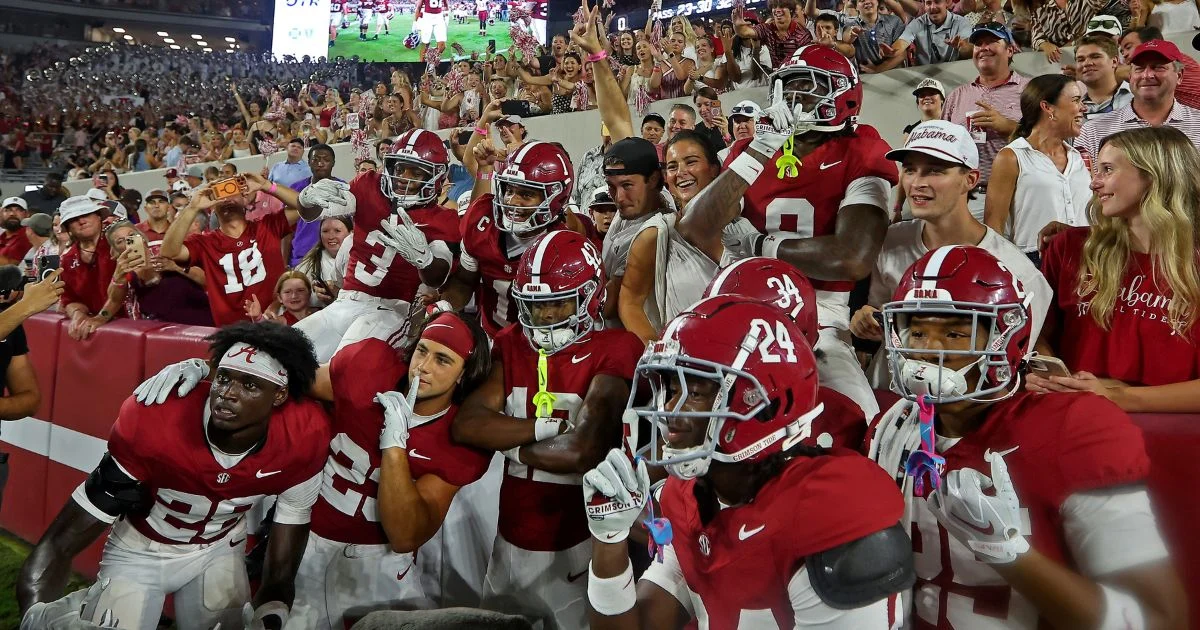
Amidst the widespread schedule disruptions, all eyes remained on the marquee matchup between the No. 1 ranked Alabama Crimson Tide and the No. 3 ranked Georgia Bulldogs, scheduled for Saturday at 7:30 p.m. Eastern on ABC in Tuscaloosa, Alabama. Despite Tuscaloosa’s proximity to the Gulf Coast, the decision was made to proceed with the game as planned, a testament to the extensive preparations undertaken by the University of Alabama and the Southeastern Conference (SEC). The game, a critical early-season contest with significant implications for the SEC Championship and national playoff picture, represented a massive economic and cultural event for the state.
However, even this high-profile event was not entirely untouched by Isaias. President Donald Trump, who had planned to attend the game, canceled his trip. As reported by CBS Atlanta, the President’s decision was made to avoid diverting essential security personnel and first responders from hurricane relief and preparedness efforts. This move underscored the gravity of the hurricane threat and the national priority placed on emergency management. While President Trump’s absence marked a notable change for the event, it did not affect the game’s kickoff time, which remained set for 7:30 p.m. Eastern. The decision by ESPN’s "College GameDay" to proceed with its broadcast from Tuscaloosa, albeit with contingency plans, further solidified the commitment to the game, highlighting its national importance despite the surrounding environmental challenges.
Safety, Logistics, and Official Responses
The overarching principle guiding all decisions regarding game changes was the safety and well-being of all involved. Governor Ron DeSantis of Florida, whose state was directly in the hurricane’s path, issued stern warnings via social media, emphasizing the storm’s Category 3 status and urging citizens to finalize their plans. "With landfall projected for this evening, now is the time to finalize your plans. If you are not evacuating, make sure you have everything you need to shelter in place. All state resources stand ready to respond and support impacted communities," DeSantis tweeted, reflecting the critical need for public adherence to safety protocols.
Athletic directors and conference commissioners, while not always issuing public statements on specific game changes, implicitly operate under protocols that prioritize safety above all else during severe weather events. The logistical challenges of hosting a college football game are immense even under normal circumstances, involving thousands of fans, intricate travel arrangements for visiting teams, broadcast crews, and extensive game-day operations staff. Introducing a major hurricane into this equation amplifies these challenges exponentially, potentially compromising travel routes, stadium infrastructure, and the availability of medical and security personnel. The decisions to move games, therefore, were not merely about football but about responsible stewardship and minimizing risk.

Broader Implications and Economic Ripples
The disruption caused by Hurricane Isaias extends far beyond the immediate inconvenience of altered schedules. College football, particularly in the South, is a colossal economic engine. Each home game generates millions of dollars for local economies through ticket sales, concessions, merchandise, hospitality, and tourism. Cancellations or significant schedule changes can inflict a substantial financial blow on universities, local businesses, and even state tax revenues. For smaller programs, especially those in the FCS or Division II, a single canceled home game can represent a significant portion of their annual operating budget, making rescheduling critical if possible.
Beyond the financial aspect, there are competitive implications. Teams that have their schedules disrupted face challenges in maintaining practice routines, game preparation, and player conditioning. A last-minute change in kickoff time, or an outright cancellation, can throw off a team’s rhythm and mental preparation. For teams vying for conference championships or national playoff berths, every game is crucial, and unexpected changes can impact their trajectory. Rescheduling a game later in the season also presents its own set of difficulties, potentially leading to compressed schedules, short weeks, or conflicts with other commitments.
The incident also highlights the ongoing vulnerability of sporting events in hurricane-prone regions. As climate patterns continue to evolve, severe weather events may become more frequent or intense, forcing sports organizations to develop more robust contingency plans and protocols. This includes not only game rescheduling but also infrastructure resilience, communication strategies for fans, and coordination with emergency management agencies.
Looking Ahead: A Season of Uncertainty
As Hurricane Isaias makes landfall and its full impact unfolds, the college football world will remain vigilant. While the initial wave of schedule changes has been implemented, the fluid nature of weather systems means that further adjustments could be necessary. FBSchedules, a key resource for tracking college football schedules, indicated that it would continue to update its listings as schools announce additional changes. The experience of Week 6 with Hurricane Isaias serves as a stark reminder of the powerful forces of nature and their ability to humble even the most organized and financially robust sporting enterprises. The resilience and adaptability demonstrated by college football institutions in the face of such adversity will undoubtedly be tested further as the hurricane season progresses. The emphasis remains on safety, cooperation, and the hope that the storm’s impact will be as minimal as possible for both the communities it affects and the beloved sport it temporarily disrupts.








