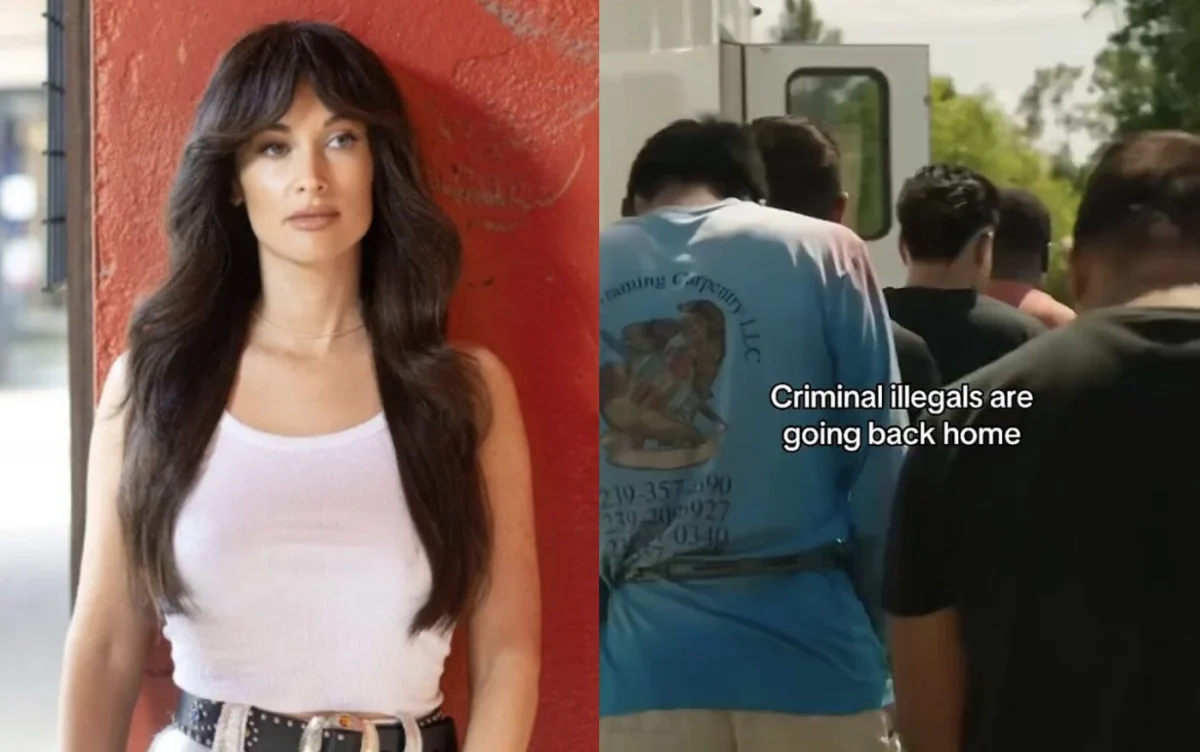
The intersection of celebrity influence and federal digital strategy has reached a new point of friction as the White House social media team utilized music from Grammy-winning artist Kacey Musgraves to soundtrack a video documenting Immigration and Customs Enforcement (ICE) operations. The move, which features the song "Mexico Honey" from Musgraves’ latest project, appears to be a calculated response to the singer’s recent and highly publicized criticisms of the administration and historical figures. This development highlights a growing trend in government communication: the use of "ragebait" tactics to maximize reach by intentionally provoking public figures and their fanbases.
The Social Media Incident and Lyric Utilization
The controversy began when the official White House TikTok account uploaded a montage showcasing ICE agents processing and deporting individuals. The video was set to "Mexico Honey," a track known for its breezy, acoustic production and romantic undertones. However, the White House’s use of the song focused on a specific lyrical play. The caption of the video read, "Going back smooth," an direct reference to the song’s chorus: "You’re going down smooth like Mexico, honey / Take my heart, take all my money / I want you so bad, it ain’t even funny."
By pairing the "going down smooth" lyric with footage of deportation flights and enforcement actions, the administration drew an explicit connection between the artist’s work and a policy she has historically opposed. This strategic use of intellectual property on social media platforms like TikTok is often protected under broad licensing agreements between the platform and music labels, leaving artists with little immediate recourse to prevent their music from being used in contexts they find objectionable.
Kacey Musgraves and the Texas Political Landscape
The White House’s decision to feature Musgraves’ music follows a weekend of heightened political activity for the Texas-born singer. During a concert in Dallas, Musgraves invited James Talarico, a Democratic member of the Texas House of Representatives, onto the stage. Talarico is currently engaged in a high-profile political struggle within the state, often clashing with Republican figures such as Attorney General Ken Paxton.
Musgraves, who has frequently used her platform to advocate for LGBTQ+ rights, gun control, and reproductive freedom, explicitly endorsed Talarico’s campaign during the show. This endorsement drew a sharp rebuke from Kristi Noem, the former Governor of South Dakota who now serves as the Secretary of Homeland Security. Noem took to social media to criticize Musgraves, stating a preference for country artist Ella Langley, whose public persona is often viewed as more aligned with traditional conservative values.
Musgraves responded to Noem’s criticism by referencing a controversial passage from Noem’s memoir, No Going Back. In the book, Noem described an incident two decades ago in which she shot her 14-month-old wirehair pointer, Cricket, after deciding the dog was "untrainable." Musgraves’ succinct online retort served to reignite a story that had previously caused bipartisan backlash against Noem, further cementing the adversarial relationship between the artist and the current administration.
The Christopher Columbus Commentary
Adding to the tension was a segment from Musgraves’ Sunday evening performance, where she addressed the audience regarding the federal holiday formerly known exclusively as Columbus Day. Musgraves did not mince words, labeling the 15th-century Italian explorer "the lamest person to ever exist" and a "loser."
"Tomorrow’s Monday? That sucks. Boo. Oh yeah, it’s a holiday, right? Ew, that’s right, wait, it’s Columbus Day?" Musgraves told the crowd. "Yeah, obviously f—k Columbus. Literally the lamest person to probably ever exist. Like, for real. What a loser. You’re a loser Christopher Columbus. We hate you."
These comments align with a broader cultural shift toward recognizing Indigenous Peoples’ Day in place of Columbus Day, a movement that has seen significant traction in progressive circles. However, within the context of the current administration’s emphasis on traditional American heritage and its vocal defense of historical monuments, Musgraves’ remarks were viewed by federal officials as a direct ideological provocation.
The "Ragebait" Doctrine: A New Era of Government PR
The White House has been surprisingly transparent about its strategy of using music from "anti-Trump" or liberal-leaning artists to promote its most polarizing policies. In a previous statement provided to Variety regarding the use of Taylor Swift’s music in similar videos, a spokesperson for the administration’s digital team stated: "We made this video because we knew fake news media brands like Variety would breathlessly amplify them. Congrats, you got played."
This strategy, colloquially known as "ragebaiting," relies on the psychological principle that high-arousal emotions—specifically anger and indignation—drive higher engagement rates on social media algorithms. By using music from artists like Kacey Musgraves, Bad Bunny, Sabrina Carpenter, and Ariana Grande, the administration ensures that:
- The artist’s fanbase will share the video to express outrage.
- Media outlets will report on the "clash" between the artist and the government.
- The core message of the video—in this case, the enforcement of immigration laws—reaches a much wider audience than it would through a standard press release or traditional advertisement.
Data from social media analytics firms suggest that these "trolling" videos receive up to five times more engagement than standard government informational posts. For the administration, the negative sentiment from the artists and their fans is a secondary concern compared to the primary goal of dominating the news cycle and demonstrating a "combative" stance to their supporters.
Chronology of Artistic Friction
The incident with Musgraves is part of a growing timeline of disputes between the entertainment industry and the federal government’s social media arm:
- Early 2024: The administration begins using Taylor Swift’s "Blank Space" in videos highlighting border wall construction. Following internal pressure and potential copyright inquiries, the audio was eventually removed, though the singer remained silent on the matter.
- Mid-2024: Bad Bunny and Ariana Grande’s tracks are used in videos celebrating the removal of undocumented immigrants with criminal records. Both artists have previously been vocal critics of the administration’s rhetoric regarding the Hispanic community.
- Late 2024: Sabrina Carpenter and Zara Larsson’s music is featured in "get out the vote" style videos that emphasize strict law-and-order policies, prompting brief but heated social media exchanges between the artists’ representatives and the White House digital director.
- October 2024: The Kacey Musgraves "Mexico Honey" video is released, timed specifically to coincide with her viral comments regarding Christopher Columbus and her public feud with Secretary Kristi Noem.
Legal Implications and the Digital Services Act
The ability of a government entity to use popular music for political messaging remains a gray area in intellectual property law. Most social media platforms operate under "blanket licenses" with major record labels (such as Universal Music Group, Sony Music, and Warner Music Group). These licenses allow users—including government accounts—to use clips of songs without seeking individual permission for every post.
While political campaigns are often hit with "cease and desist" orders for using songs at rallies (which fall under different public performance licensing rules), the use of music in short-form digital video is more difficult to litigate. Artists can request "take-downs" if they can prove the use implies a false endorsement, but the White House’s "ragebait" strategy often skirts this by using the music ironically or in a way that is clearly adversarial, making an "endorsement" claim harder to sustain in court.
Broader Impact and Policy Implications
Beyond the entertainment value of the "feud," the situation reflects a significant shift in how federal agencies like the Department of Homeland Security and ICE interact with the public. Historically, these agencies maintained a somber, bureaucratic tone. The shift toward a more aggressive, meme-heavy social media presence mirrors the broader polarization of American politics.
For Kacey Musgraves, the incident reinforces her brand as a defiant, politically active artist in a genre—country music—that has traditionally been more conservative. For the White House, the video serves as a dual-purpose tool: it satisfies a base that enjoys seeing liberal celebrities "trolled" while simultaneously disseminating footage of immigration enforcement that might otherwise be ignored by younger demographics.
As the election cycle intensifies, the use of cultural icons as foils for policy promotion is expected to increase. Whether Musgraves will take legal action or respond through her music remains to be seen, but the "Mexico Honey" incident stands as a definitive example of the new digital warfare being waged from the highest levels of government. The strategy ensures that even those who disagree with the administration’s policies are forced to engage with them, driven by the very music they enjoy.