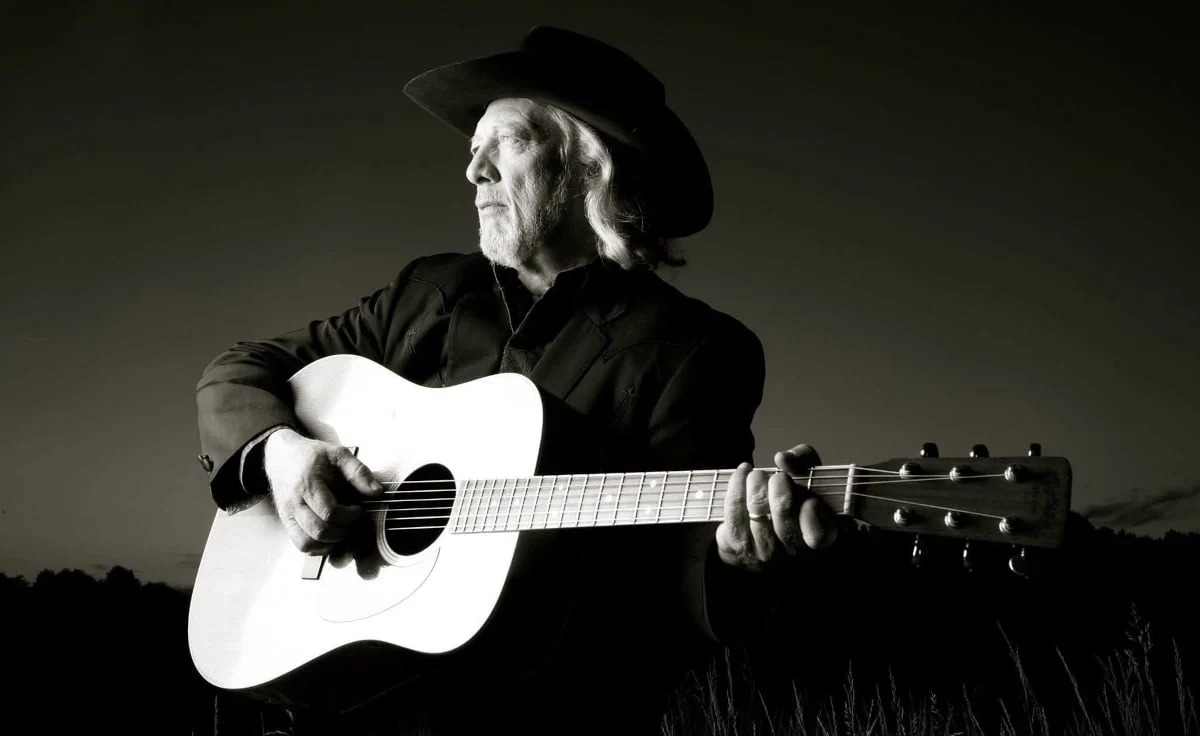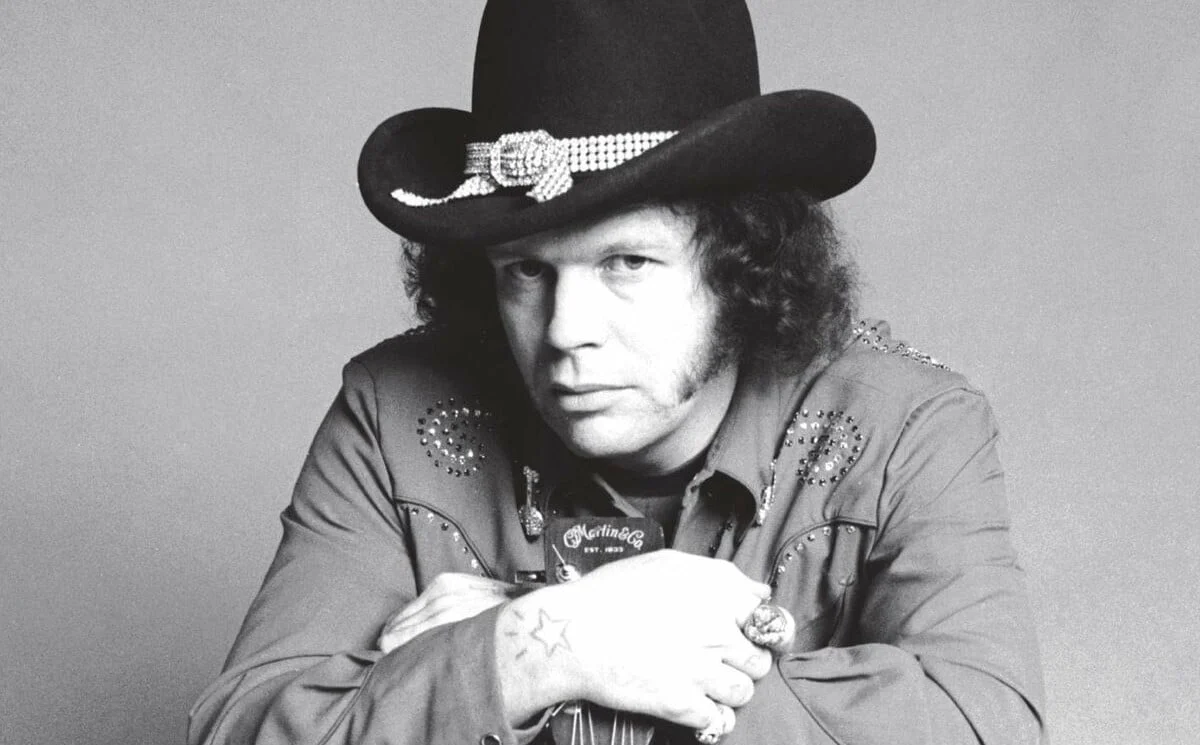
The passing of David Allan Coe on April 29, 2026, at the age of 86, has reignited one of the most enduring and polarized debates in the history of American roots music: his absence from the Country Music Hall of Fame. For decades, Coe remained a figure of singular defiance, a self-styled outlaw whose career was as defined by its brilliant songwriting as it was by its controversies. As the country music community reflects on his six-decade career, the institution in Nashville faces renewed scrutiny regarding its induction criteria and whether one of the architects of the "Outlaw" movement will ever receive its highest honor.
While the Country Music Hall of Fame is often criticized for its omissions, the case of David Allan Coe is uniquely complex. He was a performer who inspired a cult-like devotion, yet he operated largely outside the grace of the Nashville establishment. To understand his prospects for posthumous induction, one must navigate the rigid bylaws of the Country Music Association (CMA), the statistical reality of his commercial career, and the heavy weight of a personal history that often blurred the lines between myth and infamy.
The Institutional Barriers to Posthumous Induction
The immediate question following Coe’s death concerns the timeline for potential induction. Under the current rules governing the Country Music Hall of Fame, no artist is eligible for induction in the calendar year immediately following their death. This "sympathy vote" rule is designed to ensure that inductions are based on a lifetime of achievement rather than the emotional swell that follows a legend’s passing. Consequently, Coe is ineligible for the Class of 2027.
Beyond the timeline, the selection process itself remains one of the most exclusive in the world of music. Unlike the Rock & Roll Hall of Fame, which often inducts several performers in a single year, the Country Music Hall of Fame inducts only three individuals annually. These slots are strictly categorized: one for the "Modern Era," one for the "Veterans Era," and a third rotating category that alternates between "Songwriter," "Musician," and "Non-Performer."
David Allan Coe falls squarely into the Veterans Era category, which considers artists who reached national prominence more than 20 years ago. The competition in this category is notoriously fierce. There is a significant backlog of legendary figures—including Clint Black, Dwight Yoakam, and the late Eddie Rabbitt—who possess stronger chart statistics and fewer public relations liabilities. Because only one veteran is selected each year, the queue moves at a glacial pace, often leaving deserving icons waiting for decades.
A Career Defined by Writing and Rebellion
The argument for Coe’s induction rests heavily on his immense contribution to the country music canon as a songwriter. While his own chart success was modest compared to his contemporaries, his pen provided the foundation for some of the most iconic moments in the genre’s history.
Coe arrived in Nashville in 1967, famously living in a red hearse parked in front of the Ryman Auditorium. Having spent much of his youth in reform schools and correctional facilities, including a stint in the Ohio State Penitentiary, Coe brought a raw, unfiltered perspective to a town that was, at the time, dominated by the polished "Nashville Sound."
His breakthrough as a songwriter came when Tanya Tucker took his composition "Will You Lay With Me (In a Field of Stone)" to the top of the charts in 1974. Perhaps his greatest contribution to the cultural zeitgeist was "Take This Job and Shove It," recorded by Johnny Paycheck in 1977. The song became a multi-platinum anthem for the American working class and remains one of the most recognizable titles in the history of the genre.
As a performer, Coe was a cornerstone of the Outlaw Country movement alongside Waylon Jennings and Willie Nelson. His 1975 hit "You Never Even Called Me By My Name" is widely considered the "perfect country and western song," a satirical masterpiece that dissected the tropes of the genre while simultaneously honoring them. Other notable hits included "The Ride" (1983), which reached number four on the Billboard Hot Country Singles chart, and "Mona Lisa Lost Her Smile" (1984), which peaked at number two.
The Question of "Personal Baggage" and Controversy
The most significant hurdle to Coe’s induction is undoubtedly his controversial personal history. In the late 1970s and early 1980s, Coe released two independent, "X-rated" albums: Nothing Sacred and Underground Album. These records contained material that was not only sexually explicit but also featured racial slurs and themes that many find irredeemable. While Coe later distanced himself from the content, claiming it was intended as a provocation or a "joke" for a specific subculture, the existence of these recordings has provided critics and Hall of Fame voters with significant ammunition against his candidacy.

Furthermore, Coe’s "Outlaw" persona was rooted in a genuine, often troubled, past. While some of his claims—such as being on death row for killing a fellow inmate—were later debunked or found to be highly exaggerated, his reputation as a volatile outsider remained intact.
However, proponents of Coe’s induction point to the fact that the Hall of Fame has previously overlooked the "moral" failings of its members when their musical impact was undeniable. Jerry Lee Lewis, whose personal life was marred by legal and ethical scandals far exceeding Coe’s, was inducted in 2022. Johnny Paycheck, who served time in prison for a barroom shooting, has also been a frequent finalist for induction. The debate remains whether Coe’s specific brand of controversy is uniquely disqualifying or if his cultural impact eventually outweighs his past indiscretions.
The Josh Pruitt Claims and Internal Estate Conflict
Adding a layer of modern complexity to the Coe legacy is the emergence of family disputes following his death. In August 2026, Josh Pruitt, a son of Coe born out of wedlock, made headlines with social media posts alleging that Hall of Fame executives had previously attempted to induct his father.
According to Pruitt, three executives traveled to Coe’s home in Ormond Beach, Florida, with the intent to finalize an induction. Pruitt claimed the deal collapsed when Coe’s wife allegedly demanded $70,000 for the use of memorabilia and personal items for the museum display. Pruitt later clarified that the visit might have been related to a museum exhibit rather than a formal induction, but the story highlighted the friction between the Coe estate and the Nashville establishment.
The Hall of Fame operates as a non-profit museum and research library, and its induction process is handled by a secret committee of experts. The institution does not typically "negotiate" inductions or pay for the loan of artifacts. The public nature of this family dispute, combined with the ongoing turmoil within the Coe estate, creates an atmospheric "noise" that may deter voters who prefer to honor artists with stable legacies and cooperative representatives.
Comparative Impact and the "Mount Rushmore" Factor
When evaluating Coe against his peers, the statistical argument is mixed. He never achieved a number-one hit as a solo artist, a metric that is often used as a baseline for Hall of Fame consideration. However, his cultural footprint is arguably larger than many artists with a dozen chart-toppers.
Coe was a bridge-builder between disparate musical worlds. In the 1970s, he helped unite the "hippies and the rednecks" with his Longhaired Redneck persona, creating a blueprint for the modern "alt-country" and "Americana" movements. Later in his career, his collaboration with members of the heavy metal band Pantera for the project Rebel Meets Rebel showcased a versatility and a willingness to experiment that was decades ahead of its time.
To a significant portion of the country music fanbase, Coe belongs on a "Mount Rushmore" of the genre’s most authentic voices. His influence can be heard in the work of modern superstars like Eric Church, Jamey Johnson, and Chris Stapleton, all of whom have cited Coe’s uncompromising songwriting as a major inspiration.
Conclusion: A Legacy in Limbo
As of late 2026, the prospect of David Allan Coe entering the Country Music Hall of Fame remains dim but not impossible. The combination of a strict selection process, a crowded field of eligible veterans, and a career-long history of provocation makes him a difficult candidate for a committee that often prioritizes institutional prestige.
However, the Hall of Fame exists to tell the story of country music, and it is a story that is incomplete without the "Mysterious Rhinestone Cowboy." Whether through his era-defining songwriting or his role as the genre’s ultimate outsider, Coe’s impact on the fabric of American music is undeniable. If the institution eventually decides to prioritize cultural significance over commercial statistics and personal conduct, Coe may one day find his plaque in the rotunda. Until then, his legacy will continue to thrive where it always has: on the fringes, in the honky-tonks, and in the hearts of those who value the "Outlaw" spirit above all else.