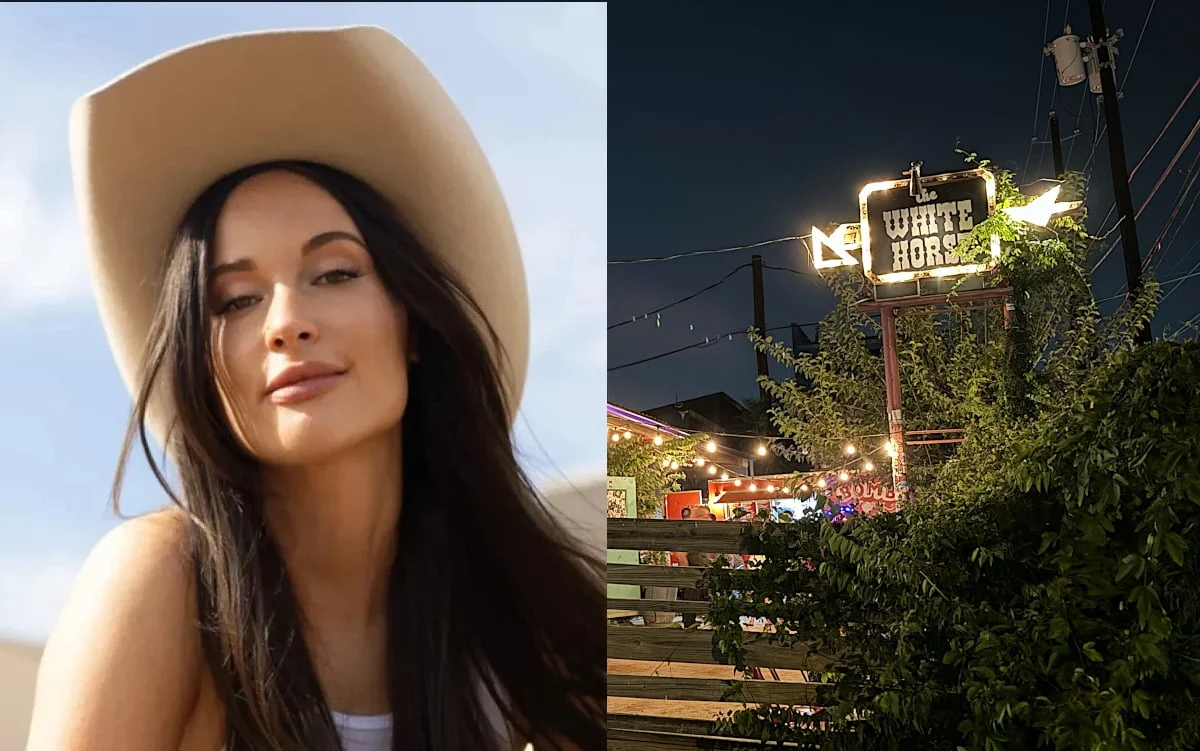
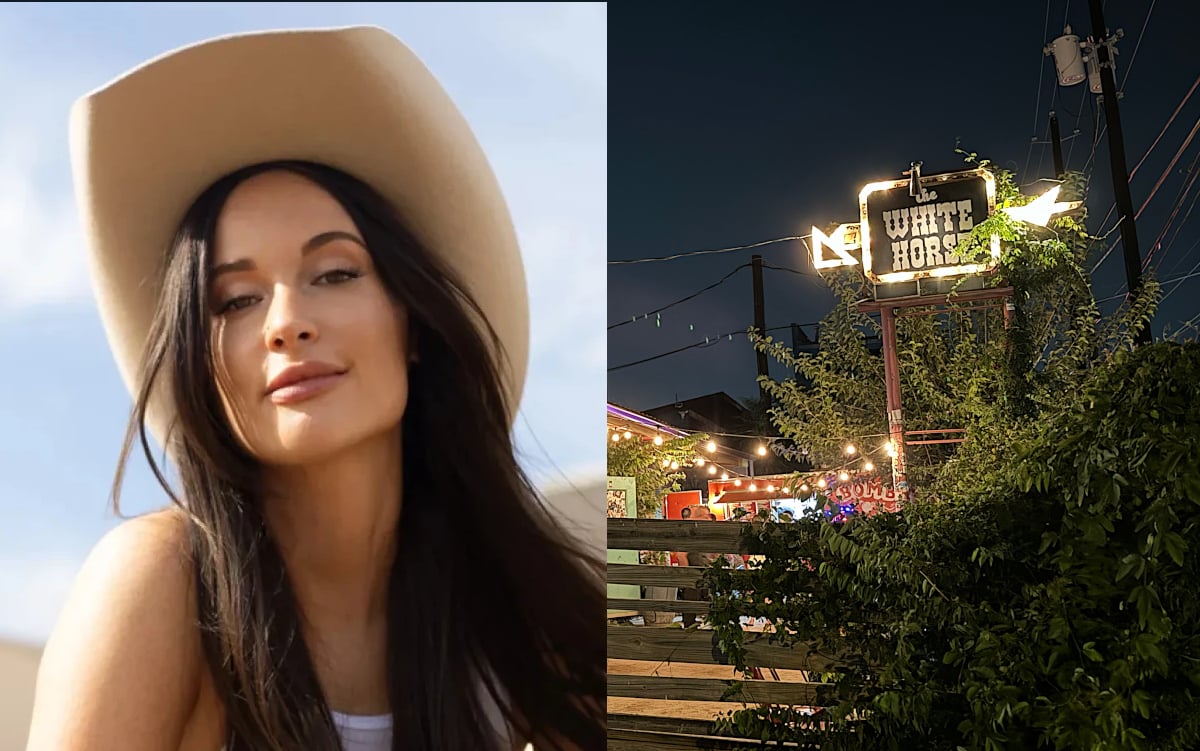
The landscape of modern country music often finds itself divided between the glitz of multimillion-dollar arena productions and the sweat-soaked floorboards of traditional dance halls. On the night of October 8, 2026, Grammy-winning artist Kacey Musgraves bridged that divide in spectacular fashion. Following the conclusion of a two-night, sold-out residency at Austin’s Moody Center as part of her "Middle of Nowhere" Tour, Musgraves bypassed the typical post-show celebrity afterparties to return to her musical origins, delivering an unannounced midnight set at the legendary East Austin honky-tonk, The White Horse.
The surprise appearance followed a high-profile series of performances on October 7 and 8 at the 15,000-capacity Moody Center. While the arena shows were defined by high-concept stage design and a headline-grabbing guest appearance by fellow Texas native Miranda Lambert, the midnight set at The White Horse offered a starkly different experience. It served as a testament to Musgraves’ enduring connection to the Texas "Opry" circuit and the grassroots culture that fostered her early career.
The Moody Center Residency and the Lambert Reunion
The "Middle of Nowhere" Tour has been characterized by critics as a reflective chapter in Musgraves’ career, balancing the psychedelic pop-country of her middle discography with a return to the acoustic-driven textures of her 2024 album Deeper Well. Her Austin stops were particularly significant, representing a homecoming for the Golden, Texas, native.
The primary narrative circulating through national media outlets prior to the surprise show was the onstage reconciliation between Musgraves and Miranda Lambert. The two stars, who both rose through the same East Texas music competitions as teenagers, performed their collaborative track "Horses and Divorces." The song, described by fans as a "bury the hatchet" anthem, addresses the parallels in their public lives and high-profile divorces. The performance at the Moody Center was the first time the duo had performed the track live since its release, fueling speculation about a burgeoning era of collaboration between the two powerhouses of modern country.
However, as the lights dimmed at the Moody Center on Thursday night, a different story began to unfold across town in the bars of East Austin.
A Midnight Transformation at The White Horse
The White Horse, located on Comal Street, has long been a sanctuary for Austin’s two-step community. Known for its sawdust-covered floors and commitment to traditional country, western swing, and conjunto, it is a venue where the dance floor is often more important than the stage.
The night’s scheduled lineup featured a trio of respected acts within the Americana and traditional country scenes: Sweet Megg, who had traveled from Nashville, and Austin local favorites Bovine and the Sentimental Family Band. In a rare display of communal support, these artists ceded their remaining stage time to allow Musgraves and her touring band to take over at midnight.
Though the performance was intended to be a surprise, the speed of social media ensured that word traveled quickly. By 11:30 PM, the atmosphere outside the venue had shifted from a standard Thursday night to a logistical challenge for security. A line of hopeful fans snaked around the block, leading to a "one-in, one-out" policy that left hundreds on the sidewalk. Interestingly, the sudden influx of "super-fans" also attracted opportunistic vendors; reports indicated that counterfeit merchandise sellers appeared within the hour, peddling T-shirts and keychains featuring Musgraves’ "glittery bovine testicles" stage prop, which has become a viral symbol of her current tour aesthetic.
The Setlist: A Tribute to the Texas Canon
When Musgraves took the stage at The White Horse, she opted to leave her radio hits behind, focusing instead on a curated selection of classic country covers that mirrored her upbringing on the Texas circuit. Accompanied by her professional touring band—who reportedly improvised through many of the selections—Musgraves delivered a set that functioned as a masterclass in country music history.
The setlist reportedly included:
- (Hey Baby) Que Paso: A nod to the Texas Tornados and the late Doug Sahm, celebrating the "Tex-Mex" sound integral to the San Antonio and Austin regions.
- Walking After Midnight: A faithful rendition of the Patsy Cline standard, showcasing Musgraves’ vocal control in an intimate setting.
- Hey, Good Lookin’: The Hank Williams classic, which invited a rowdy singalong from the packed house.
- Luckenbach, Texas (Back to the Basics of Love): The Waylon Jennings anthem that serves as a spiritual mission statement for the Texas outlaw scene.
- I’ve Been Everywhere: The rapid-fire geographical odyssey made famous by Hank Snow and Johnny Cash.
Witnesses noted that Musgraves appeared more relaxed than during her arena sets, though a slight cultural friction emerged between the artist’s dedicated fanbase and the venue’s regular patrons.
The Tension of the Two-Step
The White Horse is a venue where the "two-step" is sacrosanct. Traditionally, the area directly in front of the stage is reserved for dancers moving in a counter-clockwise circle, rather than stationary "concert-style" viewing. However, the sheer density of Musgraves fans—many of whom had rushed from the Moody Center—disrupted this flow.
Musgraves herself addressed the crowd during the set, encouraging them to maintain the venue’s spirit. "I came here to play so everyone could dance to it," she reportedly told the audience. "Why would you come to a show at The White Horse if you’re not here to dance?"
Members of the opening bands reflected on this dynamic. Nick Fichter, of the band Bovine, noted the irony of a global superstar longing for the simplicity of a dance hall. "She kept asking everyone to dance. It really felt like an ode to her relationship with the dance halls," Fichter said. "It was a really neat experience, and that it fell into our laps like that. It was great to be part of it."
Kat Foree, also of Bovine, observed a sense of nostalgia in Musgraves’ performance. "I saw that younger self wishing for people to connect with her music in that way," Foree remarked. "Austin is pretty magical for that. We can make money and have a really engaged crowd without our name needing to sell tickets."
The "Duality" of the Americana Artist
One of the most widely shared moments from the event came not from the stage, but from a social media post the following day by Georgia Ferguson, the singer, bass player, and founder of Bovine. Ferguson posted a video of herself performing her day job—throwing a bag of trash into a restaurant dumpster—with the caption: "No one at my restaurant job knows my band opened for Kacey Musgraves last night."
The post, which quickly went viral within the music community, highlighted what Ferguson called "the duality of working in an up-and-coming Americana band." It underscored the vast economic disparity between the "A-list" touring circuit and the working-class reality of the musicians who maintain the cultural fabric of cities like Austin.
Industry analysts suggest that surprise shows like Musgraves’ serve a dual purpose: they provide the artist with a "credibility reset" after months of highly polished arena performances, and they provide a massive, albeit temporary, spotlight for local venues and supporting acts.
Historical Context and Legacy
This was not Musgraves’ first encounter with The White Horse. In 2015, she filmed the music video for "Are You Sure"—a hidden track on her Pageant Material album featuring Willie Nelson—at the venue. The song itself is a critique of the shallow nature of the Nashville "party" scene, asking the listener if they are sure this is where they want to be.
Returning to the same stage eleven years later, now as one of the most successful artists in the world, suggests a deliberate attempt to maintain her "Texas Outlaw" lineage. Musgraves has frequently cited her early years playing "Opries"—community-run variety shows in small Texas towns—as the foundation of her stagecraft. By returning to a honky-tonk, she reaffirms her position within a lineage that includes Willie Nelson, Waylon Jennings, and George Strait, all of whom maintained ties to the dance hall circuit long after achieving superstardom.
Broader Implications for the Austin Music Scene
The event also brings into focus the changing nature of Austin’s "Live Music Capital of the World" moniker. As the city undergoes rapid gentrification and real estate prices soar, traditional venues like The White Horse, Sagebrush, and Sam’s Town Point face increasing pressure.
Musgraves’ surprise show acts as a high-profile endorsement of these spaces. It validates the "Two-Step" culture that artists like Ella Langley have recently romanticized in tracks like "Choosin’ Texas." For the local Austin music economy, such an event is a double-edged sword: it brings unprecedented attention and a one-night windfall in bar sales, but it also highlights the fragility of a scene where the performers often have to work service industry jobs to survive between gigs.
As the "Middle of Nowhere" Tour continues, the Austin residency will likely be remembered as a pivotal moment where Kacey Musgraves successfully navigated the space between being a global pop icon and a Texas honky-tonk singer. For the few hundred people inside The White Horse at midnight on October 8, it was a reminder that despite the arenas and the accolades, the heart of country music remains on the dance floor.