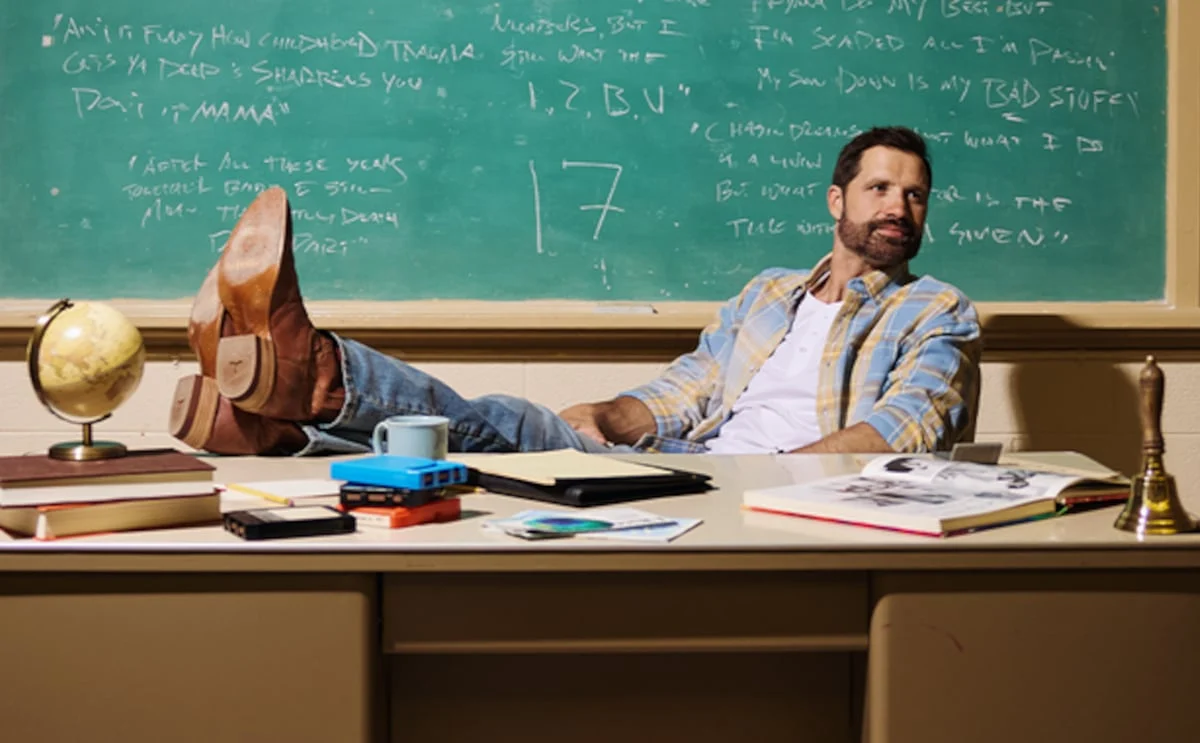
Walker Hayes, the multi-platinum singer-songwriter who rose to global prominence with the 2021 hit "Fancy Like," has officially released his latest single, "Back By Then." The track, which follows a string of commercially successful but critically polarizing releases, arrives at a pivotal moment for both the artist and the country music industry at large. As Hayes continues to lean into the rhythmic, spoken-word-influenced style that has become his signature, the release of "Back By Then" has reignited long-standing discussions regarding the boundaries of the country genre, the role of social media choreography in music promotion, and the commercial viability of "pop-country" in an increasingly digital-first marketplace.
The Composition and Lyrical Themes of Back By Then
"Back By Then" represents a continuation of the stylistic choices that defined Hayes’s previous projects, such as Country Stuff The Album. The song features a heavy reliance on "snap-tracks," a minimalist percussion style characterized by finger snaps and electronic backbeats, which has become a staple of modern Nashville production. Lyrically, the song utilizes a series of rhythmic internal rhymes and wordplay, a hallmark of Hayes’s songwriting technique.
The narrative of the song centers on a familiar trope in contemporary country music: a nostalgic or impulsive romantic encounter occurring in a rural setting. The lyrics describe a protagonist noticing a romantic interest "on a mission" and "fishing" for feelings, leading to a suggestion to "recline" and "backslide in the backseat." While the lyrics utilize rural imagery such as "backroads" and "backwoods," the musical arrangement leans heavily into R&B and hip-hop cadences, a stylistic blend often referred to by industry analysts as "hick-hop" or "snap-country."
The production of "Back By Then" is designed for high-fidelity streaming and short-form video compatibility. By emphasizing a repetitive, catchy hook and a clear rhythmic pocket, the track is optimized for platforms like TikTok and Instagram Reels, where Hayes has previously found significant success.
The Strategy of Viral Choreography and Family Involvement
A central component of the "Back By Then" release is its accompanying visual and promotional campaign, which features Hayes’s daughter, Lela Hayes. The 18-year-old has been a frequent collaborator in her father’s career, most notably helping to choreograph the "Fancy Like" dance that became a viral sensation during the summer of 2021.
The video for "Back By Then" incorporates a synchronized line dance designed to be easily replicated by fans on social media. This "TikTok-first" marketing strategy has become a cornerstone of Hayes’s brand identity. While traditional country music marketing often relied on terrestrial radio tours and live performances, Hayes’s team has successfully bypassed these traditional gatekeepers by building a direct-to-consumer relationship through "wholesome" family-oriented content.
Industry analysts note that this approach serves a dual purpose. First, it humanizes the artist, positioning him as a relatable "suburban dad" rather than a distant celebrity. Second, it creates a self-sustaining ecosystem of user-generated content. When fans record themselves performing the dance, they essentially provide free marketing for the single, increasing its visibility within the platform’s algorithm.
Chronology of Walker Hayes’s Commercial Impact
To understand the significance of "Back By Then," it is necessary to examine the trajectory of Hayes’s career over the past decade. After moving to Nashville in 2005, Hayes spent years as a songwriter and artist struggling to find a foothold in the industry.
- 2010–2015: Hayes signed with Capitol Records Nashville but was eventually dropped after his initial singles failed to gain significant traction. He famously took a job at Costco to support his family during this period.
- 2017: Hayes signed with the revived Monument Records, led by Shane McAnally and Jason Owen. His debut single for the label, "You Broke Up with Me," was a Top 10 hit on the Billboard Country Airplay chart.
- 2021: The release of "Fancy Like" changed the course of Hayes’s career. The song peaked at No. 3 on the Billboard Hot 100 and spent six months at No. 1 on the Hot Country Songs chart. Its success led to a massive partnership with the restaurant chain Applebee’s, which saw a reported 102% increase in stock value and a significant surge in sales following the song’s popularity.
- 2022–2024: Hayes followed up with singles like "AA" and "Y’all Life," which continued to perform well on streaming platforms but faced increasing scrutiny from traditionalist critics.
- 2025–2026: As the "TikTok era" of music marketing evolved, Hayes remained committed to his niche, even as some industry observers suggested that the novelty of social media dances was beginning to wane in favor of more "authentic" or "neotraditional" country sounds.
The Evolution of Monument Records and Industry Performance
The performance of "Back By Then" is also being watched as a bellwether for Monument Records. Founded originally in 1958 and home to legends like Roy Orbison and Dolly Parton, the label was relaunched in 2017 as a joint venture with Sony Music. While Hayes has been the label’s primary commercial engine, the reliance on a single artist for major revenue streams presents inherent risks.
Critics of the "pop-country" model argue that the rapid rise and fall of viral hits can lead to "brand fatigue." In the case of Monument Records, the label has had to balance the massive success of Hayes with the development of other artists. The assertion that Hayes’s dominance has negatively impacted the label’s stability is a point of contention among Nashville insiders. While some argue that his success provided the capital necessary for the label to grow, others suggest that the "Applebee’s effect" created a narrow sonic identity that has been difficult for the label to diversify.
Genre Criticism and the Traditionalist Backlash
The release of "Back By Then" has once again exposed the deep fissures within the country music community. On one side are the "traditionalists," represented by outlets such as Saving Country Music, who argue that Hayes’s music lacks the instrumental and lyrical depth associated with the genre’s roots. This faction views the incorporation of hip-hop elements and TikTok-centric marketing as a form of "cultural appropriation" that prioritizes commercial gain over artistic integrity.
The primary criticisms leveled against "Back By Then" include:
- Incoherence: Some critics argue that the rapid-fire, rhythmic delivery of the lyrics obscures the narrative, making the song difficult to follow for listeners accustomed to traditional storytelling.
- Production: The use of electronic loops and the absence of traditional country instruments like the steel guitar or fiddle are often cited as evidence that the music should be classified as pop rather than country.
- Authenticity: There is an ongoing debate regarding Hayes’s "suburban" persona. Critics often question whether his portrayal of rural life is an authentic reflection of his experiences or a calculated marketing tactic.
Conversely, supporters of Hayes argue that country music has always been an evolving genre that absorbs influences from popular culture. They point to the "Nashville Sound" of the 1960s or the "Outlaw Country" of the 1970s as previous examples of the genre shifting its boundaries. From this perspective, Hayes is simply the modern iteration of a commercial country artist who understands how to reach a broad audience in the digital age.
Broader Impact and Market Implications
The reception of "Back By Then" will likely influence how labels approach artist development in the latter half of the 2020s. If the song succeeds in generating another viral wave, it will reinforce the "social media first" model that has dominated the industry since 2020. However, if it fails to achieve the heights of "Fancy Like," it may signal a shift in consumer preferences.
Recent data from 2025 and early 2026 suggests a growing interest in "rootsier" sounds, as evidenced by the rise of artists like Zach Bryan, Tyler Childers, and Lainey Wilson. These artists emphasize live instrumentation and raw, emotional songwriting, providing a stark contrast to the polished, beat-driven production of Walker Hayes.
Furthermore, the rise of Artificial Intelligence in music production adds another layer of complexity. As AI becomes more capable of generating catchy, rhythmic loops and simple lyrical structures, human artists who specialize in these styles may find themselves facing increased competition from automated content. The "Back By Then" release serves as a test case for whether a human artist’s personality and family-based branding can maintain a competitive edge over purely algorithmic music.
Conclusion and Future Outlook
Walker Hayes remains one of the most successful and polarizing figures in modern music. "Back By Then" is a calculated continuation of a proven formula, designed to maximize engagement on social platforms while catering to a specific demographic of suburban listeners. Whether the song is viewed as a creative "new low" or a brilliant piece of commercial engineering depends largely on one’s definition of country music.
As Hayes moves forward with his career, the industry will continue to monitor the longevity of the "TikTok country" subgenre. With six children and a massive global platform, Hayes has built a brand that transcends music, encompassing lifestyle, family, and corporate partnerships. Regardless of critical reception, his impact on the business of Nashville is undeniable, having paved the way for a new generation of artists to leverage digital tools in ways that were once unimaginable in the traditional halls of Music Row.