

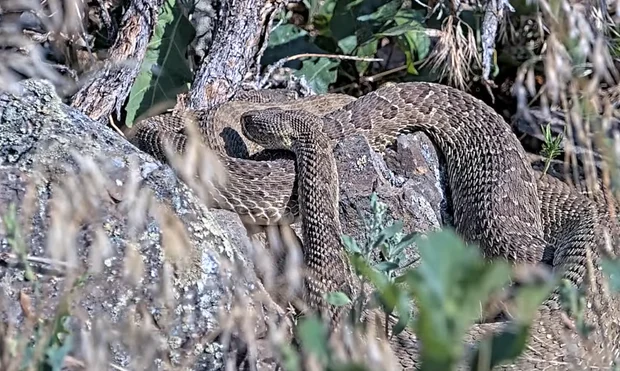
A pioneering initiative by Cal Poly has captivated wildlife enthusiasts and researchers alike, with the launch of a live YouTube stream providing an intimate, unedited view into a bustling rattlesnake "mega-den" nestled within the rugged landscapes of Northern Colorado. This innovative project, part of the broader RattleCam.org community science endeavor, offers a rare opportunity to observe hundreds of wild rattlesnakes as they emerge from their winter brumation, interact, and prepare for the upcoming reproductive season. The California university, in collaboration with local landowners, has established this discreet observation post on private property, deliberately withholding the exact location to safeguard the fragile ecosystem and its serpentine inhabitants. The geological features of the site, characterized by an intricate network of crevices and sheltered alcoves, have proven to be an irresistible haven, attracting an extraordinary congregation of these often-misunderstood reptiles. Initial observations from the livestream, which commenced recently, depicted a dynamic scene of numerous rattlesnakes coiling, slithering, and occasionally intertwining, showcasing the complex social dynamics within such a dense aggregation.
The Unveiling of the Mega-Den: A Window into Wild Colorado
The "mega-den" in Northern Colorado represents a significant ecological discovery, providing a natural laboratory for scientists. While the specific species is not explicitly stated in the initial report, given the location, it is highly probable that the den primarily hosts the Prairie Rattlesnake (Crotalus viridis), the most widespread venomous snake in Colorado. These remarkable reptiles, known for their adaptability, utilize communal dens for a crucial period of their annual cycle: brumation, a state similar to hibernation but distinct in its physiological processes, driven more by temperature fluctuations than food scarcity. The geological architecture of this particular site – its stable temperatures, protection from predators, and abundant hiding spots – has created an optimal environment for hundreds of rattlesnakes to congregate, ensuring their survival through the colder months and offering a safe haven for gestation and birth. The sheer number of individuals observed moving and interacting on the livestream underscores the importance of such sites for rattlesnake populations and highlights a natural phenomenon that is seldom witnessed by human eyes, let alone streamed globally.
RattleCam.org: A Pioneer in Community Science
At the heart of this groundbreaking endeavor is RattleCam.org, conceived as a community science project designed to harness the power of collective observation. The primary scientific objectives revolve around understanding the intricate behaviors of pregnant rattlesnakes, including their social interactions, thermoregulation strategies, and, crucially, their maternal care for neonates expected to arrive later in the summer. Community science, often referred to as citizen science, empowers individuals from the general public to contribute to scientific research by collecting or analyzing data. In this context, viewers of the RattleCam livestream are implicitly invited to become citizen scientists, their observations potentially contributing to a vast dataset that would be logistically impossible for a small team of researchers to collect alone. This model not only accelerates scientific discovery but also fosters a deeper connection between the public and the natural world, transforming passive viewing into active participation in conservation and research. The project aims to illuminate aspects of rattlesnake biology that remain poorly understood, particularly their reproductive ecology and the nuances of maternal investment.
Understanding Colorado’s Rattlesnakes: Ecology and Behavior
Colorado is home to several species of snakes, with the Prairie Rattlesnake being the most commonly encountered venomous species. These snakes play a vital role in their ecosystems, primarily as apex predators of small mammals such as rodents, thereby helping to control pest populations. Their diet also includes birds, lizards, and other small vertebrates. Prairie rattlesnakes typically inhabit prairies, grasslands, shrublands, and open forests, often near rocky outcrops or burrows which provide shelter.
Their annual life cycle is intrinsically linked to seasonal temperature changes. As temperatures drop in the fall, rattlesnakes seek out communal dens, or hibernacula, to brumate. These dens are often south-facing, subterranean crevices or abandoned burrows, providing stable temperatures above freezing. The "mega-den" observed via RattleCam exemplifies an exceptionally successful hibernaculum. As spring arrives and temperatures rise, typically from late March to May, the snakes emerge from their brumation. This is the period currently being observed on the RattleCam, where activity levels increase as snakes bask, seek mates, and forage. Mating usually occurs in the spring or early summer, with females then undergoing a gestation period that lasts approximately 3-4 months. Unlike most snakes, rattlesnakes are viviparous, meaning they give birth to live young, usually in late summer or early fall. A female Prairie Rattlesnake can give birth to anywhere from 4 to 25 live young, which are born fully venomous and self-sufficient. This reproductive strategy, along with the communal denning, is what researchers hope to study in detail through the RattleCam project.
The Phenomenon of Communal Denning
Communal denning, as showcased by the Northern Colorado mega-den, is a fascinating and critical survival strategy for many snake species, particularly those in temperate climates. For rattlesnakes, these aggregations are not merely coincidental gatherings but a deliberate, evolutionarily refined behavior. The advantages of denning communally are multi-faceted. Firstly, it provides thermal stability. Deep rock crevices and subterranean burrows offer insulation from extreme winter cold and summer heat, crucial for ectothermic (cold-blooded) reptiles. Secondly, communal denning can offer enhanced protection from predators. While individual snakes are vulnerable, a large group might deter some predators or increase the chances of detection and escape. Thirdly, these dens serve as crucial social hubs, facilitating breeding opportunities as snakes emerge in the spring. A "mega-den" like the one being observed implies a site with exceptionally favorable conditions, potentially having been used for generations, leading to a high density of individuals. The presence of hundreds of rattlesnakes at a single site is not only a rare spectacle but also an indicator of a healthy local population and a well-preserved habitat. Scientists can glean invaluable information about population demographics, genetic diversity, and the impact of environmental factors by studying such large aggregations.
Scientific Objectives and Expected Discoveries
The RattleCam project is not merely for public entertainment; it is a serious scientific endeavor with clearly defined research objectives. Cal Poly herpetologists and wildlife biologists are particularly interested in the social dynamics within these dense aggregations, especially concerning reproductive behaviors. By continuously monitoring the den, researchers aim to:
- Understand Reproductive Interactions: Observe mating rituals, competition among males, and mate selection by females.
- Document Gestation Behaviors: Track how pregnant females regulate their body temperature, choose specific basking spots, and interact with other snakes during their pregnancy.
- Study Maternal Care: While rattlesnakes are generally not considered to exhibit extensive parental care, females often remain with their young for a period after birth, providing some protection. The RattleCam will allow unprecedented observation of this critical post-parturition phase.
- Monitor Population Health: Longitudinal data from the den can provide insights into population trends, individual health, and the impact of environmental stressors.
- Identify Individual Snakes: Through distinct markings or patterns, researchers may be able to identify individual snakes over time, allowing for tracking of their reproductive success, lifespan, and social hierarchies.
The data collected from the RattleCam will be analyzed using advanced video analysis techniques, potentially incorporating artificial intelligence to track movement, identify specific behaviors, and quantify interactions. This rich dataset promises to significantly advance our understanding of rattlesnake ethology, ecology, and conservation needs.

From Planning to Livestream: A Chronology of the Project
The launch of the RattleCam livestream represents the culmination of extensive planning and logistical execution. While an exact timeline has not been publicly detailed, the project likely followed a systematic chronology:
- Initial Discovery/Identification: The "mega-den" was likely identified and studied by researchers or local landowners over a period, recognizing its unique ecological significance.
- Partnership Formation: Cal Poly researchers would have established a partnership with the private landowners, crucial for securing access and long-term monitoring rights.
- Site Assessment and Ethics Review: Thorough assessment of the den’s suitability for non-invasive observation, ensuring minimal disturbance to the snakes. This would include an ethical review process common in wildlife research.
- Technology Procurement and Installation: Selection and installation of robust, weather-resistant camera equipment capable of continuous streaming, likely powered by solar panels to maintain autonomy in a remote location. This would have involved careful placement to maximize visibility without disturbing the den.
- Testing and Calibration: Extensive testing of the livestream setup, ensuring reliable connectivity and image quality.
- Public Platform Development: Creation of the RattleCam.org website and integration with a streaming platform like YouTube, along with educational resources.
- Launch: The recent public launch of the livestream, timed to coincide with the snakes’ emergence from brumation and the onset of their active season.
- Ongoing Monitoring: Continuous monitoring by researchers and community scientists throughout the spring, summer, and fall, documenting the full annual cycle, including mating, gestation, birth, and return to brumation.
This meticulous approach ensures that the scientific integrity of the project is maintained while offering an unparalleled viewing experience to the public.
Expert Perspectives and Public Engagement
While direct quotes from specific researchers were not provided in the original brief, it can be inferred that those involved at Cal Poly are profoundly enthusiastic about the RattleCam project. Researchers would likely emphasize the "unprecedented window" the livestream offers into the hidden lives of these creatures, underscoring its potential to "revolutionize our understanding of rattlesnake social structures and reproductive behaviors." They would also stress the project’s dual role in scientific discovery and public education, hoping to "foster a deeper appreciation for these vital components of Colorado’s ecosystem."
Colorado Parks and Wildlife (CPW) officials, while not directly involved in the setup of this private property project, would likely commend such initiatives for their contribution to wildlife education and conservation. A representative might state that "CPW supports scientific research and public outreach efforts that enhance our understanding of Colorado’s diverse wildlife populations," and reiterate the importance of "responsible coexistence with all native species, including rattlesnakes." The public’s initial reaction, as evidenced by "hundreds of rattlesnakes" being observed by viewers on Monday, suggests a strong interest in this unique educational opportunity. Such engagement is crucial for shifting public perception from fear to fascination and respect.
Ethical Considerations and Wildlife Protection
The Cal Poly team has taken careful steps to ensure the ethical integrity of the RattleCam project. A fundamental principle of wildlife research is to minimize disturbance to the animals being studied. The use of a remote camera allows for non-invasive observation, ensuring that the snakes’ natural behaviors are not altered by human presence. The decision to keep the exact location of the mega-den confidential is another critical ethical consideration. This secrecy serves multiple purposes:
- Protection from Disturbance: Preventing curious individuals from approaching the den, which could stress the snakes, disrupt their natural cycle, or even lead to dangerous encounters.
- Prevention of Poaching: Protecting the snakes from illegal collection, which can decimate local populations.
- Habitat Preservation: Ensuring the den site remains undisturbed and pristine, allowing it to continue serving as a vital habitat for rattlesnakes.
These measures highlight a commitment to the welfare of the animals and the long-term viability of the research site, reinforcing the project’s dedication to responsible wildlife stewardship.
Broader Implications: Conservation, Education, and Coexistence
The RattleCam project carries significant broader implications beyond the immediate scientific findings. Firstly, it serves as a powerful tool for education and dispelling myths. Rattlesnakes are often feared and misunderstood, leading to unnecessary persecution. By providing a live, unfiltered view of their natural behaviors, the RattleCam can humanize (or, more accurately, naturalize) these creatures, showcasing their complex lives and ecological importance. Viewers can witness them as sentient beings engaged in survival, reproduction, and social interactions, rather than merely dangerous pests.
Secondly, the project directly contributes to conservation efforts. A deeper understanding of rattlesnake reproductive biology, maternal care, and denning habits is crucial for developing effective conservation strategies. As habitats face increasing pressure from human development, identifying and protecting critical denning sites like this mega-den becomes paramount. The data collected can inform land management decisions and help ensure the long-term survival of rattlesnake populations.
Finally, RattleCam promotes the concept of coexistence between humans and wildlife. In regions like Colorado, where urban and wild spaces increasingly overlap, understanding and respecting native species is vital. By fostering empathy and knowledge, the livestream encourages responsible behavior in outdoor recreationists and residents, reducing negative encounters and promoting a harmonious relationship with the natural environment. The success of this community science model could also inspire similar projects, expanding the reach of non-invasive wildlife monitoring and public engagement in ecological research.
In conclusion, Cal Poly’s RattleCam project in Northern Colorado is a remarkable blend of scientific innovation, public outreach, and ethical wildlife observation. By offering an unprecedented glimpse into the secret world of a rattlesnake mega-den, it not only promises to yield invaluable scientific data on the reproductive ecology and social behaviors of these fascinating reptiles but also serves as a powerful educational platform, challenging misconceptions and fostering a deeper appreciation for the intricate tapestry of Colorado’s natural heritage. As the summer progresses, the world will be watching, waiting to witness the next chapter in the lives of these enigmatic creatures – the arrival of new generations and the continuation of their ancient rhythms.









