

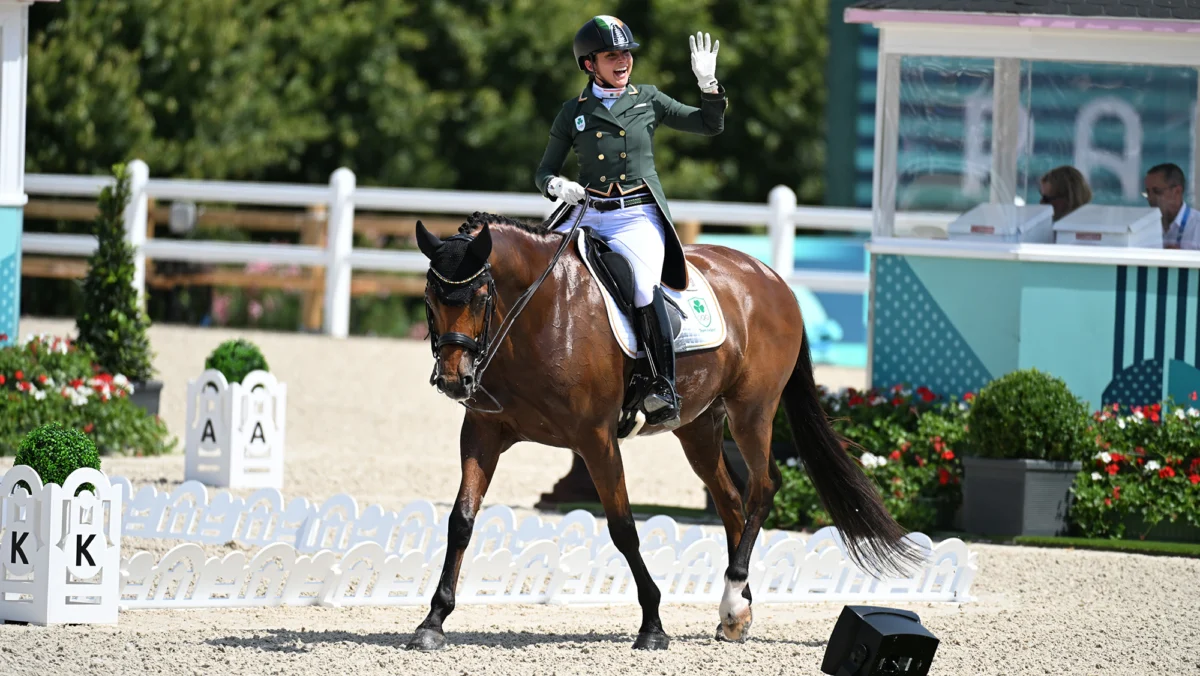
Olympic dressage rider Abi Lyle has made a striking debut in the world of British Eventing, securing a commendable second place at the GoBE80 competition held at Little Gatton on September 19th. Lyle, renowned for her elegant performances in the dressage arena, swapped her traditional tailcoat for the more rugged attire of cross-country riding, demonstrating her versatility and competitive spirit across disciplines. This achievement marks a significant crossover for an athlete typically associated with the precise and controlled movements of dressage, highlighting a growing trend of top equestrians exploring different equestrian sports.
The eight-year-old gelding, named Nice Try II, also known affectionately as "Obi," was Lyle’s mount for this inaugural eventing competition. Obi, owned by Becca McCreath, proved to be a capable partner, navigating the challenges of the cross-country course with aplomb. The GoBE80 level is designed as an introductory stepping stone into the sport of eventing, featuring smaller fences and less demanding technicality than higher levels, making it an ideal starting point for riders and horses new to the discipline. Lyle’s success at this level suggests a strong foundation and a promising future should she choose to pursue eventing further.
A Transition From Dressage to Eventing
Abi Lyle is a familiar name in the international dressage circuit. Representing Great Britain, she has competed at elite levels, including the prestigious Paris 2024 Olympic Games, where she showcased her talent and the partnership she has cultivated with her horses. Dressage, one of the three Olympic equestrian disciplines, demands exquisite precision, harmony between horse and rider, and a high degree of athleticism and obedience from the horse. Riders are judged on their ability to perform a series of predetermined movements with accuracy, suppleness, and elegance.
Eventing, on the other hand, is a demanding triathlon for horses and riders, encompassing three distinct phases: dressage, cross-country, and show jumping. The cross-country phase, in particular, tests the horse’s bravery, stamina, and jumping ability over a course of fixed obstacles, often in challenging terrain. It requires a different skillset and mindset compared to dressage, emphasizing boldness, speed, and an unflinching approach to formidable natural obstacles. Lyle’s decision to compete in eventing, even at an introductory level, signals a deliberate effort to broaden her equestrian experience and perhaps tap into a different aspect of her riding and her horse’s capabilities.
The GoBE80 Competition at Little Gatton
The GoBE80 event at Little Gatton is part of the British Eventing calendar, a governing body that oversees and promotes the sport of eventing in the UK. The GoBE80 level is specifically structured to welcome new participants to eventing, offering a manageable introduction to the sport. It typically features dressage tests that are simpler than those at higher levels, a cross-country course with fences no higher than 80cm, and a show jumping phase also within a similar height range. This format allows riders to gain experience in all three phases without the extreme demands of advanced eventing.
Competitions like these are crucial for nurturing grassroots talent and encouraging wider participation in equestrian sports. By offering accessible entry points, British Eventing aims to develop a pipeline of skilled riders and horses for the future. Lyle’s participation, given her established career in dressage, brings a significant profile to this introductory level, potentially inspiring other riders to explore different disciplines.
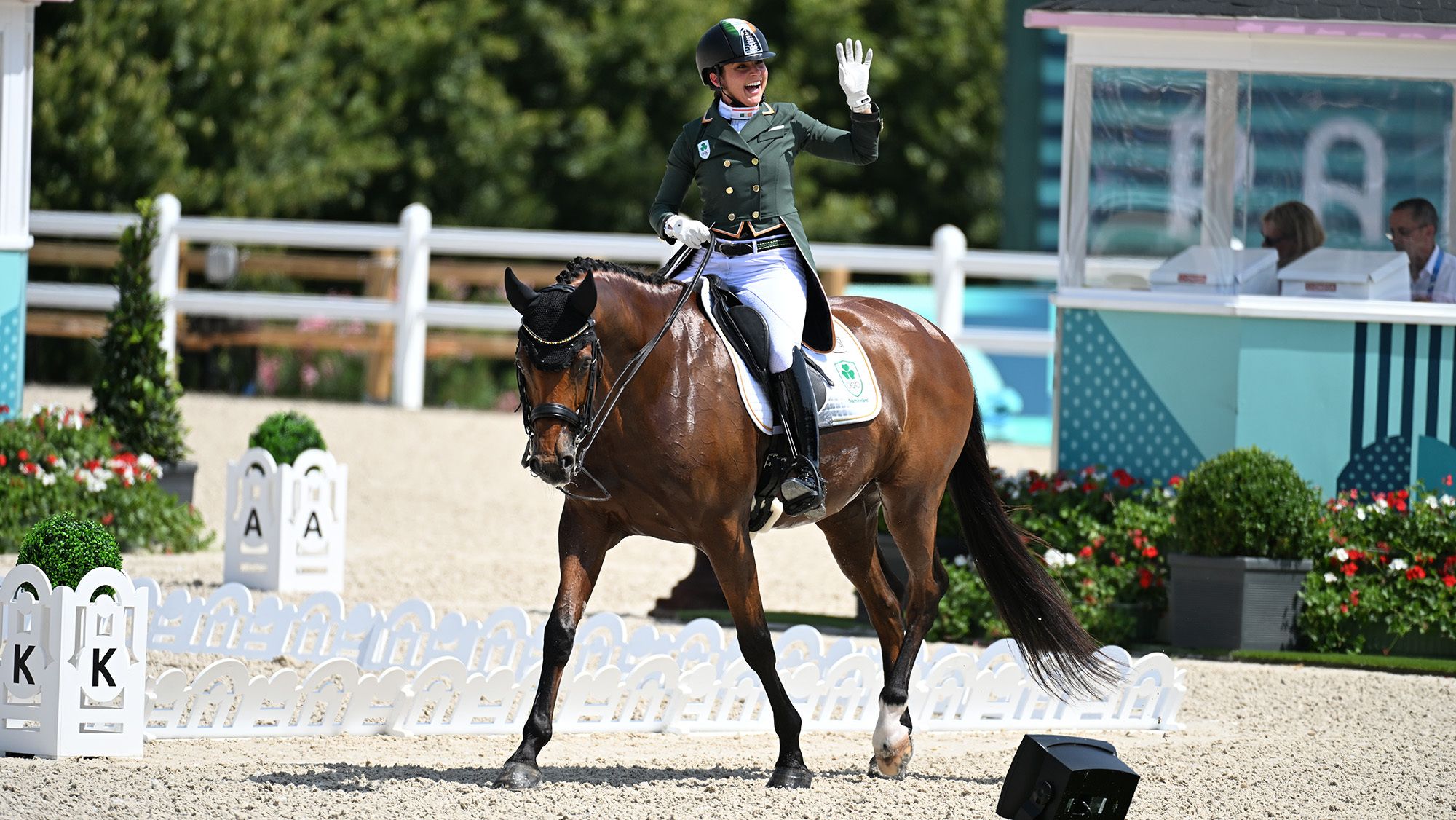
Nice Try II: A Promising Young Talent
Nice Try II, the eight-year-old gelding ridden by Lyle, is a relatively young horse. For an eight-year-old, successfully competing and achieving a high placing in an eventing competition, even at the GoBE80 level, is a testament to his athleticism and temperament. The fact that he is already competing at an Olympic level in dressage with Lyle, and is now also proving his mettle in eventing, suggests he is a horse of exceptional talent and versatility.
The successful transition of a horse between disciplines often requires careful training and management. Dressage training emphasizes suppleness, responsiveness, and precise movements, while eventing requires bravery, fitness, and a bold jumping style. For Nice Try II to be performing well in both, it indicates a strong foundation laid by his trainers and a remarkable adaptability from the horse himself. This dual capability is rare and highly valued in the equestrian world.
Background of Abi Lyle’s Eventing Debut
While the article states this was Abi Lyle’s "British Eventing debut," it’s important to clarify the context. This refers to her first official competition under the banner of British Eventing in the discipline of eventing. It is highly probable that Lyle has been schooling her horses, including Nice Try II, over cross-country fences and in show jumping arenas privately or at training events prior to this official competition. The transition from a sport like dressage to eventing involves significant preparation, both for the rider and the horse, to ensure safety and competence.
The GoBE80 competition provides a platform for riders to gain experience in a controlled environment. The scores in dressage contribute to the overall competition, and then the cross-country and show jumping phases add penalties for any faults incurred (such as refusals or knockdowns) or time penalties if the course is not completed within the allotted time. The combination of these scores determines the final standings. Achieving second place indicates a strong performance across all three phases, suggesting that Lyle and Nice Try II demonstrated proficiency in dressage, navigated the cross-country course efficiently and without major incident, and delivered a solid performance in the show jumping phase.
Supporting Data and Context for Equestrian Crossovers
The phenomenon of top riders from one equestrian discipline crossing over into another is not entirely uncommon, though it is more prevalent in certain combinations. For instance, show jumpers often transition to eventing due to the shared jumping discipline. However, a direct move from elite dressage to eventing at this level is less frequent, making Lyle’s achievement noteworthy.
Dressage vs. Eventing: Key Differences
| Feature | Dressage | Eventing (Cross-Country Phase) |
|---|---|---|
| Objective | Execute a series of precise movements with harmony and elegance. | Safely and efficiently clear a series of fixed obstacles over varied terrain. |
| Horse Type | Often lighter breeds, bred for agility, suppleness, and trainability. | Often stronger, more robust horses with bravery, stamina, and jumping prowess. |
| Rider Skill | Precision, subtle aids, balance, deep understanding of horse’s physiology. | Boldness, strategic planning, excellent balance, strong riding seat, quick decision-making. |
| Equipment | Often lighter tack, tailored for close contact. | More robust tack, often including protective boots for the horse, and a body protector for the rider. |
| Scoring | Marks awarded for execution of specific movements, overall impression. | Penalties for faults, refusals, falls, and exceeding optimum time. |
The fact that Lyle’s eight-year-old gelding is already at a level where he can compete successfully in both disciplines speaks volumes about his natural ability and the quality of his training. Many horses are specialized from a young age, but versatile talents like Nice Try II can excel across different demands.

Potential Implications and Future Outlook
Lyle’s success in her eventing debut could have several implications:
- Diversification of Equestrian Pursuits: It might encourage other dressage riders to explore eventing or other disciplines, potentially leading to a richer and more varied equestrian community.
- Horse Development Strategies: It could highlight the benefits of producing horses with a broader range of skills, rather than solely focusing on specialization from a very young age.
- Athlete Versatility: It showcases Abi Lyle’s comprehensive riding ability and her capacity to adapt to different demands, a quality admired in any sport.
While this was a GoBE80 event, a level designed for introduction, Lyle’s performance suggests a natural aptitude for the discipline. Should she decide to continue pursuing eventing, her dressage expertise could provide a significant advantage in that phase, while her willingness to tackle cross-country challenges would need to be further honed. The speed and accuracy required in eventing’s jumping phases are different from the controlled elegance of dressage, but a rider’s core seat and balance are transferable.
It is plausible that Lyle views this foray into eventing as a way to further develop Nice Try II’s bravery and athleticism, or perhaps as a personal challenge to expand her own riding repertoire. The Paris 2024 Olympics represent a pinnacle of achievement in dressage, and a rider of Lyle’s caliber would undoubtedly be focused on maintaining and enhancing her standing in that discipline. However, the thrill and unique demands of eventing can be a powerful draw.
Broader Context of Elite Athletes in New Disciplines
The trend of elite athletes venturing into new competitive territories is a recurring theme across various sports. In equestrianism, while the core principles of horsemanship remain, the specific demands of each discipline require distinct training and strategic approaches. For example, event riders often train extensively in strength and conditioning to manage the physical exertion of the cross-country phase. Dressage riders, conversely, often focus on fine-tuning their communication with the horse through subtle aids and developing a deep understanding of equine biomechanics for precise movements.
Lyle’s success, therefore, is not just a personal achievement but also a demonstration of the adaptability of both horse and rider. The positive result at the GoBE80 level, finishing as runner-up, indicates that Nice Try II responded well to the challenges and that Lyle’s riding was effective and balanced throughout the competition. This initial success is a strong indicator that she possesses the foundational skills to excel in eventing should she choose to invest further time and training into it.
The equestrian world is constantly evolving, with riders and trainers seeking new ways to develop their horses and themselves. Abi Lyle’s move into British Eventing, even for a single competition, adds an interesting dimension to her already distinguished career and underscores the multifaceted nature of equestrian sport. Her future endeavors in eventing, if any, will be closely watched by the equestrian community.







