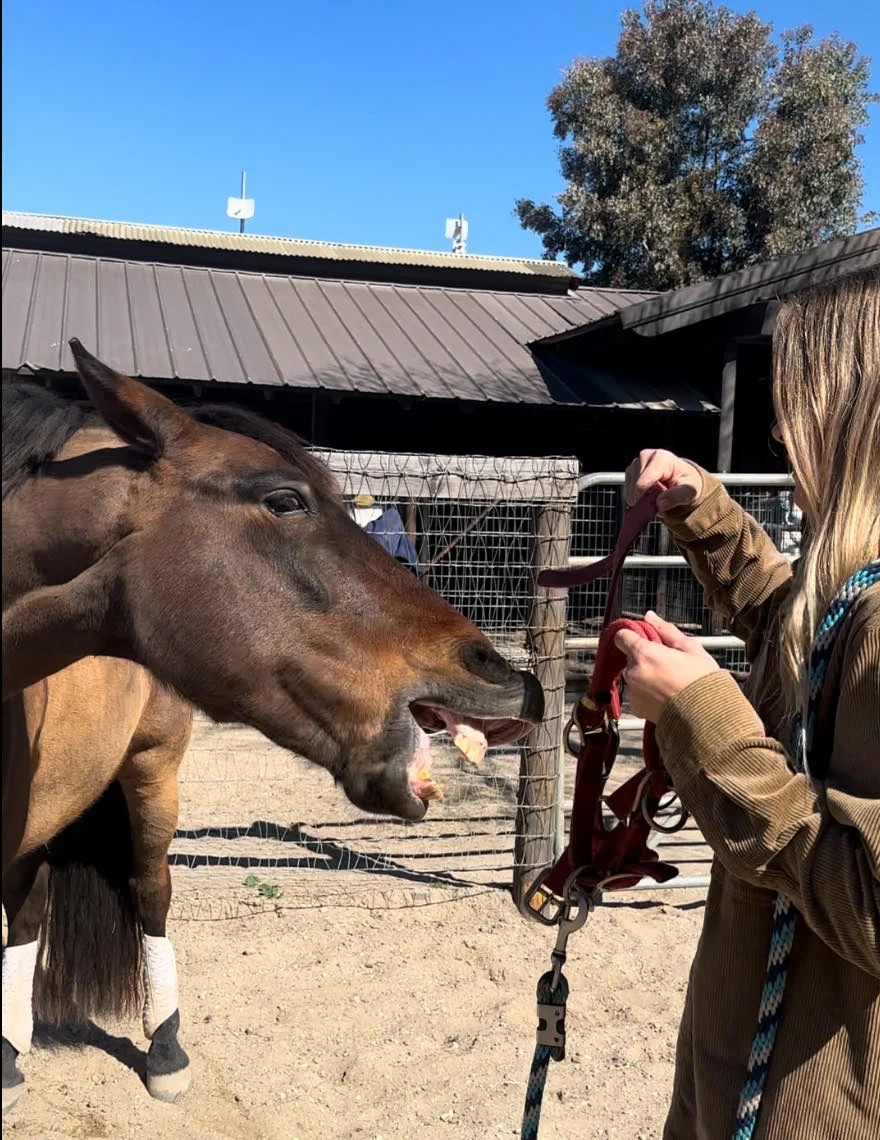
One of the most frequently asked questions at demonstrations around the world is, "How do I stop my horse biting me?" This common query highlights a significant concern for horse owners, regardless of their experience level. Fortunately, renowned equine behaviorist and trainer Monty Roberts, through his daughter Debbie Roberts Loucks, offers a surprisingly simple and rapid solution for this prevalent issue, often resolvable within mere seconds. The key, however, lies in understanding the underlying causes of the behavior before implementing the remedy.
Understanding the Roots of Equine Biting
Horses, as natural prey animals, possess an innate awareness of their surroundings. This constant vigilance, even in familiar and safe environments like stables or pastures, is a survival instinct. Their wide field of vision allows them to monitor both their immediate environment and their handlers simultaneously. This inherent alertness can sometimes be misinterpreted as a lack of trust or a sign of aggression, but it is, in fact, a fundamental aspect of their species’ biology.
Foals and the Exploration of the World
Similar to human infants, foals explore their world through their mouths. Biting is a natural part of this developmental process, allowing them to test textures, understand boundaries, and interact with their environment. In the wild, a mother horse plays a crucial role in moderating this behavior, gently correcting excessive or aggressive play. This maternal discipline teaches foals about appropriate social interactions and the limits of acceptable behavior within the herd. For human handlers, especially those working with young horses, establishing similar boundaries early on is essential. While foals may be small, they are significantly quicker and stronger than humans once they reach weaning age. Failing to set clear boundaries can lead to them exploiting these physical differences, potentially escalating into undesirable behaviors like biting.
The Dangers of Hand-Feeding
One of the most frequently cited causes of biting behavior in horses is hand-feeding. This practice, often intended as a gesture of affection and a way to strengthen the bond between horse and owner, can inadvertently create a dangerous dynamic. Horses, when consistently fed directly from a human hand, begin to associate the handler with the immediate provision of food. Given their size and strength, this association can be problematic. As Debbie Roberts Loucks recounts her personal experience with Nila’s Doll, an orphaned filly she raised, the emphasis was on providing proper care and establishing boundaries, rather than allowing the young horse to become overly reliant on human interaction for sustenance. This careful upbringing prevented Nila’s Doll from developing problematic biting habits, highlighting the importance of responsible feeding practices.
Roberts Loucks elaborates on this critical point: "When I was eight years old, we lost a mare and I was offered the baby to care for as an orphan. There was no surrogate mother to be found, which would have been ideal. Orphans are never easy to raise because its unnatural for a horse to grow up being bottle fed and handled by humans without being taught their own herd rituals or being disciplined by their mother… I was taught that one of the most common mistakes people make is feeding a horse from the hand. To the owner who feels like it shows love, it may seem like an opportunity to build a bond and make the horse eager to see the owner coming. But, given their size, horses coming to view you as a source of food is never a good idea."
Instead of direct hand-feeding, owners are advised to offer treats such as carrots or apples by tossing them into a bucket. This subtle shift in delivery reinforces that the food is not directly dispensed from the human body, thereby mitigating the risk of the horse associating the handler’s hands or body with immediate gratification.
Food as a Reward: A Misconception
The notion of food as a natural reward for horses is a misconception, particularly when viewed through the lens of their prey animal status. Unlike predators that actively hunt and "earn" their food, horses are grazers. "No blade of grass ever ran from a horse," as Monty Roberts famously states, underscoring the passive nature of their foraging. When horses are trained to believe that food is a reward or an entitlement delivered by humans, they can develop a sense of demand. This can lead to behaviors such as nipping at pockets, hands, or other body parts in an attempt to solicit food. This behavior, born from a well-intentioned but misapplied reward system, can escalate into a significant safety concern.
Other Contributing Factors to Biting
While hand-feeding is a primary culprit, other factors can contribute to a horse’s biting behavior. Physical discomfort, such as a tightly fitting girth or an ill-fitting saddle, can cause a horse to bite out of frustration or pain. In some instances, biting can also be a display of aggression or an attempt at mutual grooming, a natural social behavior among horses. Understanding the specific context in which the biting occurs is crucial for effective intervention.
The Monty Roberts Remedy: Distractibility as a Solution
The core of Monty Roberts’ approach to correcting biting behavior lies in the principle of distractibility. This method, which can be implemented in a matter of seconds, focuses on redirecting the horse’s attention at the precise moment they intend to bite. The technique is remarkably simple and effective, avoiding any form of physical punishment, which can be counterproductive and escalate the problem.

Roberts Loucks explains the efficacy of this strategy: "Getting in a fight with a 1000-pound animal is not the answer. And hitting your horse is never ok, nor will it solve the problem. They will just get faster and better at biting and holding on. Here is an effective and simple solution my Dad taught me, using the art of distractibility. You know how it’s funny to distract people with the ‘look over there!’ while you grab some of their French fries? Or how you can distract kids who are having a melt-down with an attention getting, ‘let’s go to the park!’ Distractibility works for horses too."
The method involves a light, non-painful tap on the horse’s front leg, specifically the shin, at the exact moment the horse initiates a biting motion. The key is to be quick and to ensure the tap is perceived as a surprise rather than a punishment. The horse is then conditioned to associate the intention to bite with this unexpected tactile sensation on their leg.
"When the horse reaches to bite you, look straight ahead and tap him lightly on the shin of his leg with your foot," Roberts Loucks advises. "Do NOT create pain, just surprise. You want him to associate his effort to bite with a distracting tap on his shin. No fights. Sometimes I will deliver a quick rub on the coronet band with my boot. Either works, especially if it seems unrelated to your actions. I just look ahead and act as if nothing happened."
The Psychology of the Remedy
This technique leverages the horse’s natural learning processes. By consistently associating the biting impulse with the distracting tap, the horse’s brain begins to re-route the behavioral response. The horse learns to hesitate, to look down at their leg, and ultimately to abandon the biting attempt. This behavioral habituation or modification is achieved through a rapid, non-confrontational intervention.
Roberts Loucks notes the fascinating observable effect of this method: "It only takes about six or eight times and you will see the horse begin to bite, hesitate and look down at his leg. It’s pretty cute, actually, to watch his brain work." This observation underscores the intelligence and adaptability of horses when presented with clear and consistent communication.
Broader Implications and Further Resources
The implications of this simple yet effective method extend beyond merely stopping an unwanted behavior. It represents a philosophy of equine training that prioritizes understanding, communication, and the avoidance of conflict. By empowering horse owners with a quick, accessible solution, Monty Roberts and his team are contributing to safer and more harmonious relationships between humans and horses worldwide.
For those seeking a visual demonstration of this technique, Monty Roberts Online University offers a video tutorial titled "How to Stop Nipping and Biting." The organization is providing free access to this resource using the promocode DAYPASS.
Furthermore, for individuals seeking a more immersive experience in Monty Roberts’ world-renowned training methods, opportunities for in-depth learning are available. Special Training events are scheduled, offering participants the chance to observe Monty Roberts working with various horses and showcasing his unique approach. Limited spots are available for the course commencing April 21-25, representing a valuable opportunity for dedicated equestrians to deepen their understanding of horse behavior and training.
Debbie Roberts Loucks, continuing the legacy of her father, emphasizes the importance of consistent application of these principles. The ease with which this biting correction can be implemented underscores the idea that understanding equine psychology, rather than brute force, is the most effective path to a well-behaved and safe equine companion. The ability to resolve such a common and potentially dangerous issue in a matter of seconds not only benefits individual horse owners but also contributes to the overall welfare and safety of the equestrian community.