

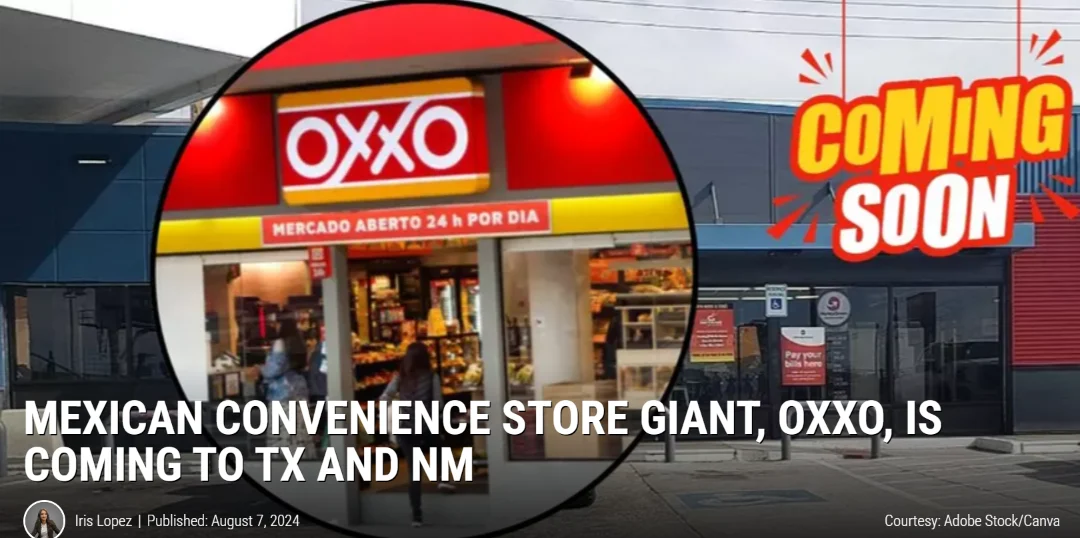
FEMSA, the prominent Mexican multinational beverage and retail company, has announced a significant strategic move to expand its OXXO convenience store brand into the U.S. market through the acquisition of 249 convenience stores from Delek U.S. Holdings, Inc. The monumental deal, valued at approximately $385 million, will see OXXO take over existing DK locations across Texas and New Mexico, marking a substantial new chapter for one of Latin America’s largest retail chains. This expansion is poised to introduce OXXO’s distinctive retail model to a broader American consumer base, particularly within key border states that share deep cultural and economic ties with Mexico.
The Strategic Acquisition: Details and Scope
The agreement, publicly disclosed by FEMSA, involves the acquisition of specific retail assets currently operating under the DK brand, a subsidiary of Delek U.S. Holdings, Inc. The transaction encompasses 249 convenience stores strategically situated across Texas and New Mexico, two states with rapidly growing populations and significant cross-border commercial activity. While the exact breakdown of locations per state has not been fully detailed, both regions present fertile ground for OXXO’s expansion, given their existing demographic profiles and consumer habits. The $385 million price tag for 249 stores translates to an average valuation of approximately $1.55 million per store, reflecting not only the physical assets but also the established customer base and operational infrastructure. This valuation positions the acquisition as a significant investment in the competitive U.S. convenience store landscape. The deal awaits crucial regulatory approval, which is anticipated to be finalized in the second half of 2024. Following approval, consumers in the affected regions can expect to see the gradual rebranding of DK stores to OXXO, characterized by its distinctive red and yellow corporate colors and familiar logo.
OXXO’s Ascendance and International Footprint
OXXO is not merely a convenience store; it is a cultural icon in Mexico and a rapidly expanding retail powerhouse across Latin America. Founded in 1978 in Monterrey, Mexico, by FEMSA (Fomento Económico Mexicano, S.A.B. de C.V.), OXXO has grown exponentially to become the largest convenience store chain in Mexico and one of the largest globally by store count. As of late 2023, OXXO boasted over 22,000 stores primarily in Mexico, but also with a robust and growing presence in countries such as Chile, Colombia, Peru, and Brazil. This extensive network underscores OXXO’s proven business model, which emphasizes high-density urban locations, a wide array of products including groceries, snacks, beverages, and an increasing number of financial and digital services. The brand’s success is attributed to its strategic placement in high-traffic areas, extended operating hours, and a consistent focus on customer convenience. For many in Mexico, OXXO stores serve as essential neighborhood hubs, offering everything from basic necessities to bill payment services and mobile top-ups. The transition to the U.S. market, particularly in states bordering Mexico, leverages existing brand recognition among Hispanic populations and aims to replicate this successful community-centric model.
FEMSA’s Broader Vision: Diversification and Growth
FEMSA, the parent company of OXXO, is a sprawling multinational conglomerate with diverse interests beyond convenience retail. Headquartered in Monterrey, Mexico, FEMSA is a leading company in Latin America, involved in beverages (Coca-Cola FEMSA, the largest franchise bottler of Coca-Cola products in the world by volume), beer (Heineken stake), and its prominent retail division, FEMSA Comercio. FEMSA Comercio operates OXXO, OXXO Gas (fuel stations), and pharmacies, alongside other specialized retail formats. The acquisition of DK locations aligns perfectly with FEMSA’s overarching strategy of sustained growth, geographic expansion, and diversification of its revenue streams. The company has historically demonstrated a keen ability to identify and capitalize on consumer trends, and its move into the U.S. convenience store market reflects a calculated effort to tap into one of the world’s largest and most dynamic retail environments. This expansion represents a significant step in FEMSA’s ambition to become a truly global retail player, leveraging its robust operational expertise and financial strength. For FEMSA, the U.S. market offers not only scale but also a pathway to further innovation in retail, potentially incorporating elements of digital transformation and enhanced customer experiences that have been successful in its other ventures.
Delek U.S. Holdings’ Strategic Divestment
From Delek U.S. Holdings, Inc.’s perspective, the divestment of its 249 convenience stores is a strategic move aimed at optimizing its portfolio and focusing on core assets. Delek U.S. Holdings is a diversified downstream energy company with assets in petroleum refining, logistics, and retail. Its retail segment previously included various convenience store brands such as DK and MAPCO. The sale of the DK stores allows Delek to streamline its operations, reduce debt, and allocate capital more effectively towards its refining and logistics businesses, which are considered its primary profit centers. Companies often engage in such portfolio optimization to enhance shareholder value by divesting non-core assets that may not align with their long-term strategic direction or where growth opportunities are less compelling compared to other segments. The $385 million proceeds from this sale will provide Delek with substantial liquidity, which can be deployed for debt reduction, share buybacks, or investments in its refining and logistics infrastructure, potentially improving its overall financial health and operational efficiency. This move underscores a broader trend in the energy sector, where many integrated companies are narrowing their focus to core competencies.
Market Dynamics and Competitive Landscape in the U.S.
The U.S. convenience store market is a highly competitive and dynamic sector, characterized by thousands of independent operators and large national chains. According to industry reports from organizations like the National Association of Convenience Stores (NACS), the U.S. convenience store industry generates hundreds of billions of dollars in annual sales, driven by fuel purchases, in-store merchandise, and food service. Key players include 7-Eleven, Circle K, Speedway, Wawa, and Sheetz, among many others. OXXO’s entry into Texas and New Mexico will undoubtedly intensify competition, particularly in areas where it establishes its presence. These two states are particularly attractive markets. Texas, with its rapidly growing population, diverse demographics, and significant economic activity, offers immense potential. New Mexico, while smaller, also presents opportunities, especially in its southern regions which have strong cross-border ties.
The success of OXXO will depend on its ability to adapt its proven model to the nuances of the U.S. consumer market. While its brand recognition among Hispanic communities, especially those with ties to Mexico, will be an initial advantage, OXXO will need to appeal to a broader demographic. This may involve tailoring product offerings to local tastes, integrating popular U.S. convenience store staples, and competing effectively on price, service, and convenience. The existing DK locations provide a ready-made infrastructure, but OXXO will invest in rebranding, potential renovations, and operational adjustments to align with its corporate standards and market strategy.

Anticipated Regulatory Review and Transition Timeline
The acquisition is contingent upon obtaining all necessary regulatory approvals, a standard procedure for transactions of this magnitude. Antitrust authorities, primarily the U.S. Federal Trade Commission (FTC), will review the deal to ensure it does not create undue market concentration or harm competition. Given the fragmented nature of the U.S. convenience store market, with thousands of operators, it is generally anticipated that this acquisition of 249 stores will not face significant antitrust hurdles, although the review process can be rigorous. The expectation is that regulatory approval will be secured in the second half of 2024, paving the way for the official transfer of ownership and operational control.
Following regulatory clearance, the transition phase will commence. This will involve the complex process of integrating the acquired DK stores into OXXO’s operational framework. Key steps will include:
- Rebranding: Changing exterior signage, interior décor, and digital branding to reflect the OXXO identity.
- Inventory Management: Transitioning product assortments to include OXXO’s signature offerings alongside popular local products. This might involve introducing Mexican snacks, beverages, and other specialty items that differentiate OXXO from its competitors.
- Technology Integration: Implementing OXXO’s point-of-sale systems, inventory management software, and back-office operations.
- Employee Training: Onboarding and training existing DK staff on OXXO’s operational procedures, customer service standards, and brand philosophy.
- Supply Chain Integration: Connecting the newly acquired stores to OXXO’s robust supply chain networks, which will likely involve establishing new distribution hubs or leveraging existing infrastructure in the region.
This transition is expected to be phased, potentially taking several months or even a year to fully complete across all 249 locations, ensuring a smooth operational handover and minimal disruption to customers.
Implications for Consumers and the Market
For consumers in Texas and New Mexico, OXXO’s arrival signifies a new option in the convenience store market. Those familiar with OXXO from visits to Mexico will recognize the brand and its offerings, which often include a wider variety of fresh food items, ready-to-eat meals, and a selection of Mexican products not typically found in traditional U.S. convenience stores. OXXO’s emphasis on financial services, such as bill payments and mobile top-ups, could also be expanded in the U.S., catering to specific community needs. The introduction of a new, well-capitalized competitor is likely to spur innovation and competitive pricing across the market, potentially benefiting consumers through improved service, diverse product selections, and competitive fuel prices where applicable.
For the broader convenience store market, OXXO’s entry represents a significant new player with deep pockets and a proven track record. This could lead to increased investment in store modernization, technology, and food service offerings across the industry as existing chains respond to the new competitive pressure. It also highlights the growing attractiveness of the U.S. market for international retail giants seeking new avenues for expansion.
Economic and Cultural Impact
The expansion is poised to have both economic and cultural impacts. Economically, FEMSA’s investment of $385 million in acquiring and subsequently transforming these stores will generate economic activity. This includes potential job creation in operations, logistics, and management, as well as increased demand for local suppliers. The tax revenue generated by these new businesses will also contribute to state and local economies.
Culturally, OXXO’s presence could further enrich the diverse retail landscape of Texas and New Mexico. For Mexican-American communities and those with strong ties to Mexico, OXXO could become a familiar and welcoming presence, offering a taste of home and a sense of cultural connection. It symbolizes the growing economic integration and cultural exchange between the United States and Mexico, reflecting the evolving demographics of the region. The brand’s identity, deeply ingrained in Mexican consumer culture, will offer a distinct flavor to the American convenience store experience.
Looking Ahead: Future Prospects and Challenges
OXXO’s entry into the U.S. market is a bold strategic move with significant potential. Its success will hinge on several factors, including its ability to:
- Localize Effectively: While maintaining its core identity, OXXO must adapt to regional consumer preferences, regulatory environments, and local supply chains.
- Manage Competition: Navigate a crowded market dominated by established players with strong brand loyalty and extensive networks.
- Build Supply Chain Efficiency: Establish robust and efficient supply chains that can support its product mix across a large geographic area.
- Leverage Brand Equity: Capitalize on its existing brand recognition among specific demographics while building broader appeal.
Should this initial expansion prove successful, it could pave the way for OXXO to further penetrate the U.S. market beyond Texas and New Mexico, potentially exploring other states with large Hispanic populations or strategic growth opportunities. This acquisition is not just about adding stores; it’s about establishing a beachhead for a major international retailer in the fiercely competitive U.S. market, potentially reshaping the convenience store landscape for years to come. The coming months will be critical as OXXO and FEMSA work through the regulatory process and begin the ambitious task of transforming DK locations into the next generation of OXXO stores in the United States.









