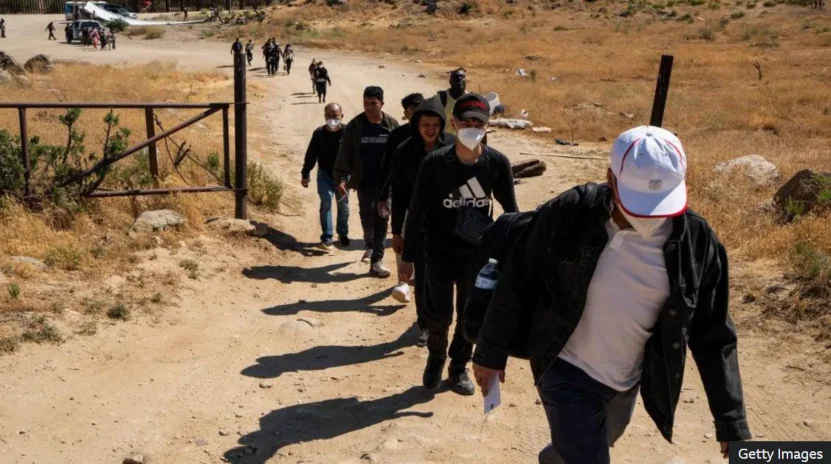
Unlawful crossings by migrants at the United States southern border have seen a substantial and consistent decline for the fifth consecutive month, according to recently released official data. This sustained reduction indicates a significant shift in border dynamics, with U.S. Border Patrol agents apprehending approximately 57,000 migrants along the southern frontier in July. This figure represents the lowest recorded monthly total since September 2020, signaling a marked departure from the high volumes observed in previous months.
The dramatic decrease in apprehensions is particularly striking when compared to the peak recorded in December, when Border Patrol agents encountered around 250,000 migrants attempting to cross the border unlawfully. This nearly 77% reduction over a seven-month period underscores the profound impact of recent policy changes and enforcement strategies implemented by the Biden administration. The trajectory of decline has been steady: 141,000 apprehensions were recorded in February, followed by 137,000 in March, 129,000 in April, 118,000 in May, and 84,000 in June, culminating in the July figures. These statistics pertain specifically to unlawful crossings and do not encompass the thousands of individuals processed daily through official ports of entry via scheduled appointments facilitated by a dedicated smartphone application.
Contextualizing the Decline: A Shift in Border Policy
The significant downturn in unlawful crossings cannot be attributed to a single factor but rather a confluence of policy adjustments, enhanced enforcement measures, and diplomatic efforts. A pivotal moment in this shift was the expiration of Title 42 of the U.S. Public Health Service Act on May 11, 2023. Enacted in March 2020 at the onset of the COVID-19 pandemic, Title 42 allowed border agents to rapidly expel migrants without offering them an opportunity to seek asylum, citing public health concerns. Its impending expiration had led to widespread predictions of a massive surge in crossings, with many humanitarian organizations and border officials bracing for an unprecedented influx.
However, the administration simultaneously introduced a new asylum rule designed to deter unlawful crossings. This regulation presumes asylum ineligibility for migrants who cross the border unlawfully without first seeking protection in a transit country, or who fail to use established legal pathways, such as the CBP One mobile application. This "circumvention of lawful pathways" rule, paired with expanded access to parole programs for certain nationalities, aimed to channel asylum seekers towards legal and orderly processes rather than dangerous, irregular crossings.
The Role of Legal Pathways and International Cooperation

A cornerstone of the administration’s strategy has been the expansion and promotion of lawful pathways for migration. The CBP One app, for instance, allows migrants to schedule appointments at ports of entry to present their asylum claims, effectively creating an organized system for processing up to 1,500 individuals daily. This mechanism is intended to reduce pressure on the more vulnerable and remote sections of the border, providing a safer and more orderly alternative to dangerous crossings. Additionally, parole programs for individuals from Cuba, Haiti, Nicaragua, and Venezuela, allowing up to 30,000 individuals from these countries to enter the U.S. legally each month if they have a U.S.-based sponsor, have played a crucial role in diverting migrants from attempting unlawful entry.
Beyond domestic policy, international cooperation has been a vital component. The U.S. has engaged in extensive diplomatic efforts with Mexico and other countries in the region to bolster border enforcement, combat human smuggling operations, and manage migratory flows. Mexico, in particular, has increased its own enforcement efforts along its southern border and within its interior, impacting the journey of many migrants attempting to reach the U.S.
Chronology of Apprehensions and Policy Milestones
The recent trend of declining apprehensions follows a period of historically high numbers, particularly throughout late 2022 and early 2023.
- September 2020: Approximately 57,000 apprehensions (pre-surge benchmark).
- December 2022: Around 250,000 apprehensions (recent peak, largely under Title 42).
- February 2023: 141,000 apprehensions.
- March 2023: 137,000 apprehensions.
- April 2023: 129,000 apprehensions.
- May 2023: 118,000 apprehensions. This month saw the expiration of Title 42 and the implementation of the new asylum rule. Despite initial concerns of a surge, the numbers continued their downward trajectory, albeit at a slower pace initially.
- June 2023: 84,000 apprehensions. A more significant drop, reflecting the full impact of the new policies and enforcement.
- July 2023: Approximately 57,000 apprehensions. Reaching the lowest point in nearly three years, matching the September 2020 figures.
This chronology illustrates a consistent and accelerating reduction in unlawful entries following the comprehensive strategic adjustments made by the administration.
Official Responses and Stakeholder Perspectives
The Biden administration has hailed the latest figures as evidence of the effectiveness of its "orderly and humane" border strategy. Department of Homeland Security (DHS) officials, including Secretary Alejandro Mayorkas, have frequently stated that the combination of increased enforcement, expanded legal pathways, and regional partnerships is yielding positive results. They emphasize that the goal is to create a disincentive for unlawful crossings while simultaneously expanding avenues for those with legitimate asylum claims or other legal bases to enter the country.

Customs and Border Protection (CBP) officials have also acknowledged the operational relief provided by the reduction in encounters. Lower apprehension numbers free up resources and personnel, allowing agents to focus on other critical aspects of border security, such as combating drug smuggling and human trafficking. The processing centers along the border, which were often overwhelmed during periods of high migration, are now operating with greater efficiency.
However, the new policies have not been without criticism. Human rights and immigrant advocacy groups have expressed concerns that the "circumvention of lawful pathways" rule effectively curtails the right to seek asylum, which is enshrined in both U.S. and international law. They argue that the CBP One app, while offering a legal pathway, is often difficult for vulnerable migrants to access due to technological barriers, language issues, or limited appointment availability. These groups maintain that a truly humane approach requires addressing the root causes of migration and ensuring robust access to asylum for all who seek it, regardless of their entry method.
Conversely, political opponents and some border security advocates argue that while the numbers are down, the underlying issues of border security remain. They contend that the administration’s policies are still too lenient and that only stricter enforcement and physical barriers can fully secure the border. They often point to the high numbers from December 2022 as evidence of a border that was, and remains, fundamentally insecure. The current reduction, they suggest, might be temporary or a result of external factors rather than a definitive success of the administration’s approach.
Broader Impact and Implications
The sustained drop in unlawful border crossings carries significant implications across various domains:
- Political Landscape: The U.S. southern border has been a highly politicized issue, particularly in the lead-up to upcoming elections. The declining numbers provide the Biden administration with a strong talking point, allowing them to counter criticisms regarding border security and demonstrate tangible results from their policy changes. For the opposition, it creates a challenge, as they must adapt their narrative to account for the improved statistics, potentially shifting focus to other aspects of immigration or the initial high numbers. The perception of border control is often a key factor for voters, and these trends will undoubtedly shape campaign rhetoric.
- Humanitarian Concerns: While the overall numbers are down, the conditions for migrants who are still attempting to cross or who are waiting in Mexico remain a concern. The new policies, intended to deter unlawful crossings, have led to increased wait times and potentially more dangerous journeys for those unable to access legal pathways. There are reports of thousands of migrants stranded in northern Mexican cities, facing exploitation and precarious living conditions while awaiting an opportunity to enter the U.S. legally.
- Resource Allocation and Operational Efficiency: The reduction in apprehensions directly impacts the operational demands on border agencies. Fewer encounters mean less strain on processing facilities, fewer resources dedicated to transportation and temporary housing, and more capacity for agents to focus on other security threats. This could lead to a more efficient use of taxpayer dollars allocated for border management.
- Regional Diplomacy and Stability: The success of the U.S. strategy is heavily reliant on the cooperation of regional partners, particularly Mexico. Sustained engagement with these countries on issues of migration management, economic development, and security is crucial. The stability of migratory flows often depends on the political and economic conditions in origin and transit countries, making ongoing diplomatic efforts essential.
- Future Outlook: Despite the current decline, the factors driving migration—including economic hardship, political instability, and violence in migrants’ home countries—have not fundamentally disappeared. Geopolitical events or changes in policy could easily trigger new surges. The effectiveness of the current strategy will need to be continuously monitored, and the administration will likely face ongoing pressure to balance enforcement with humanitarian considerations. The long-term impact on asylum law and international obligations will also be a subject of continued debate and legal challenges.
The recent data marks a notable period in the ongoing challenge of managing migration at the U.S. southern border. It underscores the dynamic nature of border security and the complex interplay of policy, enforcement, and human factors. While the numbers represent a significant shift, the broader implications for policy, humanitarian concerns, and the political landscape will continue to unfold.