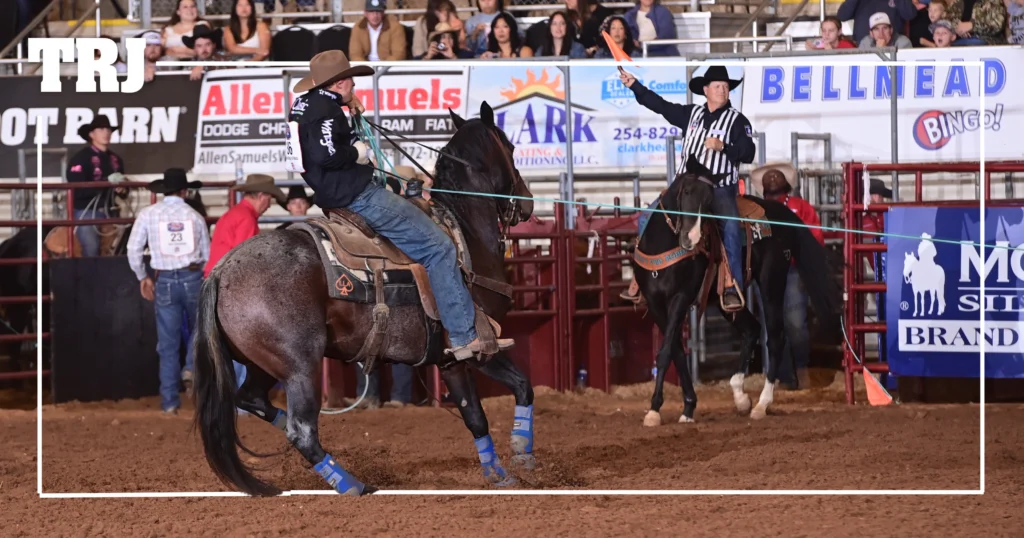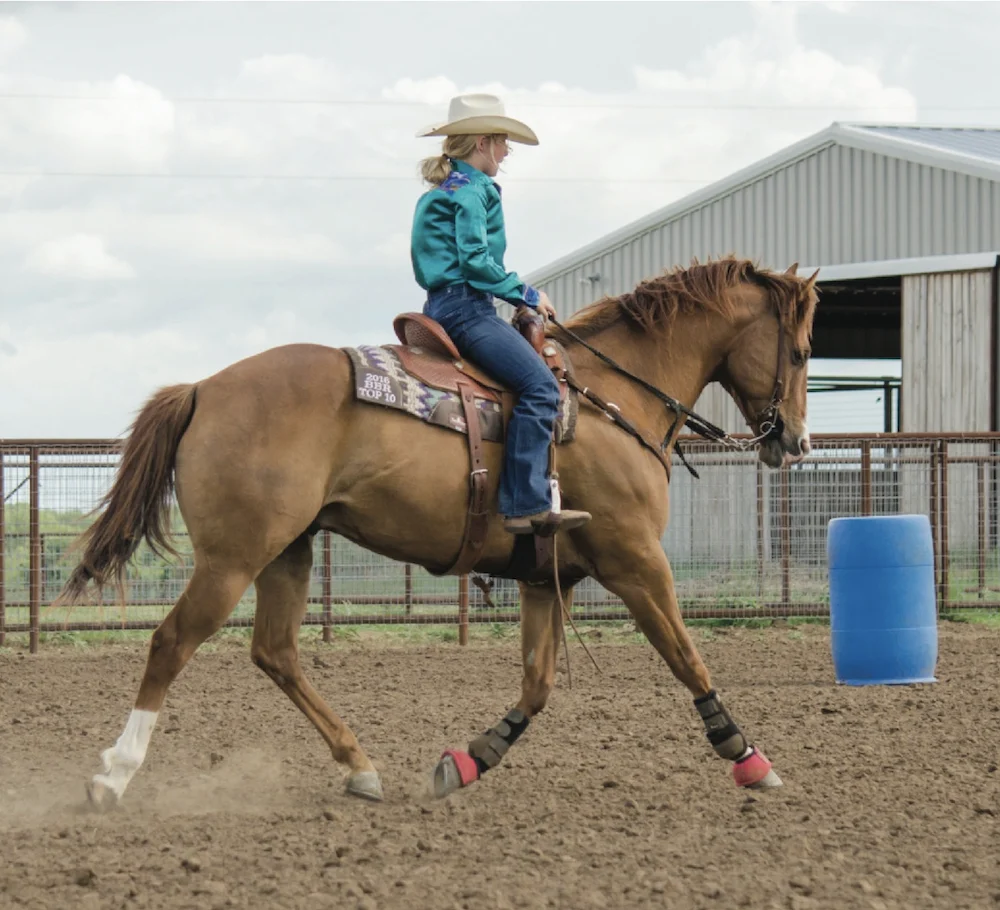
In the demanding world of rodeo, where fractions of a second can separate victory from defeat, precision and control are paramount. For young barrel racing sensation Patton Ann Lynch, these tenets form the bedrock of her success. At just 12 years old, the Crawford, Texas native has already amassed over $71,000 in Equi-Stat reported lifetime earnings, cementing her status as one of the nation’s top youth competitors, with notable wins including the Jackson Hall Memorial Derby in 2016 and, most recently, the coveted Josey Junior World championship. Lynch, who has dedicated most of her life to riding horses and running barrels, understands the intricate dance between rider and equine, particularly when it comes to refining a horse’s performance around the barrels. Her insights into training, specifically a detailed drill designed to counteract a horse’s tendency to "cheat" its turns, offer invaluable lessons for riders at all levels.

The Challenge of the "Cheating" Barrel Horse
Lynch’s primary focus in this particular drill is to ensure her horse, Tiny Bit French, affectionately known as "Twister," executes turns with impeccable form rather than anticipating and cutting them short. Twister, described as a "turny horse" with significant "rate" (the ability to slow down quickly for turns), presents a common challenge in barrel racing: harnessing natural talent without allowing it to devolve into undesirable shortcuts. A horse that "cheats" turns can incur costly penalties, such as knocking over barrels, or simply lose precious time by failing to maintain optimal angles and forward momentum. Lynch emphasizes four critical elements during slow work to address this: the precise angle of approach to the first barrel, correct hip and shoulder positioning throughout the turn, sustained forward motion around the barrel, and disciplined straight lines between each turn. This methodical approach ensures that the horse learns to respond to the rider’s cues rather than relying on ingrained habits that might prove detrimental under competitive pressure.

Foundational Principles: The Importance of Slow Work
Barrel racing, at its core, is a high-speed event demanding explosive acceleration and abrupt, tightly controlled maneuvers. Paradoxically, mastery often begins at a trot. Slow work, as advocated by Lynch and countless other equestrian professionals, is the laboratory where precision is forged, muscle memory is developed, and communication between horse and rider is refined. By practicing at a slower gait, riders can dissect each movement, identify subtle imbalances, and correct issues without the added complexity and risk of speed. This deliberate pace allows both horse and rider to focus intently on body position, responsiveness to aids, and the foundational mechanics of the pattern. For a "ratey" horse like Twister, slow work is particularly crucial for teaching controlled deceleration and maintaining engagement through the turns, preventing the horse from simply dropping its shoulder and cutting in too early. The objective is not to suppress the horse’s natural rate but to channel it into a powerful, efficient, and precise turn.

A Step-by-Step Guide to Correcting Turn Anticipation
Lynch’s drill is meticulously designed to address the nuances of turn execution, emphasizing exaggeration in practice to ensure flawless performance at speed. Performed exclusively at a trot, the drill unfolds as follows:

-
Exaggerated Approach to the First Barrel: The drill begins unconventionally, with Lynch lining up Twister with the third barrel, rather than directly approaching the first. She then guides him far up the pen, almost parallel with the first and second barrels, before initiating her approach to the first barrel. This extended, wide approach serves a crucial purpose: it prevents Twister from anticipating the first turn and angling in too soon. By exaggerating the initial positioning in slow work, the horse learns to wait for the rider’s definitive cues, building a habit of patient and precise entry into the turn, which will hold true even when speed is introduced. This method helps to reset the horse’s internal clock and reliance on visual cues for turn initiation.
-
Executing the Turn: Hip, Shoulder, and Forward Drive: As Twister approaches the barrel, Lynch focuses on two critical elements: keeping his front end moving forward and his hip engaged beneath him. Upon reaching the barrel, she employs her outside leg to cue the hip inward and her inside rein to lift the shoulder, driving him forward, up, and around the barrel. The distance Twister is made to travel past the barrel before initiating the turn is highly adaptable, depending on his tendency to cheat that particular day. Typically, Lynch ensures Twister’s hip is even with or slightly past the barrel before the turn commences. However, if he exhibits strong anticipation, they might extend this past-the-barrel distance significantly, even to the arena fence, to unequivocally emphasize forward motion and override the inclination to cut in. This teaches the horse to complete the arc and maintain momentum, rather than pivoting too sharply.

-
The Art of the Finish and Straight Lines: Completing the turn correctly and immediately aligning for the next barrel (second or third) is as vital as the entry. Lynch ensures Twister finishes the turn by arcing his body and smoothly transitioning to the next lead, heading directly in a straight line to the subsequent barrel. This emphasis on an exaggerated finish and a laser-straight path between barrels is crucial for preventing common faults such as "bowing off" (drifting wide after a turn) or "swooping" (curving prematurely into the next turn). By instilling disciplined straight lines in practice, Lynch cultivates efficiency and saves critical time in a competitive run. This also reinforces the idea that the horse must maintain its body position and listen to the rider throughout the entire pattern, not just during the turn itself.
-
Consistency Across the Pattern: The same rigorous steps are applied to the second and third barrels, ensuring Twister consistently keeps his hip engaged, moves past the barrel, responds to Lynch’s aids, and travels in a straight line from point to point. Lynch specifically notes that Twister, like many barrel horses, has a tendency to "blow off the second and swoop the third." To counter this, she doubles down on exaggerating straight lines and maintaining precise hip engagement past the third barrel, preventing him from losing form on the crucial final turn and subsequent dash for the finish line. This systematic repetition builds a deep-seated understanding in the horse, making the correct execution instinctive.

The Underlying Benefits: Why This Drill Works
The efficacy of Lynch’s drill extends beyond mere mechanical correction; it fundamentally reshapes the horse’s mental approach to the pattern and strengthens the partnership with the rider.

- Rider-Centric Focus: By working slowly and maintaining two-handed control, Lynch ensures Twister’s attention remains squarely on her, rather than on anticipating the turning point. This re-establishes the rider as the primary decision-maker, fostering a more responsive and less reactive horse.
- Exaggeration for Muscle Memory: The drill’s emphasis on exaggerating body position and movement in slow work is a powerful teaching tool. What feels "too far" or "too wide" at a trot translates to precise, efficient movements when speed is introduced. The horse’s body learns the correct mechanics, making it easier to execute them flawlessly under pressure.
- Preventing Anticipation: A common pitfall in barrel racing is when horses and riders begin to anticipate each other, leading to premature rate or incorrect body positioning. By consistently taking Twister past the turning points, Lynch teaches him to wait for the exact cue, ensuring he drives forward through the turn rather than braking too early. This forward momentum is key to maintaining speed and power.
- Control and Calmness: Performing the drill at a trot, particularly with "ratey" horses, encourages them to reach forward, stay low, and remain under control. The overarching goal is to maintain a calm and controlled demeanor, even while addressing specific behavioral issues. This mental state is vital for both horse and rider in high-stakes competition.
- Efficiency and Speed: While practiced slowly, the principles of correct body position, forward motion, and straight lines directly translate to faster, cleaner runs in competition. A horse that maintains its arc, keeps its hip under itself, and drives precisely between barrels is a horse that shaves off precious hundredths of a second.
- Injury Prevention: Correct biomechanics and balanced movement, emphasized in this drill, are not just about speed; they are also about the horse’s long-term soundness. A horse that is properly positioned and uses its body efficiently is less prone to strain and injury.
The Broader Impact: Nurturing Equestrian Talent
Patton Ann Lynch’s success and her willingness to share her training methods highlight several important aspects of the equestrian world. At 12 years old, her deep understanding of horse behavior and biomechanics speaks to the rigorous dedication required in competitive barrel racing. Her impressive lifetime earnings are a testament to her skill and the effectiveness of her training regimen.

The role of mentorship is also evident, with Lynch acknowledging the invaluable advice and support she receives from Jordon Briggs, a prominent figure in the barrel racing community. Such guidance is critical for young athletes aspiring to excel, providing them with experienced perspectives and refined techniques. Briggs, known for her own success and horsemanship, exemplifies the lineage of knowledge transfer that defines equestrian sports.
This drill, originally published in the July 2018 issue of Barrel Horse News, continues to serve as a timeless reminder of the importance of fundamental training. In a sport often defined by raw speed, the true champions are those who master the subtle art of control and precision, building a foundation that allows their equine partners to perform at their absolute best. Lynch’s methodical approach with Twister underscores that even the most naturally talented horses benefit immensely from deliberate, slow work designed to perfect every movement, ensuring that when the gate flies open, they are not just fast, but flawlessly precise.