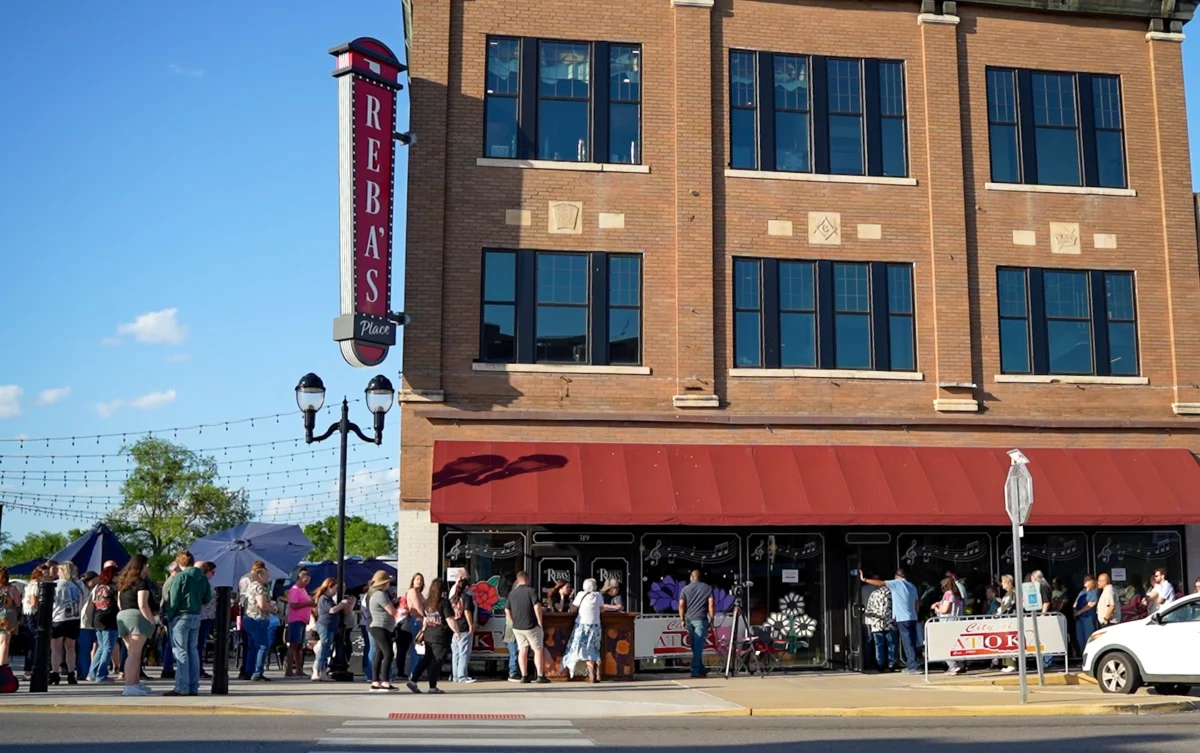
In the heart of downtown Atoka, Oklahoma, country music’s most beloved daughter, Reba McEntire, has not merely opened a restaurant; she has cultivated a vibrant community hub, a testament to heritage, and a catalyst for local revitalization. Reba’s Place stands as a unique monument, nourishing the town—body and soul—through its carefully crafted menu, its preservation of history, and its unwavering commitment to community upliftment. This establishment transcends the typical celebrity venture, embodying a deeply personal narrative that resonates far beyond its brick walls, drawing visitors from across the nation to this once-quiet corner of southeastern Oklahoma.
A Homegrown Vision: Reba’s Return to Roots

Reba McEntire, a name synonymous with country music royalty, was born in McAlester and raised in Chockie, a mere 15 miles north of Atoka. Her upbringing was steeped in the red dirt and rolling hills of Oklahoma, a third-generation rodeo enthusiast who found her voice singing alongside her mother and sisters in the bleachers. This humble beginning launched a career spanning decades, taking her to the grand stages of Nashville, Las Vegas, New Orleans, and arenas worldwide, cementing her status as one of America’s most celebrated entertainers. Yet, despite the allure of global fame, the pull of home remained paramount.
When asked about her decision to invest in Atoka, McEntire’s response is simple yet profound: "Hometown, giving back. That was my main concern. This was part of my heritage, my home. Friends, family, grocery shopping, and community. It’s all here in Atoka." This sentiment underscores a broader trend of celebrities reinvesting in their roots, but McEntire’s approach feels distinctly personal. Rather than a mere branding exercise, Reba’s Place is an organic extension of her identity, a physical manifestation of her enduring connection to the land and its people. This commitment to her origins provides the authentic foundation upon which the entire enterprise is built, differentiating it from many other celebrity-backed ventures that often prioritize commercial scale over local integration.
The Heart of the Home: Jacqueline’s Library

Stepping into the library on the top floor of Reba’s Place is an experience often described as hushed and reverent. The room, bathed in a warm lamplit glow, seems to hold its breath as Reba McEntire enters, recognizing its true purpose. Here, shelves rise to the ceiling, laden with novels, paperbacks, and hardcovers—each bearing the same signature, each carried across oceans from London, Edinburgh, and other literary havens. These are the cherished possessions of Jacqueline McEntire, Reba’s mother.
Jacqueline, a public-school teacher and librarian who once harbored dreams of becoming a country singer herself, read with an essential hunger. Her travels, often accompanying Reba, would inevitably lead her to the nearest bookshop, her bags filled with literary treasures, leaving little room for anything else. Bringing these stories home, she would sign each one, creating a personal chronicle of her intellectual journey. Now, a significant portion of this collection resides here, arranged meticulously, waiting to evoke an unexpected sense of wonder in visitors. "Wherever we went, Mama had a book," McEntire reflects, her voice tender. "So to have her books here is having a piece of Mama. Mama would have loved this room. I feel her presence here. That’s why this room is so special to me." This profound personal connection transforms the space from a mere decorative element into the emotional core of Reba’s Place. Executive Chef and General Manager Kurtess Mortensen recounts witnessing McEntire speak to her late mother in a whisper within this room, a moment that crystallized for him the true essence of the establishment: a place built on memories and heartfelt connections, designed to offer guests not just a meal, but a life experience to carry with them.
Preserving History, Building Future: The Masonic Temple Transformation

Reba’s Place is housed within a historic Masonic Temple on Main Street, a building erected in the early 20th century. Its three stories of solid bones, original brick, and century-old timber stood as a testament to bygone craftsmanship, yet had fallen into disuse, a grand structure in a downtown that had seen better days. McEntire and her partners recognized the inherent value and untapped potential within its historic facade. This decision to repurpose an existing landmark, rather than constructing anew, reflects a commitment to Atoka’s past while investing in its future.
The restoration project was a meticulous endeavor, guided by a philosophy of honoring the building’s original character while adapting it for modern use. "I love this building," McEntire enthuses. "And, I thought, What on earth are we gonna do with it? But then to have Mama’s library here, and all the memorabilia, and the little speakeasy behind the secret door, and the bandstand on the floor below with the bar and places to eat. This building was a giver. It just gave so much." Mortensen and his team painstakingly preserved architectural elements, transforming original interior doors into graceful dividers between first-floor dining booths and leaving ceilings open to expose the magnificent timber and steel framework—a visible nod to the artisans who first built the structure. This blend of preservation and innovation provides a unique atmosphere, distinct from the generic design of many contemporary venues.
The layout of Reba’s Place is thoughtfully designed across its multiple floors. The main dining room on the first floor features a well-stocked bar and a live-music stage. McEntire was particularly deliberate about the acoustics, ensuring that conversation remains comfortably possible even when a band is playing, rejecting the notion of a restaurant where guests must "read lips." The top floor offers private dining rooms, a rotating selection of merchandise, and an extensive display of memorabilia from McEntire’s personal archives, offering fans a glimpse into her illustrious career. Tucked behind a hidden door, a speakeasy delights visitors with its clandestine charm, adding an element of playful discovery. Always central, however, is Jacqueline’s library, a quiet, inviting space that serves as the spiritual anchor of the entire establishment. This multi-layered approach ensures that Reba’s Place offers diverse experiences, from lively entertainment to intimate reflection, all within a historically rich setting.

A Culinary Journey: Flavors of Family and Fame
The menu at Reba’s Place is a deeply personal creation, far removed from the sterile confines of a branding meeting or a mass-market celebrity cookbook. It began with a meticulous, five-page questionnaire crafted by Chef Kurtess Mortensen, designed to uncover Reba’s authentic culinary preferences. Mortensen, drawing from the French philosopher Brillat-Savarin’s dictum, "If you show me what you eat, I’ll tell you what you are," sought to understand McEntire’s palate intimately. His genuine curiosity separated the endeavor from mere commercialism, aiming to capture the essence of her "uncompromising joy" for food.
What Mortensen discovered was a woman whose tastes were deeply rooted in Oklahoma soil and country cooking. Her unwavering preferences included a strict aversion to liver ("ever"), an adoration for banana pudding, and a precise vision for strawberry shortcake—made with angel food cake, never biscuits, strawberries swimming in their own juices, and cream generous enough to truly mean it. Above all, she held an almost devotional love for chicken-fried chicken. "I order chicken-fried chicken every time I come here," McEntire declares, embodying the satisfaction of someone who has earned the right to eat exactly what she wants.

From this foundation, Mortensen meticulously built a menu that narrates McEntire’s life story. The chicken-fried steak, for instance, is cooked in real butter on a flat-top griddle, not deep-fried, allowing the fat to permeate the crust and meat for a rich, tender result. The Cherry Coke Barbecue Burger, initially sounding like a novelty, is a testament to Mortensen’s culinary artistry. He meticulously reduces Montmorency sour cherries from France with real Coca-Cola and crystallized ginger for hours until it forms a dark, intense syrup, which is then blended into a house barbecue sauce that stands on its own merits.
The menu also traces McEntire’s biographical arc, incorporating flavors from the cities her music career has taken her to. Nashville hot chicken, researched until it met stringent original standards, sits alongside Memphis bologna sandwiches and New Orleans-inspired dishes, demonstrating that "fancy" has its rightful place at this table, too. Even the beef has a story: sourced from an Oklahoma panhandle distiller who feeds spent whiskey mash to his cattle, resulting in uniquely marbled, flavorful meat. Mortensen sees himself as a storyteller through food, mirroring McEntire’s own narrative artistry in her music.
The moment of ultimate validation for Mortensen wasn’t the impeccably crafted strawberry shortcake, though it came close. It was Reba’s mother’s pimento cheese sandwich, made precisely as Jacqueline prepared it: on homemade bread with fresh-sliced tomatoes and Miracle Whip. Mortensen painstakingly recreated this memory-laden dish, keeping it honest and authentic. When McEntire took a bite and fell silent, then quietly exclaimed, "Oh, that’s like Mama’s," Mortensen knew he had truly understood the heart of Reba’s culinary identity, confirming the profound purpose of Reba’s Place.

Beyond the Plate: Community and Economic Impact
Reba’s Place is more than just a restaurant; it is a vital community pillar and a significant local employer. The staff is predominantly local, with many members being citizens of the Choctaw Nation, a testament to the commitment to local engagement. Remarkably, nearly all employees hired at the outset remain with the establishment, indicating an exceptionally low turnover rate—a rarity in the hospitality industry. This stability points to a work environment fostering strong camaraderie and loyalty.
The deep-seated community spirit was vividly demonstrated during a crisis. When a staff member’s house caught fire on one of the restaurant’s busiest days, the entire team paused. McEntire, embodying the spirit of communal care, immediately contacted her older sister, Alice, a retired Department of Human Services worker. By nightfall, with the help of a local minister, the displaced employee had secured a place to stay. Mortensen notes, "That wouldn’t have happened in Las Vegas. They’d have gone home, and nobody would have thought twice about it. Here, the entire town circles the wagons. That’s what this place means." McEntire echoes this sentiment, observing, "I think they find more pride and more joy in working here than they would in other places. It’s a camaraderie. It’s a place where they like each other, and the turnover is zilch."

Further solidifying its role as a community benefactor, Reba’s Place operates a "Pay It Forward" meal program. The initiative was inspired by a story McEntire heard from a friend about a restaurant in Ohio that used a bulletin board to offer free meals to those in need, "No questions asked." Mortensen expanded upon this concept, particularly during the holiday season. Before Christmas, he collaborated with local churches to identify families struggling financially, boxing up 150 complete holiday dinners. The profound impact of this initiative was underscored when a pastor reported that one woman exclaimed her children had never experienced a Christmas dinner before. McEntire proudly recalls Mortensen’s reaction: "Chef said, ‘That’s why we did this business. To give back.’ How about that!" This embodies a philosophy McEntire learned from Bob Hope: "Receiving is OK. But giving back, that’ll keep you smiling for months. Maybe years." This commitment to social responsibility extends the restaurant’s nourishment beyond its paying customers, truly feeding the community’s body and soul.
Atoka’s Renaissance: A Model for Rural Revitalization
The opening of Reba’s Place has catalyzed a tangible renaissance in Atoka. Driving through town today, the evidence of its impact is unmistakable. New storefronts have emerged along streets that were once far quieter, signaling a significant upturn in local commerce. Visitors drawn to Reba’s Place for lunch often linger, exploring the various shops and businesses they might never have discovered otherwise. Local officials report a noticeable increase in tourism traffic and sales tax revenue since the establishment’s opening, bolstering the town’s economic vitality.

"New businesses are opening up. This town is booming," McEntire observes with evident pride. "All the shop owners are really thrilled when we have events. Everybody benefits." This localized economic ripple effect underscores the power of targeted, authentic investment in rural communities. Unlike many celebrity-backed ventures that often pursue rapid expansion or franchising, Reba McEntire has no plans to replicate Reba’s Place. Her vision remains rooted in this singular building, in this one small Oklahoma town. This deliberate focus reinforces the authenticity of the project, emphasizing that its value lies not in scalability, but in its deep connection to its specific location and community.
Reba’s Place serves as a powerful case study for rural revitalization, demonstrating that genuine commitment, coupled with a compelling narrative and quality offerings, can transform local economies. It highlights the importance of preserving local heritage while fostering new opportunities. McEntire’s philosophy is clear: "People coming in, spreading the word. That word-of-mouth is priceless. We want people to have a great experience and go home and come back the next year and say, ‘I came back because it was good. So here I am.’" The message is unequivocal, and a testament to the power of authenticity: "If you want to come to Reba’s Place, you’ve got to come to Atoka."
The Enduring Legacy of Authenticity

Reba’s Place is more than just a restaurant; it is a living museum, a community cornerstone, and a vibrant testament to the enduring power of roots. It celebrates McEntire’s extraordinary career while honoring the memory of her mother, Jacqueline, whose love for stories and community now enriches every visitor. Through its thoughtful preservation of history, its heartfelt culinary offerings, and its deep commitment to local employment and philanthropy, Reba’s Place exemplifies how a global icon can profoundly impact her hometown. It is a place where food tastes like home, where music fills the air, and where the spirit of giving back nourishes everyone who walks through its doors, ensuring that Atoka, Oklahoma, thrives, body and soul, for years to come.