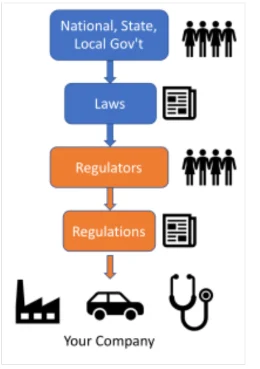
The United States Supreme Court has delivered a landmark decision that profoundly alters the landscape of federal regulatory power, effectively dismantling a nearly 40-year-old precedent known as "Chevron deference." This shift, largely driven by the Court’s conservative majority, significantly empowers the judiciary in interpreting federal statutes and challenges the long-established authority of administrative agencies. While hailed by many in the business community as a victory against bureaucratic overreach, the rulings also spark concerns among environmental, consumer, and public health advocates regarding the future of regulatory protections.
The End of an Era: Overturning Chevron Deference
On a pivotal day late last month, the Supreme Court issued rulings in two cases, Loper Bright Enterprises v. Raimondo and Relentless, Inc. v. Department of Commerce, that together overturned the foundational principle of Chevron deference. Established in the 1984 case Chevron U.S.A. Inc. v. Natural Resources Defense Council, Inc., this doctrine mandated that federal judges defer to an administrative agency’s reasonable interpretation of an ambiguous statute, provided Congress had not directly addressed the precise question at issue. The rationale behind Chevron was rooted in the idea that agencies possess specialized expertise in their respective fields and are more democratically accountable than unelected judges, thus making them better equipped to fill in statutory gaps left by Congress.
For nearly four decades, Chevron deference served as a cornerstone of administrative law, influencing countless regulations across every federal agency, from the Environmental Protection Agency (EPA) and the Food and Drug Administration (FDA) to the Securities and Exchange Commission (SEC) and the Occupational Safety and Health Administration (OSHA). It allowed agencies to adapt and implement policies in complex and evolving areas like environmental protection, financial markets, and public health, often without fear of judicial second-guessing on technical matters. The 6-3 conservative majority, however, concluded that this deference amounted to an unconstitutional delegation of judicial power, arguing that it is the courts’ duty to "say what the law is," not to cede that authority to the executive branch.
A Broader Challenge to Regulatory Stability
In addition to overturning Chevron, the Court’s recent actions and the underlying sentiment expressed by the majority suggest a broader willingness to allow challenges to even long-settled rules. While the specific "separate case" mentioned in some initial reports might be an interpretation of the Loper Bright/Relentless rulings’ expansive implications, the essence is clear: new industry players and other aggrieved parties may now find a more receptive ear in the judiciary when questioning existing regulations, regardless of how long they have been in effect. This development introduces an element of unpredictability for federal agencies and regulated entities alike, potentially leading to increased litigation and a more fluid regulatory environment. The ability to challenge established norms could, on one hand, foster innovation and reduce outdated burdens, but on the other, destabilize critical safeguards and increase legal costs for all involved.
The Historical Arc of Administrative Power

The Supreme Court’s decision marks a significant inflection point in the ongoing debate about the scope of the administrative state, a system that burgeoned during the New Deal era and expanded significantly in the latter half of the 20th century. Prior to Chevron, courts often exercised a more hands-on approach to reviewing agency actions, sometimes leading to inconsistent application of federal law. Chevron was intended to bring uniformity and predictability, recognizing the technical complexity of modern governance.
The doctrine emerged at a time when Congress frequently passed broad legislative mandates, entrusting agencies with the details of implementation. This delegation was seen as necessary due to the intricate and rapidly changing nature of areas requiring federal oversight. Over time, however, critics, particularly those advocating for limited government and free markets, argued that Chevron had granted unelected bureaucrats excessive power, allowing agencies to act as lawmakers rather than mere executors of congressional will. They contended that this shift undermined democratic accountability and led to an accumulation of regulations that stifled economic growth and innovation.
Arguments for Overturning Chevron: Reclaiming Judicial Authority
Proponents of overturning Chevron deference argue that the decision restores the judiciary’s rightful role as the ultimate interpreter of law. Justice Clarence Thomas, a long-standing critic of Chevron, has consistently argued that the doctrine permits agencies to wield legislative and judicial power, violating the separation of powers inherent in the U.S. Constitution. The majority opinion in Loper Bright echoed this sentiment, asserting that judges should not defer to agencies on questions of law but must independently determine the meaning of statutes.
From a business perspective, the repeal of Chevron is seen as a potential boon. Many chief executives have long decried "red tape" and burdensome regulations as significant impediments to efficiency and profitability. The argument is that agencies, often insulated from direct political accountability, create rules that are excessively complex, costly, and sometimes contradictory. Without Chevron deference, businesses anticipate that courts will be more willing to strike down regulations deemed to exceed statutory authority or to be based on unreasonable interpretations. This could lead to a reduction in compliance costs, foster greater innovation, and create a more competitive market environment where success is driven by product quality and efficiency rather than navigating a labyrinthine regulatory regime.
Arguments Against Overturning Chevron: Concerns for Expertise and Stability
Conversely, critics of the Supreme Court’s decision express grave concerns about its immediate and long-term implications. Environmental groups, consumer advocates, and many legal scholars warn that removing Chevron deference will weaken essential protections for public health, safety, and the environment. They argue that federal agencies employ highly specialized scientists, economists, and engineers whose expertise is crucial for crafting effective and technically sound regulations. Without judicial deference, generalist judges might be compelled to make complex policy decisions without the necessary technical understanding, potentially leading to less effective or even harmful outcomes.
Furthermore, opponents fear that the decision will usher in an era of increased litigation and regulatory uncertainty. If every agency interpretation of an ambiguous statute can be challenged and potentially overturned by courts, agencies may become paralyzed by the threat of lawsuits, hesitant to issue new rules or enforce existing ones robustly. This could create a patchwork of regulations across different federal circuits, undermining national consistency and making it harder for businesses to operate across state lines. The potential for policy swings with changes in judicial composition or prevailing legal theories is also a significant worry, replacing agency stability with judicial unpredictability.

The Economic Burden of Regulation: Data and Debate
The debate over regulatory power is often framed around the economic costs imposed by federal rules. Data from organizations like the National Association of Manufacturers (NAM) frequently highlight these burdens. According to a 2023 NAM report, considering all federal regulations across all sectors of the U.S. economy, the estimated cost was $12,800 per employee per year in 2022 (in 2023 dollars). The report specifically noted that small firms (fewer than 50 employees) incur regulatory costs of $14,700 per employee per year, which is 20% greater than the cost per employee in large firms ($12,200). These figures underscore the argument that regulatory compliance can disproportionately impact smaller businesses, potentially hindering their growth and competitiveness.
However, it is crucial to balance these cost considerations with the widely acknowledged benefits of regulation. Regulations often aim to correct market failures, such as externalities (e.g., pollution) or information asymmetries (e.g., product safety). They safeguard public health by ensuring clean air and water, protect consumers from dangerous products and fraudulent practices, maintain financial stability, and ensure fair labor practices. While imposing costs, regulations also generate significant economic benefits, including preventing illness, avoiding environmental damage, and fostering trust in markets. The challenge lies in designing regulations that are efficient, effective, and achieve their intended goals without imposing unnecessary burdens.
Reactions from Stakeholders: A Divided Landscape
The Supreme Court’s decisions have elicited a predictable range of reactions from various stakeholders:
- Business and Industry Groups: Organizations like the U.S. Chamber of Commerce and various industry associations have largely applauded the rulings. They view the overturning of Chevron as a significant step towards reining in the "administrative state" and fostering a more predictable and less burdensome regulatory environment. They anticipate that a less deferential judiciary will lead to fewer costly regulations and greater certainty for businesses planning investments and operations.
- Environmental and Consumer Advocacy Groups: Groups such as the Natural Resources Defense Council (NRDC), Sierra Club, and Public Citizen have expressed deep dismay and concern. They argue that the rulings endanger vital protections for public health, safety, and the environment by making it easier for industries to challenge and dismantle regulations. They fear a rollback of crucial standards and a diminished capacity for agencies to respond effectively to new challenges like climate change or emerging public health crises.
- Legal Scholars and Constitutional Experts: Reactions from the academic community are diverse. Some constitutional originalists and textualists welcome the decision as a necessary correction to an overly expansive view of agency power, arguing it reasserts the proper constitutional balance between the branches of government. Others express concern about the practical implications, predicting a flood of litigation, increased judicial workload, and a potential loss of valuable agency expertise in complex policy areas. They highlight the risk of judicial overreach replacing administrative overreach.
- Federal Agencies: While official statements are typically measured, federal agencies are likely assessing the profound implications for their operations. They may need to adopt more cautious approaches to issuing new regulations, ensuring that their interpretations are meticulously grounded in unambiguous statutory language. The shift could also necessitate greater collaboration with Congress to clarify legislative intent, potentially slowing down the regulatory process.
Broader Impact and the Future of Governance
The Supreme Court’s decisions represent a monumental shift in American administrative law, with implications that will ripple through virtually every sector of the economy and every aspect of public life.
- Increased Judicial Scrutiny: Courts will now have a much greater say in determining the precise meaning of statutes, potentially leading to more judicial activism in regulatory policy.
- Shift in Power Dynamics: Power will likely shift from the executive branch’s administrative agencies towards the judicial branch, and potentially back to Congress if agencies demand clearer statutory mandates.
- Regulatory Uncertainty: Businesses and agencies will face a period of increased uncertainty as the implications of the new legal standard are tested through litigation. Regulations previously upheld under Chevron deference may now be vulnerable to challenge.
- Sector-Specific Impacts: Agencies like the EPA, FDA, SEC, and Consumer Financial Protection Bureau (CFPB) often operate in highly technical fields with broad congressional mandates. Their ability to issue and enforce rules related to climate change, drug approvals, financial stability, and consumer protections could be significantly curtailed.
- Role of Congress: The onus will increasingly fall on Congress to write clearer, more specific statutes if it wishes to avoid judicial reinterpretation of its legislative intent. This could prove challenging in an already polarized political environment.
- Public Policy Implications: The long-term impact on public policy is perhaps the most significant. If courts consistently rule against agency interpretations, it could lead to a less regulated environment. While proponents argue this will foster economic growth, critics warn of potential rollbacks of environmental safeguards, consumer protections, and worker safety standards, with potentially adverse consequences for public welfare.
In essence, the Supreme Court has handed down a powerful "scythe," as some have metaphorically described it, to judicial bodies, enabling them to "shred" regulations deemed to exceed statutory authority or to be based on interpretations no longer afforded deference. The coming years will undoubtedly see extensive litigation as businesses and advocacy groups test the boundaries of this new legal landscape, fundamentally reshaping the balance between governmental regulation, judicial oversight, and economic activity in the United States.