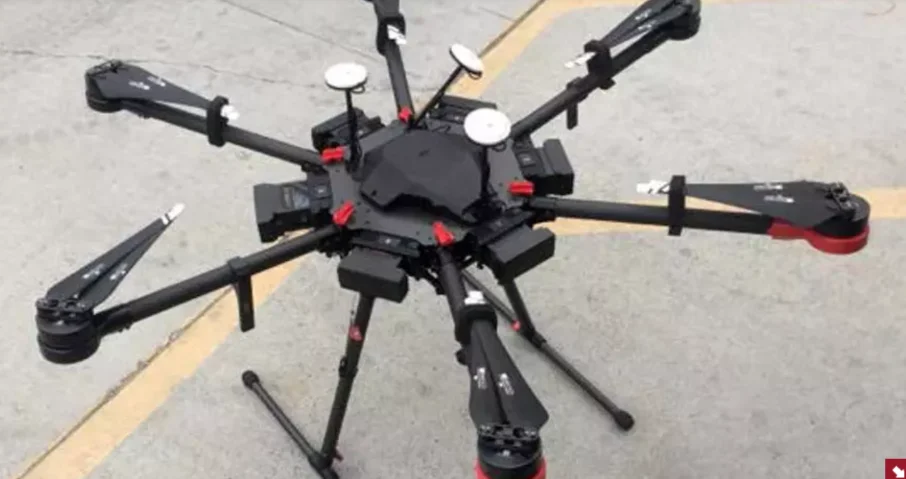
The burgeoning threat posed by Mexican cartels utilizing sophisticated drone fleets to transport illicit drugs and weapons across the U.S. southern border dominated discussions on Capitol Hill on Tuesday, prompting a bipartisan coalition of lawmakers to call for urgent, advanced countermeasures. During a House Homeland Security subcommittee hearing, Republicans and Democrats alike expressed profound concern over the escalating scale of remote-controlled incursions into American airspace, seeking to grasp the full scope of this aerial armada and identify the cutting-edge technologies required to effectively prevent these devices from breaching U.S. territory.
The hearing brought together a diverse panel of experts, including seasoned law enforcement officials and leading executives from the drone technology sector. Their testimonies painted a stark picture of U.S. airspace vulnerability, revealing a significant asymmetry in capabilities: wealthy Mexican cartels reportedly possess a larger and more active fleet of unmanned aerial vehicles (UAVs) than the U.S. Border Patrol currently has detection and interdiction equipment. This technological imbalance underscores a critical national security challenge, demanding immediate and innovative solutions to safeguard national sovereignty and public safety.
The Escalating Threat: A Deeper Dive into Cartel Drone Operations
The scale of the drone threat, as highlighted by Representative Dale Strong, an Alabama Republican, is alarming. "It is my understanding, for every drone flown by border security, the Mexican cartel is flying 17 drones," Strong stated during the hearing, emphasizing the overwhelming numerical advantage held by criminal organizations. Furthermore, data presented suggested that these cartel-operated drones are not merely hovering at the immediate border but are penetrating U.S. airspace significantly, reportedly flying "greater than 30 miles into U.S. airspace, landing and offloading drugs on U.S. soil — fentanyl, heroin, cocaine, marijuana and the list continues." This extended reach indicates a sophisticated logistical network, allowing cartels to bypass traditional ground-based interdiction efforts and deliver dangerous narcotics deeper into American communities, fueling the ongoing public health crisis, particularly concerning fentanyl.
The use of drones by transnational criminal organizations (TCOs) represents a significant evolution in smuggling tactics. For decades, cartels have adapted their methods, moving from human mules and clandestine tunnels to sophisticated vehicle modifications and semi-submersible vessels. The advent of readily available, relatively inexpensive, and increasingly capable commercial drone technology has opened a new, difficult-to-monitor frontier for illicit activities. These drones offer several advantages: they can bypass physical barriers, operate at night or in adverse weather conditions, carry significant payloads, and are expendable, making their loss a minor operational setback for the well-funded cartels.
The Bipartisan Call to Action: Congressional Concerns and Testimony
The bipartisan nature of the concern expressed in Congress underscores the gravity of the issue, transcending typical political divides. Lawmakers from both sides of the aisle acknowledged the critical need for a unified strategy to combat this aerial threat. The hearing served as a crucial platform for members of the House Homeland Security subcommittee to gather firsthand accounts and expert opinions on the operational realities faced by border agents and the technological gaps that exist.
Testimonies from U.S. Customs and Border Protection (CBP) officials detailed the challenges of detecting, tracking, and interdicting these fast-moving, often small, and stealthy aerial vehicles in vast and complex border landscapes. They emphasized the sheer volume of air traffic, both legitimate and illicit, that must be monitored, and the limitations of current radar and surveillance systems in differentiating between benign commercial drones and those operated by cartels. Executives from leading drone technology companies, in turn, presented potential solutions, including advanced radar systems, optical and thermal imaging technologies, signal jamming devices, and even counter-drone drones capable of safely disabling or capturing illicit UAVs. Their participation highlighted the private sector’s role in developing innovative defenses against this evolving threat.
The Asymmetric Battlefield: Resource Disparities and Technological Challenges
The stark disparity in drone numbers—17 cartel drones for every one U.S. border security drone—underscores a critical resource imbalance. This asymmetry is not merely numerical but also technological and operational. Cartels are known to invest heavily in adapting and upgrading commercial drones, often modifying them for increased payload capacity, extended flight range, and enhanced stealth features. They exploit off-the-shelf technology, which is cheaper and easier to acquire than the specialized, often classified, counter-drone systems developed by governments.
The challenge extends beyond simple detection. Once a cartel drone is identified, interdiction presents a complex set of legal and operational hurdles. Current laws regarding the use of force against drones in civilian airspace are still evolving, and the risk of collateral damage—should a drone carrying dangerous substances be shot down over populated areas—is a significant concern. Effective counter-drone technologies must therefore be capable of non-lethal interdiction, such as electronic jamming or net capture, to safely neutralize the threat without creating additional hazards. The integration of such technologies into a cohesive, scalable border security framework requires substantial investment, robust training, and continuous adaptation to keep pace with cartel innovation.
Historical Context: The Evolution of Border Smuggling
The current drone crisis is not an isolated phenomenon but rather the latest chapter in a long history of cartels adapting to border enforcement efforts. In the 1980s and 90s, the primary methods involved land-based vehicle smuggling and human couriers. As border security intensified with the construction of physical barriers and increased ground patrols, cartels shifted to more subterranean methods, investing in elaborate tunnel networks that could span miles, equipped with lighting, ventilation, and even rail systems. The early 2000s saw a rise in maritime smuggling, with "panga" boats and eventually crude semi-submersible vessels navigating coastal waters and rivers.

The mid-2010s marked the noticeable emergence of drone use, initially for reconnaissance and surveillance of border patrol movements. However, as drone technology advanced—becoming more affordable, capable of carrying heavier payloads, and offering longer flight times—cartels quickly recognized their potential for direct drug delivery. Early attempts involved smaller quantities, but recent reports indicate drones capable of carrying tens of pounds of narcotics, including highly potent and deadly fentanyl, in a single flight. This evolution demonstrates the cartels’ relentless pursuit of exploiting any perceived vulnerability in border security, leveraging technological advancements faster than enforcement agencies can respond.
The Lethal Cargo: Understanding the Drug Flow
The mention of fentanyl, heroin, cocaine, and marijuana underscores the severe public health and safety implications of unchecked drone smuggling. Fentanyl, in particular, has been a driving force behind the opioid crisis, with even minute quantities proving lethal. The ability for cartels to deliver such potent substances directly into U.S. territory, bypassing traditional checkpoints, represents a catastrophic risk. A single drone delivery could contain enough fentanyl to cause hundreds or even thousands of overdose deaths.
Beyond drugs, the concern over weapons smuggling is equally grave. While the primary focus of drone interdiction has often been narcotics, the potential for these devices to transport small arms, components for improvised explosive devices (IEDs), or other dangerous contraband poses a direct national security threat. The precise data on weaponized drone incidents or weapon deliveries via drone is often sensitive, but the theoretical capability remains a significant worry for defense and intelligence agencies. The ongoing flow of these illicit goods not only funds powerful criminal organizations but also destabilizes communities, strains healthcare systems, and contributes to violence on both sides of the border.
Current Countermeasures and Gaps
Currently, U.S. border security employs a multi-layered approach that includes ground patrols, fixed and mobile surveillance towers, ground sensors, and manned aircraft patrols. However, these systems were largely designed to counter traditional smuggling methods. While some specialized counter-drone units and technologies have been deployed, they are often limited in scope and not yet integrated into a comprehensive, nationwide defense system capable of addressing the sheer volume and sophistication of cartel drone operations.
One significant gap lies in the regulatory framework. While the Federal Aviation Administration (FAA) regulates U.S. airspace, the authority to detect, track, and interdict illicit drones falls under various agencies, including CBP, the Department of Homeland Security (DHS), and the Department of Defense (DoD). Clearer lines of authority, streamlined procedures for engagement, and updated legal frameworks that allow for more proactive interdiction without undue risk are critical. Furthermore, the sheer vastness of the southern border, spanning nearly 2,000 miles, makes comprehensive aerial surveillance and interdiction an immense logistical and technological challenge, requiring persistent monitoring capabilities across diverse terrains.
The Road Ahead: Policy Implications and Future Strategies
The congressional hearing highlighted the urgent need for a robust, multi-faceted policy response. This includes:
- Increased Funding and Resource Allocation: Substantial investment in advanced counter-drone technologies, including passive and active detection systems, electronic warfare capabilities, and kinetic interdiction tools. This funding must also support the training of personnel and the establishment of dedicated drone interdiction units.
- Technological Innovation and Collaboration: Fostering closer partnerships between government agencies, defense contractors, and commercial tech firms to rapidly develop and deploy cutting-edge solutions. This could involve hackathons, prize challenges, and expedited procurement processes for promising technologies.
- Enhanced Information Sharing: Improving intelligence gathering and sharing between federal, state, and local law enforcement agencies, as well as with Mexican authorities, to better understand cartel drone operations, tactics, and routes.
- Legislative Updates: Modernizing laws and regulations to provide clearer authority for law enforcement to detect, track, and interdict hostile drones, while balancing privacy concerns and ensuring public safety.
- International Cooperation: Strengthening collaboration with Mexico to disrupt drone supply chains, target cartel command and control centers, and share intelligence on cross-border drone activities.
International Cooperation and Diplomatic Dimensions
Effectively combating the cartel drone threat necessitates robust international cooperation, particularly with Mexico. The issue transcends simple border enforcement and delves into the broader context of transnational crime and shared security interests. Diplomatic efforts must focus on encouraging Mexico to intensify its efforts against cartel operations within its own territory, including targeting drone launch sites, dismantling assembly workshops, and interdicting the precursor chemicals and components used for both drug production and drone modification.
Statements from various U.S. officials often emphasize the need for Mexico to take a more aggressive stance against cartels, citing the detrimental impact of illicit drug flow on both nations. While Mexico has expressed commitment to combating organized crime, the scale of cartel power and corruption within the country presents significant challenges. Any effective long-term strategy will require a coordinated binational approach that includes intelligence sharing, joint operations, and capacity building for Mexican law enforcement. Without a concerted effort on both sides of the border, the cat-and-mouse game of cartel innovation versus enforcement response will continue, with drones serving as a persistent and evolving challenge to border security and national well-being. The recent hearing underscores that the U.S. Congress is poised to push for comprehensive, technologically advanced solutions to address this increasingly critical national security vulnerability.