

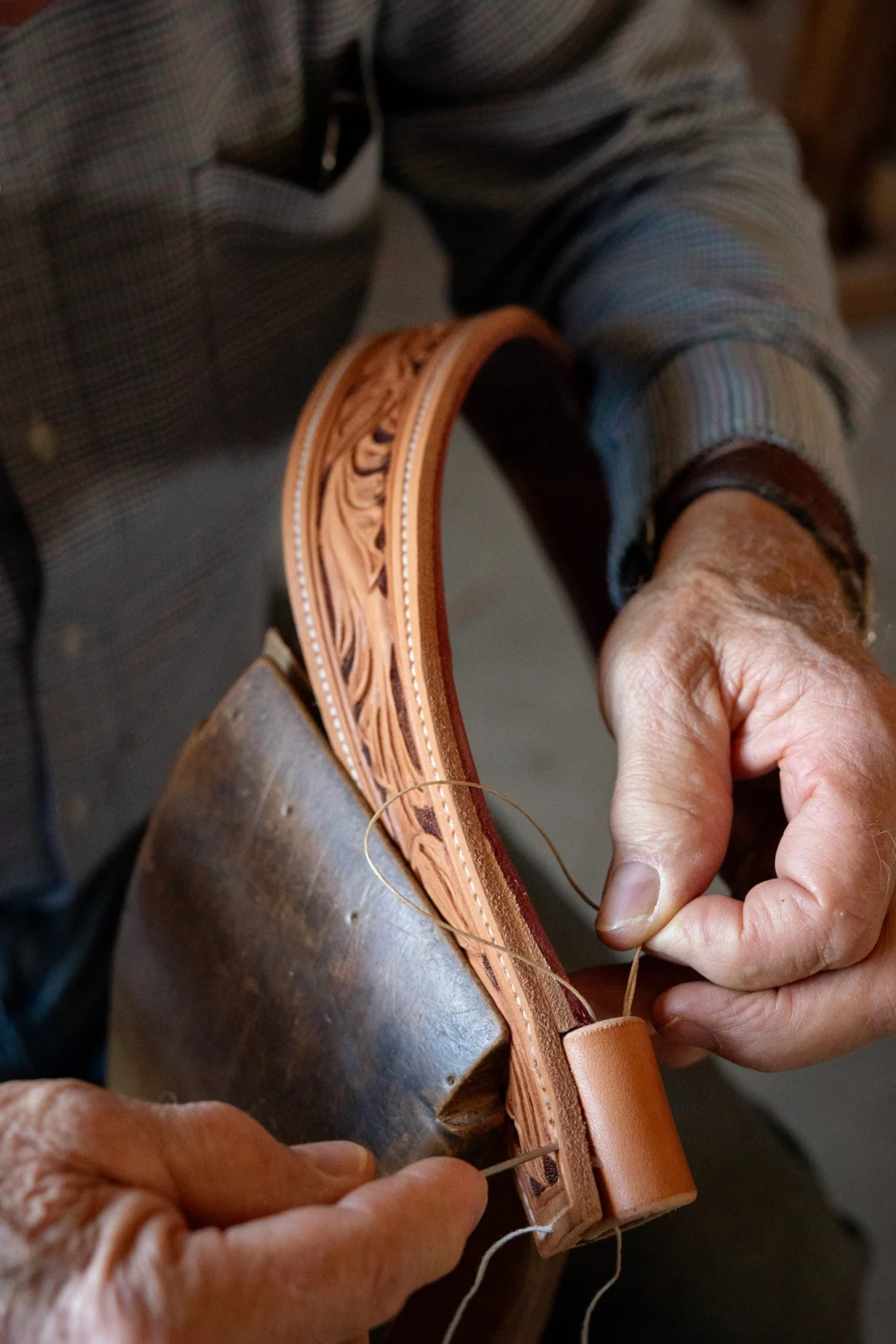
Renowned saddle artisan Doug Cox, whose career spans nearly two decades and includes an apprenticeship at Idaho’s venerable Ray Holes Saddle Company, has become a pivotal figure in the quiet resurgence of the Mother Hubbard saddle. Having crafted an estimated 930 saddles over his extensive career, Cox’s decision to dedicate a portion of his meticulous work to this historical model speaks volumes about its enduring appeal and his commitment to traditional craftsmanship. Since building his first Mother Hubbard in the 1980s, Cox, now based in Gardnerville, Nevada, has produced four such distinctive pieces, each a testament to a bygone era of the American West.
The Allure of the Mother Hubbard: A Glimpse into 19th-Century Equestrianism
The Mother Hubbard saddle, a quintessential piece of late 19th-century American equestrian gear, holds a unique place in the annals of Western history. Popular among cowboys and trail drivers primarily in the 1870s, it represented an evolution in saddle design, adapting the more robust traditional vaquero (Mexican) saddle into a lighter, more streamlined form suitable for the extensive demands of cattle driving and frontier life. Its defining characteristic, the mochila, a distinctive one-piece leather draping, served a crucial protective function, shielding the saddle’s rigging and tree from the harsh elements and abrasive brush of the open range.
The moniker "Mother Hubbard" itself is a nod to the practicalities of frontier life, derived from the large, rounded, removable leather mochila that was reminiscent of the wide-brimmed sunbonnets worn by pioneer women. This design not only offered superior protection but also provided a durable and remarkably comfortable seat for cowboys spending arduous hours in the saddle. The ability to easily swap out a wet or damaged mochila further enhanced its utility, making it a highly practical choice for the working cowboy.

However, the reign of the Mother Hubbard was relatively brief. As the cattle industry evolved and roping became an increasingly central aspect of cowboy work, the need for saddles with deeper seats and prominent horns grew. These newer designs offered greater security and leverage for roping cattle, gradually supplanting the Mother Hubbard’s lighter, hornless or low-horned configuration. By the turn of the 20th century, the Mother Hubbard had largely faded from widespread use, becoming a relic cherished primarily by historians and collectors.
A Modern Renaissance: Bridging History and Contemporary Interest
Doug Cox’s dedication to the Mother Hubbard model is not merely an exercise in nostalgia; it’s a profound commitment to preserving a significant piece of equestrian heritage. His work, meticulously detailed and historically accurate, offers a tangible link to the Old West, appealing to a diverse audience ranging from serious collectors and historical reenactors to enthusiasts of Western Americana. The timeless craftsmanship inherent in these saddles, combined with their historical weight, imbues them with a cachet far beyond their functional utility.
Interestingly, the appeal of these historical saddles has found an unexpected modern conduit: popular culture. Players of the wildly successful video game franchise Red Dead Redemption 2, set in a fictionalized American West of 1899, will recognize and often covet the historically accurate saddles depicted within the game. The developers’ meticulous research into period-appropriate gear, including various saddle types, has inadvertently introduced a new generation to the aesthetics and history of models like the Mother Hubbard, sparking curiosity and appreciation for their authentic design. This digital representation underscores the saddle’s status as an iconic artifact, reigniting interest in the physical craft.
The Art and Science of Crafting a Mother Hubbard
Crafting a Mother Hubbard saddle, while not requiring entirely unique tools compared to other Western saddles, demands a particular finesse and artistic vision, as Cox explains. The core distinction lies in the unified construction of the mochila. "When you build a Mother Hubbard, the skirt, seat, and back jockeys are all one piece of leather," Cox notes. This stands in stark contrast to most modern Western saddles where these components are typically cut and assembled separately.

The process begins with selecting a large piece of high-quality skirting leather, often measuring approximately 36 inches square. This substantial hide forms the canvas for the saddle’s defining feature. Cox elaborates on the intricate stamping process: "The stamping process is different only because you are working on a piece of skirting that is roughly 36 inches square, which is a lot of leather to be working on at one time." This expansive surface requires a consistent hand and an eye for detail to ensure uniform patterns and aesthetic integrity across the entire mochila.
Once the stamping is complete, the leather is carefully fitted over the saddle tree – the foundational wooden or synthetic frame that gives the saddle its shape and strength. The seat, which would typically be a separate piece in other designs, is integrated into the mochila and requires special attention. "The seat is padded or quilted because the leather is not enough to cover the cantle," Cox states. This padding provides the necessary comfort and support, conforming to the contours of the rider and the saddle tree.
A critical step in the assembly involves securing the mochila around the cantle – the raised back part of the saddle. "After the seat’s sewn in and the leather’s down on the tree, the back pieces are pulled up tight around the back of the cantle and laced together," Cox describes. For this crucial lacing, he utilizes a latigo leather string, which is meticulously cut and beveled to ensure a secure, durable, and aesthetically pleasing finish. Latigo leather, known for its strength and flexibility, is ideal for this purpose, providing a lasting bond that holds the large leather piece firmly in place.
The entire process, from initial design and leather selection to stamping, fitting, padding, and lacing, is a labor-intensive endeavor. Each of Cox’s Mother Hubbard saddles typically takes two to three weeks to complete, reflecting the intricate handwork, precision, and deep understanding of both historical design and material properties required.

Economic and Cultural Implications of Revival
The investment in a Doug Cox Mother Hubbard saddle is substantial, with a price tag around $13,000. This figure is not merely a cost but a reflection of the extraordinary skill, time, and premium materials involved in producing such a bespoke piece of functional art. It positions these saddles squarely within the realm of high-end custom craftsmanship, appealing to discerning clients who value authenticity, historical accuracy, and unparalleled quality.
The market for these saddles extends beyond riders looking for practical equipment. While durable and comfortable enough for riding, many clients acquire them as significant historical display pieces for ranch great rooms, private collections, or even museum exhibits. They serve as powerful conversation starters, embodying a tangible connection to the rugged romance and pioneering spirit of the American West. The decision to invest in such a piece often stems from a desire to connect with history, appreciate traditional artistry, and own a unique item that transcends mere utility.
Doug Cox’s continued dedication to the Mother Hubbard saddle highlights a broader trend in traditional crafts: the preservation of heritage skills in a modern world increasingly dominated by mass production. Artisans like Cox act as custodians of knowledge, ensuring that the intricate techniques and historical understanding required to create these objects are not lost. His work not only revives a specific saddle design but also champions the enduring value of handmade goods and the stories they carry.
In an era where digital simulations like Red Dead Redemption 2 bring historical artifacts to life on screen, the work of craftsmen like Doug Cox ensures that the physical legacy of the American West remains vibrant and accessible. His Mother Hubbard saddles are more than just equestrian equipment; they are historical documents, cultural touchstones, and exquisite examples of a craft that continues to resonate with the spirit of the frontier. The journey of the Mother Hubbard, from the dusty trails of the 1870s to the workshop of Doug Cox in Gardnerville, Nevada, and into the collections of modern enthusiasts, is a compelling narrative of resilience, artistry, and the timeless appeal of the American cowboy legend.

For those ready to embrace the old school, Doug Cox’s work can be explored further at dougcoxcustomsaddles.com. His contribution ensures that the legacy of the Mother Hubbard will continue to be ridden, admired, and discussed for generations to come.









