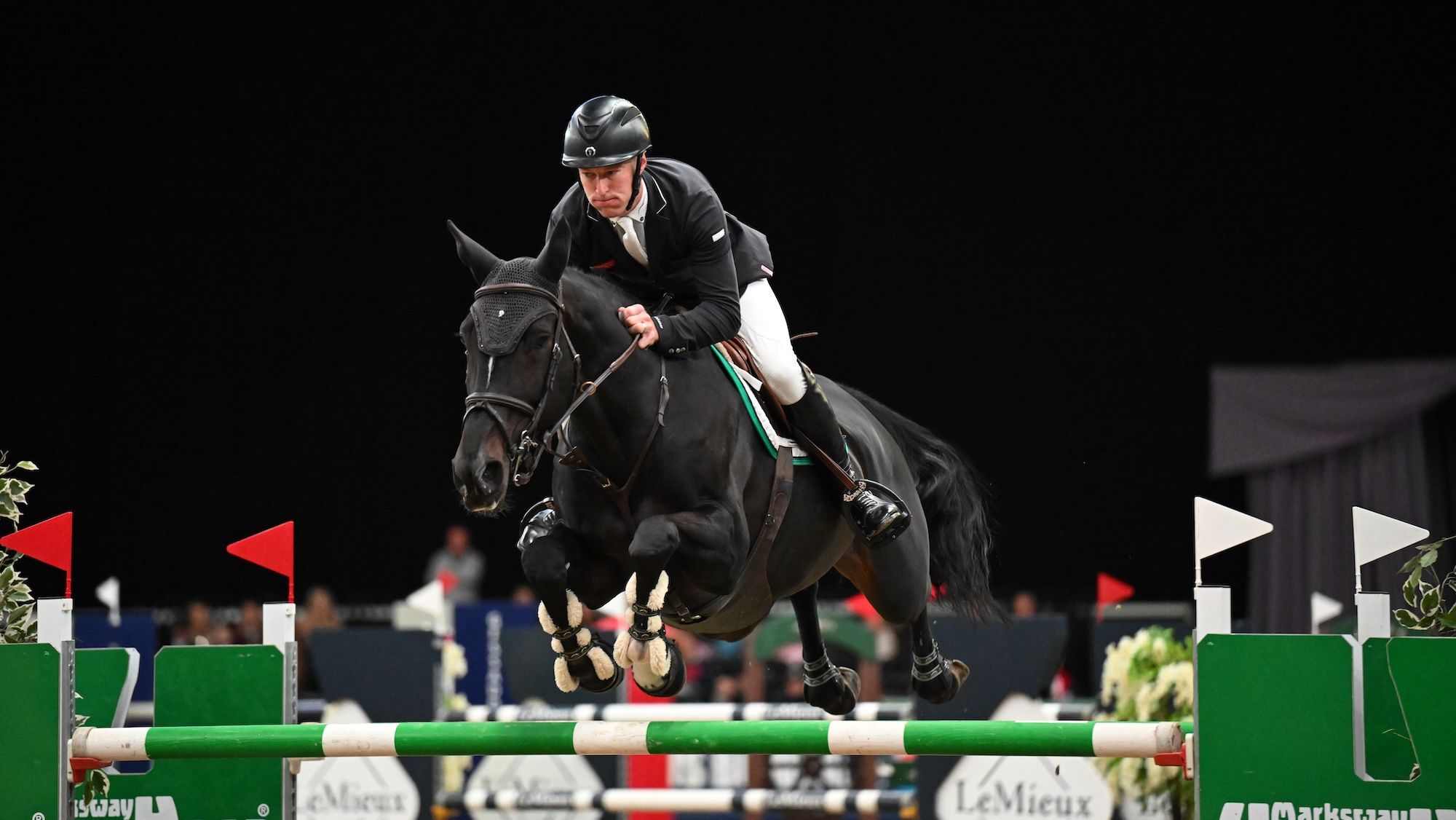
William Whitaker showcased a remarkable debut partnership with La Vie Est D’Or, clinching victory in the prestigious Grandstand Welcome Stakes at the renowned Horse of the Year Show (HOYS). The accomplished rider, who had never before competed with the 10-year-old mare, displayed a seamless and confident performance, navigating the challenging course with apparent ease. Their fluid and harmonious execution belied the fact that this was their first competitive outing together, suggesting a strong foundation built through dedicated training.
La Vie Est D’Or is typically campaigned by her owner, Iona Watkin Jones’s daughter, Glain. Whitaker, who also serves as Glain’s trainer, expressed his delight at having the opportunity to pilot the mare for the duration of the HOYS event. His sentiment underscored the collaborative spirit within equestrian circles, where shared passion for the sport often leads to such advantageous partnerships. The win at HOYS, one of the world’s most iconic equestrian events, marks a significant achievement for both Whitaker and the mare, setting a positive tone for their future endeavors.
The Significance of Horse of the Year Show
Horse of the Year Show, often abbreviated as HOYS, stands as a cornerstone event in the British equestrian calendar. Held annually, it is a culmination of national qualifying competitions across various disciplines, drawing the crème de la crème of riders and horses from across the United Kingdom and beyond. The show is not merely a competition; it is a celebration of equestrian sport, attracting hundreds of thousands of spectators and offering a vibrant atmosphere that blends elite sport with entertainment. HOYS features a diverse program, including show jumping, dressage, showing classes, driving, and police horse displays, making it a comprehensive showcase of equine talent and horsemanship.
The Grandstand Welcome Stakes, as the name suggests, serves as an opening event, often setting the stage for the week’s high-octane show jumping competitions. It is typically a class designed to test a combination of speed and accuracy, requiring riders to execute a faultless round within a time limit. Winning this particular class at HOYS carries substantial prestige, not only for the rider and horse but also for their connections, providing valuable momentum and confidence as the show progresses. The event’s historical roots and enduring popularity contribute to its status as a coveted title for any equestrian athlete.
A Partnership Forged in Training
The narrative behind William Whitaker’s victory with La Vie Est D’Or is one of trust and development. The mare, a striking 10-year-old, is a familiar sight in the competitive arena with her young rider, Glain Watkin Jones. Glain, under Whitaker’s expert guidance, has been honing her skills and building a strong rapport with La Vie Est D’Or. This established relationship between rider and trainer created a unique opportunity for Whitaker to step into the saddle.
Whitaker’s role as Glain’s trainer provided him with an intimate understanding of La Vie Est D’Or’s temperament, capabilities, and preferred style of riding. This existing knowledge base would have undoubtedly facilitated a smoother transition and allowed him to capitalize on the mare’s strengths. His comment about it being "fantastic" to take the ride highlights the mutual respect and shared goal of achieving success. For Whitaker, it was an opportunity to demonstrate his exceptional riding talent on a horse he knew well, albeit from a different perspective. For La Vie Est D’Or, it was a chance to perform on a grand stage with a rider who could draw out her best.
The Competition Landscape at HOYS
The Grandstand Welcome Stakes at Horse of the Year Show typically attracts a highly competitive field. Riders often choose to debut horses they are developing or bring forward established partnerships to test their mettle early in the show. The course design for such an opening class is usually intricate, featuring a variety of fences that test different aspects of a horse’s jumping ability, including puissance (verticality), spread, and angled jumps. The tight time allowed adds an element of urgency, demanding efficient turns and a forward-thinking approach from the rider.
In recent years, the show jumping discipline at HOYS has seen a significant evolution in terms of athleticism and technicality. The increasing standard of horses and riders means that every stride and every turn is meticulously planned. Winning such a class requires not only a horse with scope and bravery but also a rider with exceptional judgment, a precise feel for pace, and the ability to communicate subtle aids effectively. Whitaker’s victory suggests that he and La Vie Est D’Or not only met these demands but exceeded them, demonstrating a level of performance that set them apart from the rest of the competitors.
Supporting Data and Performance Metrics
While specific data points for the Grandstand Welcome Stakes are not provided in the initial report, general trends in show jumping performance at HOYS can offer context. Winning rounds in classes of this caliber often involve clear rounds within very tight time limits. For instance, top-level show jumping competitions can see winning times within a second or two of the optimum, highlighting the importance of speed. The number of faults is paramount; any knockdown or exceeding the time limit incurs penalties that can quickly drop a competitor down the rankings.
In a typical Grandstand Welcome Stakes, the field might comprise anywhere from 50 to over 100 horse-and-rider combinations. The percentage of clear rounds can vary significantly depending on the course’s difficulty, but a successful outcome usually requires a faultless performance. Riders who achieve a clear round are then ranked according to their time. A victory at HOYS, especially in a high-profile class like this, signifies a near-perfect execution of both jumping and speed. The sheer volume of entries underscores the achievement of rising to the top of such a competitive event.
Broader Implications and Future Prospects
William Whitaker’s victory with La Vie Est D’Or has several implications for the individuals involved and the wider equestrian community. For Whitaker, it reinforces his status as one of the UK’s leading show jumpers and demonstrates his versatility and skill in establishing successful partnerships with different horses. This win could open doors to further opportunities and collaborations, solidifying his reputation as a rider capable of bringing out the best in his mounts.
For La Vie Est D’Or and her owner, Iona Watkin Jones, this victory is a significant accolade. It validates the mare’s talent and the efforts invested in her training and development. Competing and winning at HOYS provides invaluable experience and exposure, potentially increasing the mare’s profile within the breeding and competition circuits. The success also serves as a testament to the effectiveness of Whitaker’s training methods, benefiting Glain Watkin Jones as she continues her own equestrian journey.
The partnership’s success at HOYS could influence future competition strategies. It might lead to a re-evaluation of La Vie Est D’Or’s competition schedule, potentially including more high-profile events. It also highlights the benefits of cross-pollination of talent within equestrian circles, where established riders can mentor and support developing partnerships. The positive outcome could inspire other young riders and their trainers to explore similar avenues for gaining experience and confidence.
A Glimpse into the Training Philosophy
The success of William Whitaker and La Vie Est D’Or provides a practical illustration of effective equestrian training. Whitaker’s ability to step in and achieve immediate success with a horse he hasn’t previously competed suggests a training philosophy that emphasizes adaptability, clear communication, and a deep understanding of equine biomechanics and psychology. His role as a trainer for Glain implies a focus on building a strong foundation of horsemanship, which includes not just jumping technique but also the horse’s overall well-being and confidence.
The fact that La Vie Est D’Or is a 10-year-old mare indicates she is likely in her prime competitive years. This age often signifies a horse that has matured physically and mentally, possessing the experience and strength to handle the demands of top-level show jumping. Whitaker’s ability to quickly harness this potential speaks to his skill in fine-tuning existing abilities rather than having to build them from scratch. This approach is crucial in elite sport, where time is often of the essence, and riders need to be able to adapt to different horses rapidly.
The collaborative aspect, with Whitaker training Glain and then riding La Vie Est D’Or, points to a holistic approach to equestrian development. It’s not just about individual performance but about fostering a supportive environment where the horse’s progress and the rider’s learning are prioritized. Such an environment is fertile ground for both human and equine athletes to reach their full potential.
The Legacy of Whitaker in Show Jumping
William Whitaker hails from a renowned equestrian family, with his father, Michael Whitaker, and uncle, John Whitaker, being legendary figures in the sport of show jumping. This lineage imbues him with a rich heritage and a deep understanding of the sport’s demands and intricacies. Growing up in such an environment provided him with unparalleled exposure to elite competition and training from a young age.
His career has seen him achieve significant success on the international stage, including representing Great Britain in numerous championships. He has consistently demonstrated a talent for producing and riding top-class horses, and his victories at prestigious events like HOYS are a testament to his dedication and skill. The Grandstand Welcome Stakes win is another chapter in his ongoing success story, further cementing his position among the elite riders in show jumping. His ability to adapt and excel with different horses, as exemplified by his partnership with La Vie Est D’Or, underscores his versatility and the depth of his talent.
The continued success of riders like William Whitaker, and the emergence of promising partnerships such as the one with La Vie Est D’Or, ensures that the sport of show jumping remains vibrant and exciting. Events like the Horse of the Year Show provide the perfect platform for these narratives to unfold, captivating audiences and inspiring the next generation of equestrians. The seamless execution and victory in the Grandstand Welcome Stakes serve as a powerful opening statement for Whitaker and La Vie Est D’Or, promising an engaging future for this newly formed competitive duo.