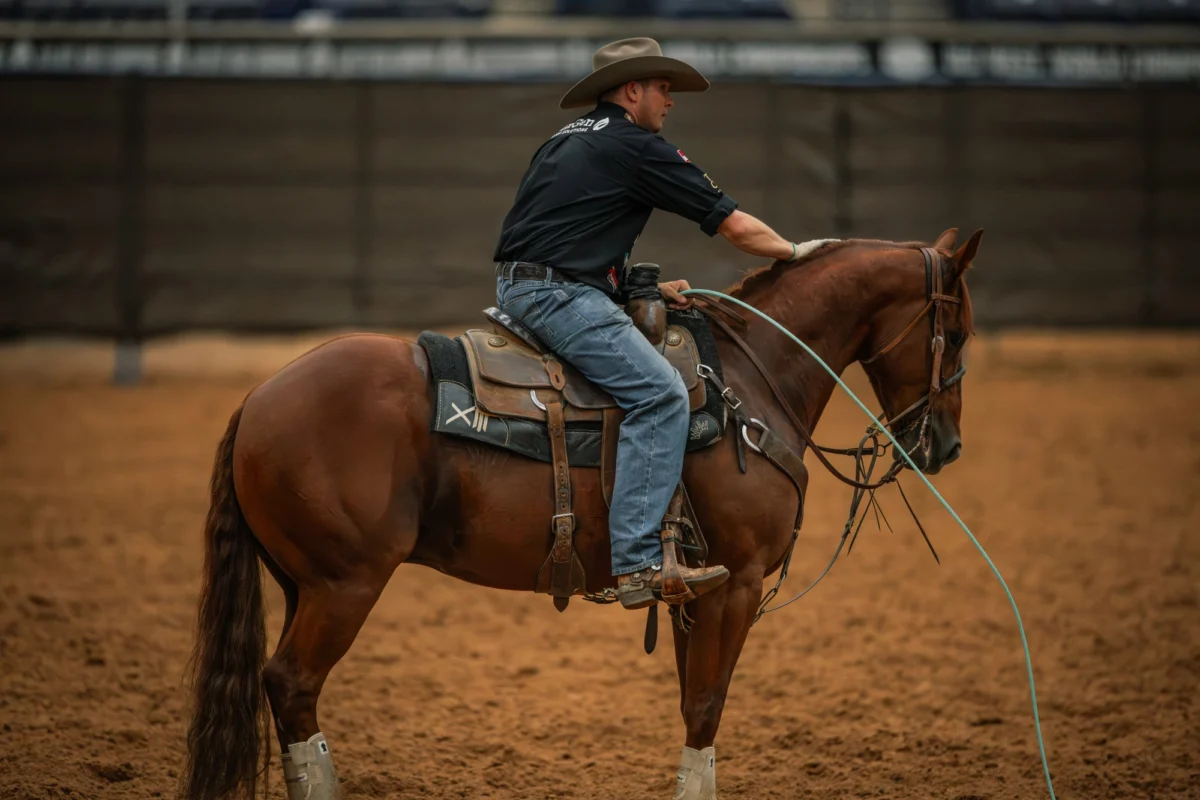
At the highly anticipated 2017 Better Barrel Races (BBR) World Finals in April, the atmosphere was electric as competitors vied for top honors. Among them was Cody Adams, making her inaugural run in the coliseum with her esteemed 16-year-old mare, Snazzy Nazzy. Snazzy, a mare whose story already resonated as a triumph, had been purchased merely as a broodmare. Yet, defying expectations, this pro rodeo-level performer had made a remarkable return to the arena, qualifying Adams for the prestigious RFD-TV’s The American Semifinals after weaning her foal. Adams harbored hopes of further adding to their impressive list of achievements, but during that fateful run, the unthinkable occurred, shifting their focus from victory to survival and recovery.
The Incident at the BBR World Finals
As Snazzy Nazzy approached her first barrel, a critical maneuver demanding immense agility and strength, her left hind leg became momentarily stuck. Adams recounted the harrowing moment: “She sat down for her first barrel and her left hind leg stuck. I felt it go back and I heard a pop. I pulled her up as soon as I could. She actually took a jump toward second.” The sound of the "pop" immediately signaled a severe issue, and Adams, with quick reflexes, brought the mare to a halt. Although Snazzy could walk from the arena, she bore minimal weight on her injured left hind leg, indicating significant distress. The gravity of the injury became acutely apparent as they attempted to navigate concrete surfaces. Adams described the struggle: “When we got on cement she’d never really put that leg down, so that foot would slide. That was the worst—getting her out of the arena and having to walk through the stall barn, because she kept almost falling down. I had a friend run and grab my Soft Rides to help keep her from slipping.”
The immediate assessment by the onsite veterinarian pointed towards a fractured lateral wing of her pelvis, specifically involving the ilium, a narrow, flat bone integral to the pelvic girdle. The mare’s pain response was dramatic upon palpation. Adams remarked on the contrast between the seemingly minor incident and the severe pain: “When he barely touched her hip, she went to the ground. It was very dramatic—the amount of pain she was in. It wasn’t that dramatic when it happened. It was so minor. It wasn’t like a major fall or bad ground or a slip; it was just bad luck.” This initial diagnosis, while alarming, set the stage for a complex diagnostic journey that would underscore the inherent difficulties in assessing hindquarter injuries in equine athletes.
Navigating Initial Diagnosis and Transport Home
Following the preliminary diagnosis, Adams conferred with her regular veterinarian, Dr. Joe Stricklin, a noted clinician and former educator at Colorado State University, who currently practices in Greeley, Colorado. The decision was made to undertake the arduous 12-hour journey home to Ault, Colorado, a choice fraught with risk given the potential severity of a pelvic fracture. To mitigate the danger during transport, Adams meticulously taped Snazzy’s hip with kinetic tape for stabilization and utilized mattress foam to wedge the mare securely into her trailer slot, providing extra support and absorbing any potential impacts against the dividers.

Dr. Stricklin voiced his initial apprehension about the long trip: “I was a little concerned about her coming home that quick with it possibly being a fracture, but the more I talked to [Cody] and found out what she was doing, I was a little less concerned. I’ve seen several pelvic fractures, and she just didn’t sound like that’s what happened.” His seasoned clinical judgment, based on extensive experience with pelvic injuries, suggested a nuance to the situation that the immediate onsite assessment might have missed.
Understanding Pelvic Injuries in Equines
Pelvic fractures in horses, particularly performance horses, represent a spectrum of injuries ranging from minor, non-displaced cracks to catastrophic breaks. The pelvis, a complex structure of fused bones (ilium, ischium, pubis, and sacrum), forms the foundation of the hindquarters, bearing immense weight and enabling powerful propulsion. Fractures can occur in various locations—in front of or behind the hip joint, or higher up in the ilium. The mechanism of injury, such as a fall or slip, often dictates the fracture site and type.
Some pelvic fractures, particularly those involving displacement, can be immediately life-threatening due to the risk of rupturing major arteries, often leading to rapid, catastrophic outcomes. Dr. Stricklin emphasized this grim reality: “You can have fractures that displace, and those are usually catastrophic because they can rupture one of the main arteries. Those horses are usually gone pretty quick.” The equine community had recently witnessed such tragedies, with high-profile cases like Jana Griemsman’s mare Chase It With Brandy at the Ram National Circuit Finals Rodeo and NBHA World Futurity Champion HM Cornerstone at the 2016 NBHA Youth World Show. Fortunately for Snazzy, her condition did not escalate to this critical level.
Diagnostic Challenges in Equine Lameness
The diagnosis of hindquarter injuries, particularly within the deep musculature of the pelvis, presents significant challenges for veterinarians. The sheer muscle mass surrounding the pelvic region severely limits the effectiveness of conventional diagnostic modalities such as standard radiography (X-rays) and ultrasound in the field. “In the field, you can’t image that area well, whether you’re doing ultrasound or radiographs, to know what’s really going on,” Stricklin explained. While larger, more powerful ultrasound machines can sometimes visualize damaged areas with skilled practice, obtaining definitive images of deep bone structures remains difficult.
Advanced imaging techniques like Magnetic Resonance Imaging (MRI) or Computed Tomography (CT scans), while invaluable for other areas, are often impractical or contraindicated for pelvic injuries in horses. The size of the horse can be a physical barrier, as many units are not designed to accommodate the entire pelvis of a large equine. More critically, putting a horse under general anesthesia—a prerequisite for most MRI or CT procedures—is extremely risky in the presence of a potential pelvic fracture due to the instability and the risk of further injury during induction and recovery.

Nuclear scintigraphy, commonly known as bone scans or "nuke scans," offers a less invasive diagnostic avenue. This technique involves injecting a radioactive isotope that accumulates in areas of increased bone turnover, highlighting inflammation, bone remodeling, or fractures in both soft tissue and bone phases. “Sometimes nuke scans will give you some ideas,” Stricklin noted. “If you have fractures, they should show up that way.” Another valuable, though limited, diagnostic tool is rectal palpation, which allows a veterinarian to manually feel internal pelvic structures for displacement or pain. “There are some you can palpate rectally,” Stricklin said. “When you have displacement, you can feel it rectally. You could tell those horses were pretty painful anytime you got close to that area.”
Ultimately, the diagnostic process for hindquarter injuries often relies heavily on clinical assessment, observation of the horse’s gait and pain response, and a period of conservative management. “In any case, we tend to be very conservative as to what that horse needs to do for two or three weeks until we get into it,” Stricklin emphasized. “Then you can differentiate it more between ligament tears and fractures. It’s not easy to do.” This conservative approach allows time for acute inflammation to subside, potentially revealing the true nature of the injury.
The True Culprit: Sacroiliac Ligament Injury
After an initial 30 days of strict stall rest, coupled with heavy doses of pain medication, omeprazole to prevent stress-induced ulcers, and three different injectable joint medications (including Pentosan and Legend to combat potential arthritis), Snazzy Nazzy underwent a reassessment. The re-examination in late May revealed a crucial development: the mare did not appear to have a fractured pelvis after all. “She was actually moving very well, and I couldn’t elicit any pain on her when I palpated her rectally,” Stricklin recounted. “I really pulled on that pelvis in every direction rectally and really pushed and pulled externally, even when she was walking, and I couldn’t elicit any kind of pain to where I thought it was a fracture.”
Dr. Stricklin’s revised diagnosis pointed to a significant tear of her sacroiliac (SI) ligaments. The SI joints are two low-motion joints situated where the wings of the ilium connect with the sacrum—the fused vertebrae that lead to the horse’s tail. The intricate network of ligaments holding the SI joint together forms a critical component of the horse’s suspension system, providing essential stability to the hindquarters and facilitating the transfer of propulsive forces from the hind limbs to the spine.
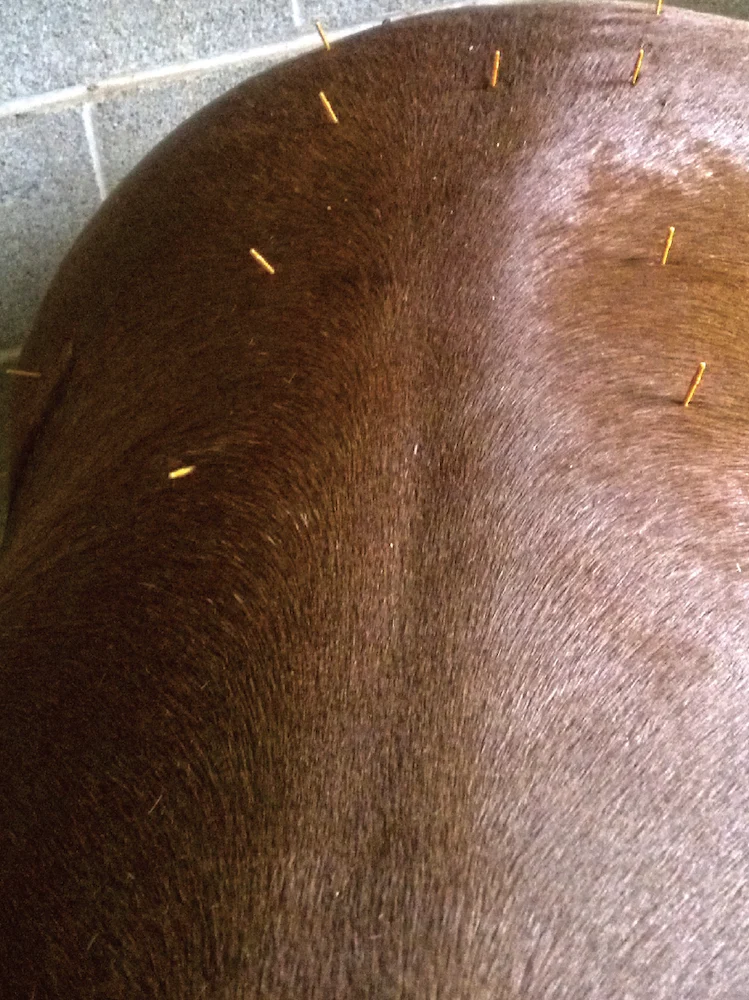
SI strains and tears are notoriously common in performance horses, particularly in disciplines like barrel racing that demand explosive power, sudden stops, and rapid directional changes. “There’s no question that SI strains and tears are a big part of any horse’s athletic performance,” Stricklin asserted, highlighting that these injuries are frequently misdiagnosed or underdiagnosed. He added that incorporating acupuncture and chiropractic examinations into his lameness workups has significantly enhanced his ability to identify muscle and soft tissue issues. “It doesn’t matter what discipline it is—cutting, roping or barrel racing. I think [SI strains and tears] are one of the most misdiagnosed, underdiagnosed conditions horses have.”
Symptoms of SI pain can be varied and often mimic other lameness issues. Stricklin described common client complaints: horses not striding out, shuffling or "bunny hopping" with their hind legs, acting as if they want to buck or "hump up," or feeling like "they’re riding downhill" due to an unwillingness to engage their hindquarters. A significant observation made by Stricklin is the strong correlation between SI pain and gastric ulcers. “Another thing I see in conjunction with SI pain is ulcers,” he explained. “SI pain is a significant pain these horses are in day and night, and it gets those horses fretting. A lot of the horses I see with SI pain have pretty significant ulcers.” The chronic stress and discomfort associated with severe SI pain can undoubtedly contribute to the development or exacerbation of gastric ulcers.

Stricklin recounted one of the most severe SI cases he treated, involving a barrel horse that dramatically declined from a robust, high-performing athlete to an underweight, ill-tempered animal. “If you just tried to touch him in his SI area, he’d kick at you or turn to bite you,” he recalled. “I literally could take one finger on either side of his SI and make him dog-sit.” The horse’s rehabilitation involved omeprazole, SI area injections, a month of stall rest in a 12×20-foot stall with hand walking, followed by a gradual return to work. This horse, after an SI diagnosis in July, was not back to running until January, illustrating the extensive recovery period required. This case also highlighted the diagnostic confusion that often precedes an accurate SI diagnosis, as the horse had previously received multiple injections in both hocks and stifles, mistakenly believed to be the source of lameness. Stricklin observed, “I see a lot of horses that have both hocks and stifles injected, and it’s actually SI pain. If I see a horse that flexes about the same on a fetlock, hock and stifle, I’m not looking as those three joints as the problem. I start looking at the SI. By the time you get through those flexions, the SI is going to be pretty sore.”
A Comprehensive Approach to Rehabilitation
Snazzy Nazzy’s rehabilitation protocol was carefully orchestrated, beginning with an extended period of rest. After 60 days of stall confinement, a timeframe that would have been highly improbable for a significant pelvic fracture, Snazzy was cleared for light exercise. This milestone confirmed the non-fracture diagnosis and marked a turning point in her recovery. Her treatment regimen also included advanced physical therapies such as shockwave therapy and intensive massage therapy targeting her SI region. Shockwave therapy, utilizing high-energy sound waves, is employed to stimulate healing, reduce pain, and improve blood circulation in injured tissues. Massage therapy helps alleviate muscle spasms, improve flexibility, and reduce compensatory pain patterns often associated with SI injuries.
“Cody started riding her, and we checked her about three weeks later, and she looked like she was doing really well,” Stricklin reported. However, as Adams gradually increased the intensity of Snazzy’s work in July, the mare exhibited the "typical painful response" associated with sacroiliac tears. This recurrence of pain necessitated specific interventions, including targeted injections for the SI area. Despite the setback, Stricklin noted, “She’s been doing remarkably well.”
Stricklin clarified his nuanced approach to injections, explaining that directly injecting into the SI joint isn’t always the primary strategy, as some substances might impede ligament healing. Instead, his focus often lies in relaxing the surrounding musculature. “I do a little more with muscle. I try to get that muscle to relax, and there’s lots of ways to do that,” he stated. These methods can include electro-stimulation, electro-acupuncture, and Magna Wave therapy, all designed to enhance circulation and promote natural healing processes. “The key is increasing circulation, which helps the healing process,” Stricklin emphasized. “There are a lot of therapies that are good, but I don’t think there is any one therapy that’s got the magic cure.” This holistic approach underscores the complexity of treating such injuries and the need for a multi-modal strategy tailored to the individual horse.
Snazzy Nazzy’s Remarkable Comeback Story (Pre-Injury Context)
Snazzy Nazzy’s resilience and ability to defy expectations were not new. Her initial entry into Cody Adams’ life was itself a stroke of serendipity. In December 2015, Adams, of Ault, Colorado, purchased the 2001 mare at the Jud Little Herd Reduction Sale for $3,900, intending to acquire a broodmare in foal to Chicados Cash. What she received, however, was an unforeseen treasure: a sound, pro rodeo-level superstar.

Adams, who favors crossing sprinting Thoroughbred blood with Quarter Horses for her barrel racing prospects, was drawn to Snazzy’s pedigree, noting her sire Regulate (TB) and her dam’s lineage tracing back to Dashing Investment and Easy Jet. After Snazzy foaled her Chicados Cash colt in February 2016, Adams shared the news on Facebook. This post caught the attention of her childhood friend, Ember (Givens) Stewart, a National Finals Rodeo qualifier from Wyoming. Stewart, surprised, reached out asking how Adams came to own a colt out of Snazzy Nazzy. “Did you buy an embryo?” she inquired. Adams replied, “No, I bought her.”
Stewart then connected Adams with Suzanne Moseley, Snazzy’s previous owner, who revealed the mare’s competitive history. Moseley, believing Snazzy was still sound and capable, encouraged Adams to bring her back to the arena. “Suzanne told me she didn’t think there was anything wrong with her, and she didn’t need to be a broodmare now. She encouraged me to try to bring her back,” Adams recounted.
Following the weaning of her colt in early July 2016, Adams began the process of conditioning Snazzy for competition. The mare’s return was nothing short of phenomenal. “I think the third barrel race I took her to was The American qualifier in August in Salina, Utah, and she qualified,” Adams exclaimed, quickly recouping the mare’s purchase price through earnings. Snazzy enjoyed a stellar fall season, performing exceptionally well at the slot race preceding The American Semifinals, placing second with a 13.9-second run despite a slight slip at the third barrel. This incredible comeback cemented Snazzy’s status as a top-tier athlete, making her subsequent injury at the 2017 BBR World Finals all the more devastating. At the time of the article’s publication, Snazzy also had a JL Dash Ta Heaven filly, under the guidance of Jordon Briggs, competing successfully in futurities, a testament to her valuable genetics.
The Road Ahead: Hopes for a Full Return
When Snazzy Nazzy’s injury initially occurred, Adams faced the agonizing fear that she might have to euthanize her beloved mare. Her immediate hope shifted to merely preserving Snazzy’s life for a potential future as a broodmare, if competitive running was no longer an option. However, as the mare showed remarkable progress after 60 days of stall rest, Adams began to harbor a renewed belief in Snazzy’s capacity for a full comeback to the barrel racing circuit.
“She’s coming back now,” Adams reported in late September, several months post-injury. Her tentative return involved a "soft coast-through" at a local jackpot. This seemingly minor step was fraught with immense emotional tension for Adams: “I did a soft coast-through at a jackpot [in late September], and I don’t think I’ve ever been so scared going to the first barrel. She sat down and turned it great, but it was terrifying.” The experience underscored the mental and emotional hurdles that both horse and rider must overcome after such a significant injury. The path to full recovery remained uncertain. “We don’t know how well she will come back. I was just hopeful I would have her as a broodmare. That still may not be the case, but we’re going to give her a shot. I’m hopeful that hers will be one of the good stories. I’m hoping she comes back well.” As of mid-September, Adams was cautiously cruising the mare through patterns, monitoring her progress, and preparing for a potential return to full competition, acknowledging the inherent unknowns of such a demanding recovery.
Broader Implications for Equine Athletes

Snazzy Nazzy’s case serves as a crucial case study for the broader equine sports community, particularly in high-impact disciplines like barrel racing. It highlights several critical implications:
- Complexity of Diagnosis: The initial misdiagnosis of a pelvic fracture underscores the inherent difficulties in accurately pinpointing the source of lameness in the equine hindquarters. The deep musculature, the limitations of field imaging, and the risks associated with advanced diagnostics mean that even experienced veterinarians face significant challenges. This case emphasizes the need for thorough, multi-stage diagnostic processes and the value of specialist consultation.
- Prevalence of SI Injuries: Dr. Stricklin’s assertion that SI strains and tears are "one of the most misdiagnosed, underdiagnosed conditions" resonates deeply. Performance horses are frequently subjected to forces that predispose them to these injuries, and their subtle, often compensatory, symptoms can easily be attributed to other areas like hocks or stifles. Increased awareness and refined diagnostic techniques are vital.
- Holistic Treatment Approaches: The success of Snazzy’s recovery, though still ongoing, can be attributed to a comprehensive treatment plan that extended beyond traditional methods. Incorporating therapies like shockwave, intensive massage, acupuncture, and chiropractic care alongside medication and controlled rehabilitation demonstrates the evolving landscape of equine sports medicine and the benefit of multimodal approaches.
- Owner Dedication and Welfare: Cody Adams’ unwavering dedication, from safely transporting Snazzy across states to meticulously managing her extensive rehabilitation, showcases the profound commitment required from owners of injured equine athletes. This commitment is essential not only for physical recovery but also for maintaining the horse’s mental well-being throughout a potentially long and frustrating recovery period.
- Impact on Competitive Careers: Snazzy’s story reflects the precarious nature of competitive careers in equine sports. Even seasoned, successful athletes can suffer career-threatening injuries through seemingly minor incidents. The economic and emotional toll on owners is substantial, highlighting the importance of robust insurance and support networks within the industry.
Immediate Action: What to Do in Case of Injury
The availability of an onsite veterinarian at major events like the BBR World Finals is a significant advantage. However, as Dr. Stricklin points out, not all jackpots or rodeos have this immediate access, and injuries can just as easily occur during routine practice at home. In such situations, swift and appropriate initial action can be critical.
Dr. Stricklin advises owners: “The best thing to do if a veterinarian isn’t readily available is take [the horse] to a stall, get them quiet, give them something for the pain, and if they seem excited, give them a little acepromazine, just something to keep them calm until you get someone there to look at them. If you don’t have to put them in a trailer and make them travel to be looked at, that’s the smartest thing to do.” Prioritizing the horse’s comfort, minimizing movement, and reducing anxiety are paramount until professional veterinary care can be secured, potentially preventing further injury or exacerbation of the existing condition.
Snazzy Nazzy’s journey, from an unexpected broodmare-turned-superstar to a severely injured athlete facing an uncertain future, encapsulates the triumphs and tribulations inherent in equine sports. Her case provides invaluable insights into the diagnostic complexities of hindquarter injuries and underscores the critical importance of meticulous veterinary care, dedicated rehabilitation, and the enduring bond between horse and rider in the pursuit of recovery and, perhaps, another remarkable comeback.