

Colleen D. of Asheville, North Carolina, poses a question that resonates deeply within the dressage community: "After years of riding dressage, I feel I still haven’t mastered the art of correct contact. Could you explain what things to look for?" This inquiry touches upon one of the most nuanced and perpetually debated aspects of equestrian training. Correct contact, far from being a static position, is an dynamic, symbiotic relationship between horse and rider, a subtle dialogue conveyed through the reins, and a hallmark of true equestrian artistry. Understanding and achieving it requires a profound connection to the horse’s balance, self-carriage, and the rider’s own biomechanics.
The Evolving Nature of Contact: From Thread to Heavy Hand
The concept of correct contact is inherently fluid, a reflection of the horse’s ever-changing state of balance and engagement. At its most refined, when a horse is perfectly balanced and in self-carriage, the contact with the bit is described as "so light it is nearly nothing." This ideal state is often likened to holding "just a thread connecting your hand to the horse’s mouth." This suggests a minimal yet consistent connection, allowing for immediate communication without impediment.
Conversely, when a horse loses its equilibrium and falls onto its forehand, the contact can become significantly heavier. This increased weight in the rider’s hands is not a desired state but rather an indicator of imbalance. The rider’s objective then becomes to re-establish the horse’s balance, thereby restoring the light and elastic contact. This cyclical nature underscores that contact is not a fixed goal but a continuous process of refinement and response.
Visualizing Correct Contact: The Rider’s Role
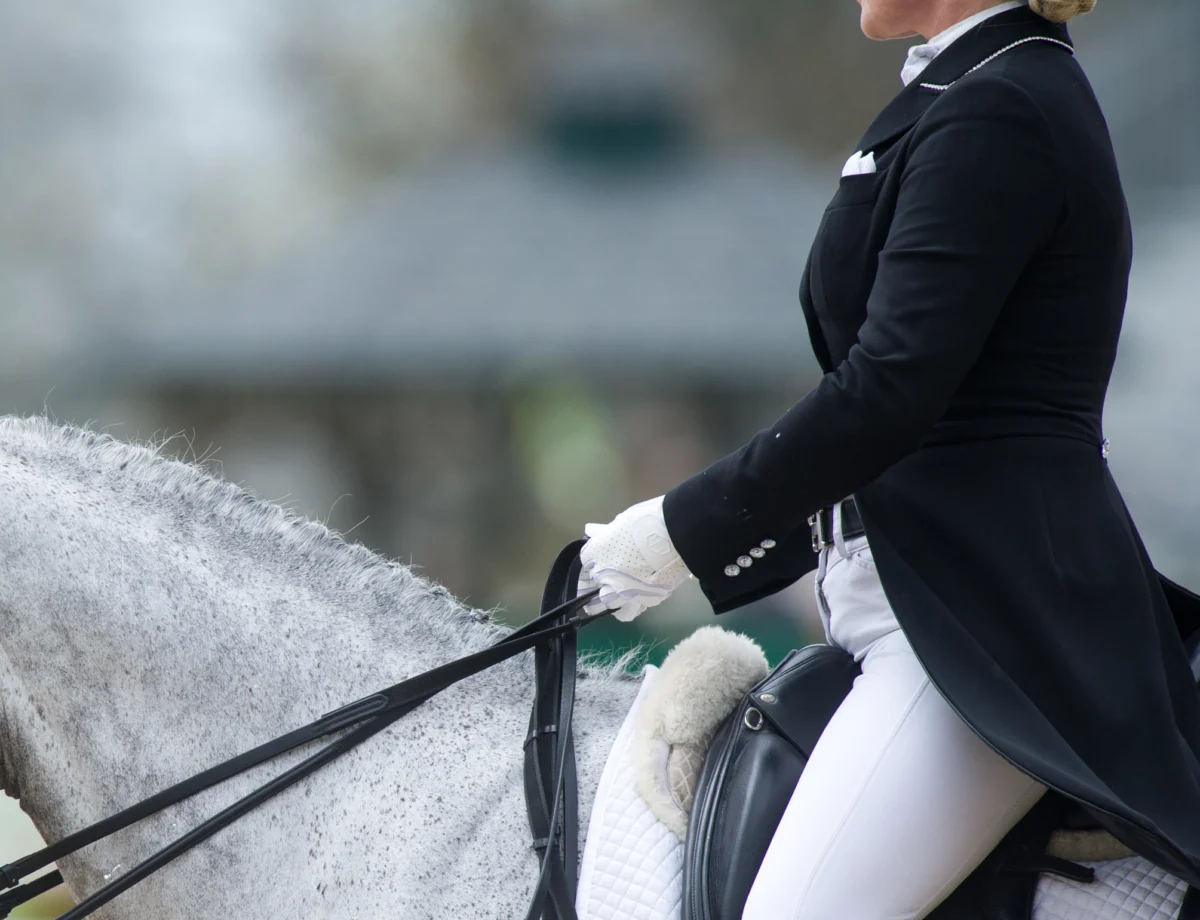
From an observer’s perspective, correct contact presents a clear visual cue: a straight, unbroken line extending from the rider’s elbow to the horse’s mouth. This line is crucial and dictates specific rider posture. The elbow, the primary pivot point for the arm, should be held directly above the hip, forming a stable base. This positioning prevents the hands from being held too high, which can create tension in the horse’s jaw, or too low, which can interfere with the horse’s natural balance and forward motion.
The ideal hand position is described as being "roughly just above and in front of the pommel of the saddle." This placement ensures that the reins are not pulled back against the horse’s mouth but rather allow for a forward-reaching connection. Crucially, the fists must be closed with the thumbs held as the highest point, a posture often illustrated by the analogy of "holding a glass of water." This grip provides security and control without unnecessary tension, allowing for subtle micro-adjustments.
The Pitfalls of "Piano Hands" and the Illusion of Lightness
The article identifies a common rider error: the "piano hands" position. This typically involves the reins running between the ring and little fingers, with the hands turned over as if playing a piano. While this position might feel comfortable for some, it significantly compromises the rider’s ability to feel the nuances of the horse’s mouth. The inherent turning of the wrist restricts the natural suppleness of the forearm and elbow, hindering the rider’s capacity for subtle communication.
Furthermore, some riders attempt to achieve a lighter contact by simply loosening their grip while maintaining the "piano hands" position. This, however, often results in "almost no contact or no feeling." The goal is not to eliminate contact but to refine it, making it elastic and responsive. True lightness comes from a balanced horse and a rider who can maintain a consistent, supple connection, not from a lack of connection altogether.
The Feeling of Connection: A Vibrational Dialogue

A correctly established contact allows the rider to "feel a connection with your horse." This connection is not merely a physical tether but a sensory conduit. When the horse chews the bit, a rider with correct contact will feel a "small vibration on the reins." This subtle sensation is indicative of the horse’s relaxation and acceptance of the bit.
In contrast, a "bad connection is like picking up the telephone and then setting down the receiver on the table." This analogy vividly illustrates the disconnect that occurs when the rider is not truly engaged with the horse’s mouth, rendering communication ineffective and akin to a dead line.
The Foundation of Correct Seating: Core Strength and Stability
The ability to achieve and maintain correct contact is intrinsically linked to the rider’s own stability and balance. The article emphasizes the importance of sitting correctly, utilizing core muscles to maintain equilibrium. This principle is directly related to the discipline of Pilates, which focuses on building a strong, stable core.
When the rider’s core is engaged, their arms and legs become relaxed extensions of this balanced posture. This allows the elbows to "hang straight down, right above your hip," creating a stable and elastic connection to the reins. In this position, if the horse pulls or shifts its weight, the rider’s core strength acts as a brace, preventing them from being pulled out of balance or losing contact. Conversely, if the arms are positioned too far forward, a strong pull from the horse can easily unseat the rider or force them to release the contact to avoid falling.
The "Tree" Analogy: Resilience and Non-Resistance
To further illustrate the principle of correct seating and contact, the article employs the analogy of a tree. Riders are encouraged to visualize themselves as trees: "Trees do not give nor pull and they do not get tense." This imagery promotes a posture of quiet strength and resilience.
If the horse pulls forward or down, the rider should not reciprocate by pulling back or yielding excessively. Instead, the objective is to "keep your arms from moving forward" and to "sit quietly using your core muscles to stay in balance." The horse, in this scenario, is encouraged to "rebalance himself." This approach fosters independence and self-carriage in the horse, as it learns to manage its own balance without relying on the rider to constantly correct it.
Navigating Imbalance: The Half-Halt as a Tool for Re-Engagement
The reality of equestrian training is that perfect balance is not always maintained. Horses, like humans, have moments of imbalance. When a horse "falls on the forehand," the contact will naturally become heavier. The crucial point here is how the rider responds.
Instead of resorting to pulling on the reins, which can exacerbate the problem and create a reactive tug-of-war, the rider must focus on re-establishing balance through their own body and aids. This involves "sitting extra correctly to keep your balance and core centered." The rider’s stable core acts as an anchor, allowing them to absorb the horse’s imbalance.
Beyond maintaining their own balance, riders must also employ their seat and legs to help re-balance the horse. The primary tool for this is the half-halt. The article cleverly reframes the half-halt as a "small downward transition." For instance, if a horse becomes heavy in the hand during a medium trot, the rider can mentally prepare to ask for a walk.

The execution of this "small downward transition" involves engaging the leg and squeezing the buttock muscles while leaning "very slightly back." This action encourages the horse to shift its weight backward, engaging its hindquarters more effectively and lifting its forehand. The purpose is to "sit the horse back on the haunches so he can regain and hold his balance." As the horse rebalances, the contact automatically lightens, and the connection becomes elastic once more.
Framing the Horse: The Seat and Leg as the Driving Force
The concept of "framing your horse" is central to achieving and maintaining correct contact. This framing is achieved through the rider’s seat and leg aids, which direct the energy generated by the horse’s hindquarters towards the rider’s hands. The seat and legs act as the engine, creating a "channel through which the horse is allowed to go forward to the contact."
The horse’s forward impulsion, generated by the activating aids of the seat and leg, causes the horse to "rise through his withers and neck." When this impulsion meets a subtle, receiving resistance at the bit, the horse yields at the poll. This yielding allows the horse to achieve the correct head position, with the poll as the highest point and the nose slightly in front of the vertical. This creates a harmonious, rounded frame.
The Horse’s Trust and the Rider’s Communication
Ultimately, the key to correct contact lies in the rider’s ability to ride from their seat and leg, using the half-halt to address imbalances, and maintaining a stable core without pulling backward on the reins. This consistent and fair approach fosters trust in the horse.
The article articulates this by stating that the horse learns that "if he loses balance and self-carriage, he will create more pressure on his own mouth, but if he can hold his balance, it will be more comfortable." This teaches the horse to self-regulate its own balance and, consequently, the feel of the contact. The horse learns to "trust the contact because he is the one who is determining how light or heavy it will be."
This creates a communication system where the rider can "communicate with your horse with nearly effortless tension and relaxation of the muscles in your fingers." This refined dialogue, built on trust and mutual understanding, is the essence of correct contact in dressage.
Background and Expertise: The Wisdom of Gail Hoff-Carmona
The insights shared in this article are attributed to Gail Hoff-Carmona, PhD, a highly respected figure in the dressage world. Her credentials as a U.S. Equestrian Federation "S" dressage and "r" sport horse breed judge, a Grand Prix rider and trainer, and a recipient of USDF bronze, silver, and gold medals on self-trained horses, underscore the depth of her experience and knowledge. Hoff-Carmona’s work breeding Swedish Warmbloods and operating Los Alamos Dressage Center in Ojai, California, further solidifies her position as an authority on equestrian training and development. Her ability to articulate complex concepts like correct contact in a clear and practical manner speaks to her dedication to educating riders and advancing the sport of dressage. The question posed by Colleen D. is a testament to the enduring challenges faced by riders at all levels, and Hoff-Carmona’s response offers a comprehensive and insightful guide to navigating these complexities.







