

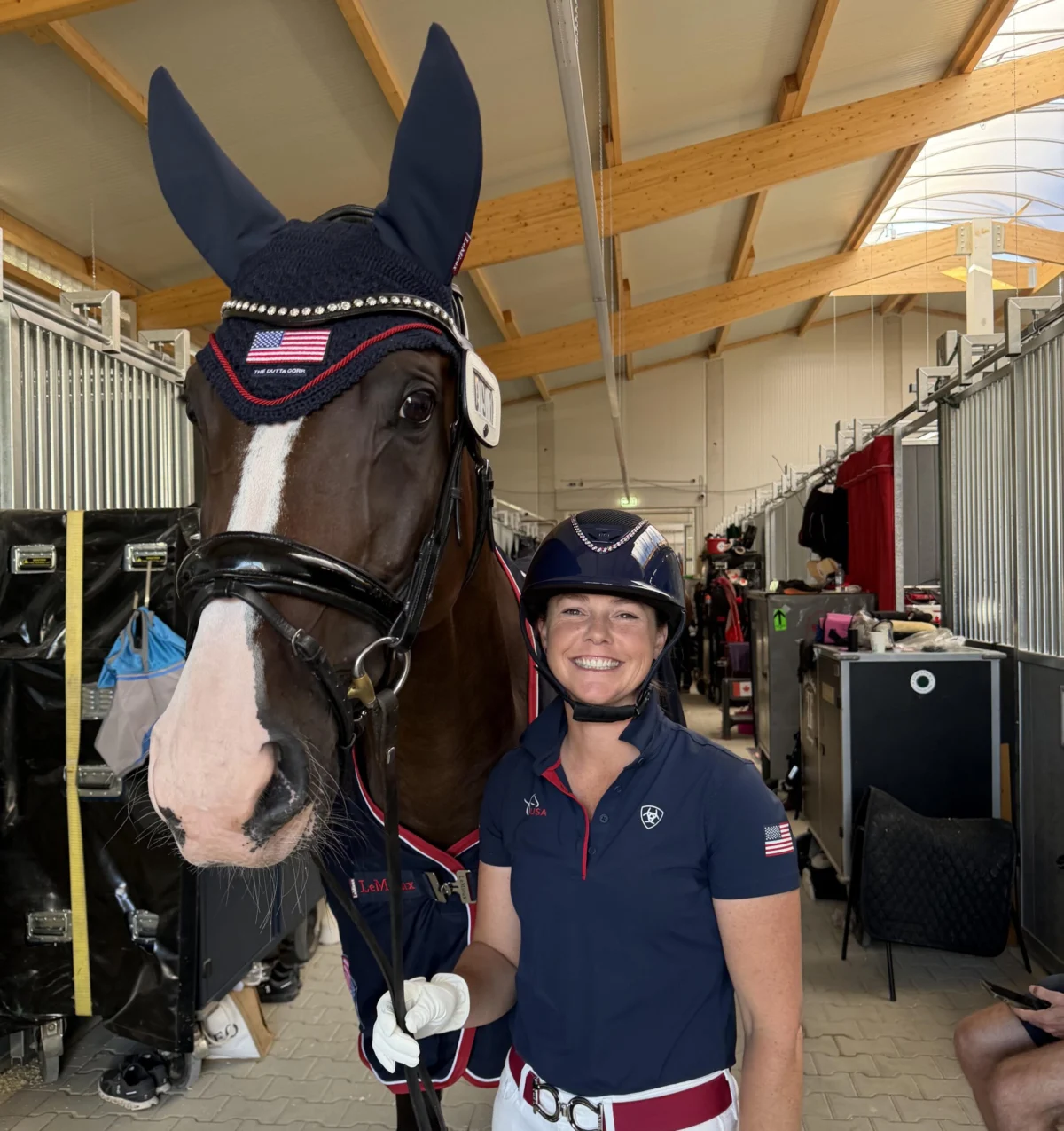
Before 2026, Meagan Davis had harbored a quiet aspiration: to represent the United States on a senior dressage team. By the close of that summer, this dream had not only materialized but far surpassed her initial expectations. Davis earned both gold and bronze medals as part of two FEI Nations Cup teams. Her remarkable season culminated in an unexpected, last-minute call-up for a coveted team spot at the 2026 FEI Dressage World Championships in Aachen, Germany, riding Scott Durkin’s 13-year-old Oldenburg gelding, Toronto Lightfoot. This whirlwind of success marks a significant milestone in Davis’s burgeoning international career.
The accomplished rider, who splits her time between training bases in Saugerties, New York, and Loxahatchee, Florida, recently sat down to discuss her extraordinary European campaign, her standout performance at Dressage at Devon, and the core philosophies that underpin her training regimen. Her journey to the pinnacle of international dressage is a testament to dedication, strategic partnership, and a profound understanding of equine athleticism.
Forging a Partnership with Toronto Lightfoot
The serendipitous meeting between Meagan Davis and Toronto Lightfoot began with a strong recommendation from trainer Lars Petersen. At the time, Petersen was working with Helgstrand Dressage in the United States, where Toronto was based. "I think I have your horse," Petersen told Davis. "You need to come ride him." Davis recalled the moment she first encountered the striking Oldenburg gelding. "Toronto walked in the ring, and I was like, ‘OK, this horse is good looking… like this one is something to look at.’ I sat on him and was like, ‘I could make this horse my own.’"
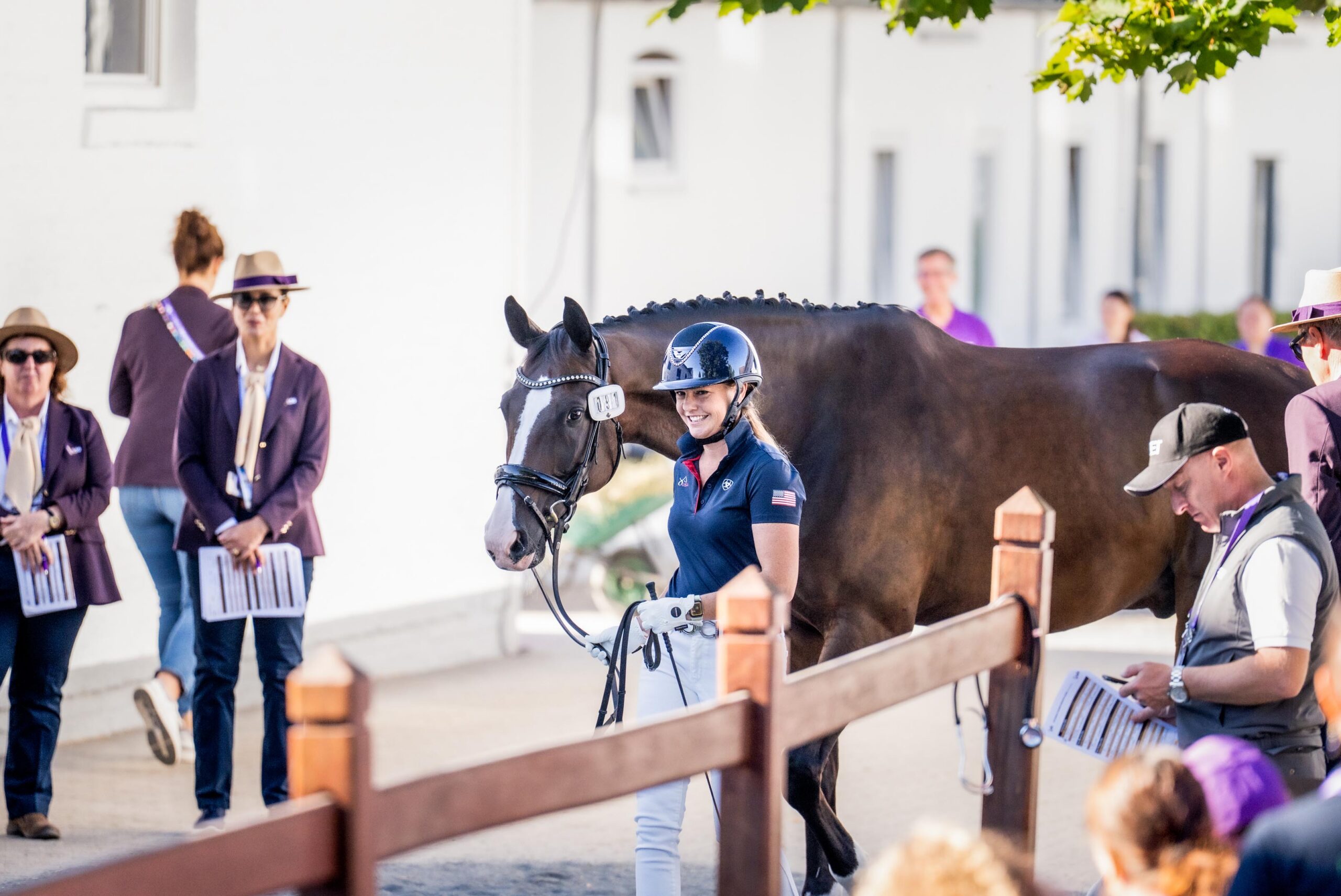
Petersen, aware of Toronto’s inherent talent, also cautioned Davis about his challenging nature. "Lars warned me that he’s a little bit tricky," Davis explained. "His conformation isn’t the easiest, but he knew I could handle that and make Toronto into something." This foresight proved crucial, as Davis took on the gelding when she had only limited experience at the international Grand Prix level, having primarily competed in national Grand Prix classes.
Toronto Lightfoot, by Totilas out of Okima Lightfoot, by Onassis, was essentially at the Small Tour level when Davis began working with him. While he was beginning to school Grand Prix movements, his education was far from complete. The initial stages of their partnership presented immediate hurdles. "He was basically small tour when we got him—starting to school some of the Grand Prix stuff, but nothing was finished," Davis recounted. "I took him to his first show, and he wouldn’t get on the trailer. Then he did this massive spook at the show, and it was like, ‘OK, we’re gonna have to put a little work into this.’"
Davis embraced the challenge, dedicating significant time to groundwork to build Toronto’s confidence. "I spent a lot of time with him on the ground, showing him the showgrounds when we went to new places, and he really thrived with that," she said. This patient approach fostered a deep trust between horse and rider. "The more I did that with him, the better he was. I’m so lucky; he trusts me so much that if I just put my leg on, I know we’re going to go."
Her training progression involved a series of influential mentors. After working with Lars Petersen for a couple of years, Davis transitioned to Ali Brock for a year as she progressed into Grand Prix. Brock was instrumental in solidifying the "throughness" required at this level and helped devise a strategic competition plan. Most recently, Davis began training with Christoph Koschel, a move she credits with pushing her and Toronto to the next tier of performance.
A Summer of Unprecedented Success in Europe
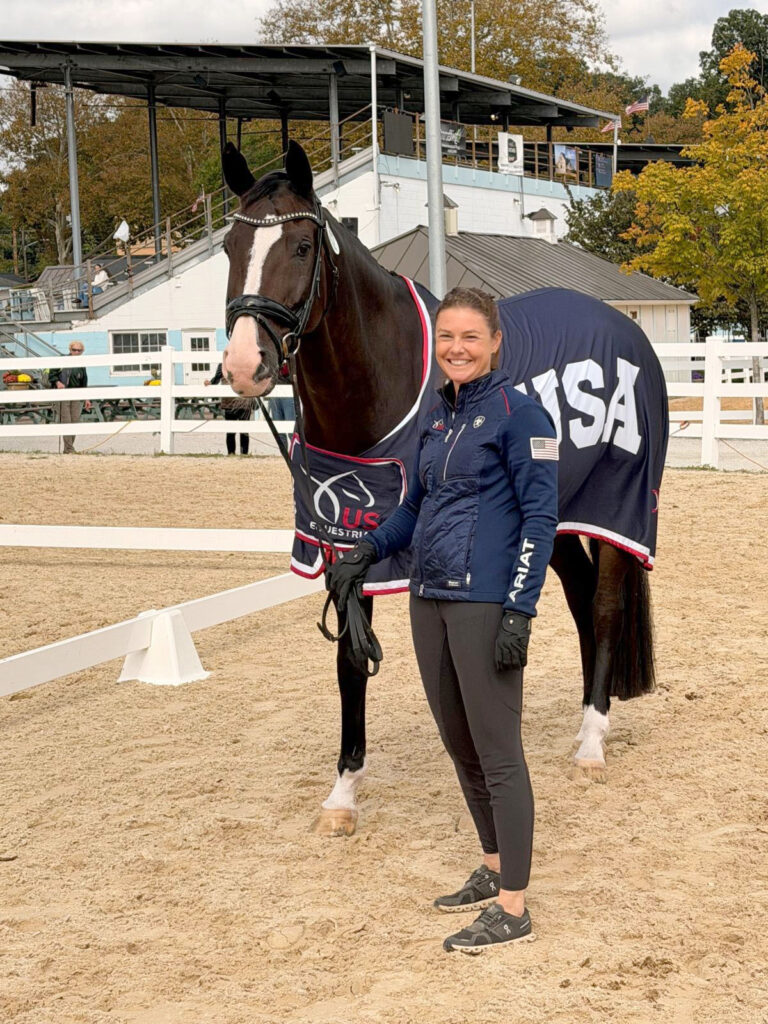
The summer of 2026 proved to be a watershed moment for Meagan Davis. Her achievements included winning four CDI (Concours Dressage International) competitions, riding on Nations Cup teams in Wellington and Hagen, making her debut at two CDIs in Europe, and ultimately, receiving the unexpected call-up for the U.S. Dressage Team at Aachen. Reflecting on this remarkable period, Davis described it as a dream realized.
"My goal was to get to training camp. That was my big goal, and then I was so thrilled to go to Europe with Toronto," she stated. The rapid progress made with Toronto over the past two years at the CDI Grand Prix level underscored the gelding’s immense potential. "To accomplish what we have in that short amount of time says a lot about how much Toronto has grown as a horse. And there’s still so much more in him."
Her return to Europe held personal significance, marking her first international competition on the continent since the Young Rider World Cup in Germany in 2010. This solo venture provided a valuable learning experience, contrasting sharply with having a larger string of horses. Navigating the complexities of European competition planning, from logistics to acclimation, presented a steep learning curve. Davis found invaluable support from her trainers, Ali Brock and Christoph Koschel, and his wife, as well as fellow American riders like Kasey Perry-Glass and Adrienne Lyle, who offered guidance and shared their experiences.
The call for the Aachen team spot arrived with dramatic timing. "I did not find out I was on the team until 5 on Saturday afternoon at training camp, and we left for Aachen early the next morning," Davis recalled. As a late addition, her support team had to scramble to make arrangements. Fortunately, her pre-arranged refundable flight tickets allowed her essential personnel to join her quickly. Christoph Koschel even postponed his vacation and sent his experienced groom, Inka Kalberlah, to assist them in Aachen, a testament to the collaborative spirit within the U.S. dressage community.
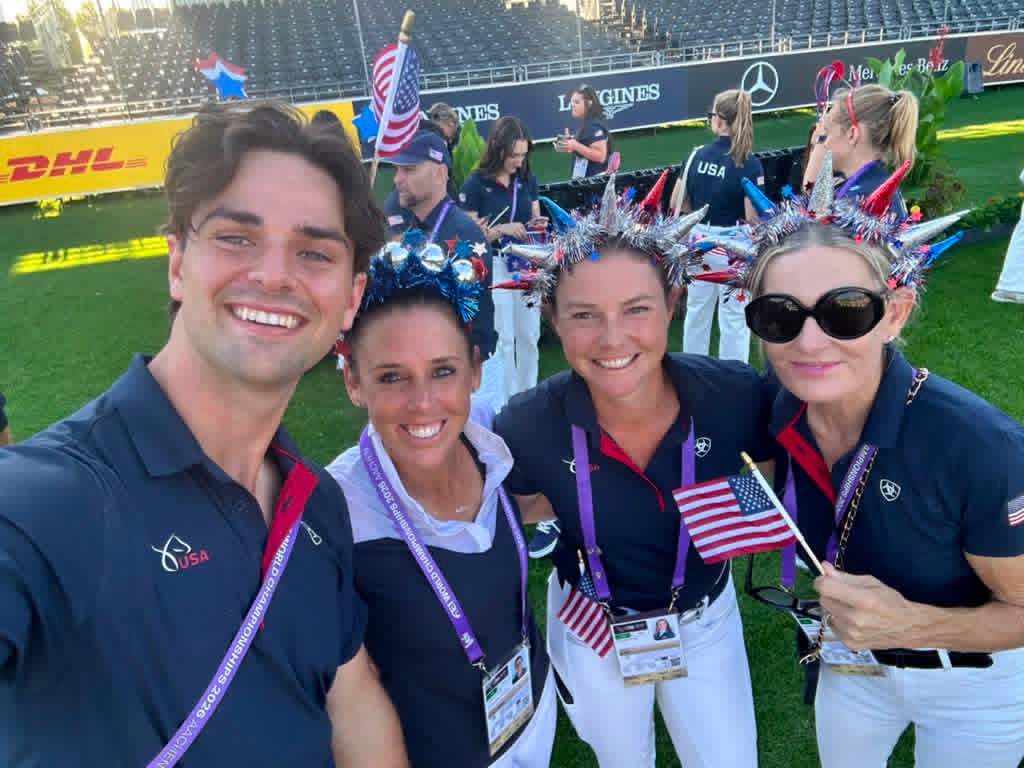
The atmosphere at the Aachen World Championships was legendary. Entering the iconic stadium, Toronto initially showed signs of nervousness. "Going into that stadium, Toronto got a little nervous and stopped right before the sand part of the arena," Davis explained. "He was looking around, and I was like, ‘OK, this is going to go one of two ways. He’s either going to decide to go with me, or he’s going to say he can’t handle the pressure, and we’re going to have to bow out.’" In a moment of profound connection, Davis whispered to her partner, "Toronto, I really need you to be my partner today." The gelding responded by lowering his head and proceeding into the arena, a powerful display of trust and partnership that left Davis awestruck. "I was dumbfounded. I was like, ‘Wow, this horse really loves me!’"
The experience of competing in Aachen was profoundly moving. "Being in that stadium was absolutely incredible," Davis shared. "I hope we did our country proud. That’s the big thing—to go out there and be a positive representation of what dressage is in the U.S." She highlighted the unique camaraderie experienced within a team setting. "The sport does tend to be a little bit lonely because we’re usually all at our own barns training. But when you’ve been on a team, there’s this special bond that you can’t replicate."
A Personal Best at Dressage at Devon
Concluding her exceptional year, Davis and Toronto Lightfoot delivered a stellar performance at Dressage at Devon, securing fifth place in the CDI-W Grand Prix Freestyle with a personal-best score of 74.970%. This event provided a crucial opportunity to test their newly refined freestyle, which was set to a rock-and-roll soundtrack featuring the Rolling Stones.
The freestyle was a relatively new program for the pair, and they had limited opportunities to ride it prior to Devon, especially after returning from Europe to their facility in New York, which has a shorter arena. "When I got home from Europe to our facility in New York, I couldn’t practice it because our ring is quite a bit short," Davis noted. "So, I was just trying to feel our way through it and listen to the music." Despite the lack of extensive practice, the partnership shone through.
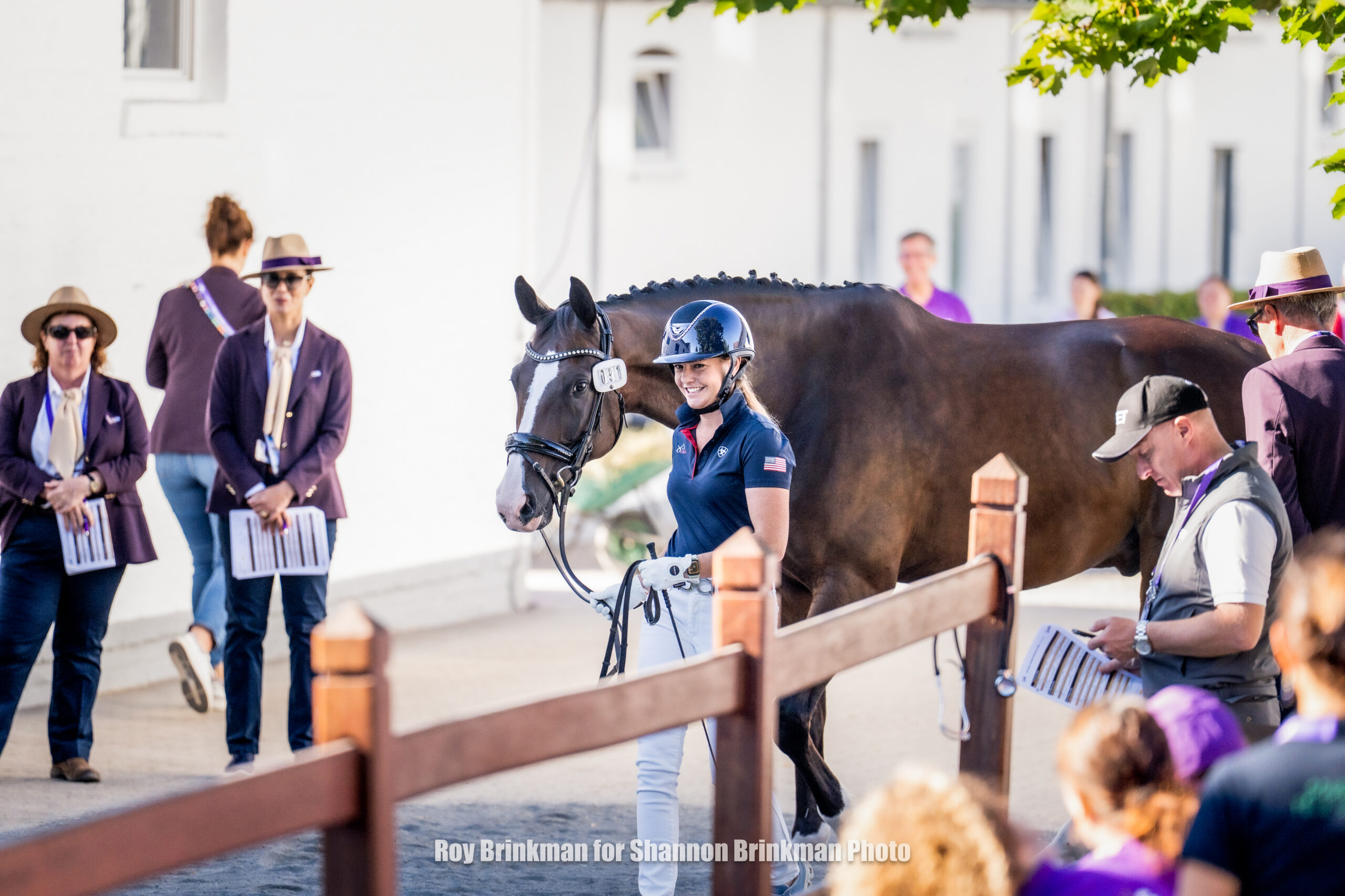
A primary objective at Devon was to expose Toronto to the unique, electric atmosphere that characterizes the historic event, often described as having a distinctly European feel, a quality that Davis feels is often missing at other U.S. competitions. "More than anything, we wanted to get Toronto into Devon’s environment—that electric, sort of European-feeling atmosphere that other shows in the U.S. just don’t have," she explained. Toronto’s performance was exemplary, demonstrating his engagement and responsiveness. "He was so good in the freestyle and answered all of my questions. He was with me every stride, and that’s really what we were looking for. All of the homework we’ve been doing at home can then go and be demonstrated in the show ring."
Future Ambitions and Training Philosophy
Looking ahead, Davis and Toronto Lightfoot are set to return to Wellington, Florida, in November to train with Christoph Koschel and finalize their strategic plan for the upcoming season. A primary target is the five-star competition in January, with aspirations to compete in Europe again next year, potentially returning to Aachen for the World Championships and participating in more Nations Cup events.
Davis’s training program is characterized by its inclusive approach. She typically manages a string of around 11 horses, ranging from adult amateurs and sales prospects to her own competition mounts. "I take everything. No horse is not good enough to be in my barn," she asserted. This philosophy stems from her upbringing, where consistent, high-level training was not always readily available, necessitating resourcefulness and a broad skill set.
She also offers "boot camps," intensive one-month training sessions for clients aiming to prepare for competitions or address specific training needs. Davis emphasizes the value of riding a diverse range of horses to continually hone her own skills. "Sometimes I’ll be like, ‘OK, well, what happens if I do this on this horse? Does it fix this?’ And I think the more different horses you have in your stable, the more things you can learn from them." While she maintains a strict policy against riding dangerous horses, she finds immense satisfaction and learning opportunities in working with horses at various levels.
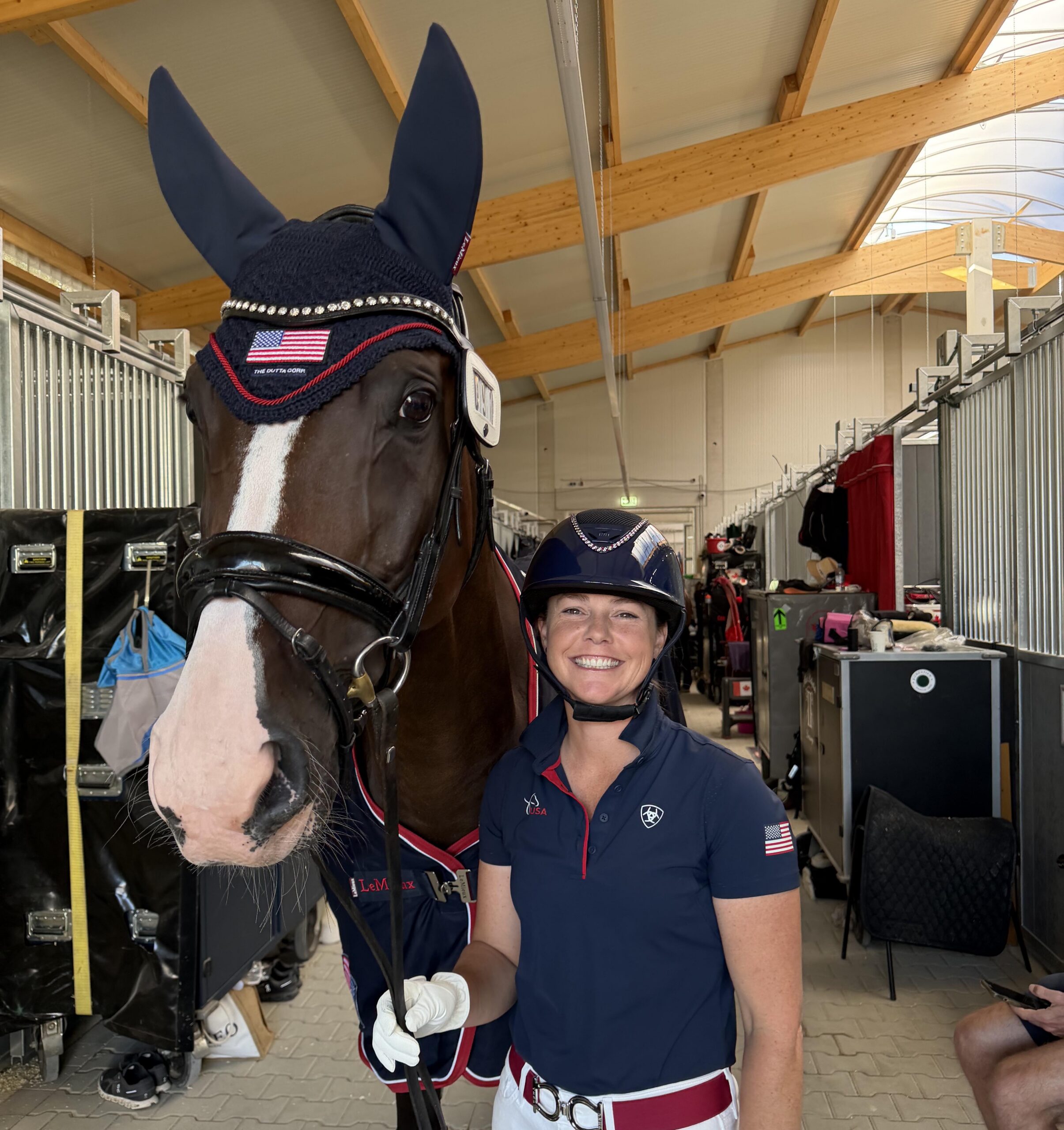
When it comes to preferred training exercises, Davis prioritizes suppleness through the horse’s rib cage, recognizing its critical role in responsiveness and overall athleticism. "For me, I really want my horses to be soft through their rib cage. When they’re soft through the rib cage and straight, you can add forward or energy—whatever it might be. But if they’re not soft and accepting of the leg, nothing comes through."
One of her favorite exercises, learned from trainer Chris Hickey, involves a series of 10-meter circles. "You do a 10-meter circle in the corner and go around like you’re going to do a second 10-meter circle. But instead of a full one, you do a half-circle followed by a 10-meter circle in the opposite direction. Then, continue that down the arena, so you eventually do six 10-meter circles down the long side." The size of the circles is adjusted based on the horse’s level of training, focusing on bending, changing bend, and directional changes. "For me, when you can do that with ease at the trot, you know your horse is working through his body."
Davis also places a strong emphasis on turnout and hacking, believing that ample time spent outside the arena is essential for a horse’s well-being and development. "I’m also big on turnout and going out of the ring to hack my horses. Usually my barn is mostly empty. My horses come in to work, and they go back out. I love having them turned out." This holistic approach to training underscores her commitment to developing well-rounded, confident equine athletes.







