

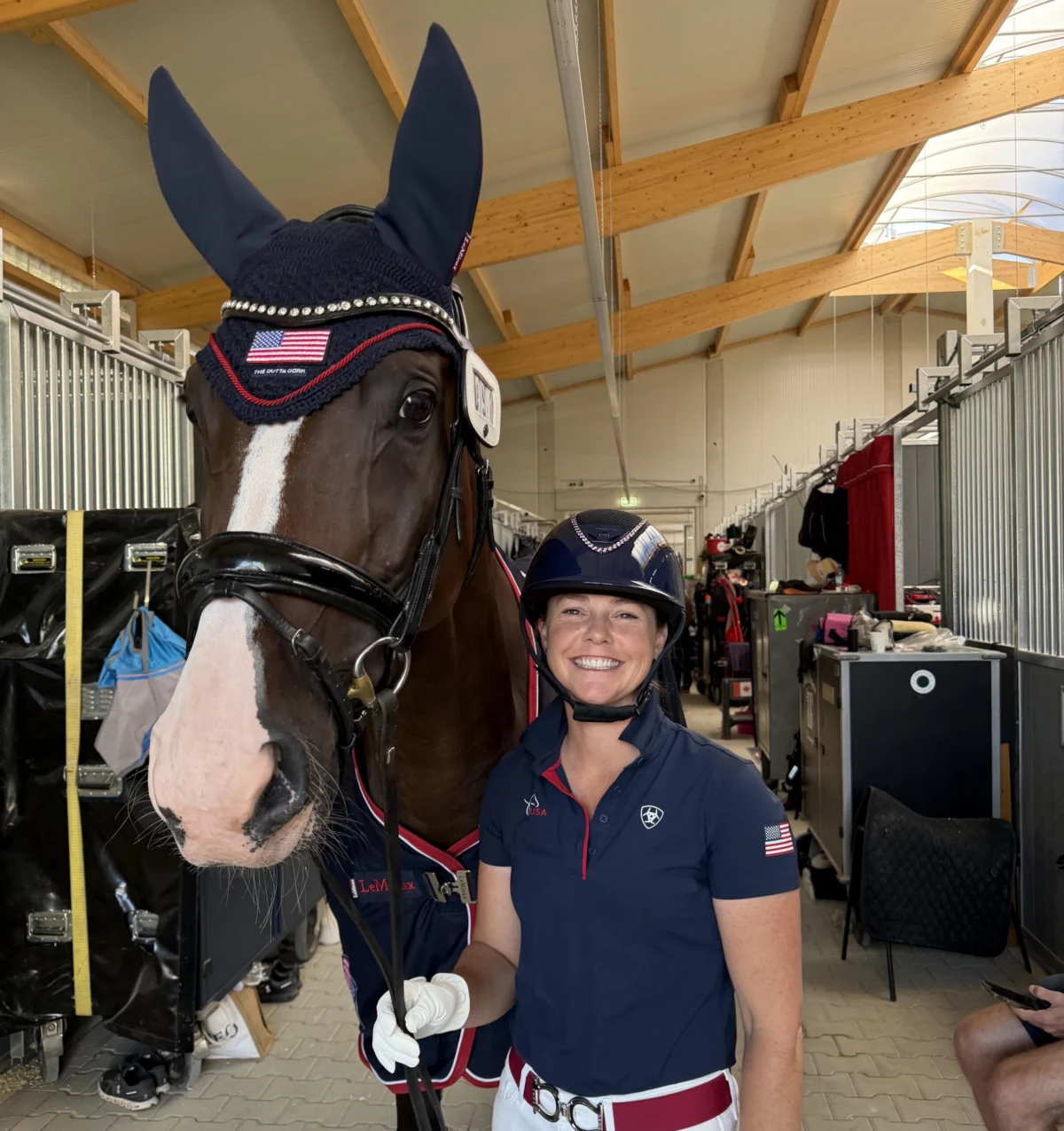
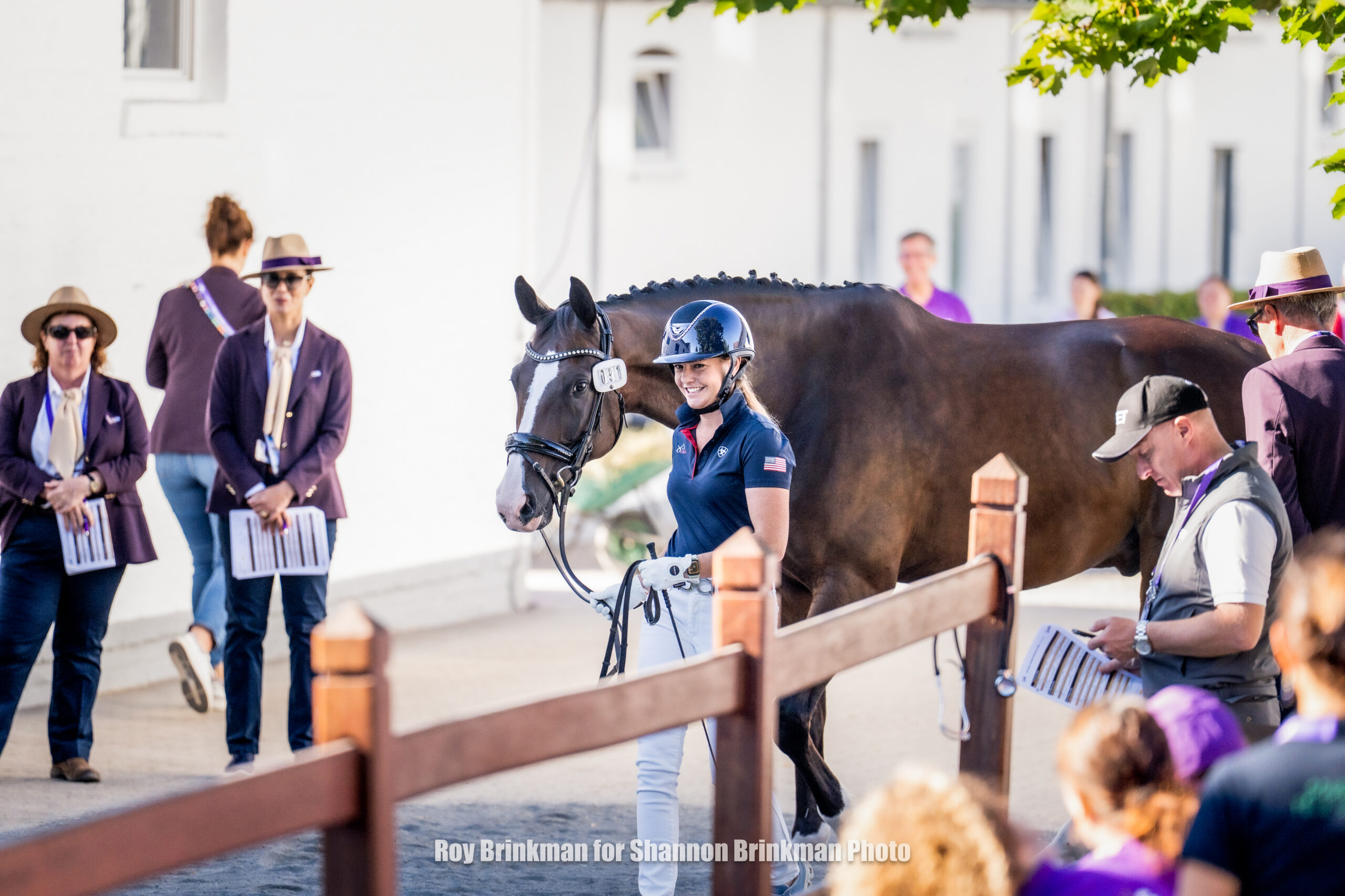
Before 2026, Meagan Davis had harbored a quiet ambition: to represent the United States on a senior international dressage team. This aspiration, once a distant dream, transformed into a stunning reality by the close of summer. Davis not only secured gold and bronze medals aboard two FEI Nations Cup teams but also received a last-minute, exhilarating call-up to the prestigious FEI Dressage World Championships in Aachen, Germany. Her partner in this extraordinary ascent was Scott Durkin’s 13-year-old Oldenburg gelding, Toronto Lightfoot, a striking descendant of the legendary Totilas.
Based across two key equestrian hubs, Saugerties, New York, and Loxahatchee, Florida, Davis recently shared insights into her whirlwind European campaign, her impressive performance at Dressage at Devon, and the foundational training philosophies that underpin her success.
Forging a Partnership with Toronto Lightfoot
The genesis of Davis’s partnership with Toronto Lightfoot is a testament to keen observation and a belief in potential. "I was riding with Lars Petersen at the time," Davis explained, recounting the pivotal moment. "He was working for Helgstrand Dressage in the U.S., where Toronto was stabled. Lars called me and said, ‘I think I have your horse. You need to come ride him.’"
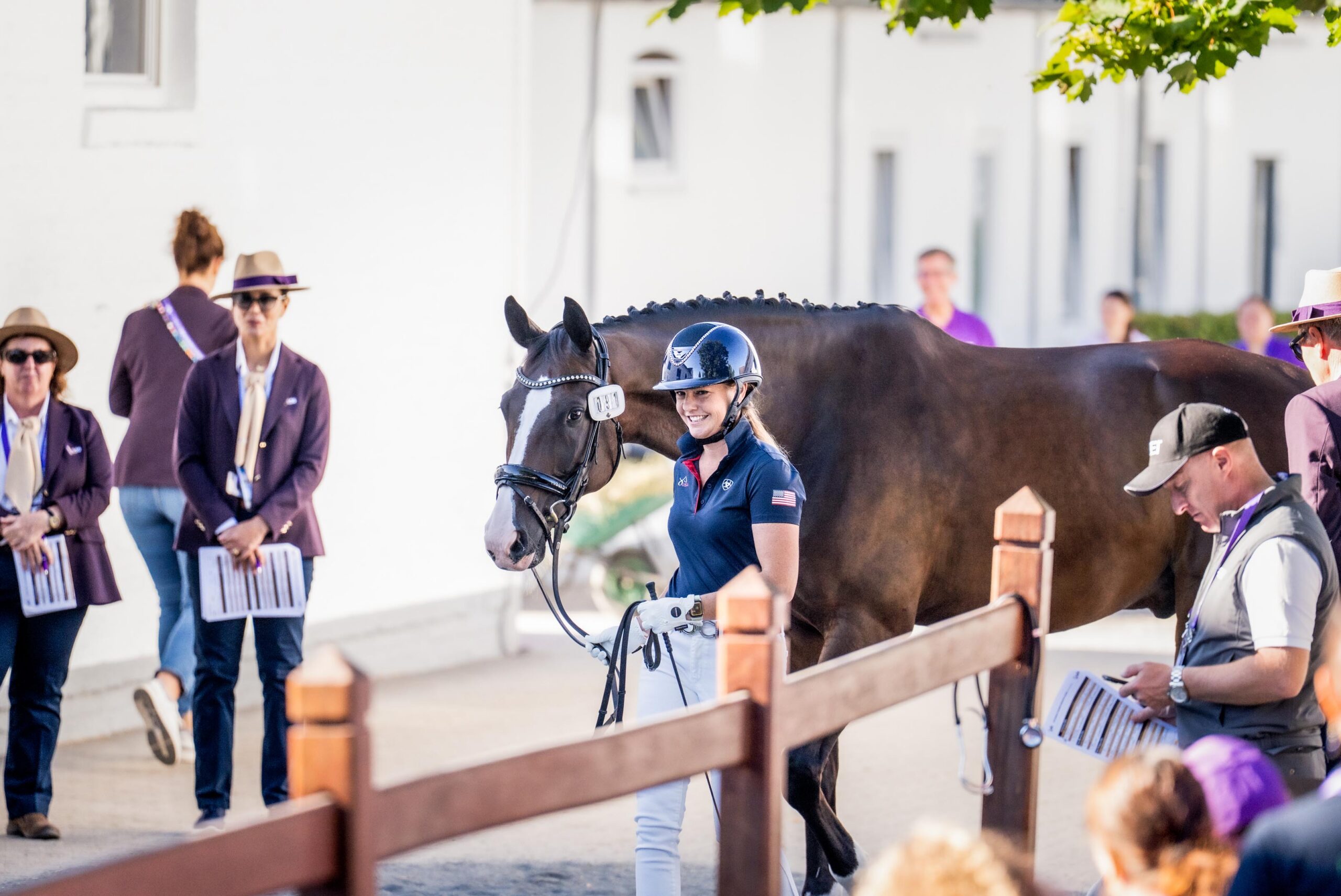
Davis traveled to the facility and, after evaluating nine or ten horses, found herself captivated by Toronto’s arrival. "Toronto walked into the ring, and I immediately thought, ‘OK, this horse is good-looking… like this one is something to look at.’ The moment I sat on him, I felt, ‘I could make this horse my own.’"
Petersen, however, offered a candid assessment. "Lars warned me that he’s a little bit tricky," Davis admitted. "His conformation isn’t the easiest, but he knew I could handle that and help Toronto develop into something special. I was incredibly fortunate that Lars recognized that potential in me." At the time, Davis had limited international Grand Prix experience, having primarily competed in national Grand Prix classes.
Toronto Lightfoot, a son of Totilas and Okima Lightfoot (by Onassis), was still in the early stages of his career when he joined Davis’s string. "He was basically Small Tour when we got him—starting to school some of the Grand Prix movements, but nothing was finished," Davis recalled. The initial integration presented challenges. "I took him to his first show, and he wouldn’t get on the trailer. Then he had this massive spook at the show, and it was clear we had some work ahead of us."
Undeterred, Davis committed to a patient and methodical approach. "I spent a lot of time with him on the ground, showing him new showgrounds when we traveled. He really thrived with that consistency and preparation," she explained. "The more I did that with him, the better he became. I’m so lucky; he trusts me so much that if I just put my leg on, I know we’re going to move forward."
Her training journey involved several influential figures. After working with Lars Petersen for a couple of years, Davis transitioned to Ali Brock for a year as she progressed to Grand Prix. "Ali was instrumental in helping us solidify the thoroughness we needed and devising a strategic show plan and goal-setting," Davis noted. This past summer, she also began taking lessons with Christoph Koschel, a move that has significantly elevated their performance. "I’m training with him now, and it’s been super. He’s pushing us to the next level."
An Unforeseen European Triumph
The 2026 season has been nothing short of extraordinary for Meagan Davis. Her accomplishments include winning four CDI (Concours de Dressage International) events, representing the U.S. on Nations Cup teams in Wellington and Hagen, making her European CDI debut at two events, and the climactic, last-minute selection for the U.S. Dressage Team at Aachen.
"My primary goal was simply to get to the training camp," Davis stated, reflecting on the initial objectives. "Then, I was thrilled to have the opportunity to go to Europe with Toronto. To achieve what we have in such a short amount of time—just two years at the CDI Grand Prix level—speaks volumes about Toronto’s growth as a horse. And there’s still so much more potential within him."
Her return to Europe held a special significance, marking her first international competition on the continent since the Young Rider World Cup in Germany in 2010. This solo journey provided a valuable learning experience. "I went by myself and stayed at Christoph’s base. You learn a great deal when you transition from managing 11 horses in training to focusing on just one," she explained. "That was a learning curve, as was navigating the logistics of planning for shows in Europe. I had never done that before, and there are so many intricate details to consider." Davis acknowledged the crucial support she received from Ali Brock, Christoph and his wife, as well as fellow riders like Kasey Perry-Glass and Adrienne Lyle, who offered guidance.
The call-up for the Aachen World Championships arrived with dramatic immediacy. "I didn’t find out I was on the team until 5 PM on Saturday afternoon at training camp, and we were leaving for Aachen early the next morning," Davis revealed. The U.S. Equestrian Federation often maintains a state of readiness for potential substitutions up to two hours before the official horse inspection (jog). "The other team members treated me as if I had been on the team throughout training camp because they needed backups to be prepared at any moment. Technically, they can substitute a rider right up until the jog. So, Kasey and I were kept ready at all times." Perry-Glass had been called up midway through the training camp, while Davis focused on keeping Toronto in peak condition, prepared for any eventuality.
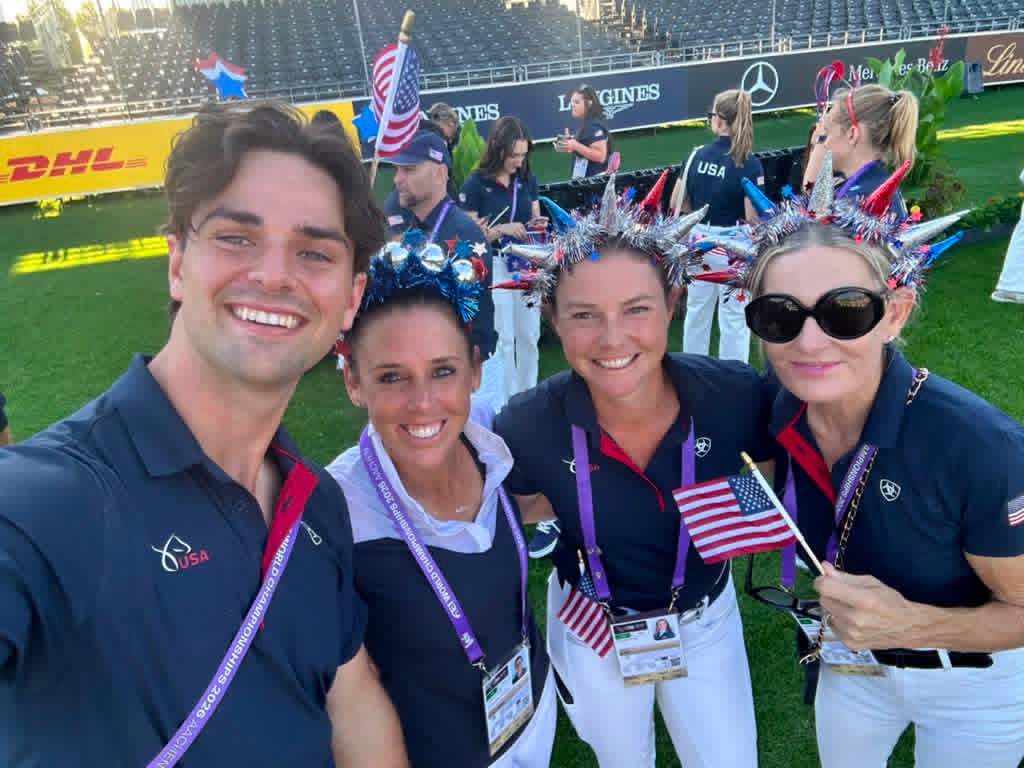
"I hadn’t planned on going to Aachen. I didn’t have any support staff with me at that point," Davis admitted. "Fortunately, my support team had refundable tickets reserved, so they were able to rebook their flights quickly. Christoph postponed his vacation for me and even sent his groom, Inka Kalberlah, to assist us."
The experience of competing at Aachen was profoundly moving. "I was incredibly pleased with our ride. As we entered the stadium, Toronto became a little nervous and stopped right before the sand portion of the arena," Davis recounted. "He was looking around, and I thought, ‘OK, this is going to go one of two ways. He’s either going to decide to go with me, or he’s going to say he can’t handle the pressure, and we’ll have to withdraw.’" In a moment of deep connection, Davis reached out to her partner. "I just petted him and actually said out loud, ‘Toronto, I really need you to be my partner today.’ He put his head down and off we trotted into the ring. I was dumbfounded. I realized, ‘Wow, this horse really trusts and loves me!’"
The atmosphere of the Aachen stadium was described as "absolutely incredible." Davis expressed her primary hope: "I hope we did our country proud. That’s the most important thing—to go out there and be a positive representation of what dressage is in the U.S." She highlighted the profound camaraderie within the team. "We had a fantastic team. Everyone had so much fun and was incredibly supportive. The sport can sometimes feel a bit solitary because we’re usually training at our own barns. But when you’ve been part of a team, there’s a unique bond that you can’t replicate."
A Personal Best at Dressage at Devon
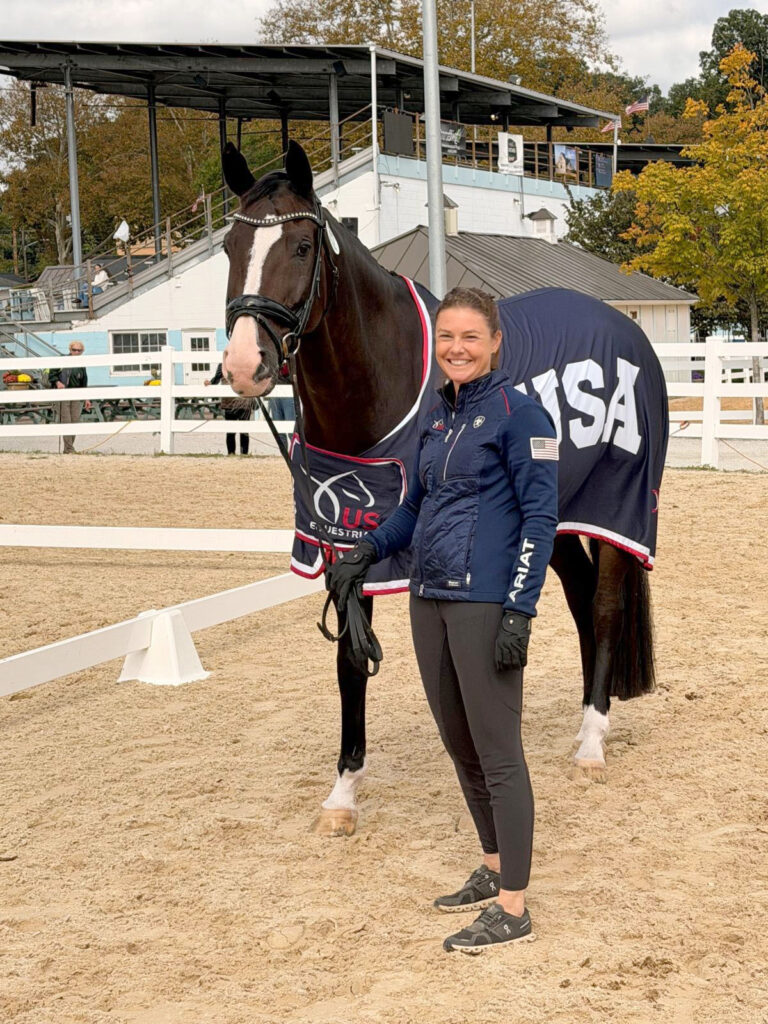
Davis and Toronto concluded their remarkable year at Dressage at Devon, achieving a fifth-place finish in the CDI-W Grand Prix Freestyle and setting a personal best score of 74.970%. "It was super exciting," Davis said of the Devon experience. "The goal was to test what we’ve been building on. It was only my second time performing that freestyle, and I hadn’t really ridden it all summer."
Their freestyle routine, set to a Rolling Stones soundtrack, offers a distinctive "rock and roll" flair designed to capture attention. "When I got home from Europe to our facility in New York, I couldn’t practice it because our arena is quite a bit shorter than ideal," Davis explained. "So, I was essentially trying to feel my way through it and listen to the music. Without being able to ride it multiple times beforehand, it was genuinely challenging."
Beyond the technical execution, the primary objective was to acclimate Toronto to the unique environment of Devon. "More than anything, we wanted to expose Toronto to Devon’s atmosphere—that electric, almost European-feeling ambiance that other shows in the U.S. don’t quite have," she stated. "He was so good in the freestyle and answered all of my questions. He was with me every stride, and that’s really what we were looking for. All the hard work we’ve been doing at home can then be demonstrated in the show ring."
Future Ambitions and Training Philosophy
Looking ahead, Davis and Toronto are preparing for their return to Florida in November to train with Christoph Koschel and finalize their strategic plan. "I believe we’re looking at the five-star CDI in January for sure," Davis confirmed. "And I’d like to return to Europe next year, hopefully to Aachen again, and compete on more Nations Cup teams."
Davis’s training program at home is comprehensive and inclusive. While she typically manages around 11 horses, she strategically reduced her string while competing in Europe to ensure a solid core group for her assistant, Regan Walmer. "I didn’t want her to be overwhelmed," Davis explained. Her barn houses a diverse range of horses, including adult amateur mounts, sales prospects, and her own competition horses. "I take on everything. No horse is not good enough to be in my barn."
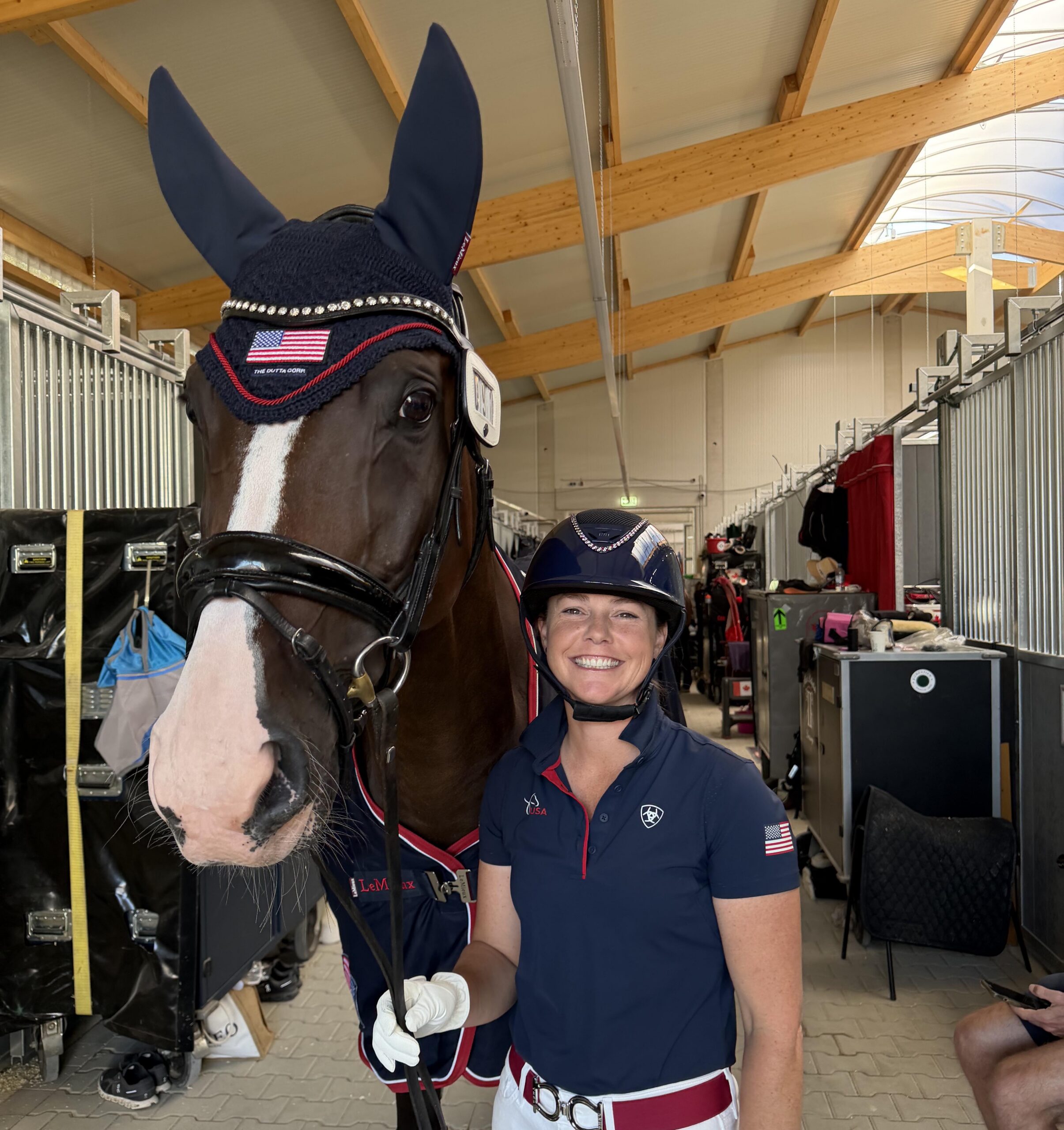
She also offers "boot camps," where clients send their horses for a month to prepare for shows or address specific training needs. Davis’s approach is rooted in her own upbringing, where she didn’t have full-time training but rather consistent lessons. "I grew up riding horses in my backyard," she shared. "I don’t feel as if I’m too good to sit on any horse. I won’t get on dangerous horses—there’s a clear line there. But I have PREs [Pura Raza Española] in my barn who are Third Level schoolmasters for their riders, and some of them are honestly my most enjoyable rides during the day. For me, being able to teach and train horses is a fantastic way to hone my own skills."
This philosophy extends to problem-solving and learning. "Sometimes I’ll think, ‘OK, well, what happens if I do this on this horse? Does it fix this issue?’ And I believe the more diverse a collection of horses you have in your stable, the more you can learn from them."
When asked about her favorite training exercises, Davis emphasized the importance of suppleness. "For me, I really want my horses to be soft through their rib cage. When they’re soft and straight through the rib cage, you can add forward or energy—whatever you need. But if they’re not soft and accepting of the leg, nothing truly comes through."
A key exercise involves working on circles. "On a circle, I’ll use leg yielding, with the inside leg to an outside rein half-halt, transitioning between 10-meter circles. I also learned a great exercise from Chris Hickey years ago: You do a 10-meter circle in the corner and go around as if you’re going to do a second 10-meter circle. But instead of completing it, you do a half-circle followed by a 10-meter circle in the opposite direction. You continue this down the arena, ultimately executing six 10-meter circles down the long side." For younger horses, the circle size is adjusted accordingly. "It’s about bending on the circle to the change of bend and direction. For me, when you can do that with ease at the trot, you know your horse is working through their body."
Davis also stresses the importance of turnout and hacking. "Usually, my barn is mostly empty. My horses come in for work, and then they go back out. I love having them turned out." This holistic approach to horse management contributes to their overall well-being and athletic development.







