Oaxaca, a southern Mexican state renowned for its vibrant cultural heritage, transforms each autumn into a kaleidoscope of color and tradition as it hosts some of the most elaborate Day of the Dead celebrations in the world. While the iconic marigolds, candlelit cemeteries, and spirited nighttime processions are powerful draws, the true essence of a visit to Oaxaca during this period lies in the seamless integration of these ancient festivities with the region’s broader historical, artistic, and culinary offerings. Visitors often arrive captivated by the promise of Día de los Muertos, only to discover a rich tapestry of experiences that extend far beyond the three-day observance, encompassing ancient Zapotec ruins, thriving artisan communities, and a gastronomic landscape unparalleled in Mexico. This unique blend ensures that the profound celebration of life and remembrance becomes an entry point into the enduring soul of Oaxaca.
The Ancient Roots of Día de los Muertos
The tradition of Día de los Muertos, or Day of the Dead, in Mexico is not merely a holiday but a profound cultural practice with roots stretching back nearly 3,000 years to pre-Hispanic Mesoamerican civilizations such as the Olmec, Zapotec, Mixtec, Maya, and Aztec. These ancient cultures held complex beliefs about death, viewing it not as an end but as a continuation of life, a transition that connected the living with their ancestors. Rituals honoring the dead were integral to their spiritual practices, with offerings of food, drink, and personal belongings made to facilitate the journey of souls. The Aztec goddess Mictecacihuatl, known as the "Lady of the Dead," presided over these festivities, which historically took place during the ninth month of the Aztec solar calendar, roughly August.
With the arrival of Spanish conquistadors and the introduction of Catholicism in the 16th century, these indigenous traditions underwent a process of syncretism. Spanish friars, finding it impossible to eradicate deeply ingrained native customs, gradually merged them with Catholic observances of All Saints’ Day (November 1) and All Souls’ Day (November 2). This blending gave rise to the modern Día de los Muertos, where pre-Hispanic reverence for ancestors converges with Christian commemorative practices. The result is a celebration unique to Mexico, distinct from somber European observances, characterized by its joyous tone, emphasis on family reunion, and vibrant artistic expressions. In 2008, UNESCO officially recognized Día de los Muertos as an Intangible Cultural Heritage of Humanity, acknowledging its profound cultural significance and its role in preserving indigenous traditions.
A Calendar of Remembrance: The Día de los Muertos Chronology
While the core Día de los Muertos celebrations officially span from October 31 to November 2, preparations and related events often begin days, if not weeks, in advance, creating an extended period of cultural immersion. The chronology of the festivities is carefully observed, reflecting specific traditions for different souls:
- Mid-October Onwards: Preparations intensify across Oaxaca. Families begin cleaning and decorating graves, purchasing marigolds (cempasúchil), candles, and ingredients for traditional foods. Artisans craft sugar skulls (calaveras de azúcar), intricate papel picado (perforated paper banners), and pan de muerto (bread of the dead). Local markets, such as Mercado Benito Juárez and Mercado 20 de Noviembre, become bustling hubs of activity, overflowing with these ceremonial items.
- October 27-30: In some communities, these days are set aside to honor pets or those who died in accidents or violent circumstances. Small ofrendas (altars) may be prepared for these specific souls.
- October 31 (All Hallow’s Eve): This day marks the return of angelitos – the souls of deceased children. Families prepare ofrendas with toys, candies, and foods that children enjoyed in life. Many towns host comparsas, festive parades featuring music, dancing, and elaborate costumes, often kicking off the city-wide celebrations.
- November 1 (All Saints’ Day): The main day for honoring adult souls. Ofrendas are laden with favorite foods, beverages (including mezcal and tequila), cigarettes, and personal mementos of the departed. Families gather at home and in cemeteries to welcome their loved ones back for a brief, joyous visit. Public processions and street festivals are in full swing across Oaxaca City’s historic center, drawing thousands of participants and spectators.
- November 2 (All Souls’ Day): This is typically the most significant day for cemetery visits. Families spend hours, often overnight, at the gravesides of their relatives, cleaning, decorating, eating, drinking, and sharing stories. The atmosphere is one of communal remembrance, celebration, and spiritual connection. Later in the day, some communities hold farewell rituals, guiding the souls back to the spirit world.
Throughout this period, the air is thick with the scent of marigolds and copal incense, the sounds of brass bands, and the sight of intricately painted faces, creating an immersive experience that is both deeply personal and universally communal.
Oaxaca City: The Epicenter of Celebration
Oaxaca City’s Centro Histórico transforms into a colossal street festival during Día de los Muertos, arguably presenting Mexico’s most elaborate public display of the tradition. From the moment one steps onto the cobblestone streets, the city pulsates with an infectious energy. Lively comparsas, spontaneous parades, erupt from various neighborhoods, drawing locals and visitors alike into their vibrant currents. These processions are a sensory feast: the rhythmic brass bands play traditional Oaxacan tunes, their melodies intertwining with the cheers and laughter of the crowd. Giant calaveras (skeletons) and fantastical puppets, often operated by multiple people, bob above the throngs, while participants, from infants on shoulders to grandparents keeping pace, don elaborate calavera (skull) makeup and intricate costumes. Devils, often portrayed with drums, weave through the crowd, adding to the festive chaos. Strings of colorful papel picado stretch between historic colonial buildings, casting vibrant shadows and enhancing the celebratory atmosphere that permeates every alley and plaza.
The city’s main squares and thoroughfares become open-air galleries and performance spaces, hosting face-painters who expertly transform faces into beautiful, intricate skulls, alongside food vendors offering regional delicacies, artists selling themed crafts, and musicians providing continuous entertainment. The sheer scale and communal spirit of these city-wide celebrations underscore the Oaxacan approach to Día de los Muertos: a public affirmation of life, family, and the unbreakable bonds that transcend death. Local tourism officials report that visitor numbers to Oaxaca City during this period consistently peak, with hotels and flights booking months in advance, a testament to the global appeal of these authentic festivities and their significant contribution to the local economy.
Sacred Spaces: Cemetery Vigils and Family Connections
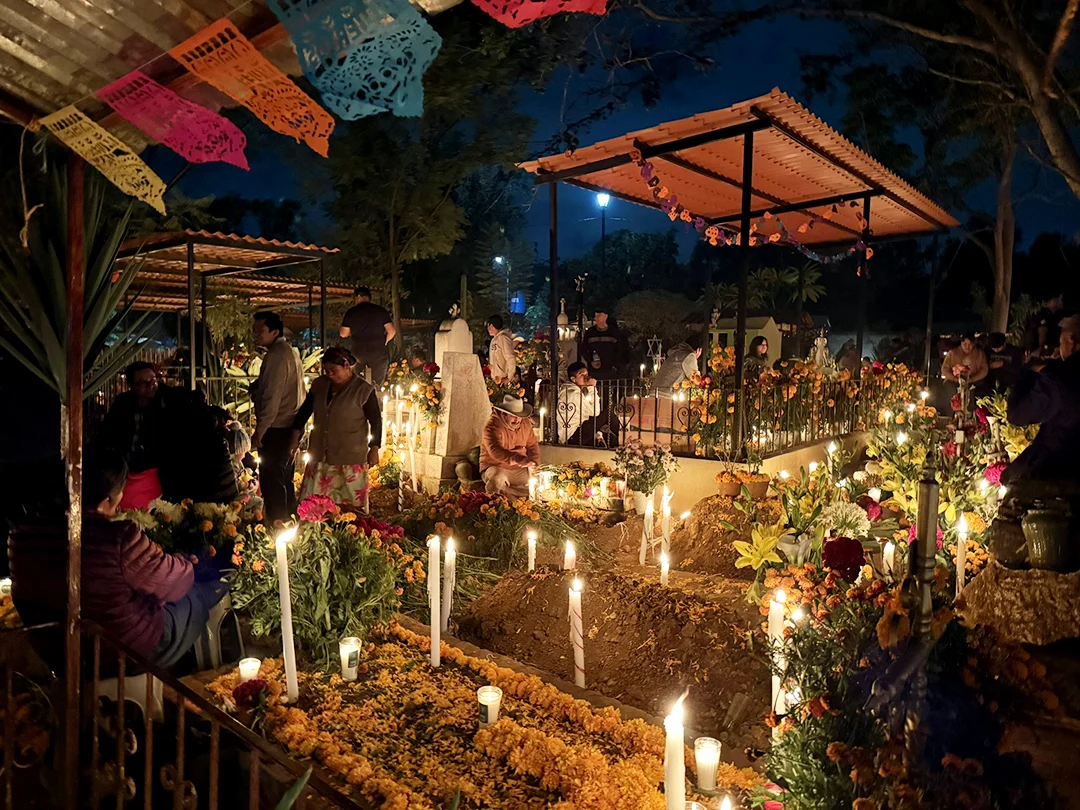
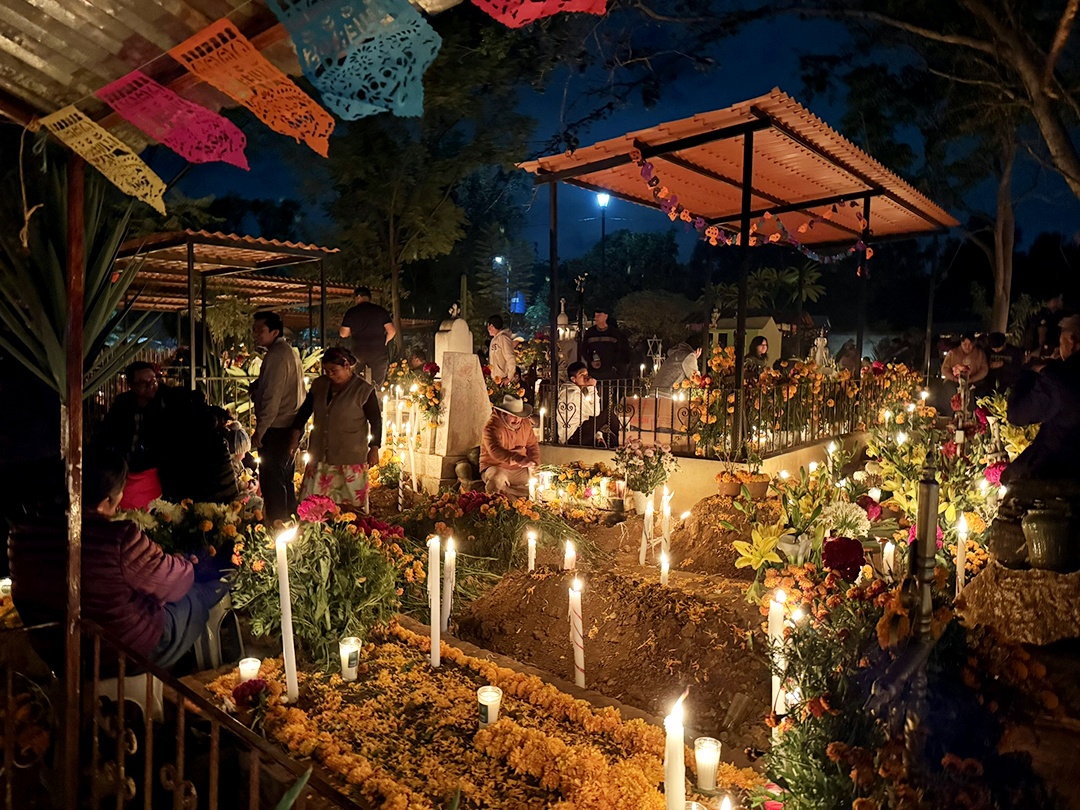
While the city’s public spectacles are captivating, it is in the cemeteries, particularly those in the villages surrounding Oaxaca City, where the profound, intimate meaning of Día de los Muertos comes into sharpest focus. As evening descends on November 1st and 2nd, these sacred grounds become luminous landscapes, aglow with thousands of candles. Families gather at the graves of their loved ones, transforming them into elaborate, temporary altars. Graves are meticulously cleaned and then blanketed with brilliant orange marigold petals, symbolizing the path for returning souls. Candles are lit, illuminating framed photographs of the deceased, alongside their favorite foods, beverages (from mezcal to soft drinks), and cherished personal mementos. These ofrendas are not merely decorations; they are heartfelt invitations, expressions of love and remembrance designed to welcome the spirits home.
The atmosphere within these cemeteries is far from somber. Instead, it is vibrant and communal. Families sit together, sharing stories, listening to mariachi or brass bands playing favorite songs of the departed, and enjoying traditional treats like pan de muerto and hot chocolate. Children play quietly nearby, absorbing the traditions that have been passed down through generations. This active participation highlights the core belief that the dead remain an integral part of the family story, returning to partake in the festivities. Visitors are welcomed into these spaces, provided they maintain a respectful distance and adhere to local customs. The palpable sense of connection, the blend of celebration and quiet reflection, makes a cemetery vigil an emotionally resonant and unforgettable experience, offering a glimpse into the very heart of Oaxacan culture.
Beyond the City Limits: Village Traditions and Lively Contests
Venturing beyond Oaxaca City reveals a mosaic of distinct Día de los Muertos traditions in the surrounding villages, each adding its unique flavor to the overarching celebration. One such highlight is the "Battle of the Bands" (El Encuentro) in Etla, a small village approximately an hour outside Oaxaca. This event is a captivating spectacle of local pride and musical prowess. Two brass bands, often representing rival villages or neighborhoods, march towards each other from opposite ends of a main street, each playing with full force, vying to outdo the other in volume and virtuosity. The costumed crowd, a mix of locals and adventurous visitors, gets joyfully squeezed into the middle, enveloped by the competing sounds.
Eventually, the bands converge on a central stage, where they take turns performing, typically one or two songs each. The winner is determined not by judges, but by the sheer volume of applause and cheers from the enthusiastic audience. The musicians, often community members who have honed their craft over years, pour their hearts into every note, knowing that the honor of their hometown rests on their performance. This boisterous, chaotic, and utterly charming event is a testament to the vibrant community spirit and deep musical traditions embedded in Oaxacan village life. Such localized events offer an authentic contrast to the broader city celebrations, showcasing the diverse cultural expressions within the state.
Echoes of Antiquity: Monte Albán and Zapotec Heritage
A mere 45-minute drive from Oaxaca City, perched atop a flattened mountaintop overlooking the Oaxaca Valley, lies Monte Albán, the awe-inspiring ancient capital of the Zapotec civilization. Founded around 500 BCE, this UNESCO World Heritage site served as a significant socio-political and economic center for nearly 1,300 years. The monumental archaeological complex features vast plazas, towering stone platforms, intricately carved stelae, and a ball court, all meticulously arranged with precise astronomical alignments. The strategic location offers panoramic views of the surrounding valleys, underscoring the Zapotecs’ advanced understanding of engineering and urban planning.
Exploring Monte Albán with a knowledgeable local guide is invaluable. Guides provide crucial context, explaining the significance of the "Danzantes" (carved figures depicting what are believed to be sacrificial victims or dancers), the elaborate tombs, and the sophisticated calendar system developed by the Zapotecs. They illuminate how the city evolved through various cultural phases, influencing and being influenced by other Mesoamerican civilizations like the Mixtecs, who later occupied the site. A visit to Monte Albán offers a profound connection to Oaxaca’s ancient past, providing a historical anchor that complements the contemporary cultural vibrancy of Día de los Muertos. It serves as a reminder that the deep-rooted reverence for ancestors celebrated today has ancient precedents in the very foundations of Oaxacan civilization.
Artisanal Wonders: The Whimsical World of Alebrijes
Following a journey through ancient history, a visit to the village of San Antonio Arrazola offers a delightful immersion into a more recent, yet equally captivating, Oaxacan artistic tradition: the creation of alebrijes. These fanciful, brightly colored wooden sculptures of fantastical creatures have become synonymous with Oaxacan folk art. The original alebrijes were dream-inspired paper maché creations by Pedro Linares López in Mexico City in the 1930s. However, Oaxacan artisans, particularly those from San Antonio Arrazola, San Martín Tilcajete, and La Unión Tejalapan, adapted the art form using copal wood, a local material, and developed a distinctive style.
Each alebrije is meticulously hand-carved, often depicting a whimsical blend of real and mythical animals – a jaguar with eagle wings, a frog with dragon scales, or a rabbit with antelope horns. What truly sets them apart is their intricate, hand-painted decoration. Artisans apply countless tiny dots, lines, and geometric patterns in vibrant, often fluorescent, colors, transforming each piece into a mesmerizing work of art. Visiting a workshop in San Antonio Arrazola allows visitors to witness the entire painstaking process, from the initial carving of the copal wood to the final detailed painting. Purchasing an alebrije directly from the artisans not only provides a unique and authentic souvenir but also directly supports the local economy and helps preserve this cherished craft, often at a fraction of the price found in urban galleries. This living art form represents the enduring creativity and storytelling tradition of the Oaxacan people.
The Culinary Soul of Oaxaca: Markets, Moles, and Mezcal
Oaxaca’s reputation as Mexico’s gastronomic capital is powerfully evident during Día de los Muertos, as food plays a central role in both celebration and remembrance. A journey through the bustling Mercado Benito Juárez and Mercado 20 de Noviembre, adjacent to the Zócalo, is an essential culinary experience. These sprawling covered markets are a feast for the senses, with stalls piled high with exotic dried chiles, aromatic herbs, seasonal fruits, and ingredients unique to the region. Sampling is encouraged, allowing visitors to discover new flavors and textures at every turn.
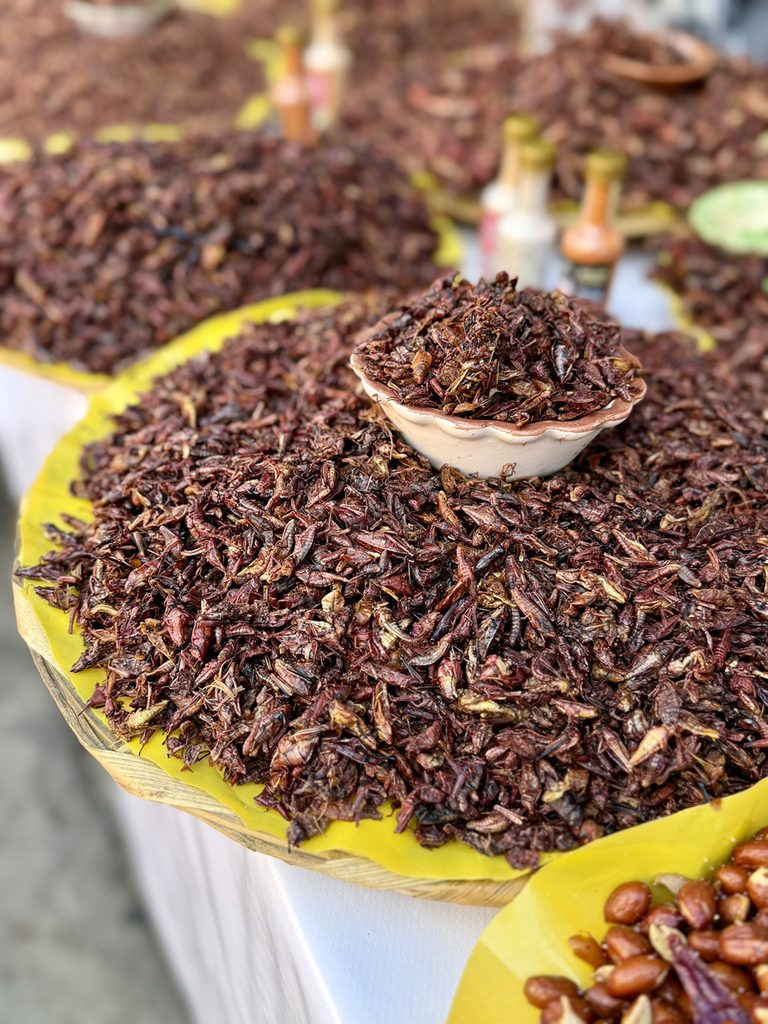
Among the more adventurous culinary offerings are chapulines – toasted grasshoppers seasoned with garlic, chile, and lime. While the idea might be daunting to some, these crunchy, salty morsels are a ubiquitous Oaxacan snack and an obligatory taste for curious visitors. More universally celebrated is mole, a complex sauce for which Oaxaca is particularly famous. Far from the singular, sweetish, chocolate-heavy version often found abroad, Oaxacan mole comes in seven distinct varieties, each a symphony of flavors derived from different combinations of chiles, spices, nuts, seeds, and fruits. From the smoky, dark mole negro to the vibrant, spicy mole coloradito or the subtly earthy mole amarillo, tasting several versions reveals the incredible depth and versatility of this culinary masterpiece.
Beyond mole and chapulines, Oaxaca boasts other culinary treasures. Tlayudas, large, crispy tortillas topped with beans, cheese, and various meats, offer a satisfying street food experience. Hand-ground Oaxacan chocolate, often prepared with cinnamon and almonds, is enjoyed as a hot, frothy drink. And no culinary exploration of Oaxaca is complete without sampling mezcal, the region’s iconic agave spirit. Numerous mezcalerías offer tastings, providing insights into the artisanal production process and the diverse flavor profiles of different agaves. The culinary landscape of Oaxaca, much like its Día de los Muertos celebrations, is a profound expression of its rich cultural identity, inviting deep immersion and appreciation.
Economic and Cultural Impact of Día de los Muertos
The annual Día de los Muertos celebrations exert a significant economic and cultural impact on Oaxaca. Tourism during late October and early November represents a crucial period for the state’s economy. Local tourism boards report a surge in international and domestic visitors, leading to near 100% occupancy rates in hotels and a substantial boost for restaurants, tour operators, artisans, and local vendors. This influx of revenue supports countless families and helps sustain traditional crafts and culinary practices. Beyond the direct economic benefits, the global interest in Día de los Muertos has elevated Oaxaca’s profile as a premier cultural destination, fostering greater appreciation for its unique heritage.
Culturally, the festival is a powerful mechanism for the preservation and transmission of indigenous traditions. Community leaders and cultural institutions emphasize that Día de los Muertos reinforces family bonds, instills respect for ancestors, and keeps alive ancient beliefs and rituals that might otherwise fade. Children learn about their heritage by participating in ofrenda construction, attending comparsas, and visiting cemeteries with their families. While the increased tourism presents challenges in terms of managing crowds and preserving authenticity, local authorities and communities are increasingly focused on sustainable tourism practices that benefit residents while protecting the integrity of their traditions. The global spotlight on Día de los Muertos has, in many ways, strengthened the resolve of Oaxacans to maintain the profound meaning and vibrant expression of their ancestral customs.
Planning Your Journey to Oaxaca
For those considering a visit to Oaxaca during Día de los Muertos, strategic planning is essential to ensure a rewarding experience.
- Timing: The core celebrations run from October 31 to November 2, with November 1 and 2 being the most significant days for cemetery visits and public events. Arriving a few days earlier allows for acclimatization and participation in preliminary festivities.
- Accommodations and Flights: Oaxaca’s popularity during Día de los Muertos means that hotel rooms and flights from major hubs book out months, sometimes even a year, in advance. It is highly advisable to secure bookings for both as early as possible, ideally 9-12 months ahead, particularly for peak years like 2027.
- Local Guides: Hiring a local, certified guide is invaluable, especially for venturing into the villages outside Oaxaca City. A good guide not only handles transportation logistics but, more importantly, provides crucial cultural context, explains the nuances of traditions, and facilitates respectful interactions with local communities during intimate events like cemetery vigils. They can also offer insights into local etiquette, ensuring visitors participate respectfully.
- Transportation: While Oaxaca City’s historic center is highly walkable, taxis and ride-sharing services are readily available for longer distances. For village tours, pre-arranged transport through a guide is recommended.
- Respectful Engagement: Día de los Muertos is a deeply personal and spiritual celebration for Oaxacan families. Visitors are encouraged to observe with respect, ask permission before taking close-up photographs of individuals, and engage with an open heart. Learning a few basic Spanish phrases can also enhance interactions.
Ultimately, a visit to Oaxaca during Día de los Muertos offers an unparalleled opportunity to witness a culture that embraces death as an integral part of life. The extraordinary celebrations may draw you in, but it is the enduring warmth of its people, the richness of its history, and the depth of its traditions that will compel you to stay, to explore, and to return.
Jon Bailey is a San Diego-based travel journalist, exploring the globe with his husband and their two daughters. For more adventures, visit 2dadswithbaggage.com.