

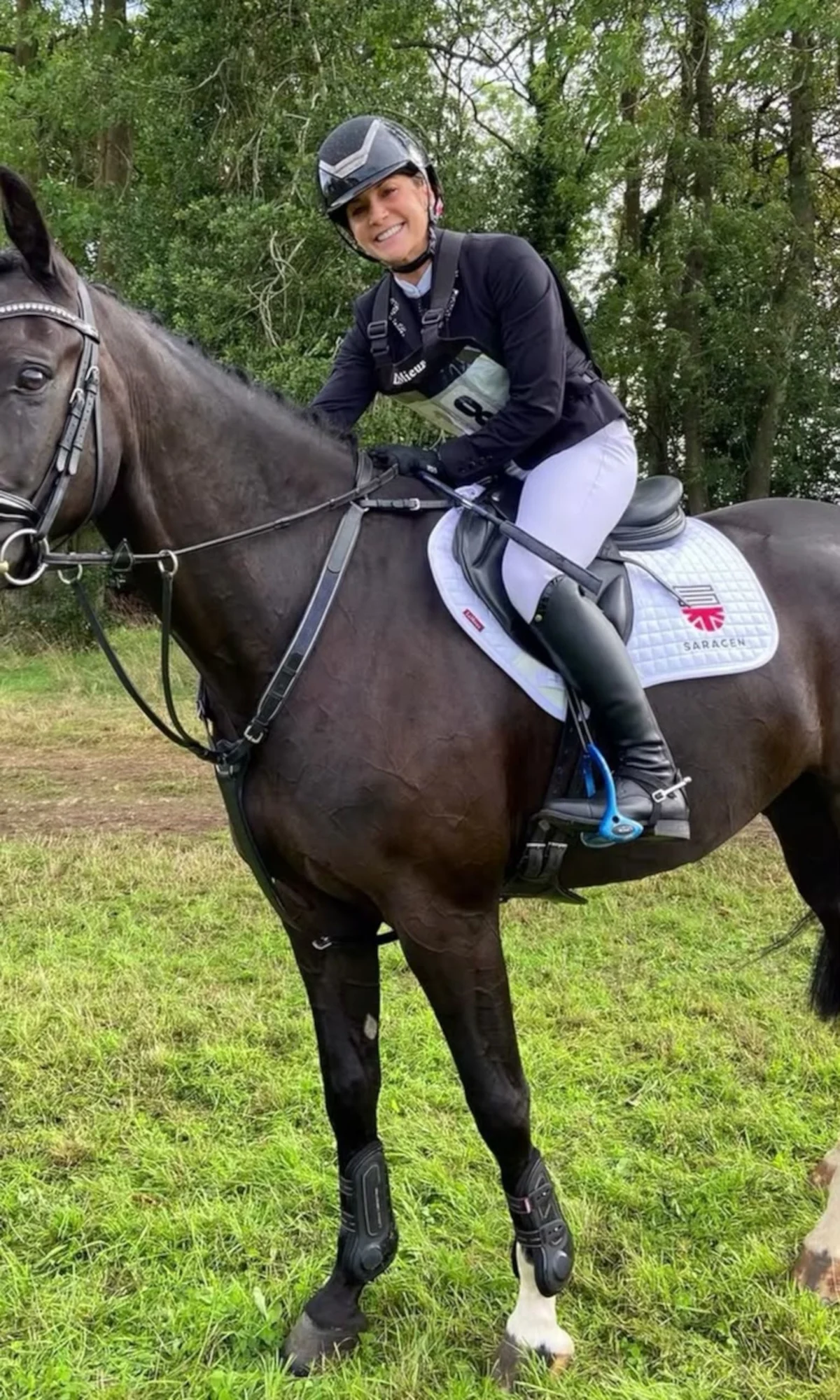
Olympic dressage rider Abi Lyle has demonstrated her exceptional versatility by clinching a commendable second-place finish in her inaugural British Eventing competition. The accomplished athlete, known for her prowess in the dressage arena, swapped her formal tailcoat for the rugged attire of cross-country on September 19th, competing in the GoBE80 at Little Gatcombe. Riding Nice Try II, an eight-year-old gelding owned by Becca McCreath, Lyle showcased an impressive aptitude for a discipline traditionally distinct from her Olympic speciality, securing a podium spot on her debut.
A Bold Transition: From Dressage Rings to Cross-Country Courses
Abi Lyle, a familiar face on the international dressage circuit and a participant in the Paris 2024 Olympic Games, made a surprising yet successful foray into the world of eventing. This discipline, renowned for its demanding three phases – dressage, cross-country, and show jumping – requires a unique blend of skill, bravery, and athleticism from both horse and rider. Lyle’s decision to compete at the GoBE80 level signifies a deliberate step into a new equestrian challenge, and her immediate success underscores her adaptability and deep understanding of horse management.
The GoBE80 is an introductory level within the British Eventing framework, designed to offer riders and horses a pathway into the sport. It typically involves a dressage test, a show jumping course, and a cross-country course with fences of a maximum height of 0.80 metres. For an Olympian accustomed to the precision and finesse of Grand Prix dressage, tackling the varied demands of eventing, particularly the often exhilarating and technically challenging cross-country phase, is a significant undertaking.
Nice Try II, affectionately known as Obi, proved to be a capable partner for Lyle’s transition. The gelding’s age, eight years old, suggests a solid foundation of training and development, making him a suitable candidate for a rider exploring a new discipline. The fact that Lyle was competing on a horse owned by Becca McCreath indicates a collaborative effort and potentially a strategic approach to her entry into eventing.
The Little Gatcombe Event: A Competitive Debut
The Little Gatcombe event, held on September 19th, provided the backdrop for Lyle’s impressive debut. This venue is a well-regarded fixture on the eventing calendar, hosting competitions that attract a wide range of riders, from aspiring amateurs to seasoned professionals. The GoBE80 class is highly competitive, as it serves as a crucial stepping stone for many young horses and riders entering the sport.
Lyle and Nice Try II’s second-place finish is a testament to their performance across all three phases. While specific details of their scores in each phase are not provided in the initial report, achieving such a high placing on debut suggests a strong and consistent performance. In eventing, the final placings are determined by the cumulative penalties incurred across the dressage, cross-country, and show jumping phases. A low penalty score is crucial for success.
In dressage, riders are judged on the accuracy, rhythm, and submission of their horse. Penalties are awarded for errors in movements, disobedience, and lack of suppleness. The cross-country phase is often the most demanding, testing the horse’s bravery, fitness, and the rider’s ability to navigate a course of fixed obstacles. Falls, refusals, and exceeding the optimum time all incur penalties. The show jumping phase, the final test, requires precision and careful jumping, with penalties for knocked poles, refusals, and exceeding the time limit.
To achieve a second-place finish in such a demanding environment, especially for a first-time competitor, implies that Lyle and Nice Try II delivered strong performances in all areas. This would have required meticulous preparation, a deep understanding of eventing tactics, and a harmonious partnership between rider and horse.
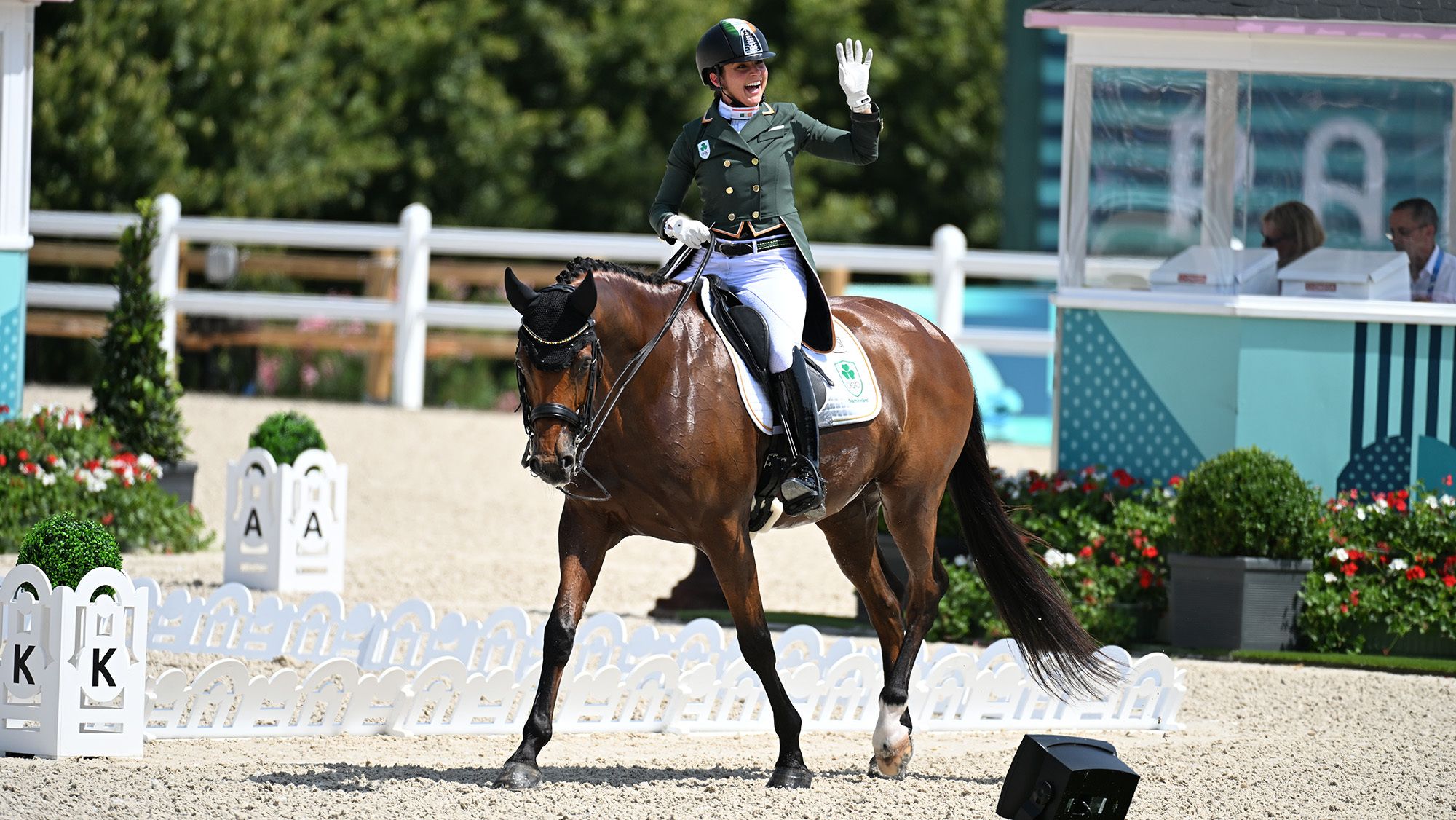
Contextualizing Abi Lyle’s Equestrian Journey
Abi Lyle’s career in equestrian sport has been primarily focused on the discipline of dressage. Dressage is an Olympic sport that involves a rider guiding a horse through a series of predetermined movements and exercises. It is often described as a form of ballet on horseback, emphasizing harmony, athleticism, and the horse’s obedience and responsiveness to the rider’s aids. Lyle has represented Great Britain at the highest levels, including the prestigious Paris 2024 Olympic Games, where she competed with her horse, Harmony’s Giraldo. Her success in dressage has been built on years of dedicated training, a deep understanding of equine biomechanics, and a strong competitive spirit.
The transition to eventing, therefore, represents a significant diversification of her equestrian skills. While both disciplines require excellent horsemanship, the physical and mental demands are distinct. Eventing riders must possess a strong seat, excellent balance, and the ability to ride a horse at speed across varied terrain, often over substantial obstacles. The cross-country phase, in particular, requires a different type of bravery and nerve compared to the controlled environment of a dressage arena.
Lyle’s decision to compete in eventing could be motivated by several factors. It might be a personal challenge, a desire to broaden her equestrian experience, or a strategic move to develop her horse’s all-around athleticism. Regardless of the motivation, her success in this debut is a significant achievement that speaks volumes about her talent and adaptability as a rider.
Potential Implications and Future Prospects
Lyle’s successful debut in eventing opens up a new chapter in her equestrian career. Her performance at Little Gatcombe suggests that she possesses the potential to excel in this discipline. This could lead to further participation in eventing competitions, potentially at higher levels, and may even see her developing horses specifically for eventing.
The sport of eventing, while popular, has a different audience and a distinct set of challenges compared to dressage. Lyle’s involvement could bring greater attention to the discipline, particularly from followers of her dressage career. Her ability to transition successfully could also inspire other riders to explore different equestrian disciplines.
For Nice Try II, this experience will undoubtedly contribute to his development. Competing in eventing can enhance a horse’s bravery, athleticism, and confidence, which can, in turn, benefit their performance in other disciplines. It is possible that Lyle may continue to campaign Nice Try II in eventing, or that this experience will inform his future training and competition plans.
The equestrian world is often characterized by the interconnectedness of its various disciplines. Riders frequently move between disciplines, sharing knowledge and developing a more holistic understanding of horse training and performance. Lyle’s foray into eventing is a prime example of this cross-pollination of skills and experiences.
Background on British Eventing
British Eventing (BE) is the national governing body for the sport of eventing in Great Britain. It is responsible for organizing and overseeing competitions at all levels, from grassroots to international elite. BE plays a crucial role in developing the sport, supporting riders and horses, and ensuring the highest standards of welfare and safety.
The BE structure comprises various levels of competition, denoted by numbers such as 80, 90, 100, and then progressing through Novice, Intermediate, Advanced, and CCI (Concours Complet International) levels. The GoBE80 class that Lyle competed in is at the entry level, providing a safe and structured introduction to the sport. This allows riders to gain experience and build confidence before progressing to more challenging courses.

British Eventing has a strong track record of producing world-class eventing athletes and horses. The UK is a leading nation in eventing, with numerous Olympic and World Championship medals to its name. Events like the Badminton Horse Trials and Burghley Horse Trials are among the most prestigious and challenging in the world.
A Look at the Horse: Nice Try II
While the article focuses on Abi Lyle’s achievement, a brief consideration of Nice Try II’s role is important. As an eight-year-old gelding, he is at an age where he would be expected to have a solid foundation of training. Gelding is a common practice in equestrian sports, and it often results in a calmer, more manageable temperament, which can be advantageous for both dressage and eventing.
The successful completion of an eventing competition, especially for a horse new to the discipline, requires a good temperament, physical fitness, and a willingness to work with the rider. Nice Try II’s performance suggests he possesses these qualities. His owner, Becca McCreath, likely played a significant role in his development and preparation for this competition.
The partnership between a rider and horse is paramount in eventing. The rider must have absolute trust in their horse’s ability to navigate the cross-country course, and the horse must trust the rider’s judgment and guidance. Lyle’s ability to form such a partnership quickly, leading to a second-place finish, is a remarkable feat.
Broader Impact and Future Outlook
Abi Lyle’s success in her British Eventing debut is more than just a personal triumph; it highlights the evolving landscape of equestrian sport and the increasing desire among top athletes to explore diverse disciplines. Her transition from the controlled elegance of dressage to the dynamic demands of eventing showcases a well-rounded equestrian skillset and a commitment to continuous learning and development.
The fact that an Olympian can achieve such immediate success at an introductory level of eventing is a testament to the transferability of core equestrian skills such as balance, riding technique, and an understanding of horse psychology. It also speaks to the quality of training and the inherent athleticism of both Lyle and Nice Try II.
Looking ahead, it will be fascinating to observe Abi Lyle’s future involvement in eventing. Will this be a one-off experience, or will she continue to pursue eventing competitions? Her performance suggests she has a natural aptitude for the sport, and with dedicated training, she could undoubtedly progress through the levels. Her participation could also attract a new audience to eventing, bridging the gap between different equestrian communities.
Furthermore, her success underlines the importance of cross-disciplinary training and the benefits it can bring to both horses and riders. It encourages a holistic approach to equestrianism, where the skills and experiences gained in one discipline can enrich performance in another. This can lead to more versatile, confident, and capable horses, as well as more adaptable and skilled riders. The equestrian world continues to evolve, and athletes like Abi Lyle are at the forefront of this exciting evolution, pushing boundaries and redefining what is possible in the pursuit of equestrian excellence.







