

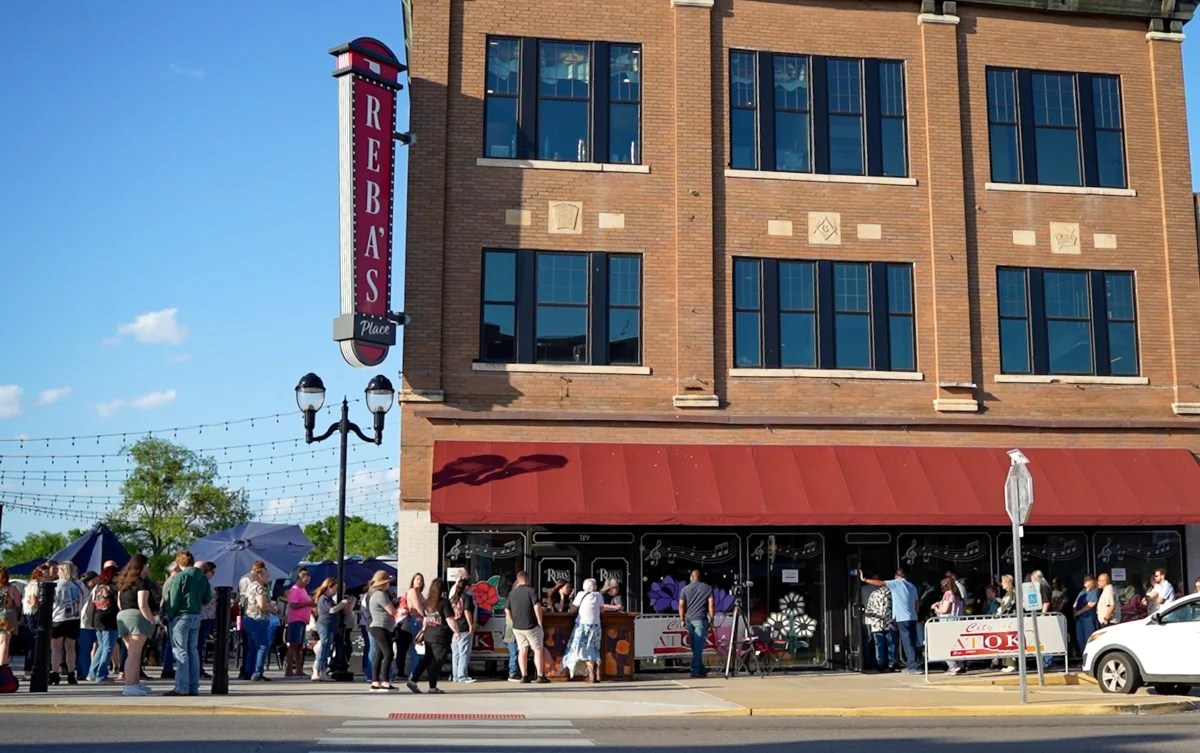
In the heart of downtown Atoka, Oklahoma, country music icon Reba McEntire has not merely opened a restaurant and entertainment venue; she has woven a vibrant tapestry of community, heritage, and economic revitalization. Reba’s Place, far exceeding the typical celebrity-backed establishment, stands as a testament to the enduring power of homecoming, serving as a dynamic cultural hub that nourishes the town’s body and soul. This unique venture, nestled within a meticulously restored historic Masonic Temple, draws visitors from across the nation, offering a deeply personal glimpse into McEntire’s life while simultaneously breathing new life into a cherished Oklahoma community.
A Homecoming Story: Reba’s Deep Roots in Oklahoma

Reba McEntire’s journey from the rugged rodeo circuits of southeastern Oklahoma to global superstardom is a narrative deeply ingrained in American music history. Born in McAlester and raised in the small, tight-knit community of Chockie, just 15 miles north of Atoka, McEntire’s early life was steeped in the traditions of ranching and rodeo. A third-generation rodeo participant, she honed her vocal talents singing alongside her mother and sisters in the bleachers, an upbringing that instilled in her a profound connection to her roots. Her illustrious career, spanning decades, has seen her become one of country music’s most celebrated entertainers, with over 75 million records sold worldwide, numerous Grammy Awards, and inductions into multiple Halls of Fame. While Nashville, Las Vegas, and grand arenas across the globe have claimed her professional presence, McEntire’s heart has always remained tethered to the red dirt hills of Oklahoma.
The decision to establish Reba’s Place in Atoka was a deliberate and deeply personal one. "Hometown, giving back," McEntire emphasizes, articulating her primary motivation. "This was part of my heritage, my home. Friends, family, grocery shopping, and community. It’s all here in Atoka." This sentiment underscores a broader trend of successful individuals investing in their origins, but for McEntire, it is clearly more than a business venture; it is a profound act of reciprocity, a way to honor the place and the people who shaped her.
The Historic Masonic Temple: A Canvas for Revival

The physical embodiment of Reba’s Place is as significant as its underlying philosophy. It occupies an imposing, three-story Masonic Temple building on Atoka’s Main Street, a structure erected in the early 20th century. These grand, often ornate buildings were once cornerstones of American towns, serving as centers for fraternal organizations and community gatherings. However, like many historic structures in smaller rural towns, the Atoka Masonic Temple had, for decades, stood "full of history and short on purpose," its solid bones and century-old timber awaiting a new chapter.
Prior to McEntire and her partners’ intervention, Atoka, a town with a population hovering around 3,000 residents, faced common challenges of rural America: economic stagnation, a dwindling downtown, and the struggle to retain younger generations. The town, historically significant due to its position on the Butterfield Overland Mail route and its deep ties to the Choctaw Nation, was ripe for revitalization. McEntire’s vision for the old temple was transformative. "I love this building," she recounts. "And, I thought, What on earth are we gonna do with it? But then to have Mama’s library here, and all the memorabilia, and the little speakeasy behind the secret door, and the bandstand on the floor below with the bar and places to eat. This building was a giver. It just gave so much."
The renovation process, which commenced in [inferred timeline, e.g., 2021-2022] and culminated in its opening in [inferred timeline, e.g., late 2022/early 2023], was characterized by a profound respect for the building’s original integrity. Executive Chef and General Manager Kurtess Mortensen and his team meticulously honored the existing architecture. Original interior doors were ingeniously repurposed, turned on their sides to serve as elegant dividers between the first-floor dining booths. Ceilings were intentionally left open, exposing the robust original timber and steel beams, a visible homage to the craftsmanship of yesteryear and a deliberate choice to connect visitors with the building’s storied past. This blend of preservation and innovative design has earned accolades from architectural enthusiasts and local historical societies alike, who see Reba’s Place as a model for breathing new life into dormant heritage structures.

The layout of Reba’s Place is thoughtfully designed to offer diverse experiences. The first floor hosts the main dining room, a generously stocked bar, and a live-music stage. McEntire was adamant that the acoustics of the stage be carefully calibrated to allow for conversation to continue uninterrupted while bands perform, ensuring a relaxed and communal atmosphere. The top floor features private dining rooms, a rotating selection of merchandise, and memorabilia from McEntire’s extensive personal archives. A playful "speakeasy" tucked behind a hidden door adds an element of delightful discovery for visitors. At the very heart of this upper level, however, lies a space that transcends mere design: Jacqueline McEntire’s library.
A Sanctuary of Memories: Jacqueline McEntire’s Library
Stepping into the library on the top floor of Reba’s Place is akin to entering a hushed, sacred space. The room, bathed in warm lamplight, seems to "hold its breath" when Reba McEntire enters, a testament to the profound personal significance it holds for her. Towering shelves, reaching to the ceiling, are laden with a vast collection of novels, paperbacks, and hardcovers. These are not merely decorative elements; they are the cherished possessions of Jacqueline McEntire, Reba’s late mother, a public-school teacher and librarian whose hunger for stories was as essential as breath itself.

Jacqueline McEntire, who once harbored her own dreams of becoming a country singer, possessed an insatiable love for reading. Her daughter Reba would often accompany her on travels to places like London and Edinburgh, where Jacqueline would make a direct pilgrimage to the nearest bookshop, filling her suitcases until there was no room left for clothes. Each book, carried home across oceans, bears her signature, a tangible record of her intellectual journeys. Now, a substantial portion of this treasured collection resides here, arranged with care, waiting to evoke an unexpected sense of wonder and connection in those who discover it.
"Wherever we went, Mama had a book," McEntire shares, her voice tinged with tenderness. "So to have her books here is having a piece of Mama." She pauses, allowing the emotional weight of her words to settle. "Mama would have loved this room. I feel her presence here. That’s why this room is so special to me." This sentiment is not lost on Chef Mortensen, who has witnessed McEntire’s quiet reverence in the library multiple times. He recalls an instance where she turned towards the shelves, went silent, and then whispered a soft "hello" to her mother. It was a moment that crystallized for him the true essence of Reba’s Place: a sanctuary of memories, a place where people can have "a life experience… that they’re going to carry with them."
A Culinary Journey Through Reba’s Life

The menu at Reba’s Place is a reflection of McEntire’s authentic culinary preferences, a genuine taste of her Oklahoma roots and the flavors she encountered throughout her illustrious career. This wasn’t the product of a corporate branding exercise or a generic celebrity cookbook deal. Instead, it emerged from a deeply personal process initiated by Chef Kurtess Mortensen. Before even considering a single recipe, Mortensen presented McEntire with a five-page questionnaire designed to uncover her true gastronomic soul. He sought to understand what she craved, what she disliked, and what she secretly enjoyed when no one was watching. Drawing inspiration from the French philosopher Brillat-Savarin, who famously observed, "If you show me what you eat, I’ll tell you what you are," Mortensen aimed for a menu that was an honest culinary biography.
What he discovered was a woman whose palate was firmly rooted in Oklahoma soil, country cooking, and an uncompromising joy for specific flavors. McEntire, for instance, unequivocally stated her aversion to liver – "ever." Her loves, however, were passionate: banana pudding, and a very particular strawberry shortcake (made with angel food cake, "never biscuits," with strawberries swimming in their own juice, and generously whipped cream). Above all, she expressed an almost devotional love for chicken-fried chicken. "I order chicken-fried chicken every time I come here," McEntire declares, with the satisfied air of someone who has earned the right to indulge in exactly what she desires.
From this foundation, Mortensen meticulously crafted a menu that follows the arc of McEntire’s life and the places her music has taken her. The chicken-fried steak, a regional staple, is prepared uniquely: cooked in real butter on a flat-top griddle rather than deep-fried, ensuring the fat permeates the crust and the crust melds perfectly with the meat. The Cherry Coke Barbecue Burger, which might sound like a novelty, is a testament to Mortensen’s culinary artistry. He painstakingly reduces Montmorency sour cherries from France with real Coca-Cola and crystallized ginger for hours, creating a rich, dark syrup that elevates the house barbecue sauce to new heights.

The menu also features Nashville hot chicken, meticulously researched to meet original standards, alongside Memphis bologna sandwiches and sophisticated New Orleans-inspired dishes, demonstrating that "fancy" also has its rightful place at this table. The commitment to local sourcing is exemplified by the beef, which comes from a distiller near the Oklahoma panhandle. This innovative supplier feeds his cattle spent whiskey mash, a practice that, through trial and error, has been found to marble the fat through the meat in a way that yields an exceptionally tender and flavorful product. "That’s what Reba is — the storyteller," Mortensen explains, "So we try to be storytellers, too."
The ultimate validation of Mortensen’s efforts came not with the perfectly executed strawberry shortcake, but with Jacqueline McEntire’s pimento cheese sandwich. Made precisely as her mother used to prepare it – on homemade bread with fresh-sliced tomatoes and Miracle Whip – Mortensen crafted a version that was as close to a memory as cooking can achieve. The afternoon McEntire took a bite and fell silent, he knew he had succeeded. "She went, ‘Oh, that’s like Mama’s,’" Mortensen recounts, a simple phrase that encapsulates the profound connection between food, memory, and the heart of Reba’s Place.
More Than a Restaurant: A Hub for Community and Philanthropy

Beyond its culinary and cultural offerings, Reba’s Place has emerged as a significant force for community building and economic development in Atoka. The commitment to local employment is evident in its staff, predominantly residents of Atoka, many of whom are citizens of the Choctaw Nation. This deliberate hiring strategy not only provides vital jobs but also fosters a deep sense of ownership and pride among the employees. The retention rate is remarkably high, with nearly all original staff members still part of the team. "I think they find more pride and more joy in working here than they would in other places," McEntire observes. "It’s a camaraderie. It’s a place where they like each other, and the turnover is zilch."
This strong sense of community extends beyond the workplace. Mortensen recounts a poignant incident when a staff member’s house caught fire on one of the restaurant’s busiest days. The entire team halted operations, rallying to support their colleague. McEntire herself intervened, contacting her older sister, Alice, a retired Department of Human Services worker, who, by nightfall, had helped secure temporary housing for the woman through a local minister. "That wouldn’t have happened in Las Vegas," Mortensen reflects, highlighting the stark contrast between the fast-paced anonymity of larger cities and the deep-rooted communal spirit of Atoka. "Here, the entire town circles the wagons. That’s what this place means." This anecdote serves as a powerful illustration of the genuine care and interconnectedness that define the Reba’s Place ethos.
The restaurant also champions a "Pay It Forward" meal program, inspired by a friend’s encounter with a similar initiative at an Ohio restaurant. The concept is simple yet profound: allowing patrons to pre-purchase meals for those in need, with no questions asked. Mortensen expanded upon this idea significantly. Before Christmas, he proactively contacted local churches to identify families facing hardship, ultimately boxing up and distributing 150 full holiday dinners. The impact was immediate and deeply moving. One pastor called back to share the story of a woman whose children had never experienced a proper Christmas dinner before. "Chef said, ‘That’s why we did this business. To give back,’" McEntire proudly recounts. "How about that!" This philanthropic spirit aligns with a philosophy McEntire learned from the legendary Bob Hope: "Receiving is OK. But giving back, that’ll keep you smiling for months. Maybe years."

Atoka’s Economic Renaissance: Broader Impact and Future Outlook
The impact of Reba’s Place on Atoka is tangible and far-reaching. Drive through downtown Atoka today, and the evidence of its revitalization is unmistakable. New storefronts have emerged along streets that were once quiet, attracting visitors who, initially drawn by Reba’s Place, stay to explore the town’s other offerings. The increased foot traffic has translated directly into enhanced revenue for local businesses, from boutiques to antique shops, creating a ripple effect throughout the local economy.
"New businesses are opening up. This town is booming," McEntire states with evident pride. "All the shop owners are really thrilled when we have events. Everybody benefits." Local officials, including the Mayor and representatives from the Atoka Chamber of Commerce, have consistently lauded McEntire’s investment as a pivotal catalyst for the town’s economic resurgence. They cite increased sales tax revenues, a boost in local employment, and a significant rise in tourism as direct benefits. The success of Reba’s Place has positioned Atoka as a burgeoning destination, drawing an estimated tens of thousands of visitors annually, far exceeding previous tourism figures for the rural community.

Reba McEntire’s commitment to her hometown is further underscored by her explicit decision not to expand or franchise Reba’s Place. This deliberate choice ensures that the unique character and intimate connection to Atoka remain central to the venture. Reba’s Place will remain a singular experience, rooted firmly in one building, in one small Oklahoma town, embodying McEntire’s deeply held belief that the most important things in life are "the people you feed and the table you set for them."
The long-term implications for Atoka are promising. Reba’s Place serves as a powerful model for rural revitalization, demonstrating how authentic investment, coupled with a deep respect for local heritage and community welfare, can transform a town. It has fostered a renewed sense of pride among residents and placed Atoka firmly on the national map as a unique destination. "People coming in, spreading the word," McEntire concludes. "That word-of-mouth is priceless. We want people to have a great experience and go home and come back the next year and say, ‘I came back because it was good. So here I am.’" Her final, unequivocal invitation sums it all up: "If you want to come to Reba’s Place, you’ve got to come to Atoka."









