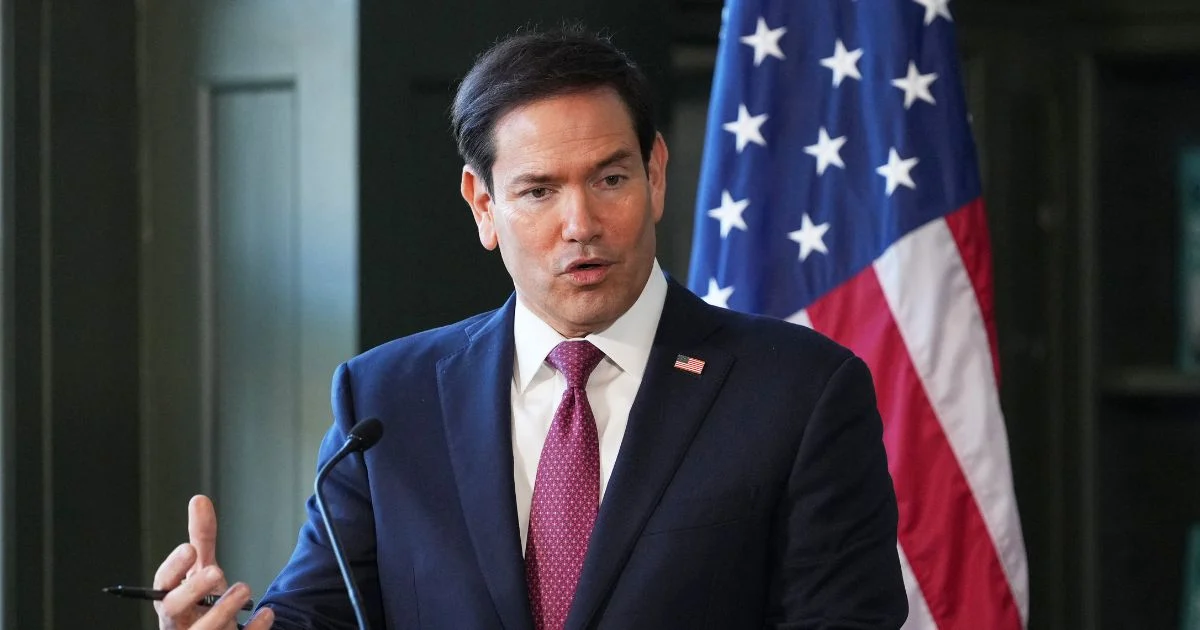
Secretary of State Marco Rubio vehemently condemned human rights organization Amnesty International on October 8, 2026, dismissing its recent accusations of war crimes committed by the United States and Israel in Iran as a "fraud." Rubio’s sharp rebuke came during a press conference in Reykjavik, Iceland, following a meeting with Iceland’s Foreign Minister, where journalists pressed him on the Amnesty International report. His remarks underscored a deepening rift between the U.S. State Department and a prominent global human rights watchdog, set against a backdrop of escalating tensions and military engagements in the Middle East.
The U.S. Secretary of State did not mince words, redirecting the focus from the accusations leveled against the U.S. and Israel to what he described as a long and egregious record of atrocities perpetrated by the Iranian regime. "Amnesty International is a fraud," Rubio stated emphatically, before outlining a litany of alleged human rights abuses by Tehran. He specifically cited reports of the Iranian regime’s brutal suppression of dissent, including the cold-blooded murder of "tens of thousands of people on the streets of Tehran and other parts of the country." Rubio further detailed horrific allegations of Iranian forces entering hospitals to murder injured protesters in their beds, sometimes extending their violence to the medical professionals treating them. "Those are war crimes. Those are crimes against humanity. Those crimes are committing against their own people!" Rubio declared, urging Amnesty International to focus its investigative efforts on these alleged abuses.
Background to the Crisis: A Region on Edge
The accusations and counter-accusations emerge from a highly volatile geopolitical environment. For years, the relationship between the United States, Israel, and Iran has been characterized by deep distrust, proxy conflicts, and intermittent military confrontations. Iran’s pursuit of a nuclear program, its ballistic missile development, and its extensive network of regional proxies—including Hezbollah in Lebanon, Houthi rebels in Yemen, and various militias in Iraq and Syria—have been consistent sources of alarm for Washington and Jerusalem. Both the U.S. and Israel have repeatedly affirmed their commitment to preventing Iran from acquiring nuclear weapons and to countering its destabilizing influence across the Middle East.
By 2026, these tensions had evidently escalated into direct military actions. While specific details of the U.S. and Israeli strikes in Tehran remain subject to ongoing scrutiny and dispute, reports suggest they targeted infrastructure and strategic assets believed to be linked to Iran’s military and its regional operations. Simultaneously, Iran had been accused of launching its own aggressive actions against neighboring states, including Jordan, Kuwait, Iraq, and Bahrain, further fueling regional instability and prompting retaliatory measures. These attacks often involved drone strikes or missile assaults, targeting both military installations and, at times, inadvertently impacting civilian areas.
Amnesty International’s Allegations and Methodology
Amnesty International’s briefing, published in late September 2026, specifically called for "accountability and redress for possible indiscriminate attacks in violation of international humanitarian law" against the United States and Israel. The organization detailed its investigation into U.S./Israeli strikes on Tehran neighborhoods, asserting that these operations "may constitute indiscriminate attacks and amount to war crimes." The report highlighted alleged instances of civilian harm, including a particularly grim claim that American military assets induced casualties at a civilian wedding.
Amnesty International, a globally recognized non-governmental organization focused on human rights, typically conducts its investigations through a rigorous methodology involving on-the-ground research, witness testimonies, satellite imagery analysis, and expert verification. Their reports are often highly influential in international legal and diplomatic circles, providing critical documentation for potential war crimes investigations. In this instance, the organization’s call for "independent, impartial, effective and transparent investigations" into the alleged U.S./Israeli actions underscores its commitment to international humanitarian law, which mandates distinction between combatants and civilians, proportionality in attacks, and precautions to avoid civilian harm.
A Chronology of Escalation and Accusations
- Early 2020s: Continued high tensions between Iran, the U.S., and Israel over nuclear program, regional proxies, and sanctions.
- 2024-2025: Increased frequency of alleged Iranian attacks on regional U.S. allies and assets, particularly in the Persian Gulf and Levant, often met with discrete or overt retaliatory measures by the U.S. and Israel.
- Mid-2026: A significant escalation of hostilities. Reports indicate U.S. and Israeli forces conduct targeted strikes within Iranian territory, specifically in Tehran, aimed at disrupting military capabilities or strategic infrastructure. These strikes are met with strong condemnation from Tehran.
- Late August/Early September 2026: Amnesty International begins its investigation into the U.S./Israeli strikes in Tehran, collecting evidence of alleged civilian casualties and potential violations of international humanitarian law. Concurrently, Iran continues its own military activities, including alleged attacks on Jordan, Kuwait, Iraq, and Bahrain.
- September 2026: Amnesty International publishes its detailed briefing, accusing the U.S. and Israel of possible war crimes due to alleged indiscriminate attacks in Tehran, citing incidents such as civilian casualties at a wedding. The report calls for international investigations.
- October 6, 2026: Secretary of State Marco Rubio travels to Reykjavik, Iceland, for diplomatic engagements.
- October 8, 2026: During a press conference in Reykjavik, Rubio is questioned about Amnesty International’s report. He responds with a forceful denunciation of the organization and redirects criticism toward the Iranian regime’s human rights record.
Official Responses and Diplomatic Fallout
Rubio’s outright dismissal of Amnesty International as a "fraud" and his robust defense of U.S. and Israeli actions represents a significant hardening of Washington’s stance against international human rights scrutiny when it pertains to its own military operations or those of its key allies. This response suggests a broader U.S. strategy to discredit organizations perceived as unfairly targeting American and allied forces while overlooking the transgressions of adversarial regimes.
Amnesty International’s Reiteration:
Following Rubio’s comments, a spokesperson for Amnesty International, speaking from their London headquarters, reiterated the organization’s commitment to impartial human rights investigations. "Our findings are based on verifiable evidence and rigorous legal analysis under international humanitarian law," the spokesperson stated. "We call for accountability for all alleged violations, regardless of the perpetrator. The severe human rights abuses committed by the Iranian regime are well-documented by our organization and have been condemned repeatedly. However, these atrocities do not absolve any other party, including the United States or Israel, from their obligations under international law." The spokesperson emphasized that Amnesty International’s focus is on ensuring all parties adhere to the laws of armed conflict, protecting civilians from harm, and providing redress for victims.
Iranian Government’s Reaction:
The Iranian government, through its state media and diplomatic channels, predictably seized upon Amnesty International’s report as validation of its long-standing claims of U.S. and Israeli aggression. A statement from Iran’s Foreign Ministry denounced Rubio’s remarks as "hypocritical and baseless," accusing the U.S. of attempting to deflect from its own "crimes against humanity." The statement further called for an immediate and thorough international investigation into the alleged U.S. and Israeli strikes, while simultaneously denying Rubio’s accusations regarding the murder of protesters and medical staff, labeling them as "fabrications by hostile foreign powers aimed at destabilizing the Islamic Republic." Iran also highlighted its own documented grievances regarding U.S. sanctions, which it claims impede access to essential medicines and humanitarian aid, exacerbating suffering among its population.
International Body Calls for Restraint:
The Secretary-General of the United Nations issued a general statement, without directly addressing Rubio’s comments, reiterating the UN’s call for all parties involved in the regional conflicts to uphold international humanitarian law and ensure the protection of civilians. The statement urged for de-escalation of hostilities and called for independent investigations into all credible allegations of war crimes or human rights violations by any actor. The International Criminal Court (ICC), while not having universal jurisdiction over all these parties (the U.S. is not a signatory to the Rome Statute, and Iran and Israel have complex relationships with its jurisdiction), indicated it was monitoring the situation and encouraged national jurisdictions to pursue accountability where possible.
Broader Impact and Implications
The exchange between Secretary Rubio and Amnesty International carries significant implications for international relations, human rights advocacy, and the global perception of justice and accountability.
Challenge to Human Rights Advocacy:
Rubio’s direct labeling of Amnesty International as a "fraud" poses a significant challenge to the credibility of a leading human rights organization. Such public condemnations from high-ranking officials can undermine public trust in independent monitoring bodies, making it harder for them to conduct investigations, garner support, and advocate for victims. It also risks creating a precedent where governments facing accusations of misconduct can dismiss such claims by questioning the impartiality or legitimacy of the accuser. This dynamic could further politicize human rights work, making it more difficult to achieve consensus on violations and accountability.
Erosion of International Law Norms:
When major global powers dismiss allegations of war crimes as politically motivated, it can erode the very foundations of international humanitarian law. The principle that all parties to a conflict, regardless of their political standing, must adhere to rules designed to minimize human suffering is fundamental. If such principles are routinely challenged or ignored, it creates a dangerous precedent that could lead to further disregard for civilian protection and the laws of armed conflict.
Deepening Geopolitical Divides:
The public spat further entrenches the existing geopolitical divides in the Middle East. It highlights the vastly different narratives each side employs to justify its actions and condemn those of its adversaries. For the U.S. and Israel, the focus remains on Iran’s destabilizing regional behavior and its internal repression. For Iran, the focus is on what it perceives as Western aggression and interventionism. Amnesty International’s attempt to hold all parties accountable, therefore, becomes caught in the crossfire of these competing narratives, often alienating all sides to varying degrees.
Difficulty in Achieving Accountability:
The sharp divergence in views makes achieving independent and impartial investigations exceptionally challenging. Without cooperation from the accused parties or strong international consensus, allegations of war crimes can languish, leaving victims without redress and perpetrators unpunished. This lack of accountability can perpetuate cycles of violence and impunity, further destabilizing already fragile regions.
The Role of Information Warfare:
In an era of pervasive information warfare, such high-profile exchanges contribute to the battle for public opinion. Each side seeks to control the narrative, framing events in a way that legitimizes its own actions and delegitimizes those of its opponents. Rubio’s forceful statement serves not only as a diplomatic response but also as a rhetorical tool aimed at shaping domestic and international perceptions of the conflict and the role of human rights organizations within it. The immediate amplification of his comments by various online commentators, praising him for "mic dropping" Amnesty International, demonstrates the rapid spread and emotional resonance of such political rhetoric.
In conclusion, Secretary Rubio’s denunciation of Amnesty International marks a critical juncture in the ongoing discourse surrounding human rights, military conduct, and international accountability. It underscores the immense challenges in upholding humanitarian principles amidst complex geopolitical conflicts and highlights the growing tension between national interests and the universal application of international law. As the situation in the Middle East remains fraught, the debate over who is truly committing "war crimes" and who should be held accountable is set to intensify, with profound implications for peace and justice in the region and beyond.