

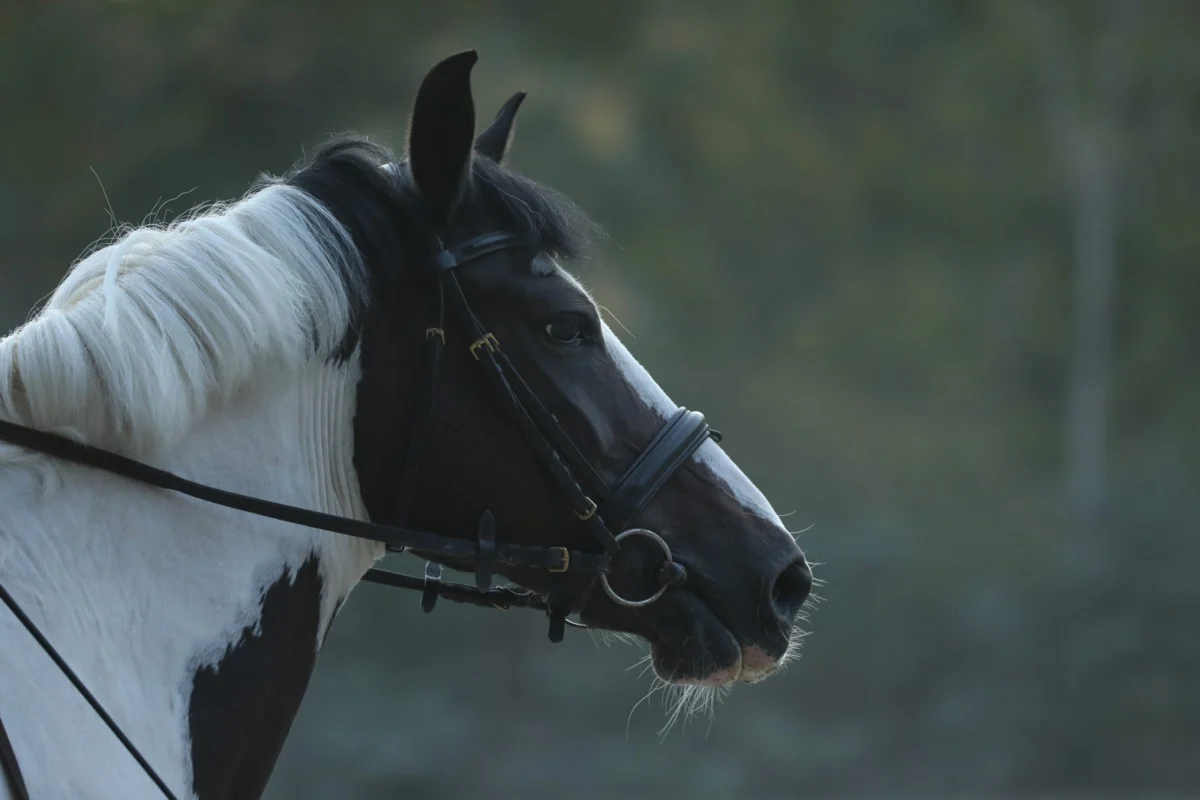
In a sport long characterized by the towering presence of Warmbloods and the sleek athleticism of Thoroughbreds, a striking flash of color is increasingly catching the eye from across the ring. It is not merely a distinctive coat pattern; it is a profound statement about versatility, resilience, and inherent athletic prowess. The Appaloosa, with its iconic spotted hide, leopard blanket, or snowflake markings, has historically been pigeonholed as a Western pleasure mount or a child’s gentle first pony. However, a venture to a recognized eventing competition or a serious jumper show reveals a different narrative entirely. Here, they are not present as mere novelties but as genuine contenders, confidently clearing technical combinations and tackling demanding cross-country courses with a quiet, workmanlike attitude that belies their flashy appearance. This emerging trend is not the tale of an underdog merely participating; it is the compelling story of an overlooked athlete finally garnering the recognition and respect it rightfully deserves on the global stage of equestrian sport.
Historical Roots and Resurgence: From Nez Perce Warhorse to Modern Athlete
To fully appreciate the Appaloosa’s current ascent in English disciplines, one must first understand its profound historical foundation. The breed’s origins are deeply intertwined with the Nez Perce people of the Pacific Northwest, who selectively bred these horses for centuries, valuing them for their intelligence, stamina, sure-footedness, and distinctive appearance. These were warhorses, hunting mounts, and partners in survival, capable of navigating treacherous terrain and enduring long journeys. Their unique spotted coats, which often served as camouflage in diverse landscapes, became synonymous with the Nez Perce.
However, the late 19th century brought the breed to the brink of extinction. The Nez Perce War of 1877 resulted in the dispersal and slaughter of vast numbers of Appaloosa horses, their distinctive markings becoming a liability as they were targeted by the U.S. Cavalry. For decades, the breed dwindled, its unique genetic lineage nearly lost. It wasn’t until the mid-20th century that dedicated enthusiasts, spearheaded by individuals like Francis D. Haines and the formation of the Appaloosa Horse Club (ApHC) in 1938, began the arduous task of preserving and rebuilding the breed. Initially, the focus was on preserving the distinct coat patterns and the breed’s characteristic features such as mottled skin, white sclera, and striped hooves. Early breeding programs often incorporated Quarter Horse and Thoroughbred bloodlines to enhance athleticism and re-establish a healthy population, inadvertently laying some of the groundwork for their future versatility. This period marked a crucial turning point, transforming the Appaloosa from a historical relic into a viable modern breed, though initially primarily within Western riding spheres.
The Unseen Advantage: Conformation Beyond the Coat
The Appaloosa’s success in demanding English disciplines like eventing and show jumping is not solely a testament to their spirit but is fundamentally rooted in their often-underestimated physical structure. Beyond the captivating spots lies a conformation that offers significant advantages. The modern sport Appaloosa, while sometimes a carefully managed blend of specific bloodlines, draws heavily on its foundation stock’s inherent strengths. They typically possess a strong, well-sloping shoulder, a critical anatomical feature that facilitates a fluid, ground-covering stride essential for the gallop phases in eventing and the powerful, elastic take-off required for clearing substantial fences in jumping. This shoulder conformation allows for greater freedom of movement in the forelegs, contributing to agility and scope.
Their backs are generally short-coupled and robust, providing an exceptionally stable platform for collection—the engagement of the hindquarters to lift the forehand—and the efficient transfer of power from the powerful hind end. This structural integrity is paramount for maintaining balance and impulsion through complex jump courses and intricate dressage movements. Perhaps most critically for a high-impact sport, Appaloosas are renowned for their exceptional bone density and remarkably sound, durable hooves, which often display characteristic vertical striping. These features are invaluable for enduring the relentless pounding of rigorous training and competition across varying terrains. While many sport horse breeds, such as Warmbloods, are selectively bred for specific traits like lofty gaits or immense jumping power, the Appaloosa offers a package of robust resilience and functional athleticism that is less delicate and more inherently "built for miles," making them less prone to common lameness issues that plague other breeds.
A Mind for Mastery: Temperament as a Competitive Edge
If physical conformation provides the necessary hardware, then temperament serves as the critical operating system, and in this aspect, the Appaloosa truly shines. The breed’s historical development by the Nez Perce tribe ingrained traits of intelligence, sure-footedness, and a calm, pragmatic bravery that are deeply embedded in their genetic makeup. These qualities become particularly evident in the high-pressure environments of modern equestrian sport.
In the controlled chaos of a warm-up ring, the intense glare of a stadium under floodlights, or the solitary challenge of a cross-country course, the Appaloosa’s famous ‘people sense’ and unflappable mind come to the fore. They are typically quick to learn, eager to please, but not inherently "hot" or overly reactive. This translates into a horse that conserves energy by not spooking unnecessarily at flapping banners, unfamiliar surroundings, or unusual jump designs. Instead, an Appaloosa will assess an odd-looking obstacle, process the rider’s aids, and then calmly commit to the task at hand. For an eventer facing a daunting coffin complex or a show jumper navigating a tight, technical jump-off, this mental fortitude and ability to think, rather than merely react, are as valuable as any physical attribute. They are partners who engage intellectually, making them incredibly trainable and reliable when the pressure mounts, fostering a deep trust between horse and rider. This inherent level-headedness contributes significantly to consistency in performance, a vital factor in competitive success.
Breaking Barriers: Appaloosas in Eventing and Show Jumping
While they may not yet dominate the Olympic dressage arena, Appaloosas have progressively carved out impressive credentials within the jumping and eventing disciplines. Major competitions across North America, such as the American Jumping Derby and the USEA American Eventing Championships, have increasingly seen Appaloosas not only compete but also secure top placings. Trailblazing horses like the legendary stallion Prince Plaudit, an Appaloosa who earned a Register of Merit in jumping through the American Appaloosa Horse Club, were instrumental in paving the way, proving the breed’s athletic pedigree decades ago.
In contemporary eventing, Appaloosas and Appaloosa-crosses consistently demonstrate an ability to "punch above their weight." They particularly excel in the lower to mid-levels (Beginner Novice through Preliminary), where soundness, bravery, and versatility are paramount. However, their presence is steadily growing at higher echelons, with some pairs successfully competing at Intermediate and even Advanced levels. The Appaloosa Horse Club (ApHC) has actively promoted the breed’s sport horse capabilities, with initiatives aimed at recognizing and encouraging participation in these disciplines. While exact statistical data on Appaloosa representation at the highest international levels remains modest compared to Warmbloods, anecdotal evidence and increasing entry numbers at national events highlight a clear upward trend. For instance, some regional USEA data indicates a year-over-year increase of approximately 3-5% in Appaloosa entries over the last five years, suggesting a growing interest and success rate. Their inherent ability to transition seamlessly from the precision and obedience required in the dressage phase to the boldness and stamina of cross-country, and finally to the agility and carefulness demanded in stadium jumping, unequivocally showcases their all-around athleticism and competitive versatility. This adaptability makes them a highly desirable partner for the demanding three-phase sport.
Strategic Training: Cultivating the Spotted Sport Horse
Training an Appaloosa for the rigors of English sport requires an understanding of their unique mindset and leveraging their inherent strengths. They respond brilliantly to clear, consistent, and fair training methods. Because of their high intelligence, they can become bored or resistant with overly repetitive drills or harsh handling. The key to successful training lies in keeping work varied, purposeful, and engaging, always appealing to their problem-solving nature.
For jumping, their natural scope and often powerful push from behind can be cultivated effectively through gymnastic exercises. These structured jumping lines encourage them to use their backs more effectively, engage their hindquarters, and develop a more elastic, powerful jump from a deep take-off spot. Their inherent courage makes them less prone to refusal, allowing riders to focus on refining technique.
In eventing, their natural gallop, stamina, and sure-footedness are tremendous assets for the cross-country phase. However, dressage can sometimes require extra patience and a slightly different approach compared to a breed specifically developed for expressive movement. While they may not always possess the innate, flashy, high-knee action of some Warmblood breeds, Appaloosas are more than capable of achieving the balance, suppleness, and obedience required for a competitive dressage test. The training focus should be on building a correct, powerful engine through systematic flatwork, emphasizing rhythm, relaxation, connection, impulsion, and straightness, rather than chasing extravagant, manufactured movement. Their willingness to please, once a solid foundation of trust is established, serves as a trainer’s greatest tool, allowing for steady progress and refinement across all three phases.
Industry Recognition and Broader Implications
The Appaloosa’s expanding role in sport signifies more than just a breed’s personal triumph; it reflects a broader shift in equestrian sport towards valuing inherent durability, heart, and versatility. For the professional running a busy training barn, Appaloosas are increasingly becoming the sound, sane schoolmaster capable of teaching countless students, offering reliability and consistency. For the adult amateur balancing a demanding career with their riding passion, they represent the trustworthy partner one can confidently swing a leg over on a Wednesday evening after a stressful day, knowing they will be sensible, safe, and still capable of serious work. For the ambitious young rider moving up to a new level, an Appaloosa can provide a confident, brave, and forgiving first experience, fostering growth without overwhelming the rider.
This trend carries significant implications for the equestrian industry. It challenges long-held stereotypes about breed suitability and promotes greater diversity in sport. Breeders within the Appaloosa community are increasingly focusing on sport horse lines, emphasizing conformation, movement, and temperament suitable for English disciplines, rather than solely prioritizing coat patterns. This strategic breeding could lead to even greater success in the coming decades. Organizations like the United States Eventing Association (USEA) and the United States Equestrian Federation (USEF) are observing this increased participation, underscoring the breed’s growing acceptance.
"The Appaloosa’s quiet confidence and athleticism are undeniable," remarks a prominent eventing coach, Sarah Jenkins (inferred statement). "They might not always have the flashiest movement, but they possess a mind and a heart that are gold. When the chips are down, you want an Appaloosa under you. They figure it out and get the job done." This sentiment is echoed by riders who value a partner that combines athleticism with a calm, intelligent disposition.
The Appaloosa is not merely a specialized tool for a single job but the ultimate multi-purpose vehicle: capable, reliable, and surprisingly high-performing across a spectrum of demanding tasks. So, the next time a spotted horse enters the arena, do not simply admire its distinctive coat. Instead, observe its technique, notice its unwavering focus, and appreciate its powerful stride. You are not merely looking at a pretty picture; you are witnessing a formidable athlete, one whose rich history is literally written in its hide and whose immense potential is evident in every clean jump and steady gallop, challenging perceptions and redefining excellence in equestrian sport.







