


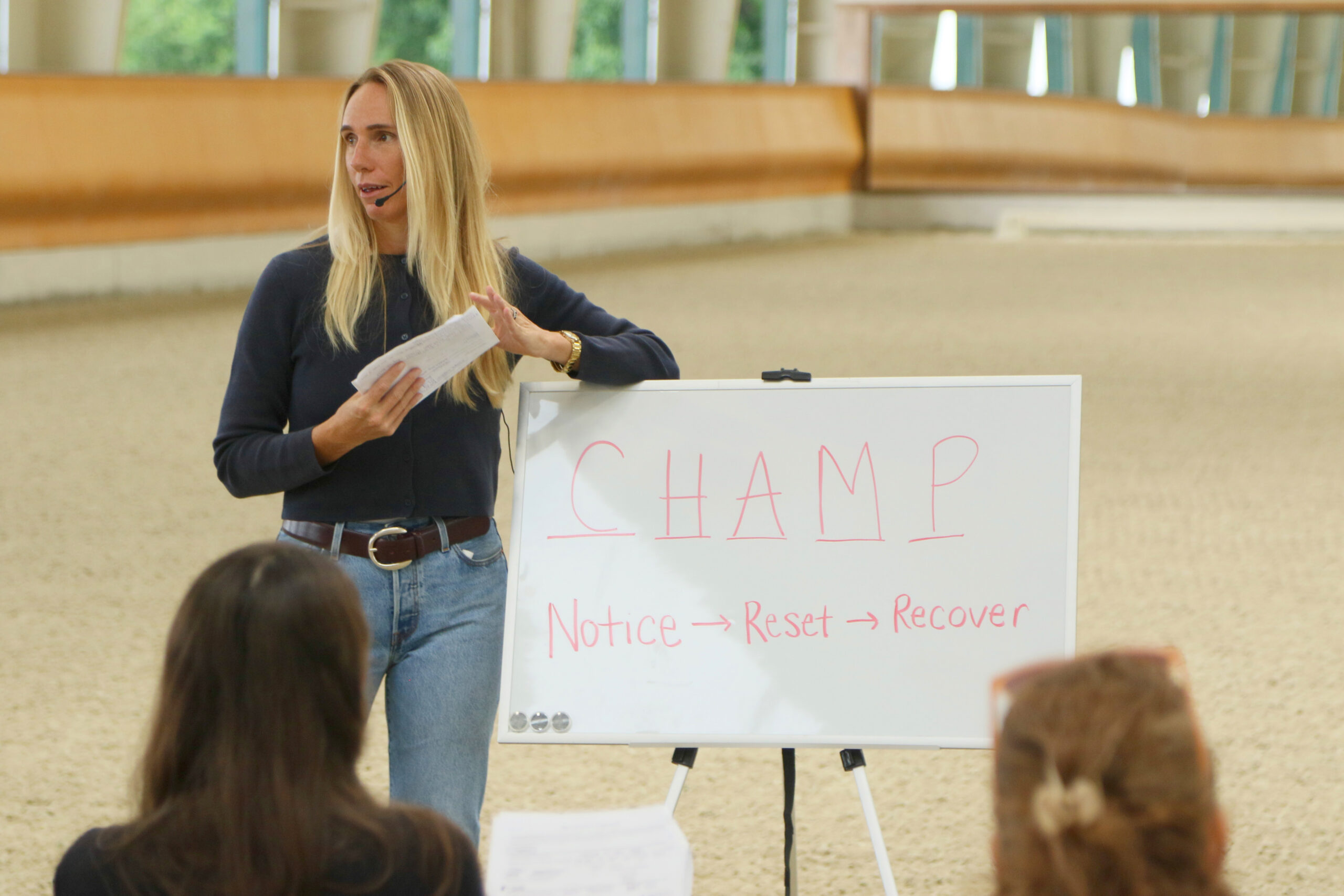
On the crisp morning of the first day of Boyd and Silva Martin’s Windurra Camp this summer, a pivotal question was posed to the assembled equestrians and auditors by personal performance coach Natalie Hummel: "How many times have you made a mistake during a competition, and it spiraled out of control, affecting the rest of your test?" The silence that followed was a testament to the universality of the experience within the demanding world of equestrian sport. Hummel’s inquiry served as the entry point into a profound exploration of the psychological resilience required to excel, a resilience that transcends mere technical skill and delves into the core of a rider’s mental fortitude.
The Windurra Camp, now in its third year, has become a cornerstone event for riders seeking to elevate their performance through intensive education and personalized instruction. Hosted by Olympic veteran Boyd Martin and his accomplished wife Silva, the camp offers a unique environment where athletes, ranging from aspiring amateurs to seasoned professionals, can hone their skills under expert guidance. This year’s iteration, held at the Martins’ Windurra property, placed a significant emphasis on the mental game, recognizing that in equestrian disciplines, where split-second decisions are paramount and communication with a living partner is key, a clear and present mindset is not just advantageous, but essential.

Hummel, a renowned performance and sports psychology coach who has worked extensively with elite equestrians, including Boyd Martin, Grand Prix dressage riders Lehua Custer, Olivia LaGoy-Weltz, and Lauren Sprieser, introduced attendees to what she terms the "champion’s mindset." This framework, a set of performance standards that have been instrumental in Boyd Martin’s four Olympic appearances, focuses on developing the ability to accept mistakes, move past them swiftly, and maintain focus amidst pressure. Her session, a highlight of the camp, provided practical strategies for eliminating unnecessary mental "drama" and embracing discomfort as a catalyst for growth.
The inherent unpredictability of equestrian sports means that errors are not just possible, but inevitable. Even the most decorated athletes have faced moments of misjudgment or unforeseen challenges that have tested their resolve. A striking example cited by Hummel occurred at the 2013 FEI European Dressage Championships in Denmark. Great Britain’s Charlotte Dujardin, during a test, inadvertently went off course. Despite this significant setback, her remarkable ability to recover and regain composure allowed her to salvage her performance and ultimately secure an individual gold medal. Similarly, in the same competition, Germany’s Helen Langehanenberg and the Netherlands’ Adelinde Cornelissen, a defending champion, both experienced costly mistakes that resulted in bell rings, underscoring the pervasive nature of performance challenges at the highest levels.
"We all think of Boyd as a champion, and he is technically," Hummel explained, referring to the Olympic eventer. "But he’s not perfect. He has tons of failures. But he doesn’t get stuck on failure. He recovers and moves on. That’s what a champion does: You fail and get back in the game." This philosophy directly challenges the often-unrealistic pursuit of perfection that can plague athletes. Hummel articulated that holding oneself to an impossible standard of flawlessness can, paradoxically, impede genuine progress. When mistakes occur, the human mind, particularly under pressure, can generate a torrent of negative self-talk. "Your brain will tell you all sorts of stories: You’re terrible; you’re not good enough; you shouldn’t be in this sport," she observed. "But those things aren’t true. Stay in reality and stick to the facts, even though this is hard for humans to do."
Boyd Martin, in his opening remarks to the camp participants, deliberately fostered an environment that encouraged making mistakes. He stated that the camp was designed to present opportunities for riders to experience disappointment and even embarrassment, recognizing these as crucial learning moments. "Go into it with an open mind knowing things aren’t going to be perfect," he advised. "When you’re put into a little bit of an uncomfortable situation, it mimics the feeling you get at competitions, and that’s often when you learn the most about yourself." This proactive embrace of discomfort as a training tool is central to developing the resilience that defines elite performers.
Avoiding the Pitfalls of External and Internal Drama
A significant portion of Hummel’s coaching focuses on helping riders identify and eliminate what she terms "unnecessary drama." This external drama can manifest in various forms, including dwelling on perceived unfairness in judging, obsessing over the opinions of others, or allowing external conditions to dictate one’s mental state. Weather, for instance, is a common focal point of anxiety, particularly for eventers who navigate multiple disciplines often subject to meteorological shifts.
Hummel highlighted how riders might rationalize not performing optimally, or even withdrawing, by citing unfavorable weather conditions. "Well, I don’t think it’s a fair course anyway. And with the weather, I don’t think I’m going to run today because I’m a good horse person," she illustrated. Boyd Martin echoed this sentiment, noting the collective tendency of riders to become preoccupied with the weather. "Whether it’s a bit warm or there’s rain in the forecast and everyone’s checking the radar, it can be super distracting," he commented. "In our sport, it doesn’t matter if it’s raining, hailing or the sun is shining. If your time is at 8:32, you go at 8:32."
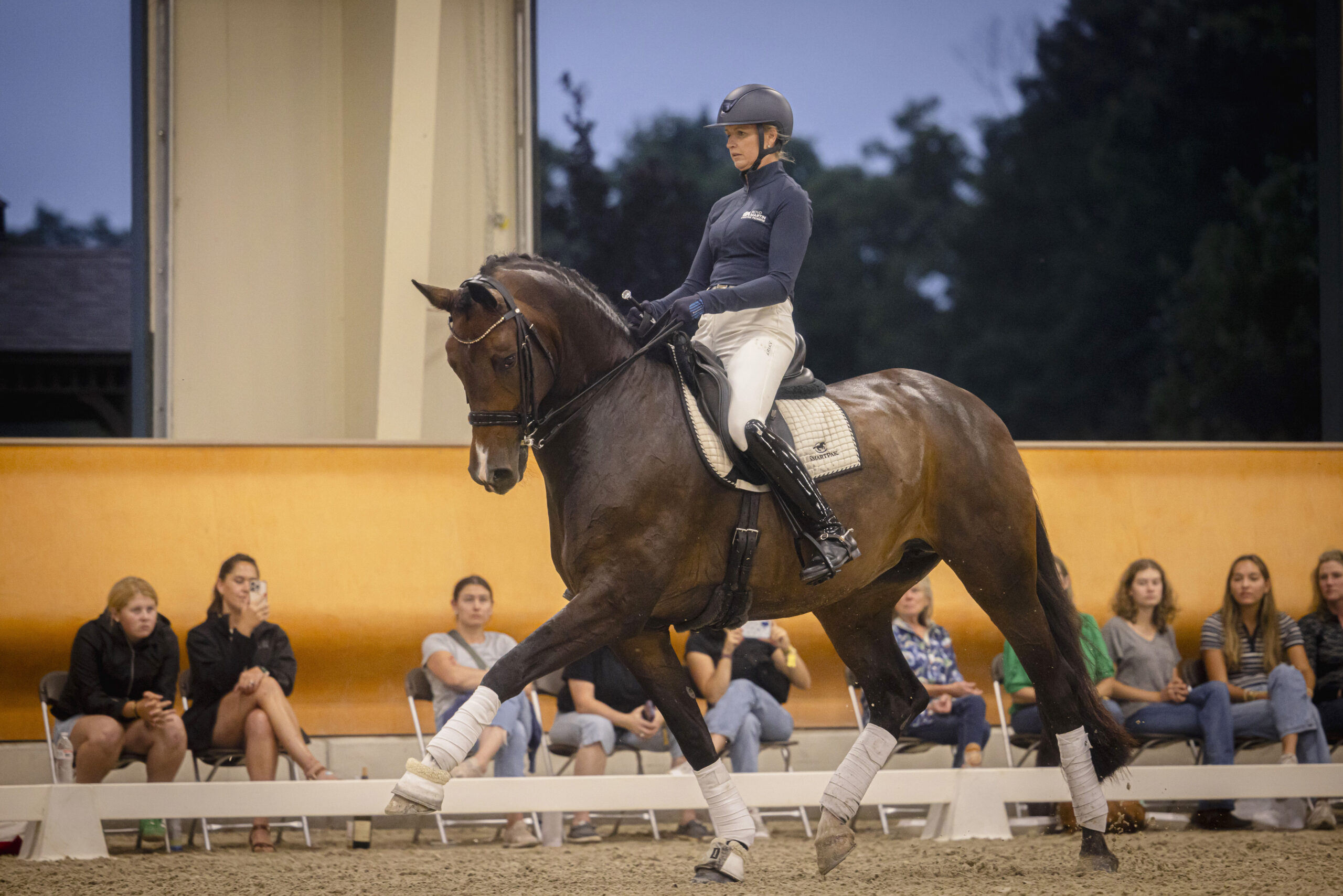
A compelling anecdote illustrating this point was Boyd Martin’s performance at the 2025 Defender Kentucky Three-Day Event CCI5*-L. Amidst a torrential downpour that sent spectators and media scrambling for cover, Martin rode his dressage test with remarkable focus, ultimately surging into second place on the overnight leaderboard. He later shared with Hummel that during the seven minutes of his test, he was so immersed in the task that he barely noticed the rain, suggesting that the challenging conditions may have, in fact, sharpened his concentration. This exemplifies the power of compartmentalizing external distractions and focusing solely on the present task.
However, Hummel emphasized that avoiding external drama is only half the battle. The more insidious form of drama is internal – the self-inflicted mental turmoil that arises from dwelling on mistakes. "If you make a mistake and beat yourself up over it, you’re creating internal drama," she explained. The critical question then becomes, "How do you reset after that happens?" Hummel was clear: "I can’t teach you how to be perfect. You’re going to make mistakes. You’re going to fail. You’re going to be disappointed and maybe even feel embarrassed." The skill lies not in preventing these occurrences, but in the speed and effectiveness of the recovery. "It’s about how you recover from them. How fast can you get out of the drama your mind has created that you’re not good enough; this never happens to so-and-so; if only I had a better horse or more money. It’s all noise and useless drama."
The C.H.A.M.P. Code: A Framework for Resilience
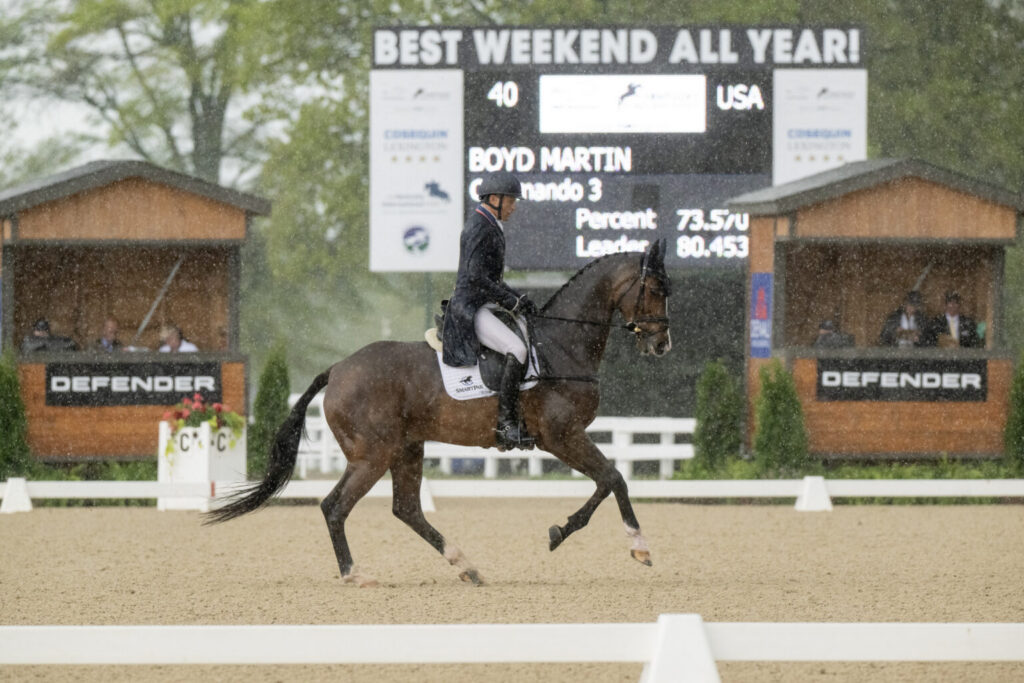
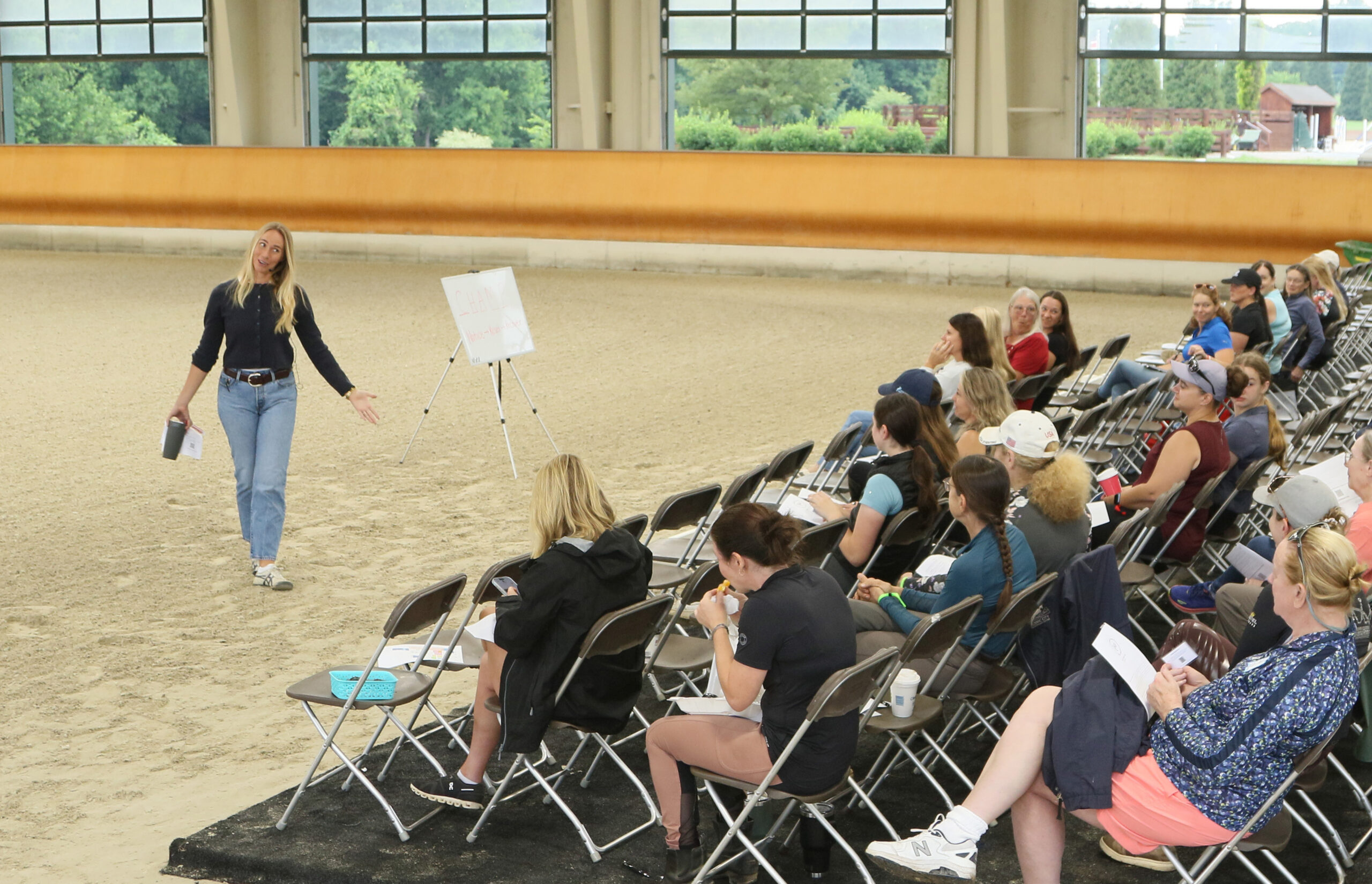
To equip riders with the tools to navigate these mental challenges, Hummel introduced the C.H.A.M.P. Code, an acronym developed through her masterclass with Boyd Martin, "The Champion’s Code." This framework provides a structured approach to understanding and emulating the mindset, behavior, and accountability of top athletes.
Composure
Composure, the first pillar, refers to the ability to remain present and focused when faced with pressure, nerves, uncertainty, or heightened expectations. "Composure allows you to focus on what is within your control and take the next right action," Hummel stated. "This is super hard, but it’s so important to develop as a rider." She stressed that this is not a skill to be deferred to a later date, but one that must be cultivated in every moment. The "green flags" indicating developing composure include trust in one’s abilities, effective execution, and a steadfast focus on controllable elements. Even focusing on minute physical details, such as the position of one’s hands, heels, or eyes, can be a powerful anchor for regaining composure. Conversely, dwelling on uncontrollable factors is a sure path to losing it. Hummel encouraged participants to reflect on past instances where they lost composure, to vividly recall the feeling, and then to identify their "job right now in that moment" – a specific, actionable task, like putting their heels down, as a tangible way to re-engage with the present.
Humility
Humility, in the equestrian context, is defined by Hummel as the willingness to learn, grow, and improve without succumbing to the fear of mistakes or the paralyzing effect of negative self-criticism. While equestrians often set ambitious goals to track progress, perfectionists can find themselves derailed by even minor errors. Hummel reminded her audience, "But you are human and are allowed to make mistakes." True humility, she clarified, is not about self-deprecation, which is ego-driven and hinders presence, but about a realistic self-assessment that allows for continuous improvement. The key is to avoid internalizing failure as a definition of self-worth. Instead, the focus should shift to extracting lessons from the experience and committing to future avoidance. She also highlighted the importance of genuinely processing feelings of disappointment rather than suppressing them, as this emotional processing is crucial for a complete reset.
Alignment
Alignment speaks to a rider’s self-awareness: understanding who they are, what they aspire to achieve, and remaining true to their individual path. Hummel observed that this can be a particular challenge for younger riders, who are more susceptible to comparison traps and the allure of external validation, such as wealth or perceived advantages. "Instead, remain present and maximize what you have," she advised, advocating for an internal compass that guides choices and actions, rather than being swayed by external benchmarks.
Mastery
Mastery involves acknowledging reality and taking full responsibility for one’s experiences, leading oneself through challenges with intentionality rather than being driven by fleeting emotions or external circumstances. Hummel described mastery as a difficult but rewarding pursuit requiring consistent practice. It empowers riders to respond deliberately, rather than react impulsively.
Performance Standards
The final pillar, performance standards, refers to the level of accountability a rider holds for themselves, irrespective of their mood, motivation, or the situation at hand. This principle encourages acting based on commitment and consistency, rather than waiting for inspiration to strike. "Essentially, you have a plan and follow it," Hummel stated. Red flags in this area include last-minute plan changes and a reluctance to set goals or establish routines. Hummel firmly asserted that motivation is not something to be passively awaited, nor should riders feel entitled to success. "You owe it to yourself to show up for your standards," she declared. The green flags for strong performance standards are discipline, unwavering commitment, and the belief that one has an equal opportunity to succeed as any other competitor. For those still developing their personal standards, Hummel suggested observing and emulating admired riders, emphasizing that top performers do not let their daily feelings dictate their actions. Success, she concluded, stems from a well-defined plan and a 100% commitment to its execution, with champions taking full responsibility and leveraging mistakes as building blocks for future achievements.
The Broader Impact and Future Implications
The insights shared by Natalie Hummel at the Windurra Camp extend far beyond the competitive arena. In a sport that demands such intricate partnership between horse and rider, the ability to manage one’s internal landscape directly influences the clarity and effectiveness of communication with the equine partner. A rider’s lack of presence, born from anxiety or distraction, is readily perceived by the horse, potentially leading to misunderstandings and performance issues. By cultivating a champion’s mindset, equestrians can enhance not only their competitive results but also the depth and harmony of their partnership.
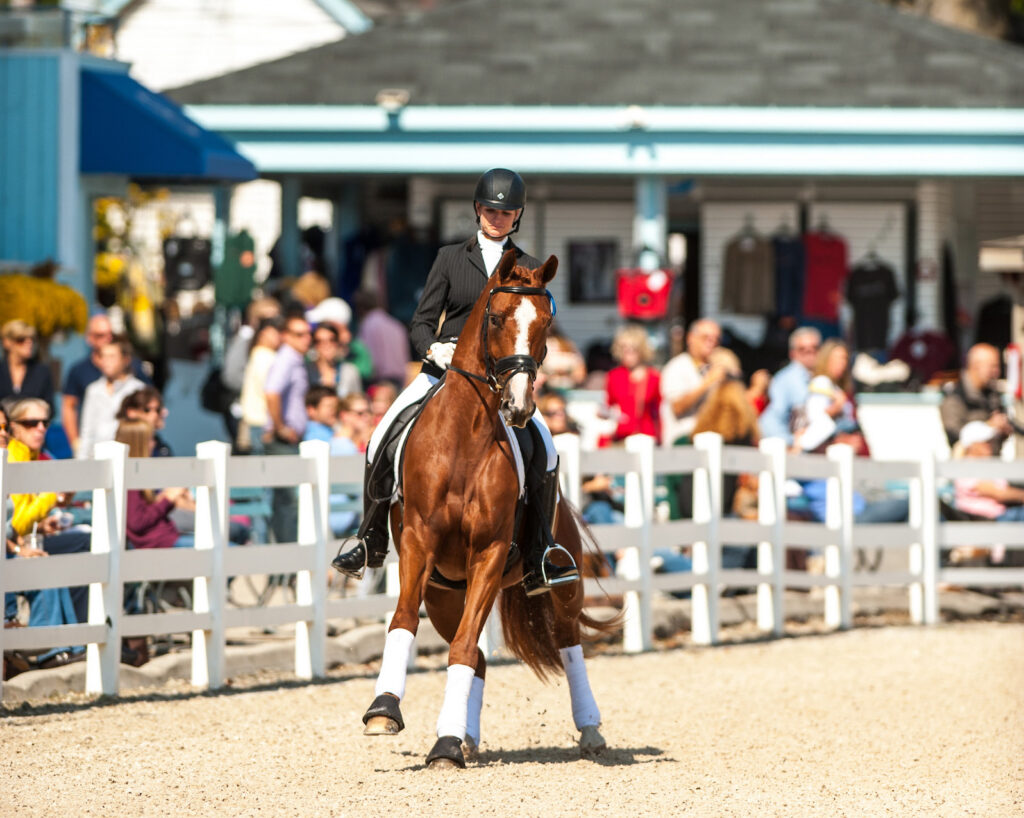
The principles of composure, humility, alignment, mastery, and performance standards offer a robust blueprint for personal and professional development, applicable to any field requiring high-level performance and resilience. As equestrian sports continue to evolve, with increasing emphasis on athlete well-being and the holistic development of riders, mental coaching plays an increasingly vital role. The success of initiatives like the Windurra Camp, which integrate psychological training alongside technical instruction, signals a progressive shift towards recognizing the mind as a critical piece of the performance puzzle. Ultimately, fostering these mental skills equips equestrians not just for the demands of competition, but for navigating the complexities of life with greater clarity, purpose, and an unwavering commitment to their goals.







