For over two decades, Craig Johnson’s Walt Longmire novels have transported readers into the rugged heart of Wyoming, crafting a literary landscape as iconic as its characters. Since the debut of The Cold Dish in 2004, Johnson has meticulously built Absaroka County, a fictional setting that embodies the spirit and challenges of the modern American West. This sprawling narrative tapestry is rich with unforgettable personalities, intricate mysteries, a distinctive blend of dark humor, profound explorations of Native American history and culture, the lingering specter of military service, and the unyielding beauty and brutality of the high plains. With more than 20 novels, alongside a collection of novellas and short stories, selecting just five standout titles from this prolific body of work presents a considerable challenge. The series deftly navigates various literary currents, with some entries leaning heavily into traditional mystery, while others emphasize action, historical introspection, or delve into the more surreal and imaginative corners of Johnson’s distinctive storytelling. However, the chosen five unequivocally capture the essence of what makes the Longmire series a cherished and lasting contribution to contemporary Western literature, reflecting its enduring appeal and critical acclaim.
The Genesis of a Legend: Walt Longmire and Absaroka County
Craig Johnson’s creation of Sheriff Walt Longmire and Absaroka County is a significant achievement in modern American fiction. The series is not merely a collection of crime novels; it is a profound meditation on place, character, and the evolving identity of the West. Absaroka County, with its vast, unforgiving landscapes, serves as more than just a backdrop; it is a character in itself, shaping the lives and destinies of its inhabitants. Johnson’s intimate knowledge of Wyoming, where he himself resides, imbues the setting with an authenticity that resonates deeply with readers. This geographical grounding allows him to explore complex themes, from environmental conservation to the socio-economic realities of rural life, all while delivering compelling narratives.

The series protagonist, Walt Longmire, is a nuanced and deeply human figure. A man of quiet integrity, haunted by personal loss yet steadfast in his commitment to justice, Walt embodies a classic Western archetype reimagined for the 21st century. He is a sheriff who relies as much on his intuition and understanding of human nature as he does on conventional police work, often navigating moral ambiguities with a stoic resolve. His relationships, particularly with his best friend Henry Standing Bear, his deputy Vic Moretti, and his daughter Cady, form the emotional core of the series, providing both levity and profound dramatic tension. These relationships evolve organically over the course of the novels, reflecting the passage of time and the cumulative weight of shared experiences.
Anatomy of a Modern Western: Themes and Craft
Johnson’s literary craft is characterized by a masterful blending of genres. While the series is primarily classified as mystery, it consistently transcends the genre’s boundaries, incorporating elements of traditional Westerns, literary fiction, and even a touch of the supernatural. Key themes explored throughout the Longmire novels include the nature of justice, the complexities of grief and loss, the enduring power of friendship, and the clash between traditional values and modern realities. A particularly salient aspect of Johnson’s work is his respectful and insightful portrayal of Native American culture, primarily through the character of Henry Standing Bear and the Cheyenne Nation. This inclusion adds layers of historical context, spiritual depth, and a crucial perspective often marginalized in mainstream narratives. Johnson’s meticulous research into Cheyenne traditions, language, and history enriches the storytelling, allowing for a more complete and authentic representation of the contemporary West.
Furthermore, Johnson’s prose is distinguished by its vivid imagery, evocative descriptions of the Wyoming landscape, and a wry, often dark sense of humor that provides a necessary counterpoint to the serious subject matter. He has a unique ability to create a strong sense of place and atmosphere, drawing readers into the world of Absaroka County with every page. The pacing of his novels varies, moving from contemplative introspection to explosive action sequences, always serving the narrative’s demands. This versatility ensures that the series remains fresh and engaging, constantly challenging reader expectations while staying true to its established characters and setting. The consistent quality of Johnson’s writing has earned him numerous accolades and a dedicated global fanbase, further solidified by the successful television adaptation that brought Walt Longmire to an even wider audience.

The Quintessential Longmire: A Deep Dive into the Top Five Novels
Choosing a definitive "top five" from a series spanning over twenty volumes is inherently subjective, yet these selections represent the pinnacle of Craig Johnson’s storytelling, showcasing the breadth and depth of the Walt Longmire universe. Each novel offers a unique window into the sheriff’s world, collectively illustrating why the series has garnered such critical acclaim and reader devotion.
5. Depth of Winter (2018): An Unchained Sheriff in a Foreign Land
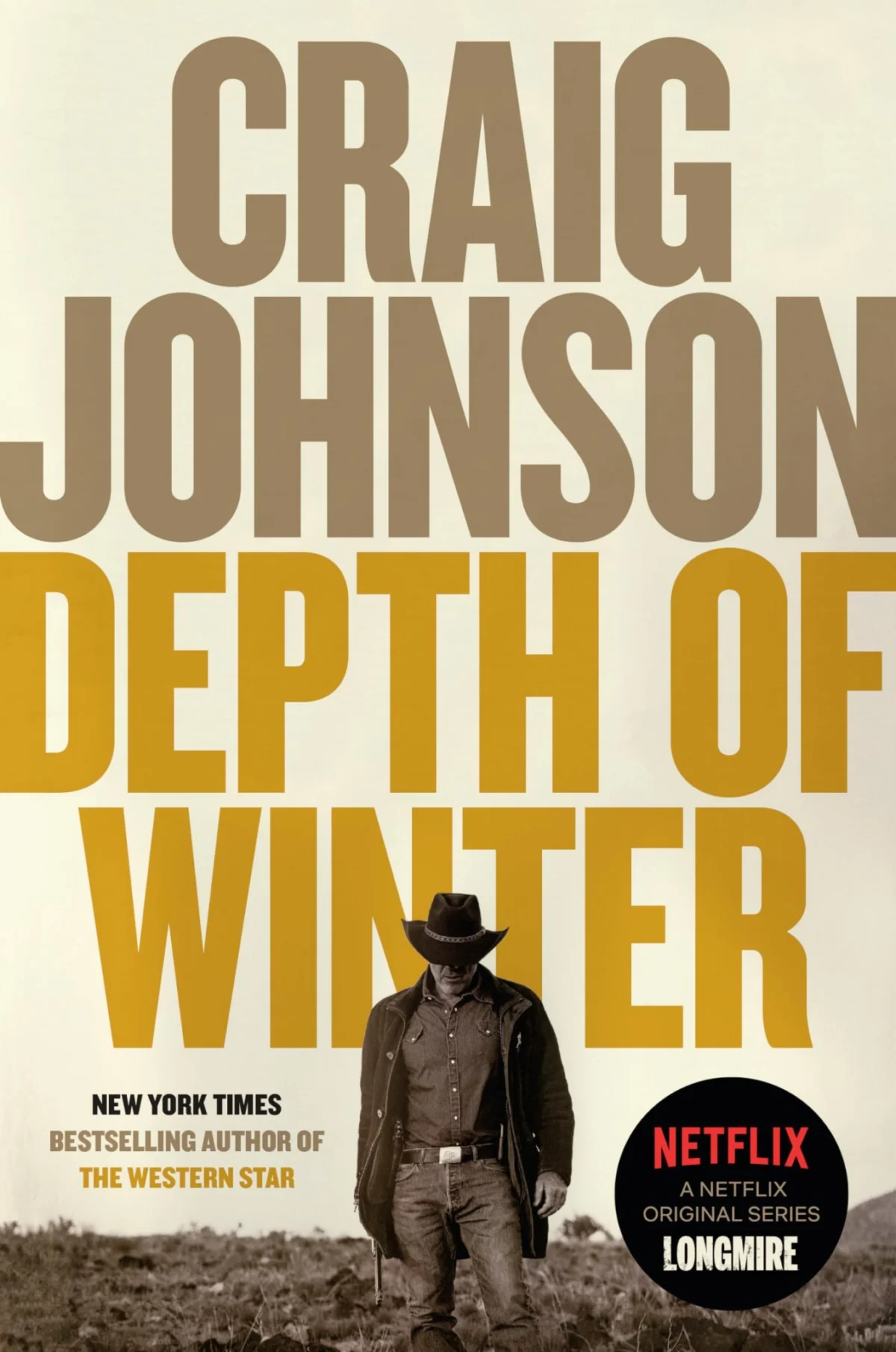
Depth of Winter, published in 2018, stands out as a pivotal and intensely action-driven installment, representing Walt Longmire "unleashed." Following a series of escalating events in preceding books, the narrative propels Walt out of his familiar Wyoming territory and deep into cartel-controlled Mexico. His singular mission: to rescue his daughter, Cady, from the clutches of the formidable antagonist Tomas Bidarte, a character whose shadow has loomed large over previous volumes. This novel is arguably the most action-heavy entry in the entire series, featuring a significantly higher body count and a relentless pace that distinguishes it from more traditional mysteries. Johnson ingeniously assembles a ragtag supporting cast, transforming them into a makeshift Western posse, navigating the treacherous landscape of modern Mexican organized crime. The book provides a deeply satisfying payoff to a long-running storyline, rewarding longtime readers who have followed Cady’s perilous journey. Johnson masterfully drops Walt, a man accustomed to the relative order of Absaroka County, into the chaotic and brutal reality of a cartel war, resulting in a narrative that is both violent and surprisingly humorous, with moments of profound strangeness that underscore the alien nature of Walt’s surroundings. The critical reception for Depth of Winter often highlighted its bold departure from the series’ usual setting, praising Johnson for taking Walt into uncharted and dangerous territory, thereby revitalizing the character and narrative tension.
4. The Western Star (2017): Echoes of the Past on Wyoming Rails
Released in 2017, The Western Star masterfully leverages Walt Longmire’s rich personal history, a constant source of intrigue for readers. The novel ingeniously interweaves two distinct investigations: a present-day effort by Walt to prevent a notorious prison inmate from receiving compassionate release, and a decades-old cold case involving a murder and disappearance aboard the titular Western Star, an old Wyoming passenger train. This dual narrative structure allows Johnson to expertly play with classic mystery conventions, reminiscent of Golden Age detective fiction, while firmly rooting the story in the rich tapestry of Wyoming’s past. The narrative contains a clear homage to Agatha Christie’s Murder on the Orient Express, showcasing Johnson’s versatility and his ability to infuse Western tropes with elements from other genres. The Western Star exemplifies what makes the Longmire series so compelling: its unique fusion of the vast Western landscape and its deep-seated history with the intricate plotting of a compelling mystery. Critics often lauded this installment for its clever structure and its ability to delve deeper into Walt’s formative years, offering valuable insights into the man he became. The novel’s exploration of memory, justice delayed, and the long shadow of the past resonated strongly with both critics and readers.

3. Hell Is Empty (2011): Survival Against the Wilderness and Man
For readers seeking to witness Walt Longmire pushed to his absolute limits within traditional Western action territory, Hell Is Empty, published in 2011, is an essential read. The premise is custom-made for a modern Western thriller: Walt is tasked with escorting three dangerous prisoners through the treacherous Bighorn Mountains when the men stage a daring escape, taking an FBI agent hostage in the process. What unfolds is a high-stakes survival story that has often been described as "Die Hard in the Wyoming wilderness." Walt must relentlessly track the fugitives through a brutal, unforgiving snowstorm, battling not only the elements but also exhaustion, the biting cold, and the cunning violence of one of the series’ most chilling adversaries, Raynaud Shade. The result is one of the most cinematic books in the entire series, demonstrating Johnson’s skill in crafting relentless suspense. He makes the Bighorn Mountains feel enormous, hostile, and utterly indifferent to human suffering, transforming Walt’s pursuit into a genuine struggle for survival against both man and nature. Hell Is Empty received widespread praise for its intense pacing, its vivid descriptions of the wilderness, and its portrayal of Walt’s physical and psychological endurance. It stands as a testament to Johnson’s ability to blend genre conventions to create something truly unique and unforgettable.
2. The Cold Dish (2004): The Foundation of Absaroka County
It is virtually impossible to compile a list of essential Longmire books without including The Cold Dish, the groundbreaking debut published in 2004. This novel introduced readers to Sheriff Walt Longmire at a particularly vulnerable juncture in his life, still grappling with the profound grief following the death of his wife. Against this personal backdrop, Walt finds himself investigating the killings of several young men, setting the stage for a compelling mystery. More crucially, The Cold Dish is where the entire world of Absaroka County begins to take shape. Readers are introduced to an unforgettable ensemble of characters who would become integral to the series: Henry Standing Bear, Walt’s stoic and wise best friend; Vic Moretti, his sharp-witted and fiercely loyal deputy; Ruby, the efficient dispatcher; Dog, Walt’s faithful companion; and Dorothy, the always-present voice of reason. Henry, in particular, immediately establishes the bedrock friendship at the heart of the books—a relationship characterized by unwavering loyalty, sharp humor, mutual respect, and an honest willingness to challenge Walt’s occasional stubbornness. While the central mystery is compelling and well-crafted, the true, lasting attraction of The Cold Dish lies in the initial discovery of Absaroka County and its vibrant, memorable inhabitants. Critics widely celebrated the novel for its strong sense of place, its authentic characters, and its fresh take on the Western mystery genre, laying the groundwork for a beloved series.
1. Another Man’s Moccasins (2008): War, Memory, and Enduring Scars
Widely regarded as one of the most emotionally resonant and thematically rich books in the series, Another Man’s Moccasins, published in 2008, masterfully presents readers with two distinct mysteries separated by decades. In the present day, Walt investigates the discovery of a Vietnamese woman’s body along a desolate Wyoming highway. Simultaneously, a faded photograph from his own past, dating back to his days as a Marine in Saigon during the Vietnam War, pulls him back into his very first murder investigation. These two seemingly disparate storylines gradually converge, weaving a powerful narrative about the lingering impact of war, the complexities of memory, the dark realities of human trafficking, and the pervasive presence of ghosts that individuals carry long after returning home from conflict. A particularly memorable character introduced in this novel is Virgil White Buffalo, a homeless Crow veteran who becomes a primary suspect. His troubled life and experiences provide a poignant and fascinating contrast to Walt and Henry Standing Bear’s own military service and their subsequent paths. Another Man’s Moccasins is a quintessential Longmire story, lauded by critics for its profound emotional depth, its sensitive handling of historical trauma, and its intricate plotting. It exemplifies Johnson’s ability to tackle weighty subjects with grace and insight, solidifying its place as a fan favorite and a critical success.
The Supporting Cast: Pillars of Absaroka

Beyond Walt Longmire, the strength of Johnson’s series lies in its richly developed supporting characters. Henry Standing Bear, owner of the Red Pony bar and Walt’s oldest and dearest friend, is more than a sidekick; he is Walt’s confidant, spiritual guide, and cultural anchor. Henry’s wisdom, dry wit, and deep connection to Cheyenne traditions provide a crucial counterpoint to Walt’s often straightforward approach to justice. Vic Moretti, Walt’s Philadelphia-born deputy, brings a feisty, modern sensibility and a sharp tongue to the team, often acting as Walt’s foil and providing much-needed comic relief, while demonstrating unwavering loyalty and courage. Cady Longmire, Walt’s daughter, represents the future and often serves as a catalyst for Walt’s personal development and protection. These characters, along with others like Ruby and Dog, create a vibrant and believable community, making Absaroka County feel like a real place with real stakes. The evolution of these relationships over the series contributes significantly to its enduring appeal, as readers become invested not just in the mysteries, but in the lives of the people solving them.
Beyond the Pages: The Longmire Phenomenon
The widespread popularity of Craig Johnson’s novels reached new heights with the television adaptation, Longmire, which aired first on A&E and later on Netflix, from 2012 to 2017. The series, starring Robert Taylor as Walt Longmire, Lou Diamond Phillips as Henry Standing Bear, and Katee Sackhoff as Vic Moretti, brought Johnson’s richly imagined world to a global audience, further cementing the characters and setting in popular culture. While adaptations inevitably take creative liberties, the television series largely captured the essence of the books, including the stunning Wyoming landscapes, the complex character dynamics, and the intricate mysteries often infused with Native American themes. The success of the TV show spurred increased interest in the novels, creating a symbiotic relationship that introduced new readers to Johnson’s literary world and deepened the appreciation of existing fans. This cross-media success is a testament to the universal appeal of Johnson’s storytelling and the compelling nature of his characters.
Craig Johnson’s Contribution to Contemporary Literature

Craig Johnson has made a significant and lasting contribution to contemporary American literature, particularly within the mystery and Western genres. He has revitalized the Western, moving beyond traditional cowboy narratives to explore the complexities of modern life in the American West, including its diverse cultures, historical burdens, and evolving challenges. His novels are celebrated for their literary quality, combining compelling plots with deeply philosophical undertones and rich character studies. Johnson’s commitment to authenticity, from the geographical details of Wyoming to the nuances of Native American culture, sets his work apart. He has demonstrated that the Western genre is not a relic of the past but a vibrant space for exploring universal human experiences—love, loss, justice, and redemption—against a uniquely American backdrop. His consistent output and the high quality of his storytelling ensure that the Walt Longmire series will remain a benchmark for contemporary Western and mystery fiction for years to come.
Conclusion: A Lasting Mark on the Western Genre
In summary, Craig Johnson’s Walt Longmire novels have, over more than two decades, carved out a distinct and beloved niche in the literary landscape. From the foundational introduction in The Cold Dish to the emotionally charged complexities of Another Man’s Moccasins, the survival epic of Hell Is Empty, the historical depth of The Western Star, and the international action of Depth of Winter, these five books collectively exemplify the series’ profound strengths. They showcase Johnson’s unparalleled ability to weave intricate mysteries with rich character development, evocative descriptions of the American West, and thoughtful explorations of challenging themes. The series stands as a testament to the enduring power of storytelling, offering readers not just thrilling narratives, but a deep, abiding connection to a world and characters that feel undeniably real. Craig Johnson’s Longmire series is more than just a collection of crime novels; it is a vital, lasting contribution to Western literature, ensuring its place in the canon for generations to come.