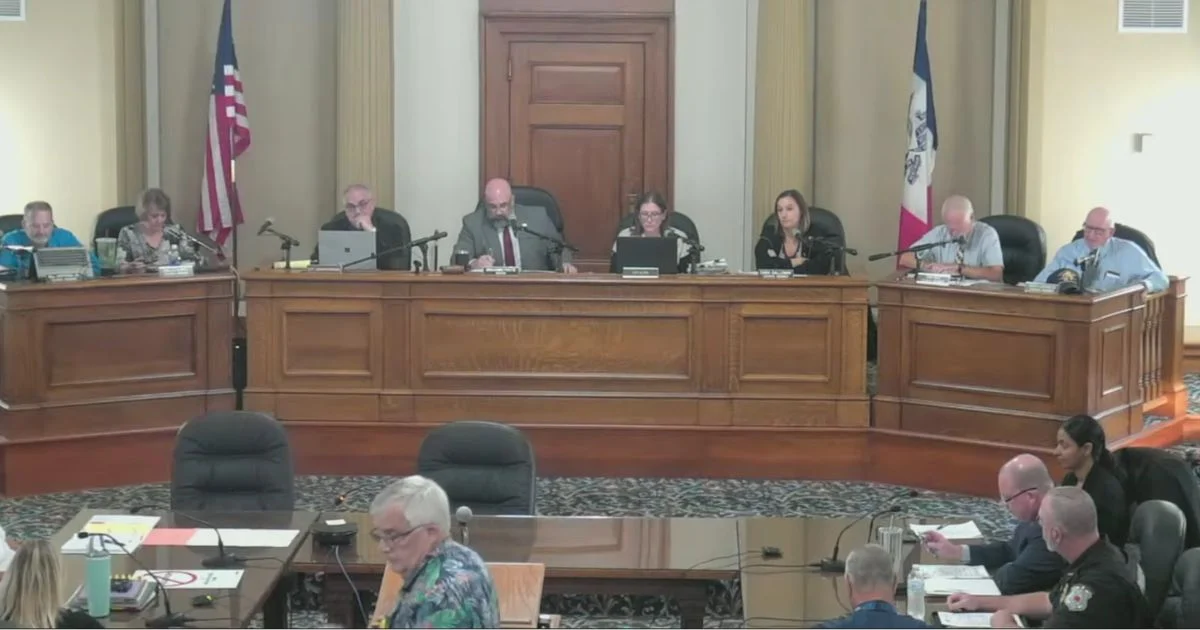
The October 7, 2026, meeting of the Ottumwa City Council in Iowa became the focal point of a heated national discussion after a former councilman delivered an invocation concluding with the phrase "Hail Satan," prompting immediate public backlash and a fervent attempt by a local pastor to counteract what he described as a "curse" upon the city. The incident, captured on video and widely disseminated across social media, has thrust the small Iowa community into the spotlight, igniting a complex debate about religious pluralism, the boundaries of free speech, and the protocols for public invocations in local government.
The contentious opening to the city council session saw Matt Dalbey, a resident and former member of the council, approach the podium to deliver the invocation. As captured in the official meeting video, Dalbey began by inviting those willing to participate to stand, then commenced his address with the words, "Let us pray. Dear dark father." His prayer continued, urging those present to stand "unbowed by arcane doctrines born of fearful minds," to "embrace the luciferian impulse to eat of the tree of knowledge," and to judge individuals based on their actions rather than "arbitrary social norms." The invocation concluded emphatically with, "It is done. Hail Satan."
The sequence of events unfolded rapidly. Following Dalbey’s invocation, the council members and staff proceeded to recite the Pledge of Allegiance, an act that typically follows such prayers, seemingly without immediate outward reaction to the preceding words. However, the gravity of Dalbey’s statements quickly became apparent as the meeting progressed.
Immediate Fallout and Counter-Invocation
The atmosphere in the council chambers shifted dramatically when Pastor Rick Bick of the New Life Center rose to speak. Without delay, Bick directly confronted the invocation, demanding that the council take immediate action to nullify what he perceived as spiritual harm inflicted upon the community. "Let’s just reverse this curse that was put on our city. That ‘Hail Satan’ is not welcome here," Bick asserted, his voice conveying a profound sense of urgency and alarm.
Council member Cara Galloway attempted to guide Bick to the designated public comment period, explaining that such matters were typically addressed then. However, Bick remained resolute, insisting on the immediate necessity of his intervention. "It needs to be done now. That was a curse put on the city. Most of you know that, and we need to just stop and reverse it," he reiterated, underscoring the spiritual significance he attached to Dalbey’s words. Despite Galloway’s objections, Mayor Benjamin Foote intervened, calling for a 30-second period of silence "to reflect on whatever it is we need to reflect on," an apparent attempt to de-escalate the burgeoning tension and acknowledge the profound discomfort in the room. This brief pause, however, did little to quell the underlying controversy.
Background: Ottumwa’s Invocation Policy and its Genesis
The ability for Dalbey to deliver such an invocation stemmed directly from a policy adopted by the Ottumwa City Council on January 20, which allowed meetings to be "opened with an invocation to aid in additional guidance and blessings for the City and all its citizens." This policy was crafted with a deliberate acknowledgment of "the diversity of both organized and unorganized religious denominations, as well as other faiths, belief systems, or the lack thereof." The city’s official invocation list confirms Dalbey, listed without an explicit congregation, was indeed scheduled for October 6, the day prior to the actual meeting. It appears there may have been a scheduling adjustment or a slight discrepancy in reporting the exact date of his scheduled appearance versus the actual event.
Council member Cara Galloway had been the sole dissenting voice against the adoption of this policy. Her opposition was rooted in a prescient concern that such a policy, while seemingly promoting inclusivity, could open a "slippery slope" leading to situations precisely like the one that unfolded. She had warned that allowing invocations would inevitably invite views the council might not share, and that attempting to answer or counteract one would risk legal challenges and further objections, undermining the council’s imperative to remain "neutral." Her concerns, previously theoretical, had now materialized into a stark reality.
The Satanic Temple: A Non-Theistic Perspective
Matt Dalbey’s invocation, particularly its "Hail Satan" conclusion, drew immediate and widespread condemnation from many who interpreted it as an endorsement of literal devil worship. However, Dalbey clarified his motivations to the Ottumwa Courier, stating in a private message that the text he used is employed by the Satanic Temple of Iowa, of which he is a member. Crucially, he emphasized that this practice "has nothing to do with the belief in a satanic deity." The Ottumwa Courier further noted that The Satanic Temple (TST) describes itself as "resolutely non-theistic."
This distinction is fundamental to understanding the nature of Dalbey’s invocation. The Satanic Temple, established in 2013, identifies as a non-theistic religious organization. Its mission is to encourage benevolence and empathy, reject tyrannical authority, advocate practical common sense, oppose injustice, and undertake noble pursuits. TST uses Satan as a literary figure representing rebellion against arbitrary authority and a symbol of reason, skepticism, and the pursuit of knowledge. Their core tenets, often referred to as the "Seven Tenets," include principles such as compassion and reason, the pursuit of justice, and the respect for the freedom of others. They frequently engage in activism aimed at promoting religious freedom and the separation of church and state, often by asserting their right to equal representation when Christian displays or prayers are permitted in public forums.
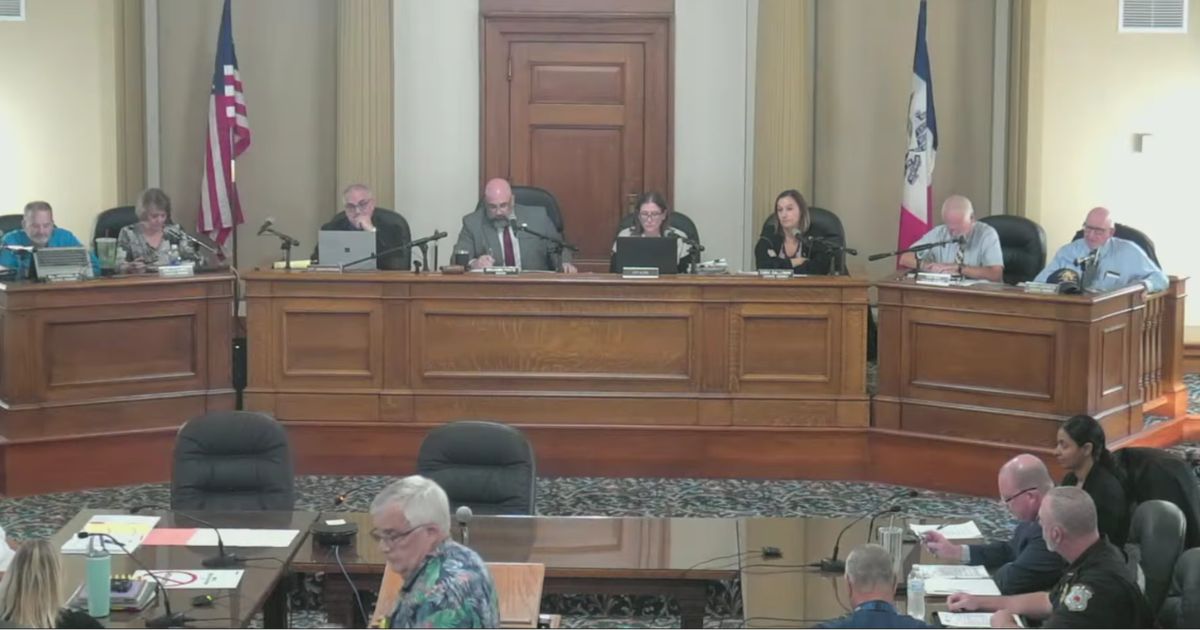
In this context, Dalbey’s invocation, with its calls to stand "unbowed by arcane doctrines" and to "embrace the luciferian impulse to eat of the tree of knowledge," aligns with TST’s philosophical stance. The "dark father" reference and "Hail Satan" closing are intended not as adoration of a supernatural evil entity, but as provocative expressions of opposition to dogmatic religious authority and a call for critical thought and individual liberty, often used to highlight perceived hypocrisy or unequal application of religious freedom laws.
Legal Precedents and First Amendment Considerations
The incident in Ottumwa is not isolated; it resonates with a broader national debate concerning legislative prayers and invocations at public meetings. The legal framework for such practices was significantly shaped by the 2014 U.S. Supreme Court case Town of Greece v. Galloway. In that ruling, the Court upheld the practice of legislative prayer, even when overwhelmingly Christian in nature, provided it does not proselytize, advance, or disparage any faith, or coerce participation by non-adherents. The Court stipulated that the content of the prayer should not be exploited to "open an exclusive legislative forum to prayers that proselytize or disparage."
The Ottumwa City Council’s policy, with its emphasis on respecting "diversity of both organized and unorganized religious denominations, as well as other faiths, belief systems, or the lack thereof," appears to have been drafted in an attempt to comply with the spirit of Town of Greece v. Galloway. By opening the invocation forum to all, the city aimed to avoid allegations of religious discrimination. However, the "Hail Satan" invocation immediately tested the practical limits of such a broad policy. If the city were to restrict invocations based on their content, particularly after explicitly creating an inclusive policy, it could face legal challenges from groups like The Satanic Temple, which often use such instances to assert their equal standing under the First Amendment’s Establishment Clause and Free Exercise Clause. The challenge for municipalities lies in balancing inclusivity with the need to maintain an atmosphere that does not alienate or coerce members of the community or the council.
Community and Social Media Reactions
The immediate local reaction, as evidenced by Pastor Bick’s intervention, underscored a profound sense of offense and spiritual concern among some residents. This sentiment rapidly escalated and spread across social media platforms, transforming a local council meeting into a viral national story. Posts from influential conservative commentators and organizations swiftly condemned the invocation. For instance, Pastor Dillon Awes tweeted, "The city of Ottumwa is begging to be cursed by God," quoting Psalm 16:4. Similarly, Brady Penfield declared the invocation "intrinsically evil" and urged followers to contact city officials to ensure it "never happens again."
Perhaps the most impactful social media amplification came from Libs of TikTok, a prominent account known for sharing controversial clips, which posted a video excerpt of Dalbey’s "Dear dark father" opening and "Hail Satan" close. This post, accompanied by an expletive-laden expression of shock and outrage, garnered an astonishing 1.8 million views by Wednesday afternoon on the platform X (formerly Twitter). The sheer volume of views and the intensity of the online reactions demonstrate the highly charged nature of religious expression in public forums and the speed with which such incidents can become national flashpoints, drawing attention and criticism from far beyond the local community. The comments section across these platforms was flooded with expressions of anger, fear, and condemnation, illustrating a significant cultural clash.
Official Responses and Future Policy Review
In the aftermath of the controversial meeting, city officials in Ottumwa found themselves navigating a difficult situation. City Administrator Philip Rath addressed the matter on KBIZ’s "Dialogue" program, acknowledging the inherent challenges of an open invocation policy. Rath explained that such a policy means the city "does not know what a speaker will say," and, critically, that "narrowing it could invite a suit." This statement highlights the precarious legal position municipalities find themselves in when attempting to balance constitutional rights with community sensibilities. Rath indicated that a revision to the invocation policy was possible, suggesting the city is now actively considering how to prevent similar incidents while still adhering to First Amendment principles.
Council member Galloway’s consistent stance against the policy from its inception has been vindicated, at least in her own view. Her warnings about the "slippery slope" and the necessity for the council to remain "neutral" now carry significant weight. The incident has forced the city to confront the practical implications of its well-intentioned, but ultimately problematic, policy. The mayor’s decision to call for a moment of silence, rather than directly intervene or rebuke Dalbey, indicates a cautious approach, likely informed by an awareness of the legal tightrope walk required in such situations.
Broader Implications for Public Discourse and Religious Pluralism
The Ottumwa incident serves as a stark illustration of the complex challenges facing municipalities in an increasingly diverse and secularizing society. While invocations have historically been a common feature of public meetings, often reflecting the dominant religious traditions of a community, the modern legal landscape demands inclusivity. The Satanic Temple, by leveraging the same constitutional protections afforded to other religions, often forces these issues into the public consciousness, exposing the tension between traditional practices and contemporary interpretations of religious freedom and the separation of church and state.
This event raises fundamental questions for public bodies across the nation: How can a government entity facilitate spiritual reflection without implicitly endorsing or disparaging any particular belief system? What constitutes a "neutral" invocation when the very act of prayer or reflection can be perceived differently by various faith groups, or by those with no faith? The Ottumwa City Council now faces the daunting task of reviewing its policy, potentially seeking to balance the constitutional rights of all citizens, including those with non-theistic or controversial beliefs, against the sensitivities and expectations of its broader community. The outcome of their deliberations could set a precedent for other municipalities grappling with similar issues, further shaping the ongoing national dialogue about religious freedom and its expression in the public square. The reverberations from this single invocation are likely to continue to shape local policy and national debate for the foreseeable future.