

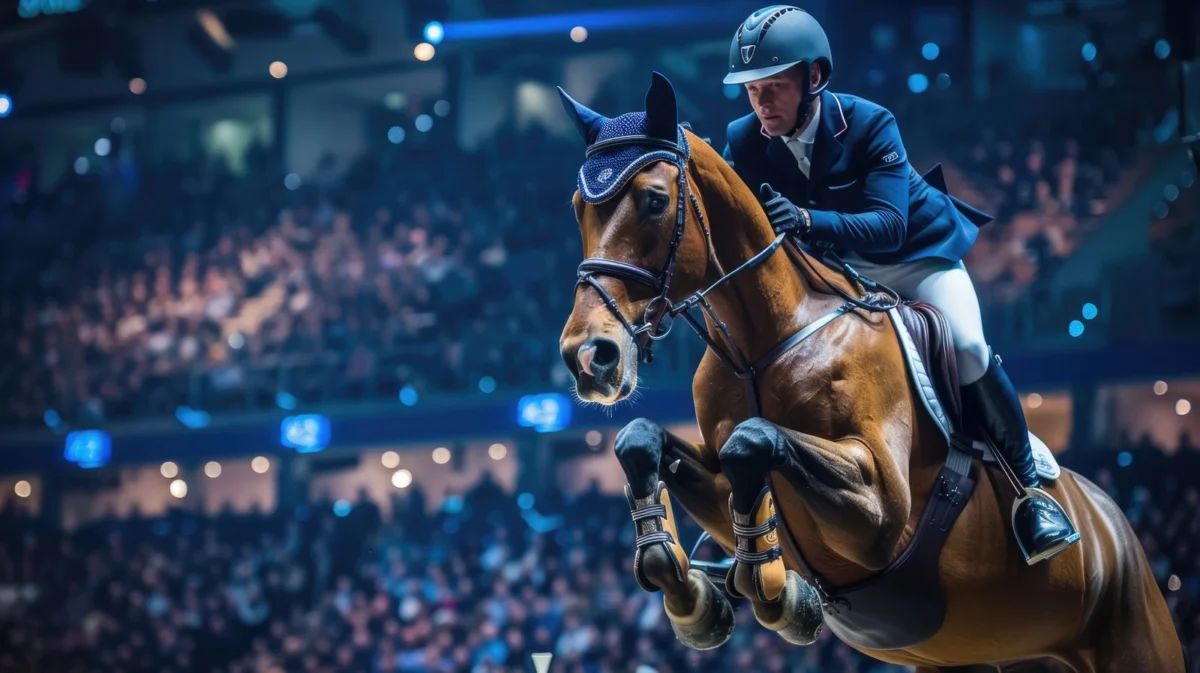
In the highly competitive world of equestrian hunter competitions, success often hinges on moments of refined execution and subtle displays of athleticism. Among these critical elements, the hand gallop stands out as a pivotal maneuver, frequently determining the final placement in a class. Far from a mere acceleration, this specific gait is a carefully orchestrated exhibition of a horse’s inherent quality of movement, its advanced rideability, and the profound partnership between horse and rider. It is the culmination of a round, a final brushstroke that, when perfectly rendered, can elevate a performance from commendable to championship-worthy, demonstrating "controlled brilliance" rather than uncontrolled speed.
The Essence of the Hunter Discipline and the Hand Gallop’s Role
To fully appreciate the significance of the hand gallop, it is essential to understand the context of the hunter discipline itself. Originating from the traditions of fox hunting, hunter classes aim to showcase horses that are ideal mounts for the field: athletic, elegant, well-mannered, and capable of navigating various terrain and obstacles with grace and efficiency. Judges evaluate horses based on their conformation, way of going (movement), jumping style, manners, and overall suitability. The ideal hunter is not merely a show jumper; it’s a horse that looks comfortable, willing, and capable of a long day’s work in the hunt field.
The hand gallop fits seamlessly into this traditional narrative. While the working canter demonstrates a horse’s rhythm and balance over fences and on the flat, the hand gallop provides a unique opportunity to assess a horse’s power, scope, and stamina in reserve. It asks the horse to lengthen its stride significantly while maintaining impeccable balance, an attentive frame, and the rider’s quiet control. This distinguishes a truly athletic hunter from one that simply performs adequately at a slower pace.
Historical Context and Evolving Standards
The inclusion and increasing emphasis on the hand gallop in hunter classes have evolved over time, reflecting a continuous pursuit of excellence in the sport. Historically, hunter classes focused more heavily on conformation and basic manners. However, as equestrian sport became more refined and competitive through the mid-20th century, the demand for horses capable of higher levels of performance grew. Judges began to seek out animals that possessed not only beauty but also functional athleticism.
By the late 20th and early 21st centuries, the hand gallop had become a standard requirement in most upper-level hunter divisions, including professional, amateur-owner, and junior hunter classes. Its strategic placement, often at the end of a course, ensures that both horse and rider demonstrate sustained focus and fitness. According to equestrian historian Dr. Eleanor Vance, "The hand gallop became a critical differentiator as the quality of horses and riders improved across the board. It separated those who merely completed a course from those who truly commanded it with their horse’s athleticism." This historical trajectory underscores the hand gallop’s transition from an optional flourish to an indispensable component of a winning performance.
Defining "Controlled Brilliance": Purpose and Biomechanics
The "why" behind the hand gallop is multifaceted. Its primary purpose is twofold, addressing both the horse’s physical capabilities and its mental responsiveness to the rider.
Firstly, it serves as a litmus test for the horse’s true quality of movement and inherent scope. At a working canter, a horse might mask a lack of impulsion or a shorter stride. The hand gallop, however, demands a substantial lengthening and flattening of the stride, revealing whether the horse possesses the powerful, sweeping thrust from its hindquarters necessary to cover ground efficiently and effortlessly. Judges look for a noticeable increase in ground-covering ability, where the horse’s strides become longer and more expansive, rather than merely quickening its tempo and becoming short-strided or scrambling. Biomechanically, this involves an increased engagement of the hindquarters, a greater swing through the back, and a more pronounced suspension phase, allowing the forelegs to reach further forward. This demonstrates the horse’s natural athleticism and suitability for the demands of the hunt field.
Secondly, and equally important, the hand gallop is the ultimate demonstration of rideability and partnership – the "hand" part of the "hand gallop." It showcases the rider’s ability to ask for a significant increase in energy and power, with the horse responding willingly, smoothly, and without any alteration in its balance, frame, or demeanor. The transition into the hand gallop should be seamless, the increased pace maintained with quiet authority, and the transition back to the working canter should be smooth and prompt, devoid of any dramatic pulling or resistance. This sequence highlights the rider’s educated hands, seat, and legs, and the horse’s trust and obedience. As veteran hunter judge Sarah Jenkins often remarks, "We’re looking for a horse that says, ‘Yes, I can do this, and I’m happy to do it,’ not one that’s fighting its rider or looking discombobulated by the request." It is a testament to years of dedicated training and the development of a harmonious partnership.
The Technical Nuances: Pace, Frame, and Form
Mastering the hand gallop requires a precise understanding of pace, frame, and the rider’s subtle aids.
Achieving the Ideal Pace:
The "ideal" speed for a hand gallop is a frequently debated topic among trainers and riders, yet a consensus exists: it must distinctly look and feel like a legitimate, forward gallop, utterly controlled, and capable of being directed safely to a fence. It is not a slow canter with a new name, nor is it a breakneck race. There must be a clear, observable difference from the working pace.
A practical, albeit imperfect, benchmark often utilized in training involves counting strides per furlong. A furlong, approximately 220 yards or the length of a standard arena’s long side, serves as a measurable unit. A strong working canter typically averages around 24-26 strides per furlong. For a quality hunter executing a true hand gallop, this lengthens significantly to approximately 20-22 strides per furlong. The emphasis, however, is not solely on the number but on the quality of those strides. They should be long, ground-covering, rhythmic, and powerful—a steady, deliberate one-two-three-four rhythm, rather than a frantic one-two-one-two scramble. Observing top professionals and feeling the distinct unfolding into a bigger, more powerful stride versus a mere hurried pace is crucial for developing an accurate eye and feel for this gait.
The Optimal Frame and Balance:
This is often where a well-executed round can unravel. The natural instinct of many riders as speed increases is to take a stronger hold, inadvertently pulling the horse’s head up and hollowing its back. This counteracts the desired outcome. The ideal frame for a hand gallop is a natural, forward-down-and-out carriage of the neck and head.
The horse should seek a light, consistent contact with the bit, but the rider must allow the neck to lower and lengthen slightly. This facilitates optimal balance and allows for the full engagement of the horse’s crucial back muscles. The poll should remain the highest point, with the nose positioned slightly in front of the vertical. This posture ensures that the energy generated by the powerful hindquarters flows smoothly over a rounded back, through a relaxed neck, and into the bit, enabling the horse to carry itself in balance. If the head elevates excessively and the back hollows, the horse is likely running on its forehand, becoming unbalanced, and prone to breaking gait or swapping leads. The rider’s role is to sit quietly, allowing their seat to follow the horse’s motion, maintaining impulsion with subtle leg aids, and employing soft, allowing hands that guide without restricting the forward reach.
Preparation and Training Regimen
A perfect hand gallop is not conjured on show day; it is meticulously built through consistent flatwork at home. The prerequisite is a horse that is genuinely responsive to the rider’s leg, moving forward into a soft, following hand at the working canter. If a rider must constantly kick or hold heavily at the working gait, any attempt at a hand gallop will likely result in a chaotic, unbalanced effort.
Building the Foundation: Training for the hand gallop begins with strengthening the horse’s basic gaits and transitions. Exercises should focus on:
- Responsiveness to the Leg: The horse must move off the leg willingly, understanding that a gentle squeeze means "go forward" and an increased pressure means "more forward."
- Suppleness and Collection/Extension: Regular exercises that encourage the horse to lengthen and shorten its stride within the canter, without breaking rhythm or losing balance, are vital. This includes practicing lengthening strides on long sides and collecting them on short sides or turns.
- Balance and Self-Carriage: The horse must learn to carry itself without relying on the rider for balance, especially at increased speeds. This is developed through consistent flatwork, including circles, serpentines, and transitions.
- Half-Halts: The ability to execute effective half-halts is paramount. This brief, engaging aid allows the rider to rebalance the horse, prepare for transitions, and gather its energy without losing momentum.
- Rider Fitness and Core Strength: A rider’s ability to maintain a quiet, deep seat and follow the horse’s motion is crucial. Core strength and an independent seat allow for effective communication without inadvertently interfering with the horse’s balance.
Expert Perspectives on Training: Renowned trainer Mark Dawson emphasizes a progressive approach: "You don’t just ask for a hand gallop one day. You build up to it. Start with subtle lengthenings in the canter, focusing on the horse pushing from behind, not just hurrying. Gradually increase the duration and intensity, always ensuring the horse stays round and responsive. Never let them get away from you; control is always paramount." He also cautions against over-schooling, noting that "a horse that is drilled relentlessly will lose its enthusiasm. Keep it fresh, keep it positive, and make sure the horse understands what you’re asking."
Executing Under Pressure: The Show Ring Strategy
When the moment arrives in the show ring, effective execution relies entirely on prior preparation and strategic planning.
Strategic Planning: Riders must plan their approach carefully. A hand gallop requires sufficient straight line after a turn to establish the pace and adequate space before the next corner or fence to execute a smooth transition back to the working canter. A common and highly effective location is down the long side of the arena, initiated after the turn off the short side, providing ample room for both acceleration and deceleration.
The Rider’s Aids and Communication: As the rider approaches the designated spot, they should sit up tall, take a quiet half-halt to ensure the horse is balanced and attentive, and then apply their aids clearly and confidently. This involves sinking the weight into the heels, closing the legs around the horse’s barrel to encourage forward impulsion, and critically, allowing with the hands. The reins should not be thrown away; rather, the rider maintains a living, elastic feel of the horse’s mouth, allowing the horse to stretch its neck forward and down. The rider’s gaze should be up and ahead, maintaining the rhythm with their seat. If the horse begins to quicken its tempo rather than lengthen its stride, a quiet, containing half-halt using the seat and outside rein can effectively rebalance it without disrupting the flow.
Judging Criteria in Practice: Judges typically observe the hand gallop for approximately 6-8 strides, or sometimes the full length of the long side, depending on the course design and division. Once the judge has assessed the gait, the rider must initiate the transition back to the working canter well before the next corner. This involves closing the fingers, sitting deeper in the saddle, and often using a soft, exhaling voice aid to signal the change. The return to the working canter should feel like a gentle downshift, controlled and smooth, rather than an abrupt, jarring halt. Amateur competitor Emily White describes the feeling: "It’s like hitting the perfect note at the end of a song. You want it to resonate, not abruptly stop. That seamless downshift shows you truly have your horse with you."
The Broader Impact: From Ribbons to Reputations
Mastering the hand gallop is more than just about winning a ribbon; it has broader implications for a rider’s career, a horse’s value, and the overall integrity of the sport.
Competitive Edge: In classes where the margin between competitors is razor-thin, a superior hand gallop can be the deciding factor, clinching a championship or moving a rider into the top placings. It demonstrates a level of polish and control that sets a combination apart. For professional riders, consistently executing exceptional hand gallops builds a reputation for producing well-schooled, rideable horses, which can lead to more opportunities and clients.
Horse Welfare and Longevity: The correct training required for a proficient hand gallop emphasizes building a horse’s strength, balance, and responsiveness. This systematic approach, focusing on engagement from behind and correct frame, contributes significantly to the horse’s physical well-being and longevity in sport. Horses that are correctly trained are less prone to injury and maintain their soundness for longer careers.
The Rider’s Journey: The journey to mastering the hand gallop demands immense dedication, patience, and a deep understanding of horsemanship. It requires a fit horse, a committed rider, and countless hours spent building a mutual understanding. The reward, however, is profound: the exhilarating sensation of a powerful surge of energy flowing into the rider’s hands, with the horse responding with joyous, controlled power. This moment transcends mere competition; it is a testament to the ultimate partnership between horse and rider, showcasing not just a pretty mover, but a true athlete and a trusted companion. It is the exclamation point at the end of a beautifully executed round, affirming the essence of equestrian excellence.







