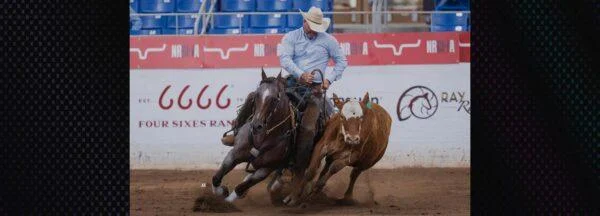
The world’s largest equine event, the Rodeo International in Barretos, Brazil, witnessed a remarkable display of humane horse training on its opening night as renowned American trainer Monty Roberts, celebrated globally for his non-violent "Join-Up®" method, successfully gentled a previously unridden four-year-old horse in under an hour. The demonstration, held under the intense gaze of thousands of spectators, highlighted Roberts’ philosophy of building a partnership with animals rather than resorting to forceful subjugation.
The equine protagonist of the evening, a young stallion named Canarinho, hailed from the rugged Northeast territories of Brazil. Prior to this historic encounter, Canarinho’s training had been limited to leading. Roberts, observing the horse, noted its distinct lineage, remarking that he had not encountered horses of this particular type in his extensive career. This unfamiliarity, however, did not deter the seasoned trainer, who has dedicated his life to advocating for and demonstrating a gentler approach to horse handling, a stark contrast to the often harsh methods he witnessed during his upbringing on a California ranch.
"My father was much harsher than any father should be," Roberts reflected before the demonstration, drawing a clear line between his own methods and the traditional, often brutal, techniques employed by his father. This personal history fuels Roberts’ unwavering commitment to his philosophy: "I don’t want to be the boss, I want to be the partner." This sentiment underscores the core of his training, which prioritizes understanding and cooperation over dominance.
The Language of Equus: Building Trust Through Body Language
Roberts’ groundbreaking approach, known as Equus, is rooted in his deep understanding of equine communication. He asserts that horses communicate primarily through gestural language and body posture. By meticulously studying and interpreting these subtle cues, Roberts has developed a system that fosters trust and mutual respect, laying the foundation for a genuine connection with the animal. This evening at Barretos was a powerful testament to the efficacy of this approach, even in the face of considerable environmental challenges.
The presentation was meticulously organized by a dedicated team of Certified Monty Roberts Instructors. Spearheading the effort on Brazilian soil were Waldo Franco and Miguel Lupiano, both esteemed figures in the Monty Roberts International Learning Center’s Brazilian contingent. They were joined by Denise Heinlein, a leading instructor from Germany, who brought her expertise to the international stage. Together, they prepared a round pen in the heart of the arena, a controlled environment designed to facilitate Roberts’ demonstration.
"I want Canarinho to be happy here," Roberts stated, expressing his primary objective for the horse. The sheer magnitude of the Barretos Festival Park, a venue renowned for its vibrant atmosphere and considerable noise levels, presented an immediate hurdle. The cacophony of sounds, a hallmark of such large-scale events, threatened to agitate Canarinho. Roberts, with a characteristic smile, acknowledged the potential difficulty: "I would like everyone to be very quiet, but that may be impossible in Brazil."
Despite the inherent challenges of a boisterous crowd, a significant portion of the audience demonstrated remarkable cooperation. In a gesture of respect for the sensitive nature of the demonstration, many spectators adapted their applause, opting to wave their hands instead of clapping, a subtle yet profound acknowledgement of Roberts’ desire for a calm environment. This collective effort by the audience further amplified the success of the gentling process.
The Join-Up® Process: A Symphony of Trust
The core of Roberts’ method, Join-Up®, commenced with a simple, gentle caress on Canarinho’s forehead. The initial phase involves the trainer positioned near the fence of the round pen, the lead rope intentionally released from the horse’s halter. Canarinho was then allowed to move freely within the enclosure. The primary objective during this stage is to cultivate the horse’s trust.
Roberts employed precise body postures, subtly guiding Canarinho in one direction and then the other. He observed that one of the horse’s ears remained "locked" onto his movements, a clear indicator of Canarinho’s focused attention. As the demonstration progressed, Canarinho’s pace gradually decreased, and signs of relaxation began to emerge. The horse’s head lowered towards the ground, a visual cue of its growing comfort.
The trainer then pointed out key indicators of the horse’s burgeoning calmness: licking and chewing. These physiological responses are widely recognized in equine behavior as signs of reduced stress. "I’ll walk away, and he’ll follow," Roberts predicted, and indeed, as he moved away, Canarinho followed suit. At this juncture, the audience, eager to acknowledge the progress, began to applaud. However, Roberts gently reminded them of the need for quiet, reinforcing the importance of maintaining a serene atmosphere to avoid startling the animal.
Desensitization: Demystifying the Unknown
The second phase of the gentling process focused on desensitization, a critical step in preparing Canarinho for the eventual experience of being ridden. Roberts’ team introduced plastic bags attached to handles, tools designed to acclimate the horse to unfamiliar objects and movements. This process aims to systematically reduce a horse’s fear response to stimuli it might encounter in its life.
Roberts delicately introduced the plastic bags to both sides of Canarinho, ensuring the horse understood that these objects posed no threat. "It’s to show him that I mean no harm," he explained, emphasizing the non-confrontational nature of this stage. He then simulated the movements of a rider preparing to mount and dismount, using the object to familiarize the horse with the actions involved.
The next crucial step was the introduction of a saddle, the first the young horse had ever encountered. With the expert assistance of Denise Heinlein, who leads the Monty Roberts teaching center in Europe, the saddling process, typically a lengthy undertaking, was accomplished in mere minutes. This rapid integration of the saddle demonstrated the efficiency and trust built during the preceding phases.
Following the saddling, Roberts introduced light reins and a leather strap to hold the stirrups. This allowed him to guide Canarinho, teaching the horse to respond to the subtle cues that would eventually be provided by a rider. As Roberts walked the horse around the pen, encouraging it with gentle "clucks," Canarinho responded by increasing its trot, showcasing its developing responsiveness to direction.
The Inaugural Ride: A Triumph of Partnership
The moment of Canarinho’s first ride had arrived. For this pivotal experience, Thiago Mega, a champion bull rider from Barretos, was chosen as the volunteer. Adhering to Roberts’ request for safety, Mega wore a helmet. Guided by Roberts, Mega gently stroked the horse between the eyes. Roberts then initiated a controlled process, lifting Mega up and down without him fully mounting, a deliberate maneuver to demonstrate to Canarinho that the act of a rider ascending would not be painful or threatening.
Initially, as Thiago Mega settled into the saddle, Canarinho reacted with understandable apprehension, kicking out a few times. Mega, an experienced rider, adeptly recognized the need to dismount and allow the horse a moment to regain its composure.
However, the process was far from over. Undeterred, Roberts introduced a novel element: Zé, a specially crafted mannequin rider, designed and named by Roberts himself for the Barretos Equine Event. Zé was securely attached to the saddle, allowing Canarinho to move freely and become accustomed to the sensation of a rider without the immediate pressure of a human presence. This creative solution further solidified the horse’s confidence.
After a few minutes of Canarinho interacting with Zé, Thiago Mega was able to remount. This time, the experience was markedly different. Canarinho accepted Mega’s presence, and together they completed a quiet, effortless ride around the pen. The success of this inaugural ride was met with immense satisfaction, not only from the horse but also from the captivated audience.
The audience, having patiently withheld their applause until Canarinho exited the round pen, erupted in a sustained ovation. The applause was briefly interrupted only when Monty Roberts, in a remarkable display of vitality, performed 88 push-ups – one for each year of his life – with the audience counting along. This symbolic gesture further endeared him to the crowd and underscored his enduring physical and mental vigor.
Background and Context: The Rodeo Internacional de Barretos
The Rodeo Internacional de Barretos is not merely a competition; it is a cultural phenomenon in Brazil, often referred to as the "Capital of Country Music" and the "Capital of Rodeo." Established in 1955, the event has grown to become one of the largest agricultural and equestrian festivals in Latin America, attracting millions of visitors over its multi-day duration. It encompasses a wide array of rodeo disciplines, livestock exhibitions, country music concerts, and cultural showcases. The inclusion of a demonstration by a world-renowned horse trainer like Monty Roberts underscores the event’s commitment to showcasing diverse aspects of equine culture and horsemanship, extending beyond traditional competitive rodeo. The event serves as a platform for both showcasing traditional skills and introducing innovative, humane practices to a vast audience deeply connected to the equestrian world.
Supporting Data and Broader Implications
Monty Roberts’ methodology, Join-Up®, has been documented to be effective across a wide spectrum of equine challenges, from initial taming of wild or feral horses to addressing behavioral issues in domesticated animals. Studies and anecdotal evidence from his global clinics suggest that his non-violent approach leads to more consistent and reliable results, fostering a deeper and more lasting bond between horse and handler. The implications of this philosophy extend beyond the arena, influencing animal welfare practices and promoting a more compassionate understanding of animal behavior. Roberts’ work has been recognized by numerous humanitarian awards and endorsements, including accolades from organizations like the ASPCA and the MSPCA, highlighting the universal appeal and ethical grounding of his methods. His influence has also extended to therapeutic applications, such as the "Horse Sense & Healing" program, which utilizes equine-assisted therapy for veterans and first responders suffering from PTSD, demonstrating the profound impact of trust-based relationships on human well-being.
Official Responses and Global Reach
While no direct official statements from the Rodeo Internacional de Barretos organizers regarding this specific demonstration were immediately available in the provided text, the very inclusion of Monty Roberts on their opening night speaks volumes. The event, with its international stature, would undoubtedly recognize the significance of showcasing a trainer whose methods have garnered global acclaim and have been endorsed by prominent figures and organizations. Roberts’ consistent advocacy for violence-free training aligns with a growing global trend towards more ethical and humane animal handling across various industries. His work with programs like Lead-Up International, aimed at reducing violence in communities through equine-assisted therapy for vulnerable youth, further amplifies his message of building trust and peaceful leadership.
Monty Roberts: A Legacy of Humane Horsemanship
Monty Roberts is more than just a horse trainer; he is an author, a motivational speaker, and a humanitarian. His New York Times bestselling book, "The Man Who Listens to Horses," chronicled his life and the development of his revolutionary methods, bringing his philosophy to a global audience. Despite witnessing and experiencing harsh training techniques in his youth, Roberts forged a different path, one that emphasizes empathy and understanding. His numerous accolades, including recognition from Her Majesty Queen Elizabeth II and his inclusion in Horse & Hound Magazine’s Top 50 Horsemen of All Time, attest to his profound impact on the equestrian world. He pioneered the Equus Online University, an interactive digital platform that disseminates his teachings worldwide, making his violence-free training techniques accessible to aspiring trainers and horse owners globally. His continued commitment to promoting non-violence, encapsulated in his motto, "Violence is never the answer," resonates deeply in an era increasingly focused on ethical treatment and compassionate stewardship of animals.
Monty Roberts is available for select interviews. As a New York Times bestselling author and a world-renowned horse trainer, his insights into animal behavior, leadership, and the power of non-violent communication are sought after by media outlets and organizations worldwide. His teachings, rooted in decades of experience and a deep respect for equine intelligence, continue to inspire a global movement towards more humane and effective animal training practices. Further information about Monty Roberts and his Join-Up® training methods can be found at www.montyroberts.com.