"Just be confident" may be one of the most well-intentioned, and least helpful, things we say to nervous riders. You hear it at horse shows, before someone enters the ring, or when a rider worries about a canter transition or climbs back into the saddle after a fall. Phrases like "You know how to do this," "Stop thinking about it," "Just ride," and "Be confident" are common, yet they often miss the mark. The fundamental issue is that confidence isn’t a switch that can be flipped on demand. If it were, every rider standing outside the dressage ring with shaking hands, a dry mouth, and a stomach in knots would simply activate it. Instead, riders often grapple with a more frustrating internal conflict: "I know I can do this. So why does my body feel like I can’t?"
This disconnect between intellectual knowledge and physical response is at the heart of performance anxiety in equestrian sports, a discipline uniquely impacted by the rider’s reliance on a sentient partner.
The Body’s Voice: Understanding Physiological Threat Response
Riding is an unusual sport because its performance partner is another complex nervous system. A rider can possess the intellectual understanding of her capability to execute a difficult dressage test or to canter the horse beneath her, yet still experience a profound physiological threat response. This response manifests as an increased heart rate, altered breathing patterns, muscle tension, and a narrowing of attention. The rider may become hyper-focused on potential negative outcomes. When then advised to "be confident," the rider is burdened with two problems: the anxiety itself and the added pressure of believing they shouldn’t be anxious.
This phenomenon is well-documented in sports psychology. Research consistently demonstrates that performance anxiety has both cognitive and physical components. Interventions aimed at reducing performance anxiety have shown meaningful impact across various athletic disciplines. This underscores why a more effective approach, as advocated by equestrian performance coaches like Kristi Seymour, LPC, MBA, is not to demand confidence, but to inquire, "What is your nervous system doing right now?" This question shifts the focus from an unattainable state to a tangible, observable reality, paving the way for targeted coping mechanisms.
Confidence: The Destination, Not the Starting Point
Scientific literature consistently identifies a strong correlation between confidence, or self-efficacy, and athletic performance. However, this relationship is more nuanced than the common advice suggests. Simply possessing high pre-event confidence does not automatically guarantee superior performance. While confidence is undeniably valuable, demanding it is not synonymous with cultivating it.
Consider a rider who has experienced a fall. Before the incident, she might have approached a substantial fence, such as a 3-foot-6-inch oxer, with minimal apprehension. Post-fall, the same fence can trigger a dramatically different physiological reaction. The rider’s brain has acquired new, potent information: "That can hurt." In this scenario, a reassurance that the fence is not inherently scary is insufficient. The rider’s nervous system has already registered a threat. What is truly needed are a series of incremental, positive experiences that recalibrate this learned response. These experiences foster a new internal narrative: "I can approach this," "I can regulate myself here," "I can make a decision," "I can stay present," and "I can ride the next stride."
This process allows confidence to become genuinely believable again. Crucially, the objective is not the elimination of all anxiety. This is a common pitfall where riders become trapped, waiting to feel completely confident before engaging in an activity that triggers fear. This can inadvertently lead to avoidance. Phrases like, "I’ll show when I feel confident again," or "I’ll canter when I’m not nervous," illustrate this pattern. However, confidence frequently emerges as a byproduct of successful experiences, not as a prerequisite.
Therefore, a more constructive goal for riders is to achieve a sufficient level of regulation to retain agency, rather than aiming for zero anxiety. This involves being able to think clearly, breathe effectively, feel the horse’s movement, and make deliberate decisions rather than simply reacting to impulses.
Regulation Before Reassurance: Navigating Nervous System States
To better understand and manage these responses, coaches often utilize a framework of nervous system states, commonly categorized into four broad states: Green, Orange, Blue, and Black. These classifications, popularized in works like Kristi Seymour’s "The Regulated Rider," offer a practical way to identify and address a rider’s internal experience.
- Green: This represents the regulated state, characterized by the ability to think, learn, respond, and make decisions effectively.
- Orange: This state signifies activation, where the heart rate may increase, muscles tighten, thoughts accelerate, and the visual field narrows. The rider begins to predict outcomes rather than actively riding.
- Blue: This state indicates low activation or shutdown. Energy levels drop, leading to feelings of heaviness, flatness, numbness, fog, or disconnection. Cognitive functions and the ability to initiate actions become more challenging. Instead of a fight-or-flight response, the individual may feel an urge to withdraw, cease trying, or disengage.
- Black: This represents an overwhelmed state where thinking becomes extremely difficult. Symptoms can include freezing, panic, disconnection, mental blankness, or an overwhelming urge to escape.
When a rider enters the Orange state, a lecture on confidence is unlikely to be effective. Instead, the immediate need is a strategy to return to a state of regulation. Simple yet powerful techniques include lengthening the exhale (making the exhale twice as long as the inhale, and exhaling as if blowing out a candle), softening the jaw, rolling the shoulders, and widening the visual field by looking up and out. Deliberately noticing the environment, beyond the immediate few strides, and feeling the rhythm of the horse’s stride are also beneficial. Verbalizing the experience, such as saying, "My nervous system is activated, but I am still right here!" can further anchor the rider in the present moment.
These strategies, while seemingly basic, are grounded in the principles of nervous system regulation. The Polyvagal Theory, for example, provides a useful lens for understanding how physiological states influence our perception of safety, threat, and connection. By intentionally modifying breathing, muscle tension, visual attention, and present-moment awareness, a rider can provide their nervous system with new information, facilitating a shift from automatic reaction toward conscious regulation.
Replacing "Be Confident" with "Do the Next Thing"
When faced with an intrusive thought, such as "What if he stops?" while approaching a jump, the instinct to counter it with "I’m confident!" may prove ineffective because the brain doesn’t genuinely feel that confidence. A more actionable approach is to assign the brain a series of concrete tasks. These include:
- Exhale.
- Soften your hands.
- Find the rhythm.
- Look through the turn.
- Ride this stride.
This sequence shifts the rider’s focus from a hypothetical future problem to present-moment actions. This distinction is critical in performance. An anxious mind often dwells seconds, or even minutes, ahead of the horse’s current position. Effective riding, however, occurs in the present. The horse beneath the rider is not aware of a predicted mistake at fence seven; it is currently cantering towards fence three. The directive is to return to the present and ride fence three.
Post-Mistake Protocol: The Three-Stride Reset
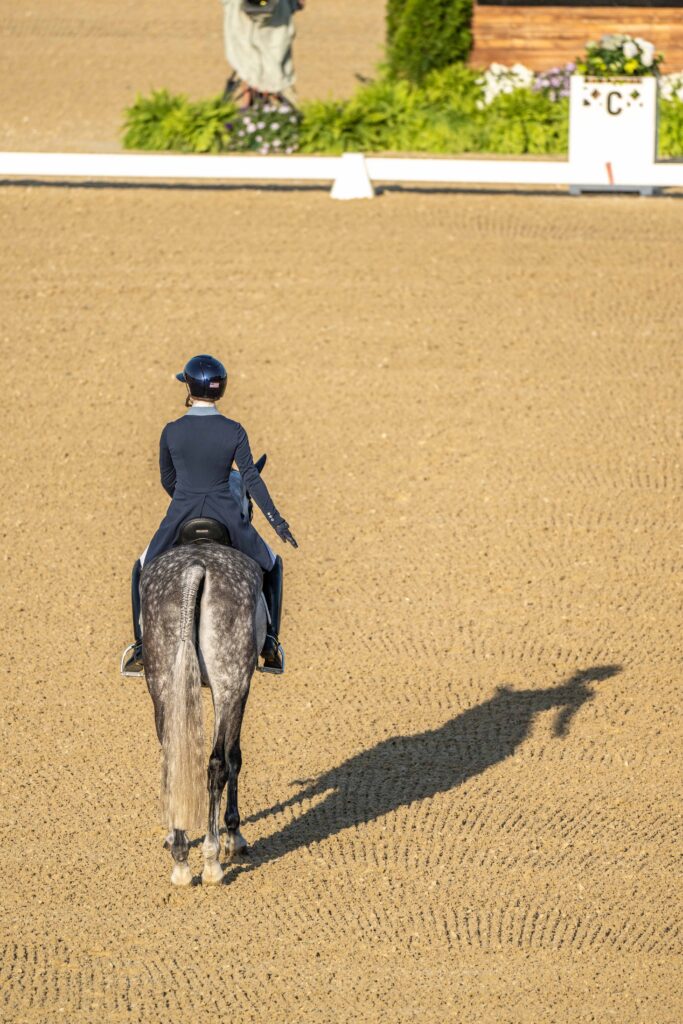
Riders often exhibit a tendency to engage in extensive psychological self-analysis immediately after a mistake, even while still in the saddle. For instance, after missing a distance to a fence, a rider might internally critique: "Why did I do that? I always do this. My trainer saw that. I can’t do this. That was terrible." Meanwhile, the horse has already landed and taken several more strides. The mistake is concluded, but the rider’s nervous system remains engaged with it.
This is where the "Three-Stride Reset" technique becomes invaluable. For three consecutive strides, the rider focuses on:
- Exhaling.
- Reconnecting to the horse’s rhythm.
- Identifying the immediate next task.
This simple sequence aims to halt the internal monologue of criticism. There will be ample opportunity later for analysis. In the competitive arena, such analysis acts as static interference. The rider’s primary responsibility is not to dwell on the previous error but to execute the current stride.
The Skill of Letting Go: Closing the Loop
The advice to "let it go" after a mistake, much like "be confident," is often given without practical instructions. Humans possess a remarkable capacity for carrying forward past experiences, replaying bad distances, refusals, critiques from trainers, or disappointing scores. Sometimes, riders remain mentally engaged with events that occurred fences, rides, or even years prior.
This persistent focus on mistakes stems from their informational value. The brain analyzes errors to understand what went wrong and prevent recurrence. The problem arises when learning transitions into unproductive looping. There is a critical distinction between reviewing an event and rehearsing it. Reviewing involves asking, "What happened? What can I learn? What will I do differently next time?" Rehearsing, conversely, manifests as thoughts like, "I can’t believe I did that. Why do I always do this? What if I do it again?" The former yields valuable insights, while the latter keeps the nervous system tethered to a past event.
Instead of merely advising riders to "let it go," a more effective approach is to teach them how to "close the loop." This involves asking oneself three key questions:
- What happened?
- What can I learn from this?
- What will I do differently next time?
This structured process extracts useful information without perpetuating rumination. Letting go does not equate to denying the significance of an event, suppressing emotions, or avoiding analysis. It means identifying what is beneficial and discarding what is not. Horses, with their innate ability to move forward, serve as a powerful example. They do not land after a flawed jump and spend the subsequent fences replaying the embarrassment. While riders may be mentally replaying past errors, their horses remain present, awaiting direction for the current moment. The directive is to absorb the lesson and release the unproductive loop.
Confidence as Evidence: Building Resilience Through Experience
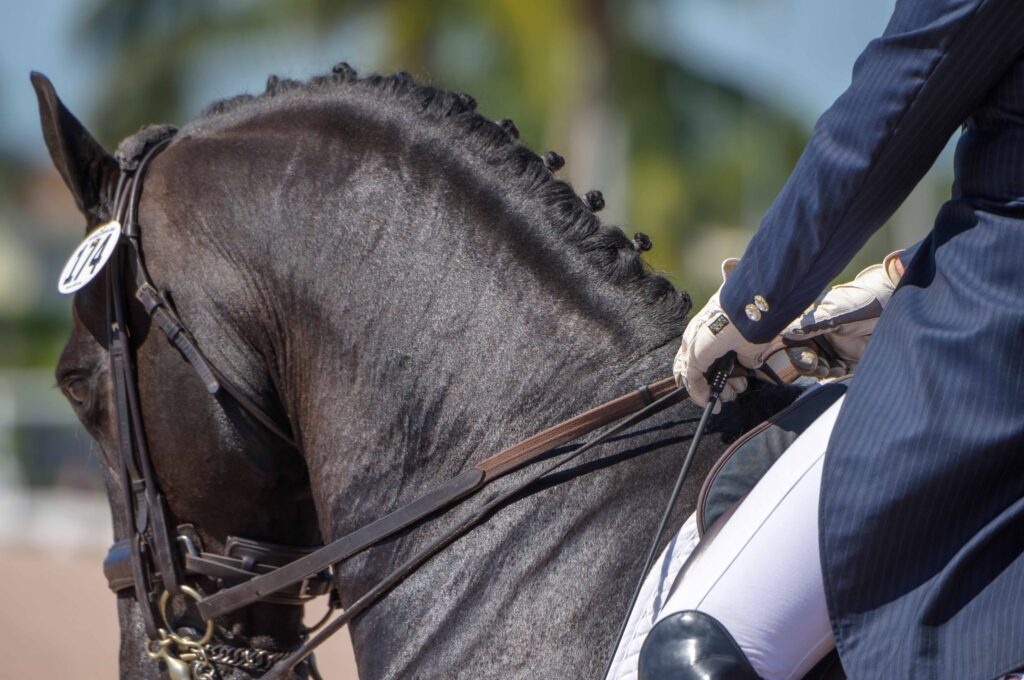
Ultimately, the most profound understanding for riders is that confidence is not something that can be manufactured through affirmations that feel disingenuous. Instead, it is a product of the nervous system learning through tangible experience. This includes successfully navigating a spook, knowing when to stop and seek assistance, opting to jump a smaller fence first, or effectively regulating oneself after a mistake. It encompasses completing a dressage test after losing one’s place at a schooling show, or recognizing a shift into an "Orange" state and actively employing strategies to return to regulation.
These experiences accumulate as evidence, transforming the internal dialogue from a hesitant "I hope I can handle this" to a more robust "I’ve handled this before." This form of confidence does not necessitate the pretense of fearlessness and does not dissipate simply due to the presence of nervousness. It is a quiet assurance built on a foundation of proven capability.
For Trainers: Equipping Riders with Actionable Tools
For equestrian trainers and coaches, the impulse to offer platitudes like "Just be confident" before a rider enters the arena should be consciously redirected. Instead, provide riders with actionable strategies they can immediately implement:
- "Take a long exhale."
- "Feel your horse’s rhythm."
- "Where are your shoulders?"
- "Ride the first corner."
- "What’s your next job?"
Perhaps the most crucial piece of advice is: "You don’t have to feel completely confident to ride well." This statement liberates riders from the pressure of an unattainable emotional state. True confidence, in this context, is not the absence of feeling but the knowledge that when activated, one possesses the tools to manage the situation. The most confident action a rider can take is to acknowledge their feelings, regulate their body, make a deliberate choice, and ride the subsequent stride.
About Kristi Seymour, LPC, MBA
Kristi Seymour, LPC, MBA, is a licensed clinical therapist and an accomplished equestrian sports performance coach. She is the author of "The Equestrian Mind" and "The Regulated Rider," and the founder of EquiMind, a mobile application designed to assist equestrians in developing emotional regulation and mental performance skills. With over five decades of experience as a rider in show jumping and dressage, Seymour expertly integrates clinical psychology, neuroscience, and firsthand equestrian knowledge. Her work focuses on helping riders cultivate confidence, resilience, and stronger partnerships with their equine partners. More information can be found at www.theequestrianmind.com.