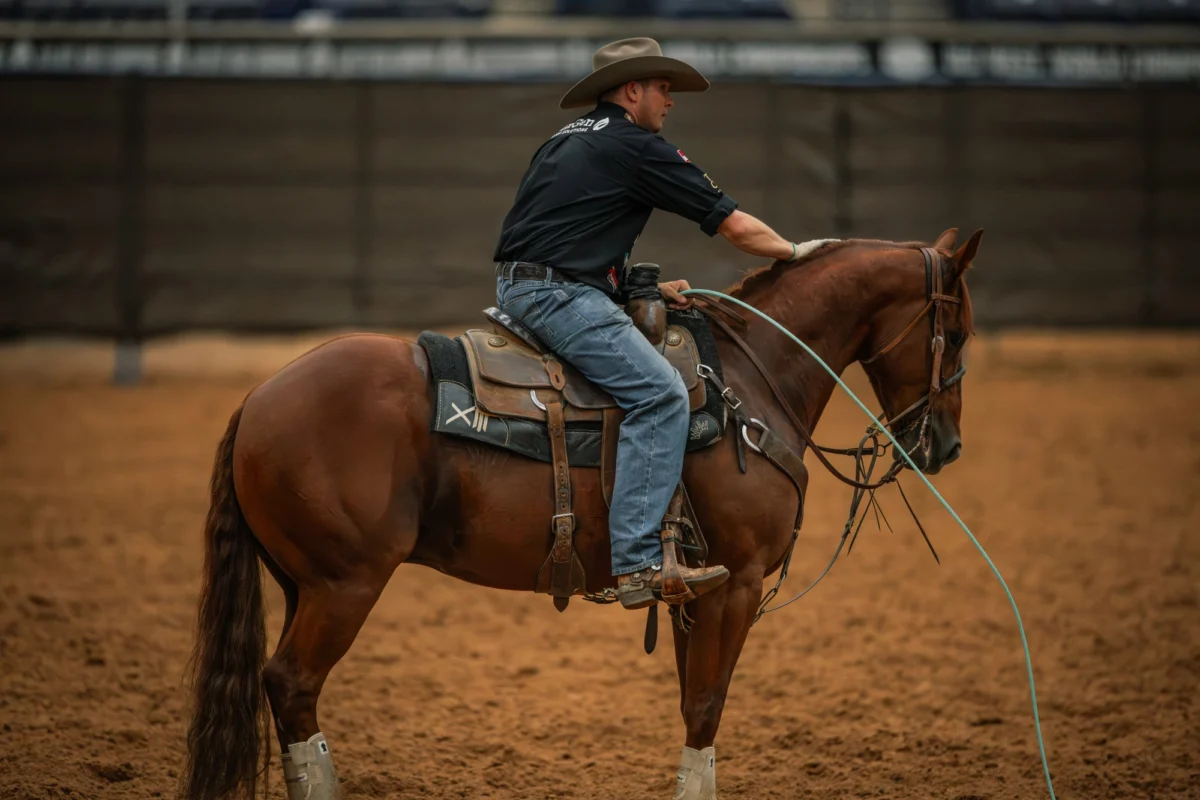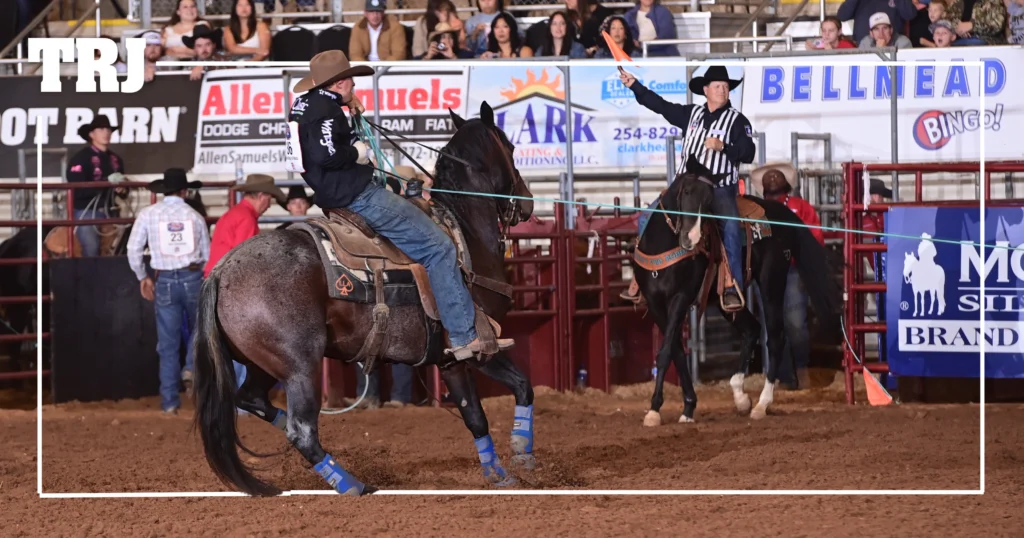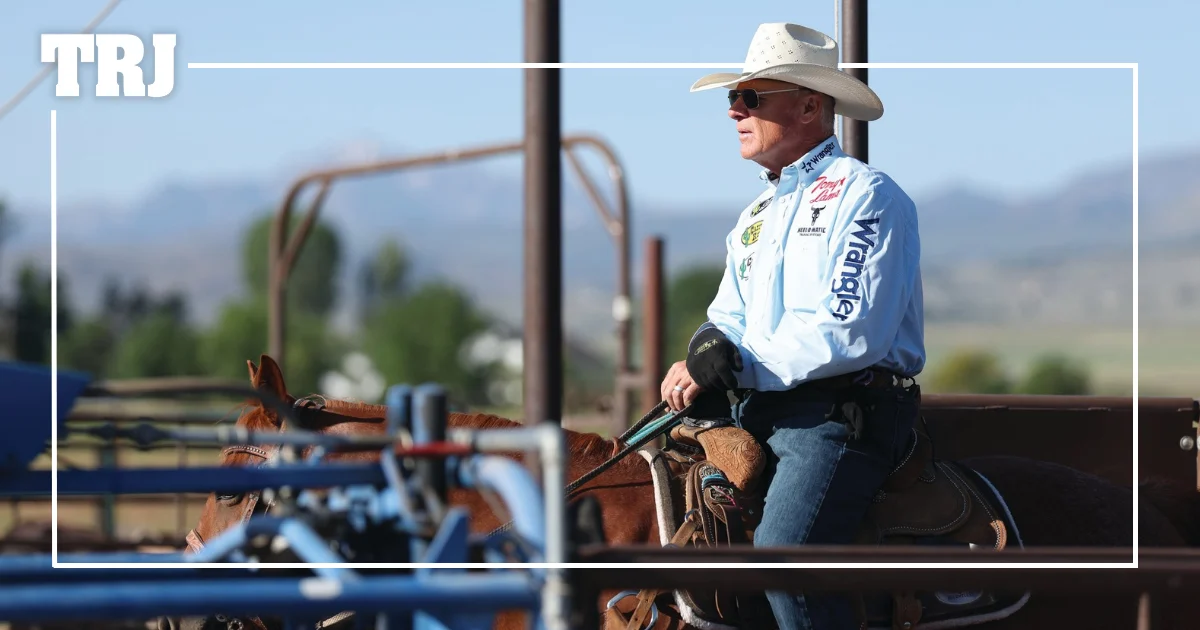
In the demanding world of professional rodeo, where milliseconds separate victory from defeat and substantial prize money hangs in the balance, raw talent alone, according to legendary team roper Clay O’Brien Cooper, is merely a starting point. A seven-time PRCA World Champion Heeler, Cooper emphasizes that the true differentiator between consistent winners and those who merely participate lies in the meticulous art of reading the situation and adeptly adjusting one’s game plan. This profound insight, cultivated over 55 years in the arena, underscores a critical truth: mental acumen, strategic foresight, and adaptive execution are as vital as physical prowess for financial success and enduring longevity in the sport.
Cooper’s journey in team roping, beginning as a dedicated heeler and more recently incorporating heading into his repertoire, has been a continuous process of daily evaluation and deep contemplation of his craft. This relentless pursuit of understanding, he asserts, is the bedrock upon which consistent performance and financial rewards are built. For him, the arena is not just a place for physical exertion but a dynamic classroom demanding constant intellectual engagement.
Cultivating Strategic Habits Through Rigorous Practice
The foundation of Cooper’s philosophy rests on disciplined preparation. Every practice session, he contends, must be underpinned by a clear plan tailored to the specific needs of both horse and rider. This could involve reinforcing fundamental techniques, targeting a particular aspect of one’s roping, or providing a horse with the precise type of run required for its development that day. This deliberate approach to practice transcends mere repetition; it is an active exercise in problem-solving and adaptive thinking.
This methodical preparation, Cooper explains, is what hones a roper’s ability to react instinctively and evaluate rapidly as events unfold in real-time. The ultimate objective of any practice session is to achieve predetermined goals, fostering a mindset of accountability and continuous improvement. In an era where technology has become ubiquitous, Cooper strongly advocates for video analysis during practice. "It doesn’t always look the way it feels," he observes, highlighting the objective truth that video provides, serving as an invaluable tool for self-correction and refining technique. This blend of traditional practice and modern analytical tools ensures that ropers gain a comprehensive understanding of their performance, bridging the gap between perception and reality.
The Blueprint for Competition: Crafting a Winning Game Plan
The transition from dedicated practice to high-stakes competition necessitates the formalization of a robust game plan. This daily process of mental engagement in practice builds the capacity for intense focus required under pressure. Before ever nodding for the steer, a competitor must have a clear set of "preloads" in their mind – a detailed strategy and specific goals for the upcoming event. Cooper stresses the importance of considering every conceivable factor: the unique conditions of the arena (e.g., size, dust, footing), the state of the ground, the characteristics of the cattle, the dynamics with one’s roping partner, and the specific horse being ridden.
The choice of partner, for instance, significantly influences strategy. A roper might opt for a more conservative approach with one partner, prioritizing a clean run, while adopting a more aggressive stance with another, aiming for a faster time. Critically, Cooper emphasizes keen observation of the cattle. Identifying "oddballs" – steers that might slow down unexpectedly, run harder than average, or duck their heads – can provide invaluable intelligence for subsequent rounds, particularly the short round where every detail counts. This meticulous scouting is not merely a passive observation but an active data-gathering exercise that directly informs tactical adjustments.
Navigating the Short Round: The Ultimate Test of Strategic Acumen
The short round represents the culmination of a day’s battle, the ultimate opportunity to secure significant winnings. Cooper views it not as an isolated event but as a direct consequence of the strategic groundwork laid throughout the competition. Success in this final, high-pressure scenario hinges on a comprehensive evaluation of the prevailing circumstances: understanding the standings of other competitors, knowing one’s position, and calculating precisely what time is needed to secure a payout. This holistic assessment keeps the mind fully engaged and responsive to the evolving competitive landscape.
"More than half the time, the battle is won or lost in your mind when you ride into the box," Cooper asserts. This profound statement underscores the psychological dimension of elite performance. He strives to remain mentally dominant, driven by an aversion to mistakes and a constant self-reflection on missed opportunities. He recounts instances where a failure to acknowledge a crucial factor might have altered an outcome in his favor, a testament to his rigorous self-analysis.
Cooper recently observed a phenomenon among talented young ropers: a disconnect between their undeniable skill and their strategic approach. He witnessed instances where simple, achievable runs that could have secured prize money were botched due to a lack of situational awareness. "It was kind of mind-boggling to me because of how my brain is trained to work," he reflects, expressing surprise at the "oblivious" attitude towards a process that could significantly enhance their winnings. This observation highlights a generational gap in mental preparation, where the abundance of physical talent sometimes overshadows the development of strategic thinking.
Maximizing Earnings: The Art of "Not Leaving Money on the Ground"
The core message from Cooper is unequivocal: neglecting situational awareness is tantamount to "leaving money on the ground." He implores ropers to develop the habit of evaluating every detail before entering the box. This includes seemingly minor aspects such as a steer’s horn size (big or small), head carriage (high-headed or low-headed), and speed (slow or fast). Each piece of information, he explains, is a tactical advantage waiting to be exploited. "Nine times out of 10, the battle is won or lost in those simple things that are obvious if you know what to look for."
A common strategic misstep he identifies is attempting a lightning-fast "4-second run" when a more conservative, clean run would suffice to win money. In such a scenario, "there’s money lying on the ground," he states, advising a practical, money-oriented approach: "Run up there, stick your boot in his butt and stick money in your pocket." This blunt advice underscores the pragmatic reality of professional rodeo, where the objective is not just to perform spectacularly but to perform effectively to earn a living.
The Evolution of Training: Imagination vs. Technology
Cooper reflects on the significant shifts in the rodeo world over his career. His formative years were characterized by a reliance on imagination and observation. Without the immediate access to video replays and digital analysis prevalent today, young ropers like him had to mentally reconstruct and analyze runs. He vividly recalls "seeing Leo and Jerold Camarillo, Walt Woodard and Ken Luman heeling steers in my mind like it’s a video," a testament to the power of mental visualization and deep observational learning.
Today, while technology offers unprecedented access to information and analysis through devices like iPhones, Cooper cautions that this accessibility does not negate the fundamental need for critical thinking. In fact, he suggests that the "old school" approach, born out of necessity, may have provided an advantage. The requirement to use imagination made him inherently more detail-oriented, forcing him to scrutinize every nuance and understand its importance.
Furthermore, the economic landscape of rodeo has dramatically changed. "Rodeos didn’t pay like they do now," Cooper notes, implying that every dollar won was critically important for his livelihood. The necessity to win to cover basic expenses like mortgage and truck payments instilled an acute focus on every detail, transforming strategic thinking from an optional enhancement to an essential survival skill. This "old school" approach, he concludes, cultivated a level of detail orientation and strategic discipline that proved invaluable throughout his illustrious career.
Broader Implications and the Future of Team Roping
Clay O’Brien Cooper’s insights extend beyond the confines of the team roping arena, offering profound lessons applicable to any competitive endeavor, from sports to business. His career, spanning over five decades, stands as a testament to the power of continuous learning, adaptability, and strategic thinking. His longevity in a physically demanding and highly competitive sport is not merely a function of enduring talent but a direct result of his unwavering commitment to mental mastery.
For the younger generation of ropers, Cooper’s observations present a critical challenge. While they possess an abundance of physical talent and benefit from advanced training technologies, there is a clear imperative to integrate this with sophisticated strategic thinking. The economic stakes in professional rodeo are higher than ever, with major events offering prize money in the hundreds of thousands, if not millions, of dollars. In this environment, the difference between a top-tier earner and a journeyman competitor often boils down to the ability to consistently make calculated decisions under pressure.
The analysis of implications reveals that the strategic mindset championed by Cooper directly correlates with financial success and sustained performance. Ropers who can accurately assess arena conditions, predict cattle behavior, adapt to partner dynamics, and make real-time tactical adjustments are better positioned to capitalize on opportunities and minimize costly mistakes. This strategic edge translates directly into higher winnings, longer careers, and a more profound legacy within the sport.
In essence, Cooper’s message is a timeless reminder that while talent opens doors, strategy unlocks potential. In a world increasingly reliant on instant information, the deliberate cultivation of critical thinking, detailed observation, and adaptive planning remains an indispensable asset. For team ropers and aspiring professionals across various fields, the wisdom of Clay O’Brien Cooper serves as a compelling blueprint for not just competing, but for truly mastering one’s craft and securing financial prosperity.