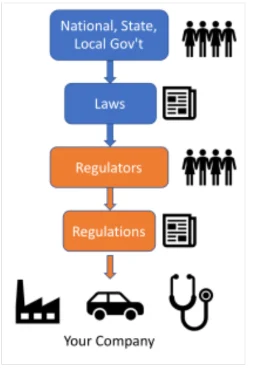
The United States Supreme Court has delivered a landmark series of rulings that fundamentally reshape the landscape of federal regulatory power, ushering in an era where long-held administrative practices face unprecedented scrutiny. In decisions issued late last month, a 6-3 conservative majority effectively dismantled the 40-year-old "Chevron deference" precedent, a cornerstone of administrative law that had long required judges to defer to government agencies’ interpretations of ambiguous statutes. This significant shift, particularly through cases like Loper Bright Enterprises v. Raimondo and Relentless, Inc. v. Department of Commerce, reasserts the judiciary’s role in interpreting law and simultaneously opens the door for new industry players to challenge even long-settled regulations. While corporate executives have historically voiced frustration over the burdens of "red tape," these rulings introduce a complex dynamic, promising both greater flexibility and potential regulatory uncertainty.
The Genesis of Agency Power: Understanding Chevron Deference
For four decades, the Chevron U.S.A., Inc. v. Natural Resources Defense Council, Inc. decision of 1984 served as the bedrock principle guiding judicial review of federal agency actions. This precedent established a two-step framework: first, courts would determine if Congress had directly addressed the precise question at issue in a statute. If the statute was ambiguous or silent on the matter, the second step required courts to defer to an agency’s reasonable interpretation of that statute.
The rationale behind Chevron deference was multifaceted. Proponents argued that federal agencies, staffed with subject-matter experts, were best positioned to interpret complex laws within their specialized domains, adapting regulations to evolving scientific, technological, and societal challenges. It was also seen as promoting uniformity in regulatory enforcement and reflecting a democratic principle, as agencies operate under the executive branch, accountable to the President. This framework empowered agencies such as the Environmental Protection Agency (EPA), the Food and Drug Administration (FDA), the Securities and Exchange Commission (SEC), and countless others, to issue regulations and enforce statutes across a vast array of sectors, from environmental protection and public health to financial markets and labor standards. The doctrine aimed to prevent judicial overreach into policy-making, leaving technical and policy choices to those within the executive branch presumed to have greater expertise and political accountability.
The Supreme Court’s Landmark Decisions: A Paradigm Shift
The recent Supreme Court rulings mark a dramatic departure from this established legal order. In Loper Bright Enterprises v. Raimondo, a case involving a fishing company challenging a federal rule requiring it to pay for onboard monitors, and its companion case, Relentless, Inc. v. Department of Commerce, the Court’s conservative majority explicitly overturned Chevron deference. The majority argued that the doctrine had improperly delegated judicial power to administrative agencies, violating the principle of separation of powers. Justice Neil Gorsuch, a vocal critic of Chevron, has long argued that it forces judges to abandon their constitutional duty to say "what the law is" and instead rubber-stamp agency preferences. The Court’s decision now mandates that judges undertake an independent interpretation of ambiguous statutes, without any presumptive deference to agency views.
This shift signifies a significant reassertion of judicial authority over the administrative state. The Court’s reasoning emphasizes that it is the judiciary’s role, not an executive agency’s, to interpret the law. This reinterpretation implies that even broadly worded statutes, which Congress has often relied upon to delegate regulatory specifics to agencies, will now be subjected to more rigorous judicial scrutiny. The additional ruling, allowing new industry players to challenge "long-settled rules," further compounds this effect, creating a potential pathway for extensive re-litigation of existing regulations that were previously considered stable under Chevron‘s umbrella. The metaphor of a "scythe" shredding the regulatory regime, as referenced by commentators, aptly captures the perceived decisive nature of these judicial actions.
The Economic Burden of Regulation: Industry’s Perspective
For years, chief executives and industry groups have pointed to the burgeoning volume and complexity of federal regulations as a significant impediment to business efficiency, profitability, and overall economic growth. They contend that the cumulative weight of compliance costs, administrative overhead, and legal complexities diverts resources that could otherwise be invested in innovation, expansion, and job creation.

A comprehensive study by the National Association of Manufacturers (NAM) in 2023, for instance, highlighted the substantial economic impact of federal regulations. The study estimated that the total cost of federal regulations on the U.S. economy was an astounding $3.079 trillion annually. This colossal figure represents resources diverted from productive activities to meet compliance requirements. Drilling down, the report indicated that federal regulations cost an estimated $12,800 per employee per year across all sectors of the U.S. economy in 2022 (in 2023 dollars). The burden, according to NAM, is disproportionately higher for smaller firms. Businesses with fewer than 50 employees reportedly incurred regulatory costs of $14,700 per employee per year, a figure approximately 20% greater than the cost per employee in larger firms ($12,200). This disparity often stems from smaller firms lacking the dedicated legal and compliance departments that larger corporations possess, making the per-employee cost of navigating complex regulatory frameworks significantly higher.
These costs are not merely theoretical; they manifest in tangible ways. Companies incur expenses for legal counsel to interpret rules, invest in new equipment or processes to meet environmental or safety standards, dedicate staff to paperwork and reporting requirements, and face delays in product development or market entry due to lengthy approval processes. From this perspective, the weakening of Chevron deference is seen as a necessary step to reduce these burdens, foster a more competitive market, and ultimately benefit consumers through greater innovation and potentially lower prices. The argument is that in a less regulated or differently regulated market, the primary "risk" is competition itself, which naturally drives businesses to produce better products and services.
Anticipated Reactions and Diverse Perspectives
The Supreme Court’s decisions have elicited a spectrum of reactions from various stakeholders, reflecting the profound implications for governance, economy, and public welfare.
Business and Industry Groups: Organizations like the National Association of Manufacturers and the U.S. Chamber of Commerce have largely welcomed the rulings. They view this as a crucial victory for economic liberty, judicial accountability, and the principle of separation of powers. They express hope that the decisions will lead to a more stable and predictable regulatory environment, less prone to shifting with "political winds" or the interpretations of unelected bureaucrats. Their expectation is that businesses will face fewer arbitrary rules, fostering greater investment and innovation.
Government Agencies: Federal agencies are likely to face significant challenges. The rulings diminish their inherent authority to interpret the statutes they are charged with enforcing. This could lead to increased litigation against agency actions, requiring them to defend their interpretations more robustly in court. Agencies may find it harder to adapt quickly to new challenges, as their policy responses could be more easily challenged and overturned. Concerns have been raised about potential "regulatory paralysis" or a chilling effect on agencies’ willingness to address emerging issues without clearer, more explicit congressional directives.
Environmental, Consumer, and Public Health Advocates: These groups have expressed strong apprehension. They argue that Chevron deference was a vital tool for agencies to protect the public interest, particularly in areas like environmental protection, worker safety, and consumer rights, where scientific and technical complexities often outpace congressional legislative detail. They fear that the weakening of agency power will lead to a rollback of critical protections, potentially resulting in greater corporate influence, increased pollution, unsafe products, and financial instability. They emphasize that agencies often fill regulatory gaps that Congress, due to its broad mandate and often slow legislative process, cannot address with sufficient specificity.
Legal Scholars and Constitutional Experts: The legal community remains divided. Some scholars view the overturning of Chevron as a necessary correction, restoring the judiciary’s proper constitutional role and curbing what they see as an overreach by the administrative state. Others express concern that the decisions will destabilize administrative law, leading to an explosion of litigation, inconsistent judicial rulings across different circuits, and an inefficient system where policy decisions are made by judges rather than expert agencies or democratically elected officials. The rulings also intersect with the "major questions doctrine," another legal principle the Court has increasingly used to limit agency power, suggesting a broader trend towards judicial oversight of federal regulation.
Broader Impact and Implications for the U.S. Economy and Governance
The Supreme Court’s decisions are poised to have far-reaching and multifaceted impacts across the U.S. economy and its system of governance.

Increased Litigation and Regulatory Uncertainty: The most immediate and foreseeable consequence is a likely surge in litigation. Businesses, advocacy groups, and states will undoubtedly seize the opportunity to challenge existing regulations and future agency actions that previously would have been shielded by Chevron deference. This could lead to a period of heightened regulatory uncertainty as courts grapple with interpreting numerous statutes independently, potentially leading to conflicting rulings across different judicial circuits until the Supreme Court provides further clarity.
Enhanced Congressional Responsibility: The rulings place a heavier burden on Congress to draft more precise and detailed legislation. If statutes are ambiguous, courts will now interpret them without deference to agency expertise, meaning Congress can no longer rely on agencies to fill in the policy gaps. This could either lead to legislative gridlock as Congress struggles to achieve consensus on granular details or result in less adaptable laws that quickly become outdated in rapidly evolving fields.
Economic Landscape Transformation: Proponents of deregulation anticipate reduced compliance costs, increased investment, and accelerated innovation. They argue that freeing businesses from overly prescriptive rules will foster greater economic dynamism. However, critics warn of potential market failures, as industries might cut corners on environmental, safety, or labor standards without robust agency oversight. This could lead to negative externalities, such as increased pollution or financial instability, which ultimately impose costs on society. The "race to the bottom" scenario, where companies lower standards to gain competitive advantage, remains a significant concern.
Shift in the Balance of Power: These decisions represent a profound shift in the balance of power within the U.S. government. Authority is being pulled away from the executive branch’s administrative agencies and reallocated towards the judiciary and, by implication, the legislative branch. This reassertion of judicial review fundamentally alters the checks and balances designed to govern federal regulatory activity.
Political Implications: Regulatory policy will become an even more central and contentious aspect of political debate. Presidential administrations will find their ability to implement policy through executive agencies significantly curtailed, potentially pushing more policy battles into the legislative arena or the courts. This could further politicize the appointments of judges and agency heads, as their interpretive approaches will have a more direct and unmediated impact on policy outcomes.
Sector-Specific Repercussions: Industries with extensive and complex regulatory frameworks, such as energy, environmental, finance, telecommunications, and pharmaceuticals, are likely to experience the most significant impacts. For example, environmental regulations concerning emissions standards or water quality, often developed by the EPA based on broad congressional mandates, could face renewed challenges, potentially leading to their modification or invalidation. Financial regulations aimed at market stability or consumer protection, overseen by agencies like the SEC or Consumer Financial Protection Bureau (CFPB), may also become targets for re-litigation.
The Road Ahead: Navigating the New Regulatory Frontier
The Supreme Court’s decisions to dismantle Chevron deference and empower challenges to established rules mark a pivotal moment in American administrative law. The "scythe" has indeed been swung, delivering a blow to the long-standing model of agency-led regulation. While proponents champion this as a necessary step to curb bureaucratic overreach and foster economic growth, critics warn of potential rollbacks of vital protections and increased instability.
The full ramifications of these rulings will unfold over many years, as lower courts apply the new standard and various stakeholders test its boundaries. Congress, federal agencies, businesses, and public interest groups will all need to adapt to a new legal and political reality where judicial review of administrative action is paramount, and the power dynamic between the branches of government has been fundamentally recalibrated. The debate over the optimal balance between economic freedom and public welfare, between efficient governance and judicial oversight, will undoubtedly intensify as the nation navigates this uncharted regulatory frontier.