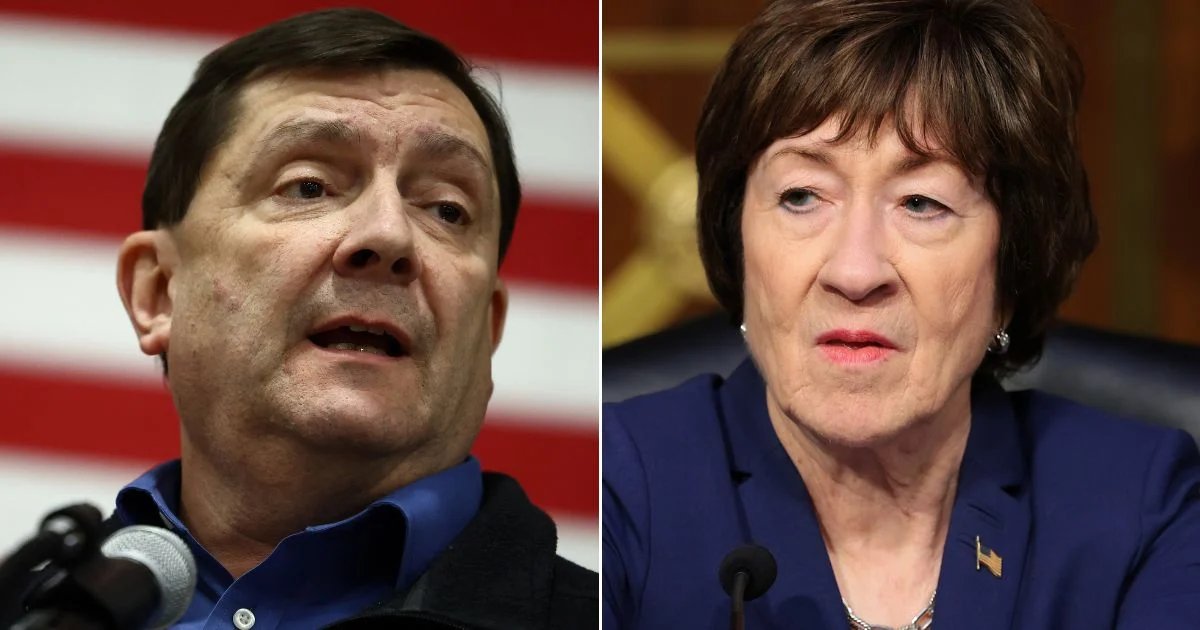
Weeks before the crucial 2026 midterm elections, a significant misstep in political advertising has cast a spotlight on the fiercely contested Maine Senate race, where incumbent Republican Senator Susan Collins faces a formidable challenge from Democratic opponent Troy Jackson. A Republican political action committee (PAC) aimed at bolstering Senator Collins’ re-election campaign inadvertently aired a $25,000 attack advertisement in Portland, Oregon, rather than its intended target of Portland, Maine, sparking questions about campaign efficiency and the complexities of modern political outreach. This geographical gaffe adds a layer of unexpected drama to an already turbulent election cycle, characterized by intense policy debates and a controversial change in the Democratic nominee.
The Advertising Blunder: A Costly Misdirection
The error originated from Defending Main Street, a Republican PAC dedicated to supporting moderate GOP candidates. The advertisement, designed to target Democratic challenger Troy Jackson and brand him as "Taxin’ Troy Jackson," ran in a media market thousands of miles away from its intended audience. This misplacement represented a substantial financial outlay for an ad that reached virtually none of the voters it sought to influence. Sarah Chamberlain, the president of Defending Main Street, expressed profound dismay over the incident, stating her extreme unhappiness and shock at the mistake. "I’m really upset," Chamberlain declared, emphasizing, "I cannot believe that this happened."
Chamberlain was quick to assign responsibility, asserting that the PAC itself was not at fault and pointing instead to Cross Screen Media, the ad buying firm contracted for the placement. Cross Screen Media promptly acknowledged full accountability for the error, issuing a statement that confirmed the mistake was "100 percent" on them and pledging a full refund of the $25,000 cost. Following the discovery and immediate rectification, the advertisement was pulled from the Oregon market and subsequently redirected to its correct destination in Maine. While the financial impact was mitigated by the refund, the incident raised eyebrows within political circles, highlighting the potential for human error even in sophisticated digital advertising campaigns and underscoring the high stakes involved in deploying campaign resources effectively. Political advertising, especially in competitive races, often involves intricate targeting strategies across various media platforms, where even minor oversights can lead to wasted funds and missed opportunities to sway public opinion.
The High-Stakes Maine Senate Race: A Battle for Control
The ad blunder occurred against the backdrop of one of the most closely watched Senate races in the nation. Senator Susan Collins, a seasoned Republican legislator known for her moderate stance and willingness to cross party lines, is locked in a tight contest with Troy Jackson. Recent polling data from late 2026 indicated the race as a toss-up, underscoring the volatility and competitiveness of Maine’s political landscape. The outcome of this election is not merely a matter of state politics; it holds significant implications for the balance of power in the U.S. Senate, making it a critical focus for both national parties.
Senator Susan Collins: A Veteran Moderate’s Battle
Senator Collins’ political career spans nearly three decades, during which she has cultivated a reputation as one of the Senate’s most independent voices. First elected in 1996, she is known for her pragmatic approach and her willingness to work across the aisle, often serving as a pivotal swing vote on contentious issues ranging from judicial nominations to healthcare legislation. Her long tenure has provided her with deep institutional knowledge and a significant base of support among Maine voters who appreciate her moderate credentials. However, this independence has also occasionally drawn criticism from both ends of the political spectrum. Conservative Republicans have sometimes faulted her for not aligning more consistently with party orthodoxy, while Democrats, despite her moderate leanings, view her as a crucial obstacle to their legislative agenda. Her campaign strategy often emphasizes her bipartisan achievements and her dedication to Maine-specific issues, aiming to appeal to the state’s historically independent-minded electorate.
Troy Jackson’s Ascent Amidst Democratic Turmoil
Troy Jackson’s journey to becoming the Democratic challenger has been marked by unexpected turns. A prominent figure in Maine state politics, Jackson has served multiple terms in the Maine Legislature, including a stint as President of the Maine Senate. His background in logging and his strong ties to labor unions have positioned him as a champion for working-class Mainers. Jackson’s nomination, however, came under extraordinary circumstances. The original Democratic nominee, Graham Platner, was forced to withdraw from the race in July 2026 following a cascade of scandals.
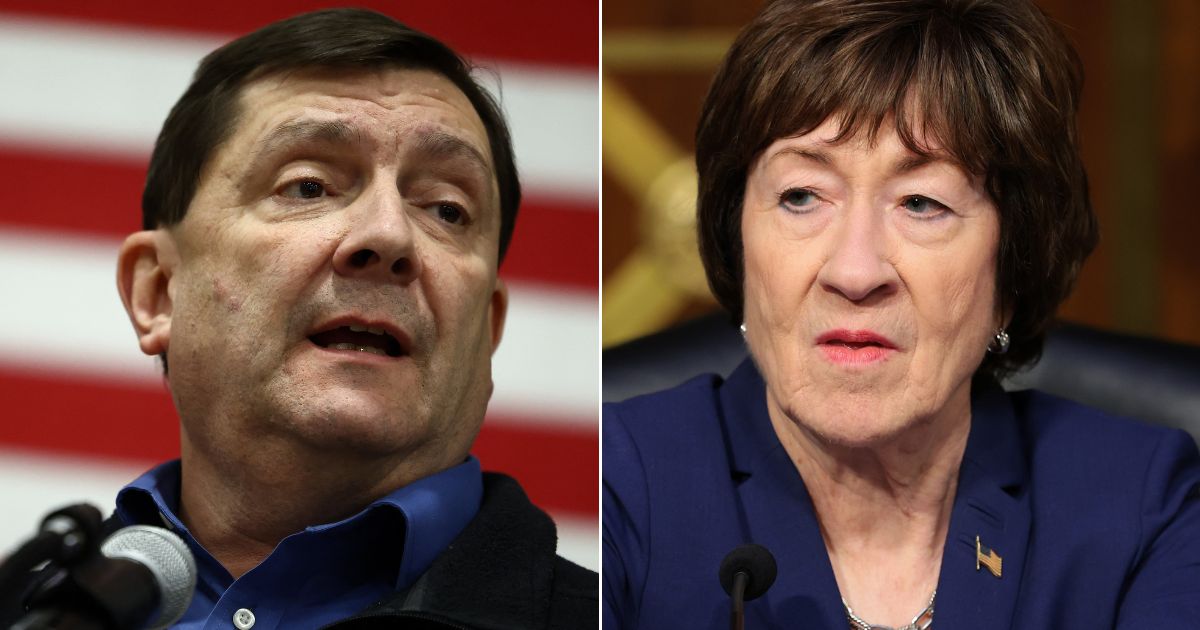
Platner’s campaign unraveled after a series of damaging revelations, including the discovery of a Nazi tattoo on his chest, allegations of inappropriate social media posts, infidelity, and accusations of abuse from former girlfriends. The final blow came when Jenny Racicot, a prominent Maine Democrat, publicly accused Platner of rape. This accusation led to a swift and decisive repudiation from Democratic party leadership and other major figures within the party, who collectively called for his immediate withdrawal. The unprecedented nature of Platner’s collapse left the Maine Democratic Party scrambling to find a replacement and galvanize support for a new candidate in the critical weeks leading up to the midterms. Jackson, with his established political career and robust support base within the state, was quickly tapped to fill the void, inheriting the challenge of uniting a fractured party and rapidly building a competitive campaign against an entrenched incumbent.
Contentious Issues Shaping the Campaign
Beyond the campaign gaffes and candidate changes, the Maine Senate race has been defined by sharp disagreements on key policy issues, which both campaigns have leveraged to rally their respective bases and sway undecided voters.
The "Taxin’ Troy Jackson" Narrative
The advertisement that mistakenly aired in Oregon was a prime example of the Collins campaign’s strategy to define Jackson negatively. By branding him "Taxin’ Troy Jackson," the Republican PAC sought to portray him as a proponent of higher taxes, a common tactic used to appeal to fiscally conservative voters and those concerned about economic burden. This narrative likely aimed to link Jackson with broader Democratic policies that Republicans often characterize as leading to increased government spending and taxation. The effectiveness of such branding often depends on its resonance with voters’ economic anxieties and whether it can be substantiated with Jackson’s actual legislative record or stated policy positions. While the specific content of the ad was not detailed in the original report, it can be inferred that it highlighted specific votes or proposals by Jackson related to state taxation or public spending during his time in the Maine Legislature.
The Transgender Inmate Housing Controversy
One of the most incendiary issues to emerge in the campaign revolves around Jackson’s stance on a state policy concerning the housing of transgender inmates. While serving as President of the Maine Senate in 2021, Jackson voted in favor of a state policy that allows individuals who identify as transgender to be housed according to their gender identity, rather than their biological sex, within state correctional facilities. This policy has become a flashpoint, particularly after a Republican super PAC, Pine Tree Results, launched a substantial $1.1 million ad campaign directly attacking Jackson over the issue.
The Pine Tree Results ad campaign meticulously highlighted a specific and deeply disturbing incident that allegedly occurred under this policy. It featured the case of Andrea Balcer, a trans-identifying male convicted of killing his parents and their family dog. Balcer was moved from the Maine State Prison to the women’s section of the Maine Correctional Institute in 2023. The ad focused on the allegations made by Katie Mountain, a female inmate serving a 10-month sentence at the facility. Mountain filed a lawsuit in April 2026 against the Maine Department of Corrections Commissioner Randy Liberty and Maine Correctional Center Warden Ben Beal, alleging severe harassment and threats by Balcer.
According to Mountain’s lawsuit, Balcer subjected her to graphic sexual stories, forcibly kissed her, threatened to rape and impregnate her, and trapped her in the restroom. Furthermore, Mountain claimed Balcer threatened to kill her by smothering her with a pillow. The ad from Pine Tree Results explicitly stated, "As Senate president, Jackson signed the bill requiring state prisons to house biological men if they identify as female with women prisoners," directly linking Jackson to the policy and its alleged consequences. The legal case, which remained pending in late 2026, gained further traction in June when WCSH-TV reported that several other women had joined Mountain’s lawsuit, indicating a potentially broader issue within the correctional system. This controversy has ignited passionate debate, drawing strong reactions from women’s rights advocates, LGBTQ+ organizations, and those concerned about prison safety and inmate welfare, making it a powerful wedge issue in the Senate race.
Campaign Finance and Electoral Integrity
The Portland-Oregon advertising gaffe, while an isolated incident, underscores broader aspects of campaign finance and the integrity of electoral processes. Political action committees like Defending Main Street and Pine Tree Results play an increasingly influential role in U.S. elections, often spending millions to support or oppose candidates through independent expenditures. These PACs operate under specific campaign finance regulations, but their ability to raise and spend large sums of money means that efficiency and accuracy in ad placement are paramount.

The Role of Super PACs in Modern Elections
Super PACs, officially known as independent-expenditure-only committees, can raise and spend unlimited amounts of money to overtly advocate for or against political candidates. Unlike traditional PACs, they cannot contribute directly to candidates or coordinate with their campaigns. This independence, while providing legal distance, also means that candidates often have limited direct control over the messaging or execution of these groups’ advertising efforts. The Defending Main Street PAC, while not explicitly called a "Super PAC" in the original article, functions similarly in its independent advertising efforts. The Pine Tree Results PAC, with its $1.1 million expenditure, clearly operates at a scale typical of a Super PAC, emphasizing the immense financial firepower that can be brought to bear in competitive races. The reliance on such groups means that their operational competence directly impacts a candidate’s broader electoral narrative and financial efficacy.
Preventing Future Geographical Errors
The misdirected ad also highlights the intricacies and potential pitfalls of modern media buying. With the proliferation of digital platforms, connected TV (CTV), and programmatic advertising, campaigns have unprecedented abilities to target specific demographics and geographic areas. However, this sophistication also introduces new points of failure. Errors like the Portland-Oregon mix-up can occur due to simple data entry mistakes, misconfigurations in ad platform settings, or human oversight within media buying agencies. While Cross Screen Media took responsibility, the incident prompts a wider discussion within the campaign industry about quality control, redundant verification processes, and the training of personnel involved in multi-million dollar ad placements. For a $25,000 ad, the financial loss was recoverable, but larger, more critical ad buys could suffer far greater consequences from similar errors.
Broader Implications for the 2026 Midterms
The Maine Senate race is more than just a local contest; it is a microcosm of the national political struggle for control of Congress. With the Senate balance often hanging by a thread, every race, particularly those involving long-serving incumbents or unexpected candidate shifts, gains outsized importance.
A Bellwether Race
Maine, with its history of electing both Republican and Democratic officials and a significant bloc of independent voters, often serves as a bellwether for national political trends. Senator Collins’ ability to navigate challenging political environments and secure re-election as a moderate Republican in an increasingly polarized era has made her a unique figure. Her current tight race against Troy Jackson reflects the broader national mood, where issues of economic policy, social justice, and cultural debates are highly charged. The outcome will be closely watched by political strategists on both sides, offering insights into voter sentiment and the effectiveness of various campaign strategies heading into future election cycles. The significant financial investment from national PACs in this race further underscores its perceived importance on the national stage.
The 2026 Maine Senate election has proven to be a particularly eventful and complex contest. From an accidental ad placement in the wrong Portland to the dramatic withdrawal of a Democratic nominee and the intense debate over transgender inmate housing, the race has encapsulated many of the challenges and controversies facing American politics today. As voters head to the polls, they will not only be deciding who represents Maine in the U.S. Senate but also contributing to the national political narrative and potentially shaping the legislative landscape for years to come. The blend of local issues with national political stakes ensures that this race will remain a focal point until the final votes are tallied.