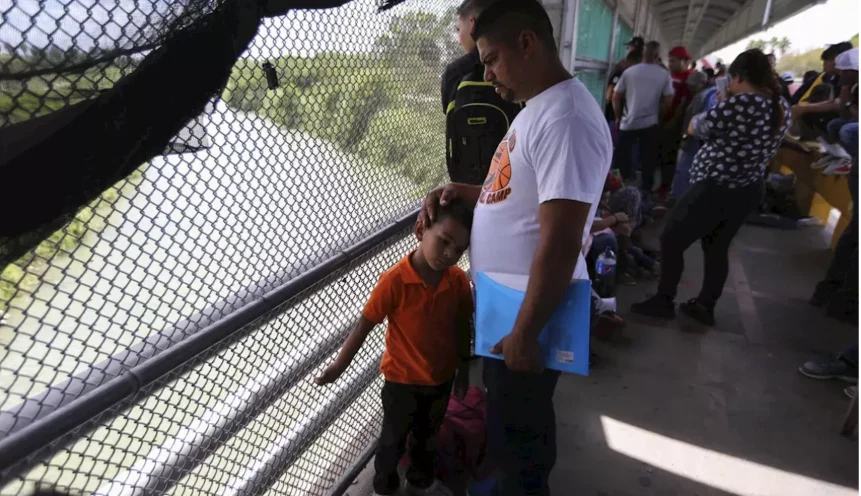
A disturbing nexus of organized crime, humanitarian crisis, and systemic vulnerabilities has emerged along the U.S.-Mexico border, with cartels increasingly exploiting unaccompanied migrant children for profit through forced labor and sex trafficking. This alarming trend, highlighted by recent findings from expert Jarrod Sadulski, reveals a calculated strategy by transnational criminal organizations to infiltrate migrant flows and leverage the U.S. government’s system for processing unaccompanied minors, ultimately condemning many children to a grim fate upon arrival in American communities.
The Unseen Plight of Unaccompanied Alien Children
Jarrod Sadulski, an expert in border security and criminal justice, recently brought to light critical insights into the pervasive exploitation of children migrating from south of the border. These children, often designated as "unaccompanied alien children" (UACs) by U.S. authorities, are processed and then sent to communities across the country, where they frequently face a future far removed from the safety and opportunity they sought. Sadulski’s investigations, which included a recent border trip and a visit to a shelter in McAllen, Texas, underscore a systematic abuse: while some tragically fall victim to sex trafficking, the more common outcome is forced labor, orchestrated by the very cartels that facilitated their journey or preyed on them en route.
Sadulski is scheduled to present his findings before a Republican Senate roundtable, aiming to expose the depth of this crisis and spur a more robust governmental response. His work reveals that cartels strategically embed operatives within migrant groups or at various shelters along the migratory path. These operatives are specifically tasked with identifying vulnerable migrants who can be robbed, kidnapped, or whose children can be stolen and subsequently exploited. "The cartels are exploiting this by having children placed with sponsors who exploit the children for profit," Mr. Sadulski stated, pointing to a critical flaw in the current system.
A Mother’s Agony: A Glimpse into Cartel Brutality
During his shelter visit in McAllen, Sadulski encountered a harrowing testament to the cartels’ ruthlessness. He recounted the story of a woman who desperately clung to her sole remaining child, refusing to let go. When pressed by shelter staff, she revealed the devastating reason for her vigilance: "She explained that en route to the southwest border, just south of Reynosa, Mexico, she was robbed by the Sinaloa cartel. Not only were all of her belongings taken from her, but so were her other two children because she had no money for bribes." This chilling account encapsulates the brutal reality faced by countless migrants, where the journey itself becomes a gauntlet of extortion, violence, and unimaginable loss, with children often serving as the ultimate currency for cartel operations.
This incident is not isolated. Sadulski underscored the cartels’ central and ruthless role in the entire smuggling economy. Their modus operandi extends far beyond simply facilitating illegal crossings; they view migrants, particularly vulnerable children, as commodities. The theft of children, either directly from parents unable to pay protection fees or through coercion and deception, feeds a vast and illicit network designed to profit from human suffering.
The Migratory Pipeline: A Chronology of Vulnerability
The journey of an unaccompanied migrant child to the U.S. is often fraught with peril, transforming them into targets for exploitation at multiple stages.

- Origin (Push Factors): Children and families often flee dire circumstances in their home countries, including extreme poverty, gang violence, political instability, and natural disasters in Central America and other regions. These "push factors" drive them to seek asylum or better opportunities in the U.S.
- The Perilous Journey: The trek north, often thousands of miles, exposes migrants to harsh environmental conditions, lack of food and water, and the constant threat of criminal elements. They frequently rely on smugglers, or "coyotes," who are often affiliated with or controlled by cartels.
- Cartel Control and Extortion: From the moment migrants enter cartel-controlled territories in Mexico, they become subject to the cartels’ rules. This includes paying exorbitant fees for safe passage, often under threat of violence, kidnapping, or even death. Families who run out of money become particularly vulnerable, with children sometimes taken as collateral or payment.
- Border Apprehension and UAC Status: Upon reaching the U.S. border, children arriving without a parent or legal guardian are identified as Unaccompanied Alien Children (UACs) by Customs and Border Protection (CBP).
- HHS Custody and Sponsor Placement: UACs are then transferred from CBP to the custody of the Office of Refugee Resettlement (ORR) within the Department of Health and Human Services (HHS). ORR is legally mandated to provide care and find suitable sponsors for these children, typically family members already in the U.S. or other vetted individuals.
- Exploitation Post-Placement: This is where the cartel’s insidious network often re-emerges. Sadulski’s findings suggest that cartel operatives, sometimes posing as legitimate sponsors or working through corrupt intermediaries, arrange for children to be placed with individuals who then force them into labor or sex trafficking, fulfilling a debt owed to the cartel for their passage or generating new profits.
Supporting Data: A Growing Crisis
The scale of the UAC phenomenon has surged in recent years, creating immense pressure on U.S. border agencies and social services, inadvertently expanding the pool of vulnerable individuals for cartels.
- Record UAC Encounters: According to CBP data, the number of UAC encounters at the U.S. Southwest Border has seen dramatic spikes. In Fiscal Year (FY) 2021, over 147,000 UACs were encountered, followed by approximately 152,000 in FY 2022. While numbers fluctuated, they remained historically high, far exceeding pre-2014 levels.
- HHS Caseload: The influx has strained HHS’s capacity. At peak times, thousands of children have been held in temporary shelters, sometimes for longer than legally permissible, awaiting placement. The system’s rapid expansion to accommodate these numbers has raised concerns about the thoroughness of sponsor vetting.
- Reports of Exploitation: While precise figures are difficult to obtain due to the clandestine nature of human trafficking and forced labor, government reports and NGO investigations have increasingly documented instances of UACs falling victim to exploitation. A 2023 New York Times investigation, for example, detailed widespread forced labor among migrant children, including UACs, working dangerous jobs across various U.S. industries to pay off debts to smugglers or support their families.
- Cartel Revenue: The human smuggling enterprise is a multi-billion-dollar industry for cartels. Estimates vary, but some reports suggest that cartels earn billions annually from smuggling operations alone. The fees charged for children, whether as part of a family unit or individually, contribute significantly to these illicit profits, further incentivizing their involvement.
- Trafficking Statistics: The National Human Trafficking Hotline reported thousands of calls related to child trafficking annually, with a significant portion involving foreign nationals or individuals with immigration vulnerabilities. While not all are UACs, the overlap highlights the risks faced by this population.
Official Responses and Systemic Challenges
The U.S. government faces a complex dilemma in managing the flow of UACs while simultaneously safeguarding them from exploitation.
- HHS and ORR’s Mandate: HHS’s Office of Refugee Resettlement is legally mandated to ensure the safety and well-being of UACs in its care. This includes providing shelter, education, medical care, and ultimately, placing them with vetted sponsors. However, the sheer volume of children and the urgency to move them out of federal custody can sometimes compromise the thoroughness of vetting processes.
- Sponsor Vetting: The sponsor vetting process is crucial. It typically involves background checks, fingerprinting, and home visits. However, critics argue that these checks are not always sufficient to detect sophisticated cartel operatives or individuals intent on exploitation. The pressure to quickly unite children with family members, even distant ones, can sometimes outweigh stringent vetting, especially during periods of high intake.
- DHS and Border Security: The Department of Homeland Security (DHS), through its components like CBP and Immigration and Customs Enforcement (ICE), is responsible for border enforcement and identifying UACs. Their role largely ends once a child is transferred to HHS custody, though ICE can investigate human trafficking cases.
- Congressional Scrutiny: The increasing reports of UAC exploitation have drawn bipartisan concern in Congress. Lawmakers are pressing HHS for greater transparency, more rigorous vetting procedures, and improved post-release services to monitor children’s welfare. Sadulski’s upcoming Senate appearance is part of this broader congressional examination.
- NGO and Advocacy Efforts: Numerous non-governmental organizations (NGOs) and human rights advocates work tirelessly to support UACs, provide legal aid, and monitor their welfare. They often report on the systemic gaps that enable exploitation and advocate for stronger protections, better resources for child welfare, and comprehensive immigration reform. These groups play a critical role in identifying cases of abuse and pressing for accountability.
Broader Impact and Implications
The exploitation of unaccompanied migrant children carries profound and far-reaching implications, impacting not only the children themselves but also national security, public health, and societal ethics.
- Humanitarian Crisis: At its core, this is a humanitarian catastrophe. Children subjected to forced labor or sex trafficking suffer immense physical and psychological trauma, often leading to lifelong struggles with mental health, addiction, and inability to reintegrate into society. Their childhoods are stolen, and their fundamental human rights are violated.
- National Security Threat: The cartels’ ability to operate with impunity, infiltrate U.S. systems, and generate massive profits from human exploitation poses a significant national security threat. It empowers criminal organizations, destabilizes border regions, and undermines the rule of law. The sophisticated networks used for human smuggling can also be leveraged for other illicit activities, including drug trafficking and potential terrorist infiltration.
- Economic Impact of Forced Labor: While difficult to quantify, forced labor depresses wages in legitimate industries, creates unfair competition, and often involves dangerous working conditions that violate labor laws. The profits from this illicit labor flow back to criminal organizations, further entrenching their power.
- Erosion of Trust and Ethical Dilemmas: The perception that the U.S. system, designed to protect vulnerable children, is inadvertently enabling their exploitation erodes public trust in government institutions. It also presents a profound ethical challenge, forcing a re-evaluation of immigration policies and humanitarian responsibilities.
- Long-Term Societal Costs: The failure to adequately protect and care for these children has long-term societal costs. Traumatized and exploited individuals may struggle to become productive members of society, potentially requiring extensive social services, healthcare, and psychological support for years.
- International Relations: The crisis also impacts international relations, particularly with Mexico and Central American countries. Effective solutions require enhanced cooperation on border security, anti-trafficking efforts, and addressing the root causes of migration.
Moving Forward: A Call for Comprehensive Solutions
Addressing the complex issue of UAC exploitation requires a multi-faceted and comprehensive approach. This includes:
- Strengthening Sponsor Vetting: Implementing more rigorous and standardized vetting processes for potential sponsors, including enhanced background checks, more frequent home visits, and post-placement monitoring to ensure the child’s safety and well-being.
- Increased Resources for HHS: Providing HHS and ORR with adequate funding, staffing, and technological capabilities to manage the UAC caseload effectively and safely, reducing the pressure for rapid placements that might compromise vetting.
- Targeting Cartel Networks: Intensifying law enforcement efforts, both domestically and internationally, to disrupt and dismantle the cartel networks that profit from human smuggling and exploitation. This includes intelligence sharing with Mexican authorities and other partners.
- Addressing Root Causes: Investing in long-term strategies to address the push factors in migrants’ home countries, such as economic development, violence reduction programs, and strengthening democratic institutions, thereby reducing the incentive for dangerous migration.
- Enhanced Victim Identification and Support: Improving training for border agents, shelter staff, and community service providers to identify signs of trafficking and exploitation, and ensuring robust support services for child victims.
- Legislative Reform: Engaging in thoughtful, bipartisan legislative efforts to reform immigration laws in a way that balances border security with humanitarian protections for vulnerable populations, particularly children.
Jarrod Sadulski’s findings serve as a stark reminder of the urgent need for action. The exploitation of unaccompanied migrant children is not merely a border issue; it is a profound human rights crisis that demands immediate and sustained attention from policymakers, law enforcement, and society as a whole. Only through a concerted and compassionate effort can the U.S. truly live up to its commitment to protecting the most vulnerable among us.