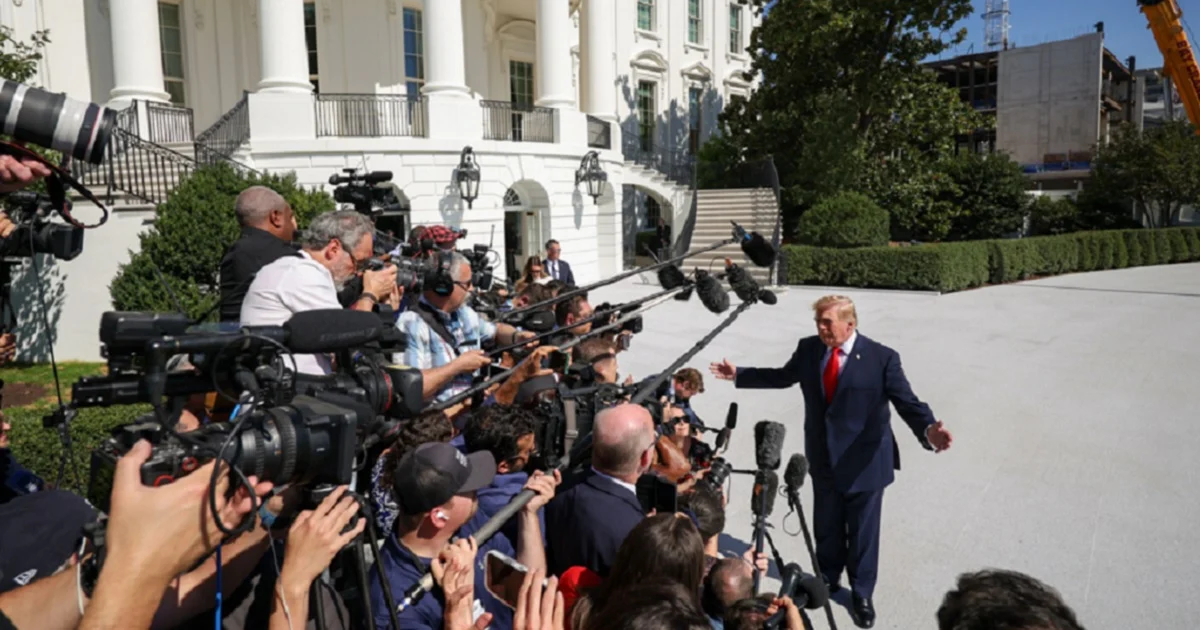
A federal judge on Tuesday issued a significant preliminary injunction, extending an earlier order that secures the continued presence of journalists from CNN, MS NOW (the rebranded entity formerly known as MSNBC), and Politico within the White House complex. This ruling comes as these prominent media organizations continue their legal battle against a ban imposed last month by President Donald Trump, which had aimed to revoke their essential access credentials. The decision underscores a crucial judicial intervention in the contentious relationship between the executive branch and the press, affirming fundamental constitutional protections for media access.
U.S. District Judge Timothy Kelly, a Trump appointee, delivered the preliminary injunction late Tuesday. This judicial directive effectively blocks the administration from permanently revoking the "hard passes" held by reporters from the three outlets until a final decision is reached in the ongoing lawsuit. A "hard pass" is a critical credential for White House journalists, granting them unaccompanied access to designated press areas within the complex, facilitating their daily coverage of the presidency. The injunction requires the plaintiffs to post a nominal bond of $1, a standard legal formality.
The ruling immediately restores the media outlets’ full access to the White House grounds, a vital space for reporting, gathering information, and interacting with administration officials. However, the injunction does not compel the administration to grant these outlets access to more exclusive settings, such as the Oval Office for presidential interviews or Air Force One for travel coverage. In recent weeks, CNN and Politico reporters had notably been excluded from such prime reporting opportunities, even following an earlier temporary restraining order. Politico, in its own reporting on the matter, highlighted that the White House had generally continued to exclude the three outlets from participating in pool coverage – a system where a small group of reporters covers an event on behalf of the entire press corps – despite the initial judicial intervention.
Chronology of a Contentious Ban
The origins of this legal dispute trace back to September 18, 2026, when President Trump publicly announced the ban via a post on Truth Social, his preferred social media platform. In his declaration, the President explicitly stated that the revocation of credentials was a direct consequence of what he characterized as the outlets’ consistent "reporting" of "FAKE NEWS." He specifically named "Fake News CNN, MSNOW (who recently changed their name from MSNBC due to lack of viewership and credibility!), and Politico." Furthermore, Trump criticized Politico for what he termed an "illegal and ridiculous $8 Million Dollar subscription" from the Biden administration, implying a partisan bias. He also warned that similar actions against other media outlets would follow, signaling a broader intent to restrict access based on perceived editorial slant.
Following the President’s announcement, 78 journalists from the affected organizations found their hard passes threatened. In response, CNN, MS NOW, and Politico swiftly filed a lawsuit, asserting that the ban constituted a "direct assault on the First Amendment." This legal challenge initiated the process that led to Judge Kelly’s subsequent rulings.
On September 24, just days after the initial ban, Judge Kelly had already issued a temporary restraining order (TRO), which temporarily lifted the ban while he deliberated on the broader preliminary injunction. This initial order provided a brief reprieve for the affected journalists, allowing them to resume their duties pending a more comprehensive legal review. The President, even before Tuesday’s more extensive decision, had publicly vowed to appeal any unfavorable ruling, indicating the administration’s determination to pursue the matter further. The White House did not issue an immediate comment following the preliminary injunction.
Judicial Scrutiny: First Amendment and Due Process Violations
Judge Kelly’s 26-page opinion meticulously laid out his reasoning, finding strong arguments that the Trump administration’s ban likely violated both the First and Fifth Amendments of the U.S. Constitution. His analysis centered on the administration’s stated justifications and the lack of procedural fairness in the revocation process.
Central to the First Amendment argument was the issue of viewpoint discrimination. The judge found compelling evidence that President Trump’s decision to revoke the hard passes was directly motivated by the content of the outlets’ reporting. Kelly wrote, "President Trump likely banned Plaintiffs from the White House because he believes that their reporting is generally inaccurate and biased against him." This conclusion was heavily supported by the President’s own public statements, including his Truth Social post announcing the ban and remarks made during an interview with Time magazine regarding his White House coverage, where he specifically singled out CNN and MS NOW for criticism. The court determined that this direct causal link between the outlets’ protected speech and the revocation of their credentials represented a probable violation of their First Amendment rights to freedom of the press.
The administration, in its legal filings, had subsequently attempted to justify the ban on grounds of "national security." However, Judge Kelly was not persuaded by this argument, dismissing it as a "post-hoc justification" lacking substantive evidence. He wrote, "There is practically nothing national security-related in the record connected to the President’s decision to revoke Plaintiffs’ hard passes to which the Court can defer." He further elaborated, "Strikingly, there is just about no evidence in the record to explain or justify the ‘ban’ from a national security perspective." This judicial rejection highlighted the court’s skepticism regarding the genuine basis for the administration’s actions, reinforcing the perception that the ban was primarily punitive rather than preventative.
In addition to the First Amendment concerns, Judge Kelly also found a likely violation of the Fifth Amendment’s due process clause. The administration failed to provide the affected journalists with advance notice that concerns about their reporting could lead to the loss of their White House access. Nor did it offer a clear, established process for challenging such a decision. For professional journalists who rely on these credentials for their livelihood and to perform their public service function, a hard pass can be considered a significant interest, and its arbitrary revocation without due process raises serious constitutional questions.
Reactions from Legal and Media Communities
The ruling was met with strong affirmations from the legal counsel representing the media outlets. Theodore Boutrous Jr., the lawyer for CNN, MS NOW, and Politico, reiterated the core argument of the lawsuit in a statement issued after the decision. He asserted that President Trump had "repeatedly, candidly, and consistently admitted in public that he banned our clients from the White House to punish reporting he doesn’t like." This statement underscored the legal team’s confidence in their position, which was largely validated by Judge Kelly’s findings.
The broader media community and press freedom advocates also viewed the injunction as a crucial victory for journalistic independence. Organizations dedicated to protecting press rights often emphasize that access to government officials and institutions is fundamental for informing the public and holding power accountable. Restricting access based on the content or perceived bias of reporting sets a dangerous precedent, potentially chilling critical journalism and undermining the democratic function of the press. The ability of journalists to scrutinize and report on the executive branch without fear of reprisal, such as the arbitrary revocation of credentials, is considered a cornerstone of a free society.
Historical Context and Broader Implications
The dispute between the Trump administration and these media outlets is not an isolated incident but rather a chapter in a long-standing, often acrimonious relationship between President Trump and segments of the press. Throughout his political career, President Trump has frequently employed the term "fake news" to describe reporting he deems unfavorable or inaccurate, fostering an environment of mistrust and antagonism. This latest action against CNN, MS NOW, and Politico fits into this broader pattern of rhetoric and action aimed at challenging the credibility of news organizations.
Historically, White House press passes have been largely governed by established protocols, with revocations being rare and typically reserved for serious infractions, such as security breaches or misconduct, rather than disagreements over editorial content. While presidents have always had their preferred and less preferred media outlets, outright bans from the White House complex based on reporting content are highly unusual and raise profound questions about the limits of executive power in managing press access. This case draws parallels with past legal battles over press credentials, though the specific grounds of content-based discrimination are particularly salient.
The preliminary injunction issued by Judge Kelly serves as a significant check on executive power, reaffirming the judiciary’s role in safeguarding constitutional rights. It signals that even the President’s authority to manage access to the White House is subject to legal and constitutional constraints, particularly those enshrined in the First and Fifth Amendments. This ruling could set an important precedent for future administrations, making it more difficult for presidents to use credentialing as a tool to punish or silence critical media voices.
The Path Forward: Ongoing Litigation and Potential Appeals
It is important to note that the preliminary injunction is not a final judgment on the merits of the case. It simply maintains the status quo – ensuring the outlets’ access – while the full lawsuit proceeds. The administration retains the right to appeal Judge Kelly’s decision to a higher court. Given President Trump’s earlier pledge to appeal, it is highly probable that the legal battle will continue, potentially reaching the U.S. Court of Appeals for the D.C. Circuit and, conceivably, even the Supreme Court.
The ultimate resolution of this lawsuit will have lasting implications for the relationship between the presidency and the press. It will further define the legal boundaries of presidential authority over White House press access and the extent to which the First Amendment protects journalists from content-based discrimination by the executive branch. The outcome will be closely watched by media organizations, legal scholars, and proponents of press freedom, as it could shape the landscape of White House reporting for years to come. The case underscores the enduring tension between a president’s desire to control their message and the media’s constitutional mandate to inform the public, even when that information is critical or perceived as unfavorable.