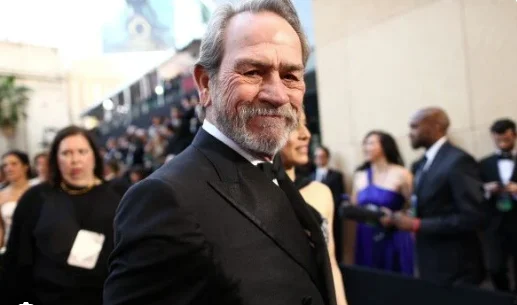
Focus Features has officially acquired the worldwide distribution rights from Teton Ridge Entertainment for Outside Man, a highly anticipated neo-Western thriller that will pair Oscar-winning veteran actor Tommy Lee Jones with multi-hyphenate star Ice Cube. The film, penned and directed by Oscar-winning filmmaker Brian Helgeland, known for his critically acclaimed screenplays and directorial efforts, is slated to commence production in November, marking a significant entry into the evolving landscape of contemporary Western cinema. This acquisition underscores Focus Features’ commitment to distinctive, character-driven narratives and signals Teton Ridge Entertainment’s growing influence in the production of high-caliber, Americana-focused content.
The Project: Outside Man Details and Narrative Core
Outside Man delves into the intricate dynamics of unlikely companionship and the inescapable shadows of the past. The narrative centers on Ruben Bowman, portrayed by Ice Cube, a former Chicago mob enforcer recently released from prison with a singular focus: to radically transform his life. Seeking anonymity and a fresh start, Bowman relocates to rural Texas, where he secures employment under the tutelage of Gus Wanamaker, played by Tommy Lee Jones. Wanamaker is depicted as a skilled furniture craftsman with a quiet, yet formidable, past as a retired Texas Ranger. As Bowman and Wanamaker forge an unexpected bond, their nascent friendship is placed in jeopardy when the specters of both men’s former lives begin to converge, threatening to dismantle their carefully constructed peace and potentially expose their true identities.
The logline suggests a rich tapestry of themes, including redemption, the search for identity, the enduring impact of past actions, and the complex nature of justice in a world where lines between good and bad often blur. The choice of a neo-Western setting is particularly pertinent, allowing for exploration of classic Western tropes – isolation, moral ambiguity, rugged individualism – within a modern context, often characterized by psychological depth and societal critique. Helgeland’s proven track record in crafting intense, character-driven thrillers, particularly with a gritty edge, positions Outside Man to be a compelling addition to the genre.
Tommy Lee Jones: A Resurgent Year for the Esteemed Veteran
The announcement of Outside Man adds another high-profile project to what is shaping up to be a remarkably busy period for Tommy Lee Jones, a career trajectory that belies the typical pace for actors in their late 70s. Known for his laconic delivery, commanding presence, and ability to imbue characters with profound gravitas, Jones has long been a fixture in American cinema, earning critical acclaim and an Academy Award for Best Supporting Actor for his role as U.S. Marshal Samuel Gerard in the 1993 thriller The Fugitive. His filmography is studded with iconic roles across various genres, including Westerns (Lonesome Dove, The Missing, No Country for Old Men), sci-fi comedies (Men in Black franchise), dramas (JFK, Lincoln), and thrillers (In the Valley of Elah).
His recent slate of projects highlights his enduring appeal and versatility. Prior to Outside Man, Jones is set to appear in Angel and the Badman, a contemporary reimagining of the classic 1947 John Wayne Western. This adaptation, featuring Zachary Levi and Neal McDonough, is scheduled for theatrical and drive-in release on an upcoming Friday, further cementing Jones’s connection to the Western genre, both traditional and reimagined. Following this, he is slated to join the ensemble cast of the returning FX/Hulu dramedy The Lowdown. In this series, he will portray the errant father of Lee Raybon, a Tulsa-based "truthstorian" played by Ethan Hawke. This role offers a departure from his often stoic or authoritative characters, showcasing his capacity for more nuanced, potentially comedic or dramatic, family dynamics.
Jones’s consistent presence in diverse projects, from big-screen Westerns to streaming dramedies, underscores his enduring market value and his ability to draw audiences across different platforms. His involvement often lends a project an immediate air of credibility and a promise of a deeply etched performance, a factor undoubtedly considered by Focus Features in their acquisition strategy for Outside Man.
Ice Cube: Expanding His Dramatic Range and Production Footprint
For Ice Cube, born O’Shea Jackson Sr., Outside Man represents a significant opportunity to further showcase his dramatic acting prowess while also leveraging his considerable influence as a producer. Transitioning from a groundbreaking career in music as a rapper and songwriter, Ice Cube successfully reinvented himself as a formidable presence in Hollywood. His acting career began with acclaimed roles in films like Boyz n the Hood (1991) and Friday (1995), the latter of which he also co-wrote, establishing his talent for both drama and comedy.
While he has achieved significant box office success with comedic franchises such as Barbershop and Are We There Yet?, and action films like XXX: State of the Union and Ride Along, Ice Cube has periodically returned to more serious dramatic roles, often imbuing his characters with a compelling blend of intensity and vulnerability. His role as Ruben Bowman, a former mob enforcer seeking redemption, is particularly well-suited to his established screen persona—a man capable of immense power and intimidation, yet also possessing a profound inner struggle. This character aligns with the gravitas he brought to roles in films like Anaconda or even the more dramatic undertones of Straight Outta Compton, which he produced and which chronicled the rise of N.W.A.
Beyond his acting, Ice Cube is a prolific producer through his company, Cube Vision, co-founded with Jeff Kwatinetz. Cube Vision has been instrumental in developing and producing many of his successful film projects, demonstrating his strategic vision and commitment to shaping narratives from the ground up. His involvement as a producer on Outside Man, alongside Kwatinetz, ensures his creative input extends beyond his performance, potentially influencing the film’s tone and direction. This dual role as both lead actor and producer highlights his comprehensive engagement with the project and his continued evolution as a multifaceted entertainment mogul.
Brian Helgeland: The Visionary Behind the Lens
The creative force behind Outside Man is Brian Helgeland, an Oscar-winning screenwriter and accomplished director whose work is frequently characterized by its dark, intricate plotting, complex moral landscapes, and memorable characters. Helgeland earned an Academy Award for Best Adapted Screenplay for his work on the neo-noir masterpiece L.A. Confidential (1997), a film widely lauded for its intricate plot and unflinching portrayal of 1950s Los Angeles corruption. His screenwriting credits also include Mystic River (2003), another critically acclaimed film that explored themes of trauma, revenge, and justice in a working-class Boston neighborhood.
As a director, Helgeland has helmed several notable features that often delve into the darker aspects of human nature and crime. His directorial debut, Payback (1999), starring Mel Gibson, was a gritty, stylish neo-noir thriller. He later directed A Knight’s Tale (2001), a successful historical adventure film, demonstrating his versatility across genres. However, it is his work on films like Legend (2015), chronicling the rise and fall of the Kray twins in London, that truly showcases his affinity for crime narratives populated by morally ambiguous characters.
Helgeland’s involvement as both writer and director for Outside Man is particularly significant. This dual role allows for a singular creative vision, ensuring that the script’s thematic depth and character nuances are fully realized on screen. His expertise in crafting taut thrillers with a strong sense of place and psychological intensity makes him an ideal choice for a neo-Western exploring themes of redemption and confronting one’s past in a rural, isolated setting. His past works suggest that Outside Man will likely be a film that challenges conventional notions of heroism and villainy, offering a nuanced exploration of its characters’ internal and external conflicts.
Focus Features: A Strategic Acquisition
Focus Features, a subsidiary of NBCUniversal, has established itself as a prominent player in the independent and specialty film market. Known for distributing critically acclaimed and commercially successful films that often garner awards attention, Focus Features’ portfolio typically includes character-driven dramas, sophisticated thrillers, and art-house fare. Their track record includes films like Brokeback Mountain, Dallas Buyers Club, Get Out, and Promising Young Woman, all of which have achieved significant critical and commercial success.
The acquisition of Outside Man aligns perfectly with Focus Features’ brand identity. The project boasts a compelling premise, an Oscar-winning director and lead actor, and a genre—the neo-Western thriller—that offers both artistic depth and commercial appeal. For Focus Features, acquiring worldwide rights means they will be responsible for the film’s theatrical release strategy across various territories, including North America, and will manage its subsequent ancillary distribution across streaming, home video, and broadcast platforms. This strategic move indicates their confidence in the film’s potential to resonate with audiences globally and to stand out in a competitive market. The presence of established stars like Jones and Ice Cube, combined with Helgeland’s directorial vision, offers a strong package for international sales and domestic marketing.
Teton Ridge Entertainment: A New Powerhouse in Western Content
Teton Ridge Entertainment, the company from which Focus Features acquired the rights, is a division of Teton Ridge, a rapidly expanding entity focused on Americana-centric properties spanning sports, media, entertainment, and lifestyle. Teton Ridge’s overarching mission appears to be the revitalization and modern interpretation of classic American narratives and cultural touchstones, particularly those rooted in the Western ethos. Their strategic investments underscore a deliberate effort to become a dominant force in this niche.
The company’s recent activities paint a clear picture of its ambitious trajectory. Teton Ridge Entertainment recently secured a full-series order from Netflix for an adaptation of Larry McMurtry’s Pulitzer Prize-winning epic Lonesome Dove. This highly anticipated series will be adapted by Zoe Kazan and Jeb Stuart, signaling a commitment to prestige television. Lonesome Dove is one of the most beloved Western novels of all time, and its successful adaptation could significantly elevate Teton Ridge’s profile.
Furthermore, Teton Ridge Entertainment has been actively acquiring high-profile Western intellectual property (IP). Their acquisitions include High Noon, the iconic 1952 film from director Fred Zinnemann and producer Stanley Kramer, known for its groundbreaking real-time narrative and profound themes of civic responsibility. They have also acquired the rights to Louis L’Amour’s beloved bestseller Fallon, a classic tale of a wanderer seeking justice and a new life. Perhaps most notably, Teton Ridge Entertainment has secured the life rights to the legendary John Wayne, an acquisition that opens up a vast array of possibilities for future projects, from biopics to reinterpretations of his iconic roles, or even leveraging his image in new media.
The production of Outside Man is a logical extension of Teton Ridge’s strategic vision. By backing a contemporary neo-Western thriller with a compelling storyline and A-list talent, Teton Ridge Entertainment is demonstrating its ability to produce original content that aligns with its brand while appealing to a broad audience. The company’s involvement in Outside Man alongside Cube Vision and veteran producer Bill Gerber (known for Gran Torino, A Star Is Born) suggests a well-resourced and thoughtfully assembled production team, aimed at delivering a high-quality cinematic experience.
The Neo-Western Genre: A Modern Frontier
Outside Man‘s classification as a neo-Western thriller places it within a vibrant and continually evolving cinematic tradition. The neo-Western genre takes the foundational elements of the classic Western—its landscapes, archetypes, and thematic concerns—and recontextualizes them within a modern or near-modern setting. These films often explore themes of moral ambiguity, the decline of traditional values, the struggle against modernity, and the psychological toll of violence, all while retaining the iconic imagery of the American frontier.
Notable examples of the neo-Western include No Country for Old Men (which also starred Tommy Lee Jones), Hell or High Water, Wind River, and Logan. These films utilize the vast, often desolate landscapes of the American West as a backdrop for contemporary crime stories, exploring characters who are often outsiders, struggling against forces larger than themselves. They frequently subvert traditional Western hero tropes, presenting protagonists who are flawed, haunted, or morally compromised.
The appeal of the neo-Western lies in its ability to resonate with contemporary anxieties while tapping into the enduring mythology of the West. It allows filmmakers to comment on modern societal issues—such as economic hardship, systemic corruption, and the erosion of community—through a familiar yet fresh lens. For Outside Man, setting the story in rural Texas and featuring a former mob enforcer alongside a retired Texas Ranger provides fertile ground for exploring how the codes of the past clash with the realities of the present, and how personal histories can define or doom individuals regardless of their attempts at reinvention.
Production Outlook and Industry Implications
With production slated to begin in November, Outside Man is poised to enter a competitive release slate, likely in late 2025 or early 2026. The timing of the shoot suggests a post-production timeline that could position the film for a festival premiere, potentially at events like Sundance, Toronto, or Telluride, which often serve as launchpads for Focus Features’ award contenders.
The combined star power of Tommy Lee Jones and Ice Cube, along with Brian Helgeland’s directorial vision, presents a compelling package for both critical reception and box office potential. Jones’s established draw with mature audiences and fans of serious dramas, coupled with Ice Cube’s appeal across younger demographics and his strong fan base from his music and comedy work, creates a broad potential audience. The neo-Western thriller genre itself has proven to be a consistent draw, particularly when executed with intelligence and intensity.
The involvement of multiple production entities, including Jillian Share and Jen Gorton of Teton Ridge Entertainment, Ice Cube and Jeff Kwatinetz of Cube Vision, and veteran producer Bill Gerber, suggests a robust support structure for the film. Executive producers Brian Helgeland, Justin Bursch, Madeleine Moore for Teton Ridge Entertainment, and Ben Hurwitz for Cube Vision further underscore the depth of talent and resources committed to the project. This collaborative model, bringing together established Hollywood figures with the emerging force of Teton Ridge Entertainment, highlights the dynamic nature of contemporary film production.
Conclusion: A Promising Venture on the Modern Frontier
The acquisition of Outside Man by Focus Features marks a significant development for all parties involved and signals a promising venture for cinematic audiences. For Tommy Lee Jones, it solidifies his status as an in-demand veteran. For Ice Cube, it offers a powerful vehicle to deepen his dramatic acting portfolio and expand Cube Vision’s influence. For Brian Helgeland, it’s an opportunity to deliver another signature, gritty thriller. And for Teton Ridge Entertainment, it represents a crucial step in establishing itself as a major producer of high-quality, culturally resonant Western-themed content, bridging the gap between classic Americana and modern storytelling. As the film moves into production, anticipation will undoubtedly grow for this convergence of talent and narrative ambition on the modern American frontier.