

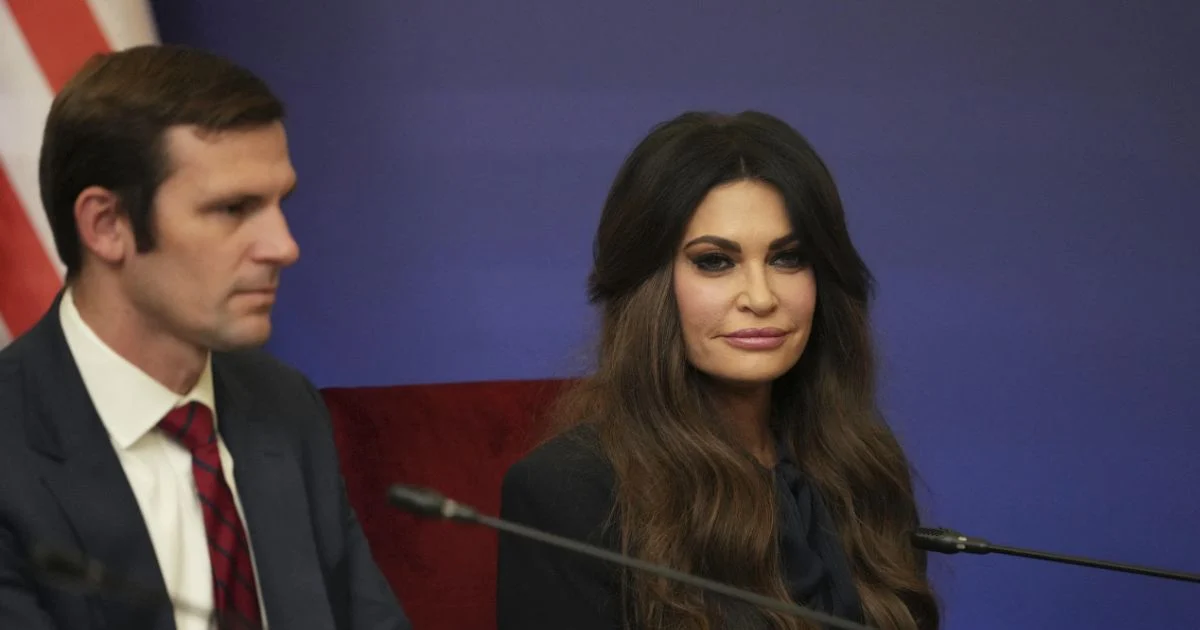
Former U.S. Ambassador to Greece Kimberly Guilfoyle is facing a defamation lawsuit filed by Eric Deters, a prominent Republican donor, who claims Guilfoyle requested $100,000 to settle credit card debt in exchange for access to high-ranking officials. The lawsuit, filed in Kentucky state court, emerged swiftly after Guilfoyle’s abrupt resignation from her diplomatic post, a decision reportedly prompted by the White House following the public disclosure of alleged text messages between Guilfoyle and Deters. The unfolding scandal casts a significant shadow over Guilfoyle’s public career and raises questions about ethical conduct in political appointments and fundraising.
The Core Allegations and Guilfoyle’s Resignation
The crux of the controversy revolves around Eric Deters’ accusation that Kimberly Guilfoyle solicited a $100,000 payment from him to cover American Express credit card charges. According to Deters, this financial transaction was explicitly linked to promises of access to influential figures within the Trump administration, an arrangement he claims was sought in the run-up to her Senate confirmation hearing for the prestigious role of U.S. Ambassador to Greece. Deters, a vocal Trump supporter and donor, first brought these allegations to light, subsequently sharing what he purports to be text message exchanges with Guilfoyle with various media outlets, including CBS News, The Wall Street Journal, and NewsNation.
The allegations rapidly escalated into a major diplomatic and political crisis. Just days after the claims surfaced and the alleged text messages were widely reported, the White House requested Guilfoyle’s resignation from her ambassadorial position. On Tuesday, October 13, 2026, Guilfoyle complied, issuing a lengthy statement on X (formerly Twitter) expressing gratitude to President Donald Trump and Secretary of State Marco Rubio for the opportunity to serve. Crucially, her statement also directly addressed the swirling controversy, asserting, "I also want to address the recent allegations against me. These allegations are false, and I intend to vigorously defend my name, my reputation, and my integrity." She further emphasized her dedication to public service and vowed not to let "false accusations define my decades of public service."
President Trump, when questioned about Guilfoyle’s departure, offered a concise but telling comment to reporters, stating, "She wasn’t a member of my family… I guess she dated my son a long time ago. She was doing a good job, but we didn’t like what we were reading." This remark underscored the administration’s apparent discomfort with the allegations and the media storm they generated, signaling that the White House’s decision to request her resignation was directly influenced by the unfolding narrative.
The Defamation Lawsuit: Legal Battle Commences
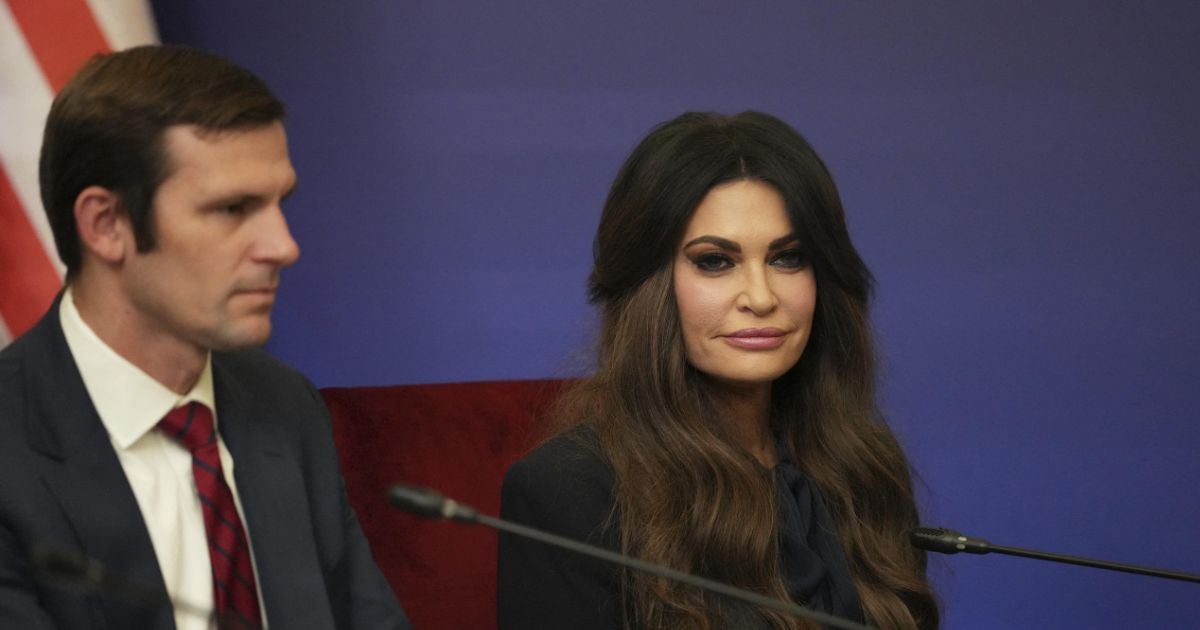
On Thursday, October 15, 2026, Eric Deters officially escalated the dispute by filing a defamation lawsuit against Kimberly Guilfoyle and her legal representatives, Jesse Binnall and David M. Schwartz, in Kenton Circuit Court in Kentucky. Deters’ legal action directly targets statements made by Guilfoyle and her defense team in response to his initial allegations.
Specifically, Deters cited quotes provided by Guilfoyle’s legal team to The Wall Street Journal, which claimed that Guilfoyle "was owed a balance for traveling to and supporting" certain "patriotic events." Deters vehemently contests this assertion, stating, "Now, they’re claiming that there are invoices when she knows that’s not true. In all the text messages, she doesn’t mention anything about me owing money." He further added, "She knows that is phony, and I’m going to be suing them all for defamation."
The lawsuit also addresses Guilfoyle’s legal team’s challenge to the authenticity of the text messages Deters shared with media outlets. Deters maintains the texts are genuine, asserting, "The texts are not fake. I have never been accused of or charged with blackmail… This statement contains the falsehood that I owed Kim Guilfoyle money." By naming her defense attorneys, Binnall and Schwartz, in the lawsuit, Deters indicates his intention to hold them accountable for statements made in their professional capacity on Guilfoyle’s behalf, arguing that their claims constituted defamation. Deters is seeking monetary damages and has requested a trial by jury, signaling his commitment to pursuing the matter through a full legal process.
Background and Chronology of Key Events
Kimberly Guilfoyle has maintained a high-profile presence in American media and politics for over two decades. Her career trajectory includes stints as a prosecuting attorney in San Francisco and Los Angeles, a legal analyst for CNN and Court TV, and a prominent host on Fox News Channel. She transitioned significantly into the political arena as a vocal supporter and advisor to Donald Trump’s presidential campaigns, becoming a key surrogate and fundraiser.
- 2001: Guilfoyle marries Gavin Newsom, who would later become California’s Democratic Governor.
- 2004-2006: Serves as First Lady of San Francisco during Newsom’s tenure as mayor.
- 2006: Divorces Newsom; later marries businessman Eric Villency, with whom she has a son.
- 2009: Divorces Villency.
- Post-2009: Continues her media career, eventually becoming a fixture at Fox News.
- Mid-2010s: Becomes a prominent figure in Republican politics, particularly supportive of Donald Trump.
- Late 2010s-Early 2020s: Becomes a senior advisor to Donald Trump’s re-election campaign and a leading voice in conservative media.
- 2024: Her engagement to Donald Trump Jr., son of the President, is reportedly broken off.
- Earlier 2026: Nominated by President Trump to serve as U.S. Ambassador to Greece, a significant diplomatic appointment that would require Senate confirmation.
- October 7, 2026: U.S. Ambassador Kimberly Guilfoyle attends the opening of the sixth round of the Greece-U.S. Strategic Dialogue in Athens, indicating she was actively serving in her role at this time.
- Pre-October 13, 2026: Allegations from Eric Deters surface in various media reports, detailing the alleged $100,000 credit card payment request in exchange for political access. Alleged text messages between Guilfoyle and Deters are released, including messages where Guilfoyle reportedly implores Deters not to disclose their "arrangement," fearing it could "literally cost me my ambassadorship."
- October 13, 2026 (Tuesday): The White House formally requests Guilfoyle’s resignation from her ambassadorship. Guilfoyle resigns, citing her gratitude to the President and Secretary of State, while denying all allegations against her in a public statement on X.
- October 15, 2026 (Thursday): Eric Deters files a defamation lawsuit against Kimberly Guilfoyle and her attorneys, Jesse Binnall and David M. Schwartz, in Kentucky state court.
Implications and Analysis
The unfolding scandal surrounding Kimberly Guilfoyle carries several significant implications, touching upon U.S. diplomacy, political ethics, and the dynamics of public figures navigating legal challenges.
Impact on U.S. Diplomacy: The sudden resignation of an ambassador under a cloud of ethical questions, particularly involving alleged quid pro quo arrangements, can momentarily disrupt bilateral relations. While the U.S. State Department typically moves quickly to appoint new leadership, such incidents can raise concerns among host nations about the stability and integrity of diplomatic representations. The swift action by the White House to request Guilfoyle’s resignation could be interpreted as an attempt to contain potential damage to the administration’s image and to reassure allies of its commitment to ethical standards in foreign service. However, the vacancy and the circumstances of her departure undoubtedly create a period of adjustment for the U.S. embassy in Athens.
Political and Ethical Ramifications: The allegations strike at the heart of ethical conduct in public service and political fundraising. The claim that a high-ranking appointee sought personal financial gain in exchange for political access is a serious charge, regardless of the veracity of the specific details. Such accusations can erode public trust in government and raise questions about the integrity of the appointment process for ambassadorial roles, particularly those often awarded to political donors or allies rather than career diplomats. For the Trump administration, already accustomed to scrutiny over its ethical practices, this incident adds another layer to the ongoing debate about transparency and accountability. Guilfoyle’s close ties to the Trump family and her prominent role in their political campaigns mean the scandal inevitably reflects on the broader Trump political orbit.
Defamation Lawsuits and Public Figures: The decision by Deters to pursue a defamation lawsuit highlights the complex legal landscape faced by public figures. For a defamation claim to succeed, Deters would typically need to prove that Guilfoyle and her attorneys made false statements of fact about him, published those statements to a third party, did so with actual malice (knowing the statements were false or acting with reckless disregard for the truth), and that these statements caused him harm. Given Guilfoyle’s status as a public figure, Deters faces a higher burden of proof regarding "actual malice," a standard established by the Supreme Court in New York Times Co. v. Sullivan. The lawsuit will force both parties to present evidence and testimony under oath, potentially revealing more details about the alleged arrangement and the nature of their communications. The outcome could have significant repercussions for Guilfoyle’s public image and her future career prospects.
The Role of Media and Digital Evidence: The role of media outlets in breaking this story and the reliance on digital evidence, such as text messages, underscores modern journalistic practices. The challenge Guilfoyle’s legal team faces in discrediting the authenticity of the alleged texts will be a critical component of the legal battle. In an era where digital communications are easily shared and widely consumed, the verification and contextualization of such evidence become paramount for both media reporting and legal proceedings. NewsNation’s obtaining of texts reportedly showing Guilfoyle’s plea to Deters not to disclose their "arrangement" adds a dramatic layer to the narrative, suggesting a potential awareness on Guilfoyle’s part of the sensitive nature of the alleged financial dealings.
In conclusion, the defamation lawsuit filed by Eric Deters against Kimberly Guilfoyle represents a significant legal and political challenge for the former ambassador. Her abrupt resignation from a key diplomatic post and the public statements from President Trump indicate the gravity with which the allegations were perceived at the highest levels of government. As the legal proceedings unfold in Kentucky, the case promises to delve deeper into the nature of the alleged financial arrangements, the authenticity of digital communications, and the ethical boundaries that govern political appointments and interactions between public figures and donors. The outcome will not only determine the legal liability of the involved parties but also contribute to the ongoing national conversation about integrity in public service.









