

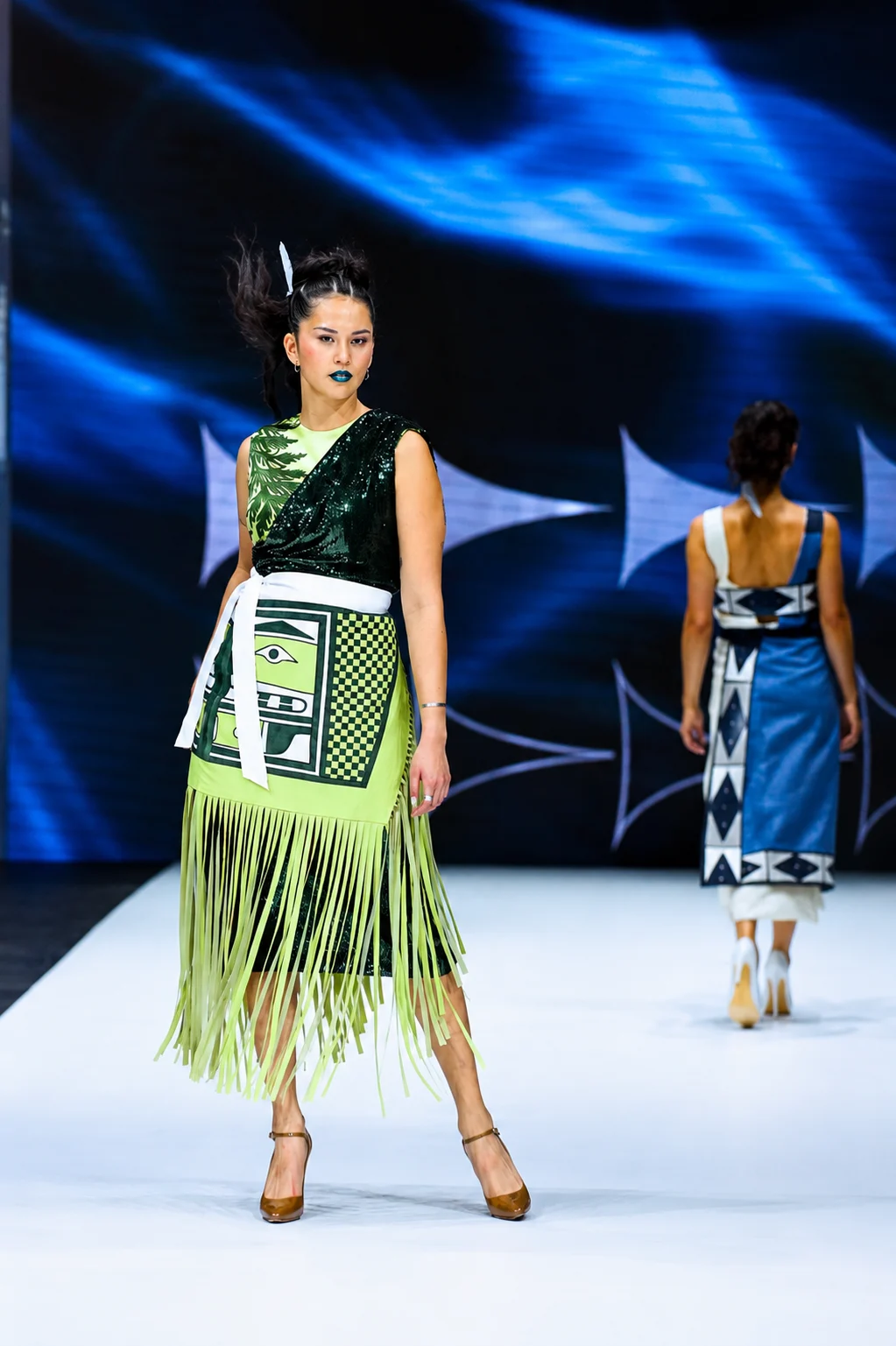
The landscape of contemporary fashion is undergoing a profound transformation, with Indigenous design emerging as a powerful and vibrant force. In recent years, Native American fashion has experienced an undeniable boom, moving from niche cultural showcases to sweeping runways, red carpets, and prominent retail spaces across major fashion hubs. Destinations like Santa Fe, New York, and Vancouver have become pivotal epicenters, drawing sartorially savvy individuals increasingly captivated by clothing imbued with time-honored cultural traditions, meticulously sewn, woven, and beaded into every garment. This surge in interest underscores a growing global appetite for authenticity, sustainability, and narratives deeply rooted in heritage.
Social media platforms bear witness to this burgeoning passion, with new Indigenous brands, collections, and fashion shows appearing daily. However, while there is much to celebrate in this moment of heightened visibility, industry leaders caution that enthusiasm alone cannot sustain a thriving commercial sector. The current juncture represents a critical "eclipse moment," as coined by two-spirit designer, model, filmmaker, and creative director Peshawn Bread (Comanche/Kiowa/Cherokee). This "turning point" signifies not just recognition, but a demand for tangible support, investment, and equitable integration within the broader fashion ecosystem.

The Ascent of Indigenous Fashion: From Margins to Mainstream Momentum
For centuries, Indigenous artistry in textiles, adornment, and ceremonial dress has reflected profound connections to land, community, and spiritual belief. These practices, rich in diverse techniques and symbolic meaning, were often overlooked or, worse, appropriated by the mainstream fashion industry without attribution or benefit to the original creators. The current boom, however, is a deliberate and empowered reclamation. It is driven by Indigenous designers who are not only preserving ancestral methods but also innovating with contemporary aesthetics, creating pieces that resonate with a modern global audience.
The increasing demand for Indigenous designs is part of a larger consumer trend towards ethical, sustainable, and culturally rich products. A 2023 report by the Council of Fashion Designers of America (CFDA) highlighted a growing consumer preference for brands that demonstrate social responsibility and cultural authenticity. Similarly, market analyses consistently show increasing investment in the "slow fashion" movement and artisanal crafts, areas where Indigenous design naturally excels due to its emphasis on craftsmanship, natural materials, and respect for process. This alignment with contemporary values has created fertile ground for Indigenous fashion to flourish, offering a powerful counter-narrative to the often-homogenized and fast-paced global fashion machine.

The visibility extends beyond specialized events. Indigenous designers are increasingly featured in mainstream publications, stocked in high-end boutiques, and worn by celebrities on major cultural stages, amplifying their reach and impact. This newfound prominence, however, brings with it a responsibility to ensure that growth is equitable, sustainable, and beneficial to Indigenous communities themselves.
Voices from the Front Lines: Shaping the Future from Santa Fe, New York, and Vancouver
To understand the trajectory of this dynamic movement, Cowboys & Indians spoke with three pivotal figures who are not only witnessing but actively shaping the future of Indigenous fashion from their respective hubs.

The View From Santa Fe: A Call for Investment and Ethical Kinship
Peshawn Bread, based in Santa Fe—a city long celebrated for its vibrant Indigenous arts scene, particularly through events like the Santa Fe Indian Market—articulates the dual nature of this "eclipse moment." "We’re getting recognition, we’re getting the spotlight, we’re having our stories told," Bread observes. "But we’re also at a point where we’re like, ‘Y’all see us…now do something about it.’ I’m talking about fellowships, collaborations, and investments."
Bread’s multifaceted career—spanning designing their House of Sutai line, modeling, filmmaking, and cultural liaison work—provides a comprehensive vantage point. They have been instrumental in producing major events, including the storied SWAIA Indian Market Native Fashion Show, which recently celebrated its 13th year, a testament to its enduring influence and increasing scale. Their experience as a cultural liaison in high-profile partnerships, such as the Polo Ralph Lauren x Naiomi Glasses artist-in-residency, serves as a benchmark for what ethical collaboration can achieve.
Bread emphasizes the necessity of genuine engagement from non-Indigenous brands. "I really appreciate how some of these companies take the time to listen, understand, and educate themselves," they explain. "Because how is someone who works in New York ever going to understand our community and our connection to the land if they don’t have that background knowledge? It’s been really beautiful to see that education turn into kinship and reciprocity. When it comes to working with the Native community, brands need a little more humanity." This perspective highlights a critical shift from mere transactional relationships to partnerships built on mutual respect, understanding, and shared benefit—a model that seeks to rectify historical power imbalances and exploitation.

The View From New York: Building Protective Spaces and Redefining Success
Bringing a vital sense of Indigeneity to the global fashion capital, New York, is the driving force behind the inaugural Indigenous New York Fashion Week (INYFW). Launched last year by fashion designer, producer, and retailer Korina Emmerich (Puyallup) and cultural worker and community organizer Liana Shewey (Mvskoke), INYFW swiftly established itself as a significant event. The five-day affair showcased the creations of 30 Indigenous designers from across North, South, and Central America, celebrating a vast spectrum of Indigenous aesthetics and storytelling. The initiative was proudly title-sponsored by Emmerich and Shewey’s East Village store, Relative Arts, which uniquely functions as the city’s sole Native fashion and arts shop while simultaneously serving as a vital community gathering space.
In a city where Indigenous histories and influences have been largely marginalized or erased, INYFW’s mission is paramount. Emmerich views INYFW as "a protective place for designers and models to be in community while launching their careers." She underscores the ethical imperative: "It’s incredibly important to bring people into the fashion world with care and respect, because this can be a very exploitative industry."
Emmerich’s own journey through the fashion industry illuminates this need. After gaining national recognition on Project Runway in 2014 and subsequently debuting collections at New York Fashion Week and Lord & Taylor’s flagship store, she experienced the mainstream industry’s pitfalls firsthand. Confronted by its harmful and wasteful practices, she pivoted, founding her sustainable slow fashion line, Emme Studio, in 2015. This personal experience fuels her advocacy for agency and autonomy among emerging Indigenous creatives.

"Defining what success looks like in fashion is very different than it was 10, 15 years ago," Emmerich asserts. "People are coming in with their morals and no longer feel the need to abandon their ethics to fit in." She critiques the historical tendency within established institutions like New York Fashion Week or the Council of Fashion Designers of America to offer a "single opportunity for one person who best represents Indigenous fashion," a practice that "perpetuates the competitive ‘crabs in a bucket’ mentality." Instead, Emmerich champions the vast diversity within Indigenous design, recognizing it as a source of immense potential.
Despite the critical acclaim and accolades, such as Emmerich’s 2026 Pratt Institute Fashion Visionary Award, implementing systemic change demands significant resources. The inaugural INYFW, for instance, incurred nearly six-figure debt for its founders. The duo remains optimistic about securing more sponsors for this year’s expanded event, projected to cost around $350,000—a relatively modest budget for an event of its scale. This financial strain highlights a pervasive issue: the burgeoning Native fashion industry is largely sustained by the individual efforts and financial sacrifices of its designers, producers, and models, underscoring the urgent need for greater institutional and corporate investment.
The View From Vancouver: Cultivating Market Access and Mentorship
Across the continent, in Vancouver, Joleen Mitton (Cree, Treaty 8), founder and artistic director of Vancouver Indigenous Fashion Week (VIFW), echoes the sentiment regarding financial viability. "I keep hearing from makers that fashion feels like an expensive hobby," Mitton states. While VIFW’s annual market generates significant revenue—"Vendors are collectively making half a million dollars at our annual VIFW market"—this is a singular annual event. "Very few designers have the resources or connections to get into stores or access real marketing," she adds, pointing to a critical gap in infrastructure and support.

Mitton launched VIFW in 2017 with the explicit aim of boosting Indigenous visibility and economic opportunities. Building on this, she established Canada’s first and only Indigenous modeling agency, Supernaturals, in 2021. This initiative directly addresses the exploitative practices she experienced as an international fashion model in her youth, providing a safe and supportive platform for Indigenous talent.
VIFW’s impact has been substantial. Last year, the event attracted over 8,000 attendees across four nights, showcasing 29 designers, featuring more than 100 models on the runway, and hosting over 40 marketplace makers. Beyond the glamour of the shows, VIFW is deeply committed to nurturing future talent, offering formal youth mentorship and internship programs that empower the next generation of Indigenous creatives.
Mitton’s expertise is now sought after beyond Vancouver, leading her to help produce events like the 2025 SWAIA Native Fashion Week in Santa Fe and the 2026 RES Indigenous Fashion Show in Las Vegas. In stark contrast to the often-insular and competitive nature of the mainstream fashion industry, Mitton readily shares her knowledge, driven by a shared vision for collective advancement. "I’m trying to get people to care," she asserts. "When we started in Vancouver, there was no Indigenous visibility at all. People didn’t even know we still existed, let alone that we have been doing fashion forever." She acknowledges the progress but emphasizes the ongoing work required. Her message culminates in a powerful call for conscious consumerism: "It really comes down to respect and reciprocity, and I do think people have a responsibility to be conscious consumers. If you like our Indigenous designs, why not buy from Indigenous designers?"

Navigating Challenges and Seizing Opportunities
The collective insights from Bread, Emmerich, and Mitton paint a clear picture of the challenges and opportunities facing Indigenous fashion.
Challenges:

- Financial Sustainability: The most prominent challenge remains turning passion into a viable, income-generating profession. Many designers operate on tight budgets, and event organizers like INYFW face significant financial burdens without robust sponsorship and investment.
- Market Access: Beyond annual markets and specialized events, designers struggle to gain consistent access to mainstream retail channels, marketing resources, and business development support.
- Exploitation and Appropriation: Despite growing awareness, the risk of cultural appropriation persists, necessitating protective measures and ethical frameworks for collaborations. The industry must move beyond superficial inclusion to genuine partnership.
- Infrastructure Gaps: The lack of dedicated manufacturing facilities, textile development resources, and business education tailored to Indigenous contexts hinders scaling and economic sovereignty.
Opportunities:
- Growing Consumer Demand: A global shift towards ethical, authentic, and sustainable fashion strongly favors Indigenous design, offering a vast market.
- Cultural Richness and Diversity: The immense variety of Indigenous cultures, traditions, and artistic expressions offers an inexhaustible wellspring of unique designs, preventing homogenization and fostering innovation.
- Community-Driven Models: Indigenous fashion is inherently collaborative and community-focused, fostering mentorship, skill-sharing, and collective empowerment, which contrasts with the often individualistic mainstream model.
- Digital Platforms: Social media and e-commerce offer direct pathways for designers to reach global audiences, bypassing traditional gatekeepers and building direct relationships with consumers.
A Vision for Tomorrow: Mainstream Integration, Economic Sovereignty, and Cultural Perpetuation
Despite the systemic challenges, the leaders in Indigenous fashion share an unwavering optimism for the future, fueled by a clear vision for transformative change.

Joleen Mitton envisions a future where Indigenous designers are financially secure and universally celebrated. "I’d love to see more non-Indigenous people wearing our garments," she states, highlighting a desire for broader appreciation and cultural exchange. Crucially, she adds, "I’d love to see Indigenous designers being treated the same way non-Indigenous designers are. I’d love to see Indigenous designers in a safe financial bubble, where this doesn’t just feel like an expensive hobby for them."
Korina Emmerich’s vision centers on economic sovereignty and a return to ancestral wisdom. "I would like to see more economic sovereignty within our communities," she emphasizes. "I think there’s a lot of opportunity in building resources and developing textile manufacturing on our people’s homelands." She sees the future of fashion aligning with Indigenous principles of sustainability and stewardship. "Within the industry, conversations are starting to be more centered around sustainability, stewardship, and community. I think the future really looks a lot like the past, where we’re working with resources in a respectful way—and those are all lessons learned through Indigenous leadership." This suggests that Indigenous fashion can offer a powerful model not just for design, but for the very ethics of the global fashion industry.
Peshawn Bread articulates perhaps the most ambitious and inspiring vision: complete integration and proliferation. "I want to see us so deeply rooted in the mainstream fashion industry that we outgrow the idea of a Native fashion industry," Bread declares. "I want to see our people and our designs everywhere. I want to see a Native designer on the scale of Tiffany or Cartier. I want to see us up on billboards. I want to see more of our Native designs on red carpets—and not just on Native actors." Beyond visibility, Bread champions systemic support for future generations: "I want to see more Native people in fashion school with more scholarships to support that. I want to see us with our own ateliers and stores. I want to live to see all of it."

Broader Impact and Implications
The rise of Indigenous fashion is more than a trend; it is a cultural and economic movement with profound implications. It represents a powerful form of cultural reclamation, allowing Indigenous peoples to tell their own stories, on their own terms, through a medium that reaches global audiences. It fosters economic empowerment by creating sustainable livelihoods within communities and challenging historical economic disparities. Furthermore, it offers the mainstream fashion industry a much-needed lesson in ethical practices, sustainability, and the true value of cultural authenticity.
As Indigenous fashion continues its upward trajectory, the collective efforts of designers, organizers, and advocates like Peshawn Bread, Korina Emmerich, and Joleen Mitton are crucial. Their work ensures that this "eclipse moment" transforms into a sustained era of recognition, investment, and unparalleled creative flourishing, forever enriching the global tapestry of style and culture. The future of fashion, indeed, looks increasingly Indigenous.









