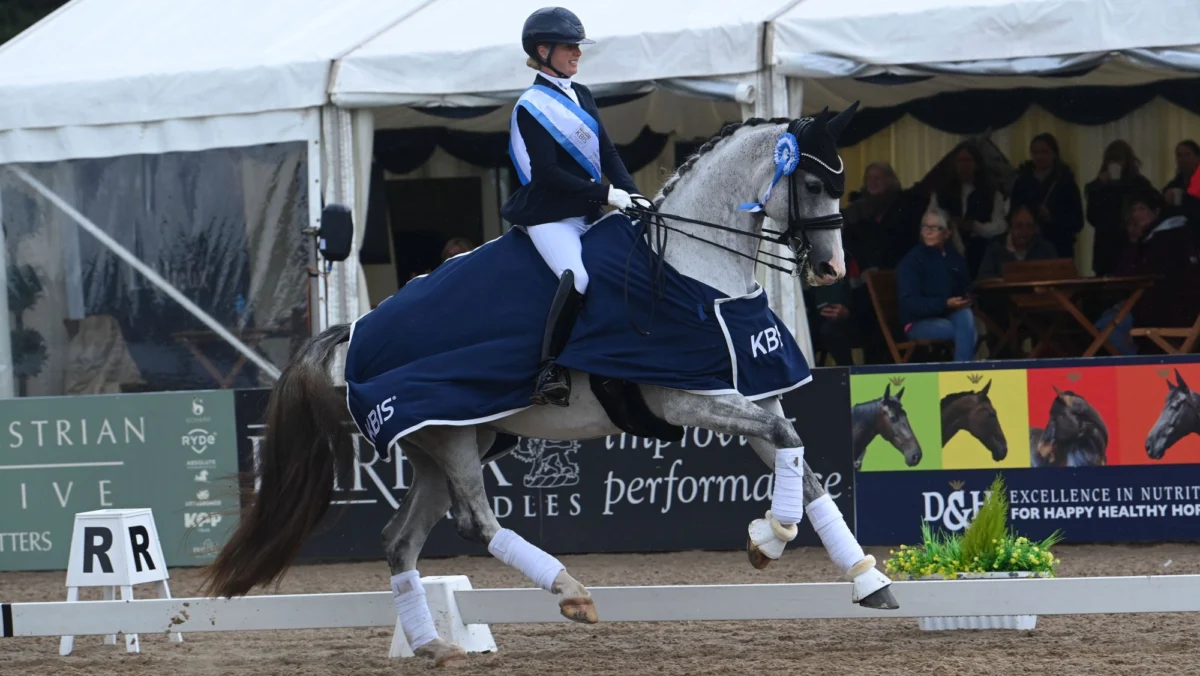
Sadie Smith and the impressive seven-year-old mare River Rise Onassis have achieved a truly extraordinary victory at the 2026 National Dressage Championships, clinching the KBIS young horse test with a commanding score of 81.17%. This triumphant return to the winner’s circle comes almost precisely one year after a harrowing horsebox accident that nearly claimed the mare’s life, an incident that occurred on the very journey home from the same prestigious championships. The victory serves as a potent testament to the resilience of both horse and rider, and the dedication of the entire team involved.
A Near-Tragic Accident and a Miraculous Recovery
The incident that threatened to end River Rise Onassis’s career, affectionately known as "Sassy," occurred in September of the previous year. Sue Garrard, Sassy’s owner, was driving the mare home from the 2025 National Dressage Championships when her horsebox was violently struck from behind on the M6 motorway. The conditions were treacherous, with driving rain, fierce squally gusts, and significant standing water creating a perilous environment for road travel.
The force of the impact sent the horsebox into a dangerous fishtailing motion before it ultimately overturned, skidding across all three lanes of the motorway. While Sue Garrard managed to escape the vehicle through the passenger window with only minor injuries, Sassy was trapped inside the wreckage. The mare found herself surrounded by sharp metal debris and shattered fibreglass, a terrifying ordeal made worse by the constant proximity of passing vehicles, each one amplifying her distress. At the time, the gravity of the situation was starkly apparent, with Sue Garrard later recounting her immediate fear, stating, "I thought she was dead."
The Long Road Back to Competition
The aftermath of the accident involved an extensive and arduous recovery process for River Rise Onassis. The physical injuries sustained, though not immediately life-ending, required meticulous veterinary attention and rehabilitation. More significantly, the psychological trauma of such a terrifying event could have had lasting repercussions on a horse’s temperament and willingness to travel or perform.
The journey back to elite competition demanded a phased and patient approach. Initially, the focus was on Sassy’s physical healing, ensuring all wounds, both internal and external, had fully recuperated. This would have involved a period of complete rest, followed by carefully managed exercise regimes designed to gradually rebuild her strength and suppleness. Veterinary specialists would have played a crucial role in monitoring her progress, addressing any lingering pain or discomfort, and ensuring her fitness for strenuous equestrian activities.
Beyond the physical, the mental recovery would have been equally, if not more, challenging. Reintroducing Sassy to travel, even for short distances, would have required a carefully orchestrated plan. This might have involved gradual acclimatisation to the horsebox environment, perhaps with short trips to local fields or training facilities, accompanied by familiar handlers and a calm atmosphere. The process of rebuilding trust and confidence would have been paramount, with Smith and her team likely employing positive reinforcement techniques and ensuring Sassy felt secure and safe at all times.
The dedication shown by Sadie Smith and her support team during this period cannot be overstated. The commitment to Sassy’s well-being, prioritizing her recovery above immediate competitive goals, speaks volumes about their bond and horsemanship. The fact that she has not only returned to competition but has done so at the highest level, achieving a winning score, is a testament to their unwavering belief in the mare’s potential and their meticulous approach to her rehabilitation.
The 2026 National Dressage Championships: A Stage for Resilience
The 2026 National Dressage Championships, held at a prestigious venue known for its world-class facilities and competitive atmosphere, provided the perfect stage for this remarkable comeback. The KBIS young horse test for seven-year-olds is a highly competitive class designed to showcase the emerging talent in dressage. These classes are crucial for identifying and nurturing future stars, and the judging criteria typically focus on the horses’ potential for further development, their rideability, and their overall quality of movement and conformation.
Sadie Smith’s performance aboard River Rise Onassis was reportedly outstanding. The mare, a striking individual by Glamourdale out of an Amsterdam mare, displayed the elegance, power, and expressive movement that has become characteristic of her pedigree. The partnership between Smith and Sassy was evident in their harmonious execution of the test, with the mare responding willingly and accurately to her rider’s aids. The judges, evaluating a range of movements including the trot, canter, and walk, as well as the horses’ submission and general impression, clearly recognized the exceptional quality of their performance.
Achieving a score of 81.17% in such a competitive field is a significant accomplishment. This score indicates a performance that was not only technically sound but also aesthetically pleasing and full of potential. For a young horse, this level of performance demonstrates maturity beyond their years and a strong foundation for future success at Grand Prix level.
Expert Analysis and Potential Implications
The victory of Sadie Smith and River Rise Onassis carries significant weight within the dressage community. Firstly, it highlights the exceptional quality of breeding programs, with Glamourdale, a highly sought-after sire, producing another top-tier athlete. The mare’s dam, by Amsterdam, further contributes to her impressive bloodlines, suggesting a strong genetic predisposition for top-level dressage.
Secondly, the win underscores the importance of expert veterinary care and rehabilitation in equestrian sports. The ability of Sassy to not only recover from a potentially fatal accident but to return to peak physical and mental condition is a triumph of modern equine medicine and dedicated training. This case will likely serve as an inspiration and a case study for other owners and riders facing similar challenges.
Furthermore, this success story offers a powerful message about resilience and perseverance. In a sport that demands immense dedication and faces numerous unpredictable challenges, Smith and her team’s unwavering commitment to Sassy’s well-being and recovery is a profound example. It demonstrates that even after devastating setbacks, with the right support and determination, remarkable achievements are possible.
The future for River Rise Onassis appears incredibly bright. With this significant victory at a national championship, she has firmly established herself as one of the most exciting young prospects in British dressage. Her performance suggests she has the talent, temperament, and training to progress through the levels and potentially represent Great Britain on the international stage in the coming years. Her journey from near-death to national champion is a narrative that will undoubtedly inspire many within the equestrian world.
Background Context of the National Dressage Championships
The National Dressage Championships are a cornerstone event in the British equestrian calendar. Held annually, they bring together the nation’s top dressage riders and horses across various age groups and levels, from young horses to Grand Prix. The event serves as a crucial platform for identifying elite talent, setting performance benchmarks, and fostering the development of the sport. For young horse classes, specifically, the championships are vital in assessing the potential of upcoming equine athletes, with their performances closely watched by breeders, trainers, and potential buyers. The competition is fierce, attracting riders who have qualified through regional events and demonstrating the pinnacle of dressage training and horsemanship in the UK. The prestigious nature of the championships means that a victory here significantly elevates a horse and rider’s profile and signals their potential for future international success. The KBIS young horse test, in particular, is designed to evaluate horses that are still developing, focusing on their trainability, gaits, and overall promise for a successful dressage career.